
 MONA OS 2.0
 Partner with MONA


 Tự động hoá doanh nghiệp
 Cẩm nang SEO
 Digital Marketing
 Kinh nghiệm thiết kế website
 Hạ Tầng Server
 Giáo dục


 VI
 EN











Message us on
Zalo Official


 ProductsNew

 ProductsProducts
 Mới ra mắtKHA AI 2027App tự edit video, tự đăng mọi mạng xã hội, 2 phút mỗi ngày










 Website designLooks good and wins customers over.
SEO servicesBrings in customers searching for exactly what you sell.
 Tư vấn digital marketingKéo khách từ nhiều kênh, đo bằng số thật.
Corporate video productionVideos introducing your company, factory and team.
 NewAI video productionCompany story films made with AI.
 Custom software developmentCRM, ERP and HRM built for your business.
 Viết AI Agent theo yêu cầuĐặt riêng một trợ lý AI cho đúng việc của mình.
 Tư vấn chuyển đổi AIĐưa AI vào vận hành của cả công ty.
NewMONA LMSManagement for centers and schools.
MONA SkillHubInternal training for company staff.
 NHTQ systemEnd-to-end China–Vietnam shipping operations.
MONA JMSManagement for gold, diamond and pawn shops.
 MONA E-LearningA website with every feature you need to sell courses.
 How to sell online courses (course)More than 30 free lessons on selling courses on autopilot.
 MONA Cloudmonacloud.vnServers to get your apps and websites running.
 MONA Basemonabase.vnPostgres database, sign-in and file storage.
 MONA Mailmonamail.vnSend OTP, order and invoice emails from your software.
 MONA Paymonapay.vnAccept bank transfers via VietQR and notify your software when the money arrives.
 MONA eInvoiceComing soonIssue e-invoices that meet tax standards.
Gấu CườiTrả lời khách 24/7 trên web, Fanpage, Zalo và thu lead cho sale.
 Gấu TeleSalesGọi điện tư vấn, chăm khách như tổng đài viên thật.
Dê CườiTư vấn và chốt đơn cho shop ngay trong khung chat.
Gấu WebmasterNhắn nhóm Zalo là website được sửa xong.
 Gấu Pháp ChếSoạn hợp đồng, rà điều khoản trong vài phút.
 Gấu Báo GiáLên báo giá đúng mẫu và gửi khách ngay.
 AI chăm sóc khách hàngTheo dõi và giữ chân khách hàng cũ.
 Gấu Tuyển DụngLọc hồ sơ, hẹn lịch, phỏng vấn ứng viên.
 Mới ra mắt
KHA AI 2027
Xây kênh chuyên gia 2 phút mỗi ngày
Quay bằng điện thoại, AI tự edit video, tự đăng lên 16 nền tảng và tự trả lời bình luận, tin nhắn.
931.408lượt xem trên kênh CEO MONA sau 42 ngày
 Anh Khánh HùngCEO MONA đang dùng mỗi ngày
Xem app làm được gì
 AI
Gấu Cười MONA ĐANG TỰ XÀITrả lời khách 24/7 trên website, Zalo OA, Messenger và thu lead về cho sale.
Dê CườiChốt đơn bán lẻ và sàn: Shopee, TikTok Shop, web. Chăm cả khách sỉ, đại lý.
Gấu WebmasterCập nhật nội dung, tối ưu SEO website mỗi ngày.
Gấu TeleSalesGọi điện tư vấn, chăm khách như tổng đài viên thật.
Gấu Tuyển DụngLọc hồ sơ, hẹn lịch, phỏng vấn ứng viên tự động.
AI chăm sóc khách hàngGiữ khách cũ, cứu lead đã rớt cho phòng kinh doanh.
Gấu Pháp ChếSoạn hợp đồng, rà điều khoản trong vài phút.
Gấu Báo GiáLên báo giá đúng mẫu, gửi khách ngay khi có yêu cầu.
 Chuyển đổi AI toàn phầnGiải pháp tổng cho doanh nghiệp, 3 lớp triển khai.
 Viết AI Agent theo yêu cầuĐặt riêng một con AI gánh đúng nghiệp vụ của bạn.
 Custom softwareCRM, ERP and HRM with built-in AI automation.
 SEO & AEO thời đại AIĐược Google lẫn AI trích dẫn, không chỉ xếp hạng.
 Kiến thức AI cho doanh nghiệpBài phân tích, hướng dẫn ứng dụng AI vào vận hành.
 Free AI courses
 AI tools at work
App mới · KHA AI 2027
Xây kênh 2 phút mỗi ngày
AI tự edit video, tự đăng mọi mạng xã hội
Free consultation, 8am–10pm every day

07 August, 2026
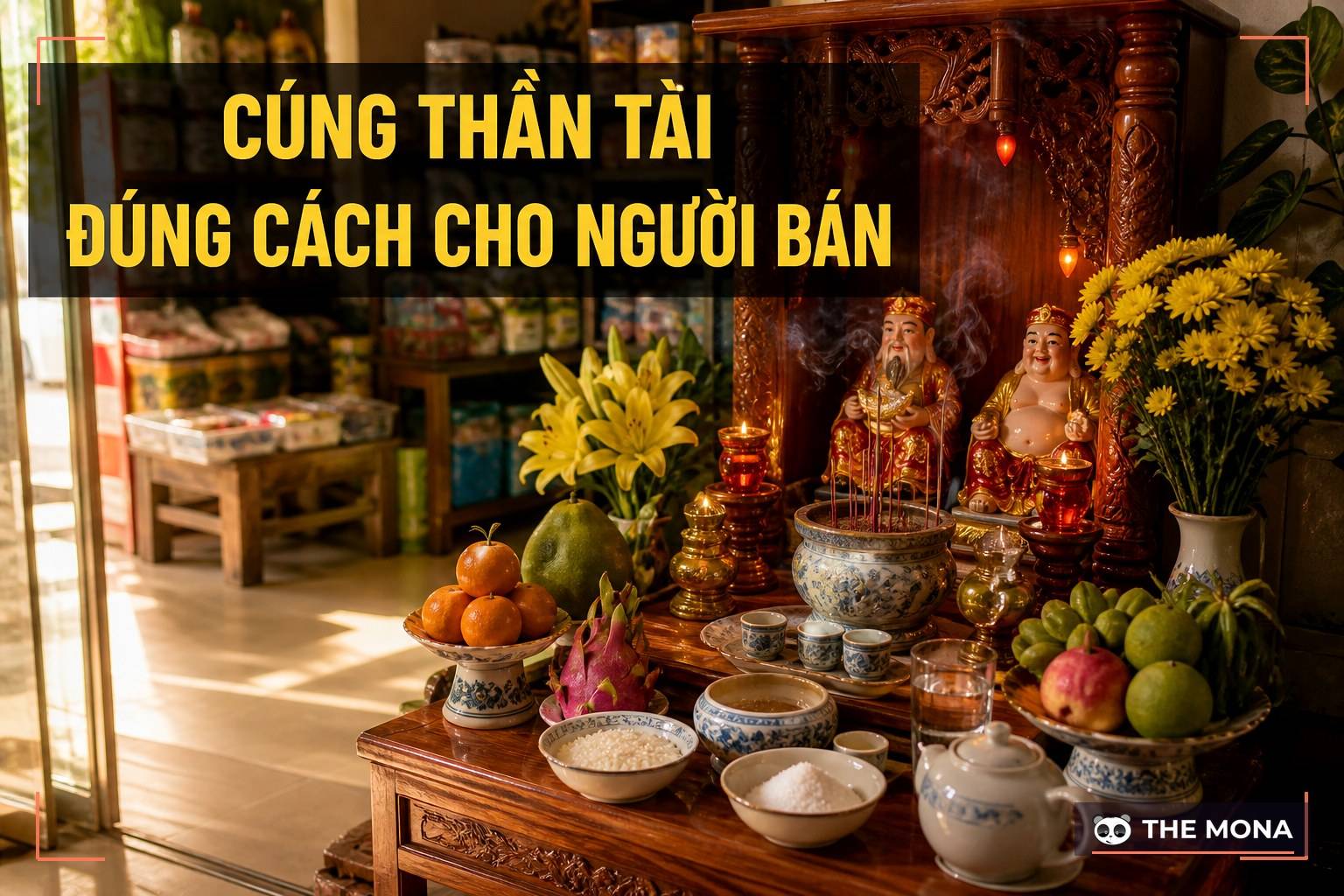
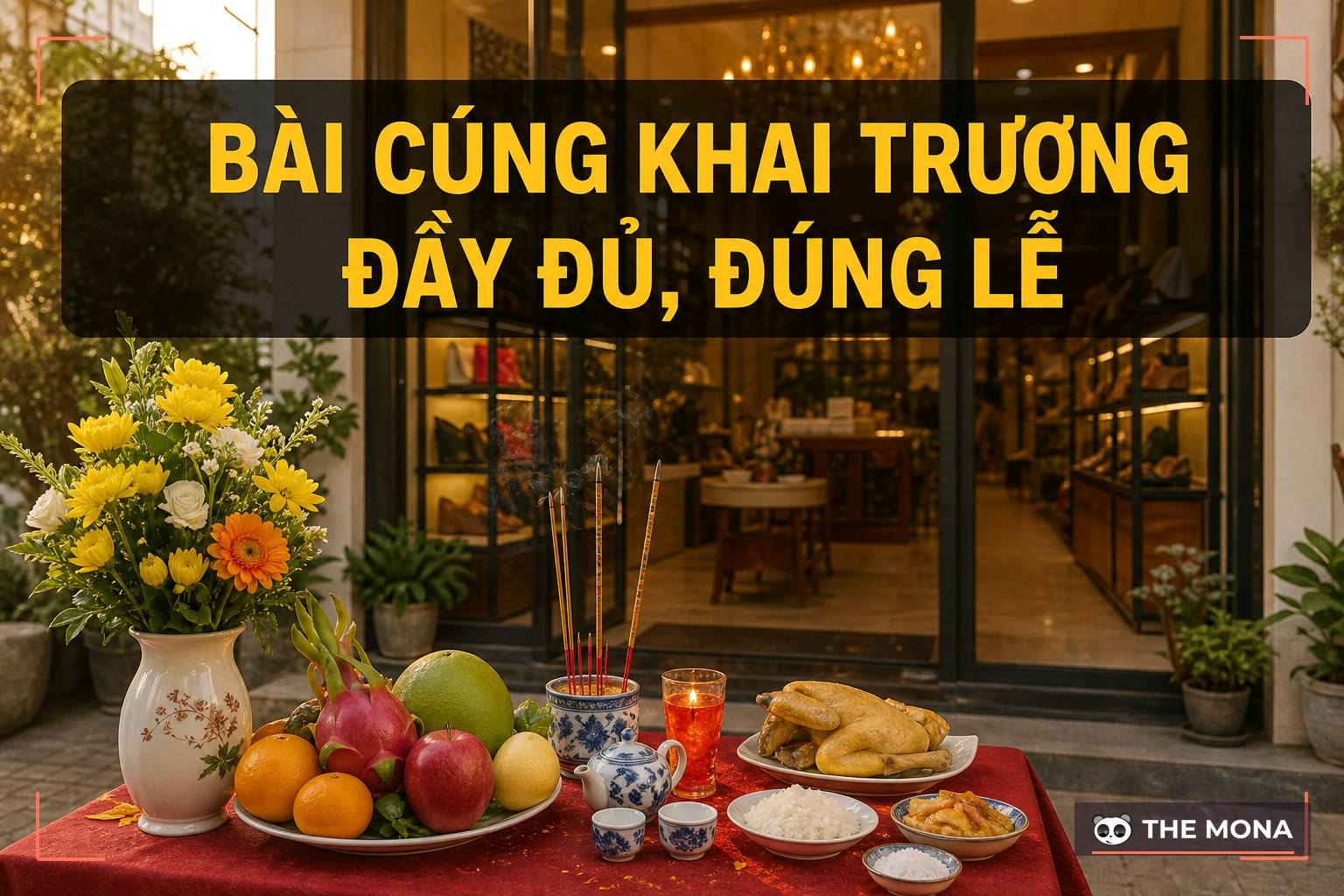
In the morning, many shop owners wipe the altar and change the water worshipping Thần Tài before turning on the cash register. The daily offering only needs incense, water and clean fruit; on the 1st, the full moon day and the 10th, people usually prepare something more generous. What matters is a clean altar, fresh offerings, a clear prayer and safe incense and flame. You do not need roast pork, liquor or paper offerings every day to show sincerity. We usually change the water at 7:30 so the altar is dry before the shop welcomes customers at 8:00, avoiding lighting incense while squeezing past delivery people.
Clean first, offer second.
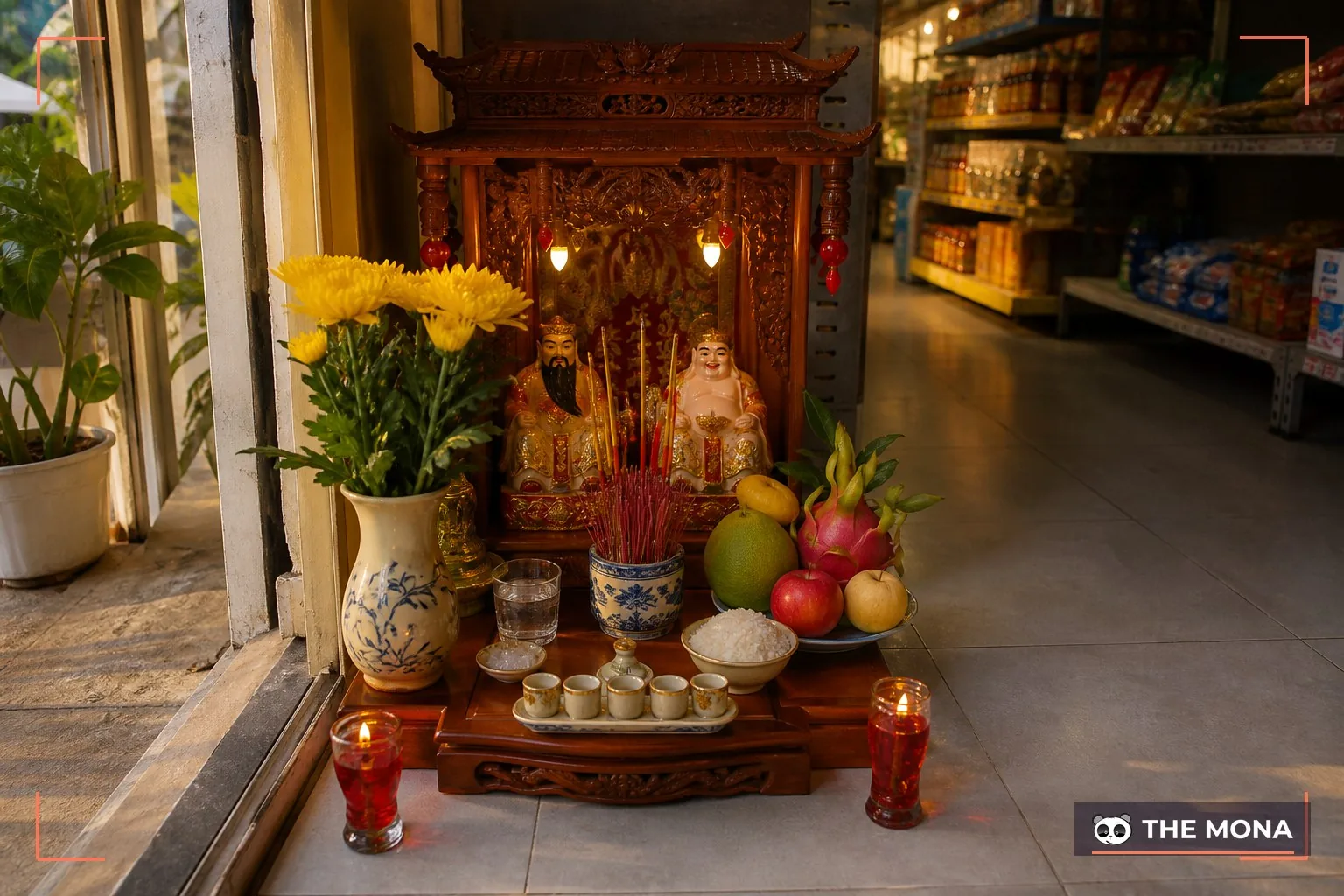
The altar of Thần Tài (the God of Wealth) and Ông Địa (the Earth God) usually sits near the entrance, low to the ground and facing the street to welcome customers. It is a familiar folk belief in many Vietnamese homes and shops. Sellers light incense to show respect and to ask for steady work, willing buyers and the ability to keep what they earn. We once helped our mother sell goods, and 30 minutes before opening we would always wipe the counter first and only then change the water on the altar.
The 10th day of each lunar month is regarded in many places as the day to worship Thần Tài; the 10th of the first lunar month is taken more seriously because it opens the business year. VTC News notes this custom is still common in Vietnamese life, especially among small traders. Whichever day you hold the offering, you do not need to treat buying gold or preparing a salty feast as an obligation.
The line must be clear. The ritual is about sincerity, while whether the business sells still comes down to the goods, the price and how you look after customers. If you make a careful Thần Tài offering one morning but the shelves are dusty, the prices are wrong and messages go unanswered, customers will still walk away. The ritual steadies the seller and reminds you to start the day properly.
On ordinary days, the altar needs to be clean and the offerings just enough. On the 1st, the full moon day or the 10th, families usually add fruit, sticky rice, sweet soup or a savory dish according to their own custom. Do not bring back a list from another region and worry about missing snakehead fish, roast pig or the set of three meats. Those are all optional. We use a budget of 250,000 VND for a simple daily offering, and for the 10th the shop owner sets a ceiling of 500,000 VND so they do not buy just because everyone else does.
An offering you can afford is one you can keep up.
| Occasion | What to include | Optional extras |
|---|---|---|
| Daily Thần Tài offering | Clean water, incense, fresh flowers or fruit | Tea, coffee, sweet cakes according to family custom |
| The 1st and the full moon day | Incense, lamp, flowers, fruit, water, tea | Sticky rice, sweet soup, cakes, a vegetarian tray |
| The 10th of each month | Incense, lamp, flowers, fruit, water, rice and salt | Sticky rice with sweet soup, betel and areca, liquor, a savory dish |
| The 10th of the first lunar month | A generous tray within the family's means | The set of three meats (tam sên), roast pig, grilled snakehead fish, and votive paper if the locality has the custom |
The tam sên set is usually understood as boiled or roast pork, a boiled egg, and shrimp or crab. If your family is vegetarian, the premises ban meat dishes, or you need to hold the budget, skip this part. No dish is worth an argument with the shop owner first thing in the morning.
Choose flowers that are still fresh, in a clean vase, without a scent too strong for a closed shop. Wash the fruit and wipe it dry. Change the water on the altar regularly, and replace any cracked cup. Offerings that have spoiled must be taken down; do not keep them out of reluctance to waste.
Shop owners usually wipe the altar just before opening. Wash your hands, use a clean cloth reserved for this, lift each item gently and remember its original position before moving it. If the statue, incense bowl or other items follow your family's own customs, ask an elder first rather than rearranging everything after watching one video.
Use clean, slightly warm water for wiping. Some families use scented water by their own tradition. Whichever you use, wring the cloth out well so you do not dampen the wood, sockets or lights. A low altar picks up dust from the door easily; wipe the floor around it and wait until it is dry before lighting incense. We keep 2 separate cloths, one for the altar surface and one for the floor, then wait about 10 minutes before plugging in the lights and check twice.
If your family sets out the three jars of rice, salt and water, keep them dry, clean and covered. Replace wilted flowers and fallen leaves right away. Trim the incense stubs only on occasions your family customarily does, and there is no need to touch the incense bowl every day. Caring for the altar regularly matters more than one huge cleaning followed by weeks of neglect.
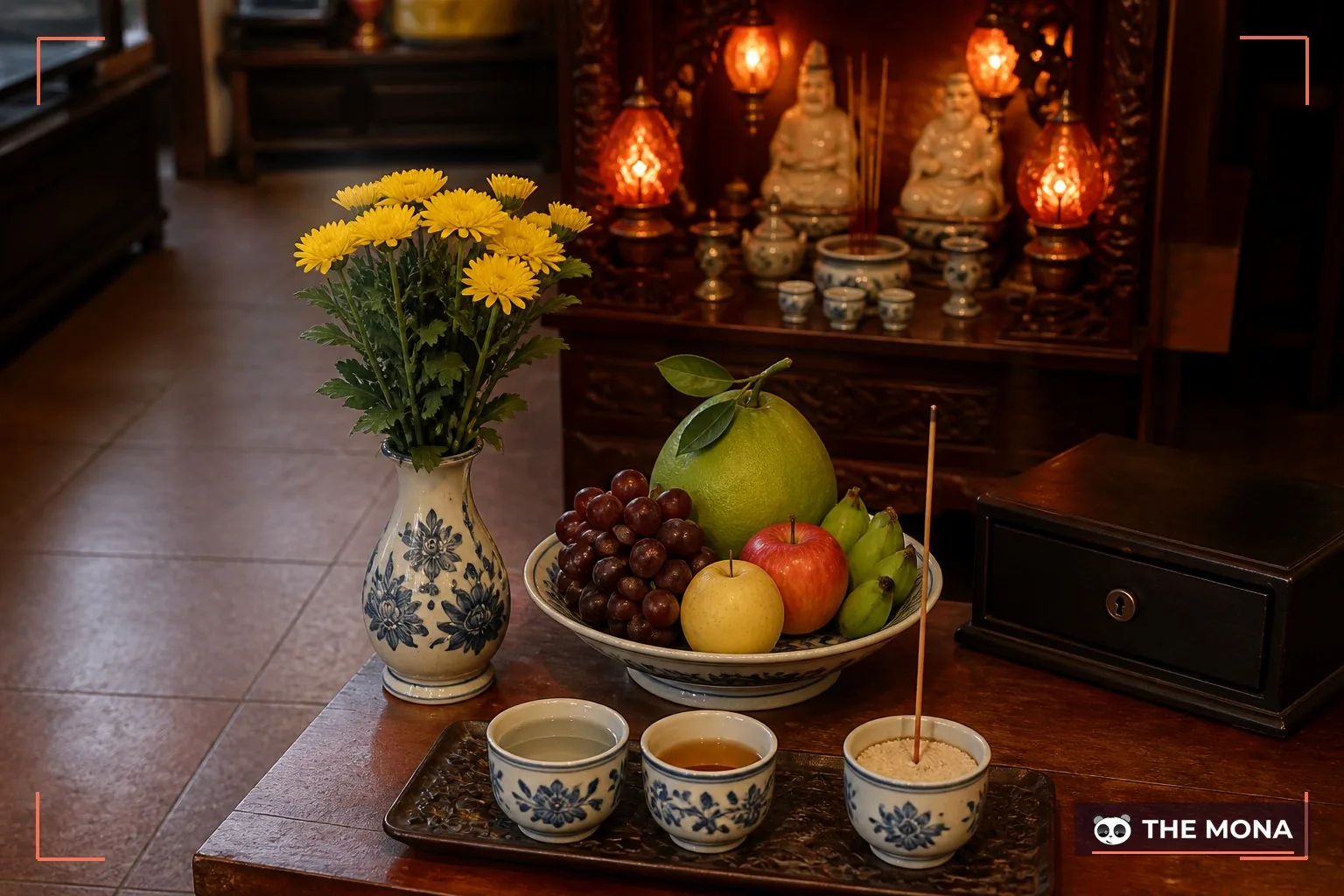
For the daily offering, many shops light incense in the morning before welcoming customers; a shop that opens at 8:00 changes the water and makes the offering at 7:30, then clears the entrance, powers on and checks the counter. Staff on the afternoon shift do not have to force themselves to rush in at dawn; pick a time that is clean and quiet and keep it consistent. From watching small shops we see that a window 30 minutes before opening is easier to keep up, because there is still time to wipe the floor and test the payment machine before customers arrive.
Settle the time ahead, no last-minute rush.
On the 10th of the first lunar month, some families pick a time based on the calendar and the age of the person leading the ritual. If you go this way, settle on one source your family trusts. Do not change delivery schedules, staff rosters and launch campaigns just because a website gives a different time slot. Family custom, the premises and safety still stand next to the question of an auspicious hour.
An evening offering is not considered wrong in every case, but a busy shop will find it harder to keep things solemn and safe. Incense and candles next to clothes, paper, alcohol or cardboard boxes are a real risk. Holding the offering before opening hours is usually tidier.
Prepare the evening before so you do not have to hunt for flowers or wash cups and then open late. One person making the offering and one person watching the counter and walkway is enough. The sequence below works for ordinary days and for the 10th; only the offering tray differs.
For a shop that opens at 8:00, we run 2 checks within 10 minutes: the first looks at incense and flame, the second at the walkway, small change and the QR code.
Do not skip the final check.
On rainy or windy days, the candle should sit in a sturdy holder. If the premises ban open flame, use electric lamps and clean offerings; do not sneak incense into a bathroom or storeroom. Following the shared rules also keeps the shop at peace.
The daily prayer does not need to be long. The text below is a folk prayer for reference, suited to changing the water, offering flowers and fruit, and starting the sales day. It is not a magic spell; read it slowly and say your own name and your shop's name correctly.
Nam mô A Di Đà Phật! (3 times)
I respectfully bow before Hoàng Thiên Hậu Thổ and all the revered deities. I respectfully bow before Đông Trù Tư Mệnh Táo Phủ Thần Quân (the Kitchen God).
I respectfully bow before the God of Wealth (Thần Tài), the Earth God (Thổ Địa) and all the deities who watch over this place. I am…, doing business at…
Today is the day… month… year…, and I sincerely offer incense, flowers, clean water and offerings before the altar.
I humbly ask that you witness my sincerity and protect the shop in peace, with staff in harmony, customers who buy willingly, honest business and a reputation kept for trustworthiness.
My offering is modest but sincere; I humbly ask that you bear witness.
Nam mô A Di Đà Phật! (3 times)
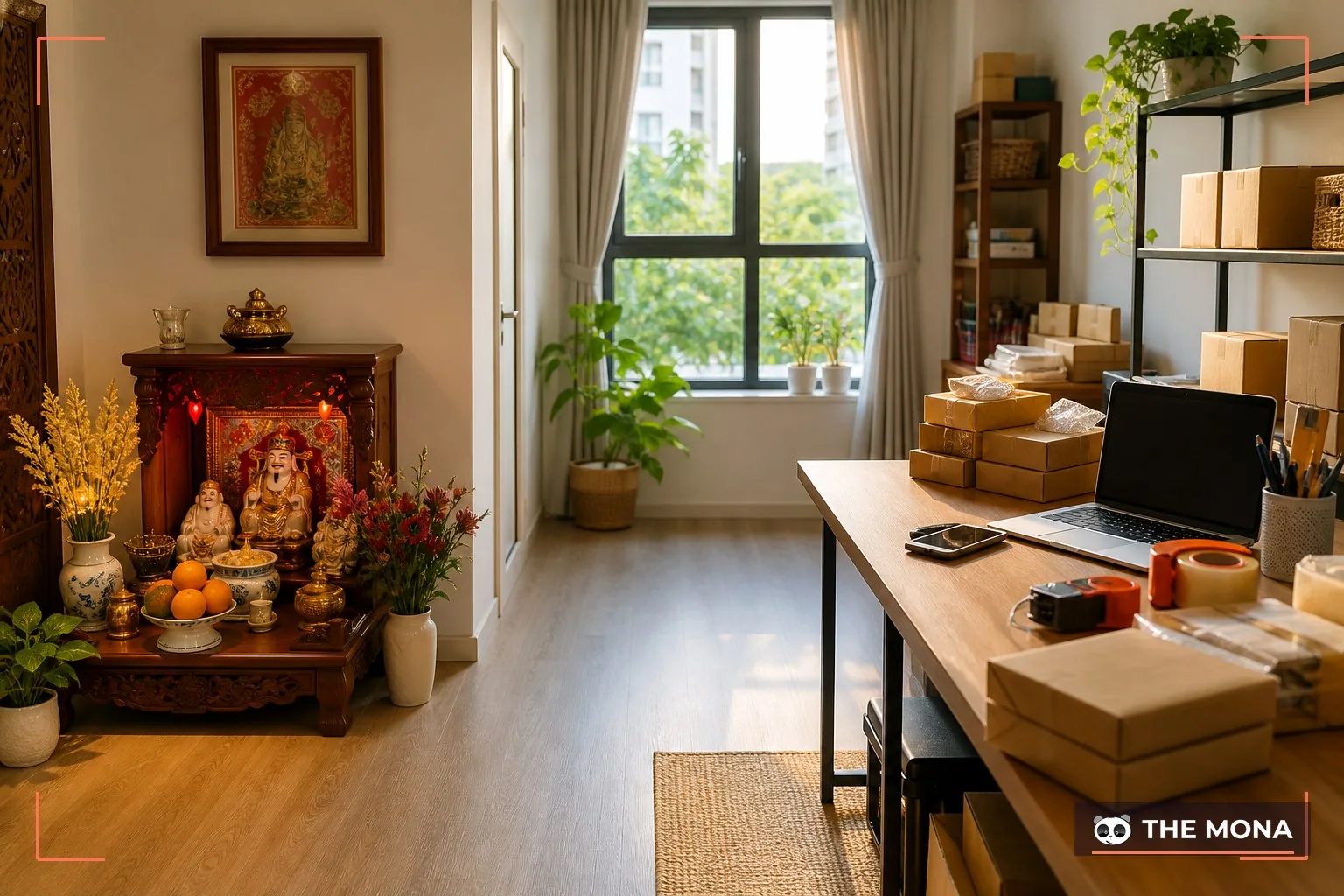
The section below is a Thần Tài prayer based on the traditional Vietnamese prayer text passed down among the people, with blanks to fill in. The way the deities are addressed and the order of the offering may differ between regions. If your family already has a version it has used for years, keep it.
Nam mô A Di Đà Phật! (3 times)
I bow to the nine directions of Heaven and the ten directions of the Buddhas. I bow to the Lord of Heaven, the Earth Mother, and all the revered deities.
I respectfully bow before Đông Trù Tư Mệnh Táo Phủ Thần Quân (the Kitchen God).
I respectfully bow before the God of Wealth (Thần Tài) of the shop front.
I respectfully bow before the household Earth God (Thổ Địa), the Dragon Vein and all the revered deities who watch over this area.
I, the devotee, am…
Residing at…, now running the shop… at…
Today is the 10th day of the month… year…
I sincerely prepare incense, flowers, offerings, gold and silver, tea and fruit, and set them before the altar, respectfully inviting the God of Wealth, the Earth God and all the revered deities to descend and bear witness. I humbly ask that you take pity on me and protect this place of business in peace, with upright work, goods that circulate, staff of one heart, fortunate meetings with customers, clear income and spending, and a reputation kept whole.
We vow to work diligently, never cheat on weights and measures, never let down those who buy from us, and know how to keep what we earn and how to share. We also invite the former owners and later owners and all the spirits who once lived at this place to come and enjoy the offerings and bear witness to our sincerity.
I come with a modest offering and a sincere heart. I bow before the altar and humbly ask for your protection and blessing.
Nam mô A Di Đà Phật! (3 times)
Replace “shop” with café, office, warehouse or the name of your facility. Keep your wishes about honest business, a trusted reputation and peace. Promises of profit, order counts or getting rich quickly do not belong in the prayer.
Taboos differ from household to household. What is easier to agree on is keeping things clean, keeping the ritual, and keeping everyone safe. Do not ignore a burning candle next to a paper bag out of worry about missing a ritual step. We once saw an incense ash fall less than 20 cm from a cardboard box, so whenever there is a flame we assign exactly one person to watch until it is fully out and check twice within 1 minute before the shop welcomes customers.
Safety comes before taboos.
Leave only when the ash is cold.
Turn away only when the flame is out.
| Common mistakes | Why it's a problem | How to fix |
|---|---|---|
| Leaving wilted flowers and old water for days | The altar loses its cleanliness and the shop starts to smell | Schedule water changes and a flower check every morning |
| Setting a big tray that blocks the door | Customers have trouble getting through, and incense and candles are more likely to be knocked over | Use a medium-sized table and leave room for the exit and the selling path |
| Making the offering and then leaving to deliver goods | No one is watching the flame | Wait for the incense to burn out or ask someone to stay and watch |
| Blaming customers for having “heavy luck” | It upsets customers and hides real selling problems | Recheck prices, stock, how you greet customers and reply speed |
| Taking the offerings down and selling them | It is unhygienic and unclear to customers | Use them at home or share with relatives |
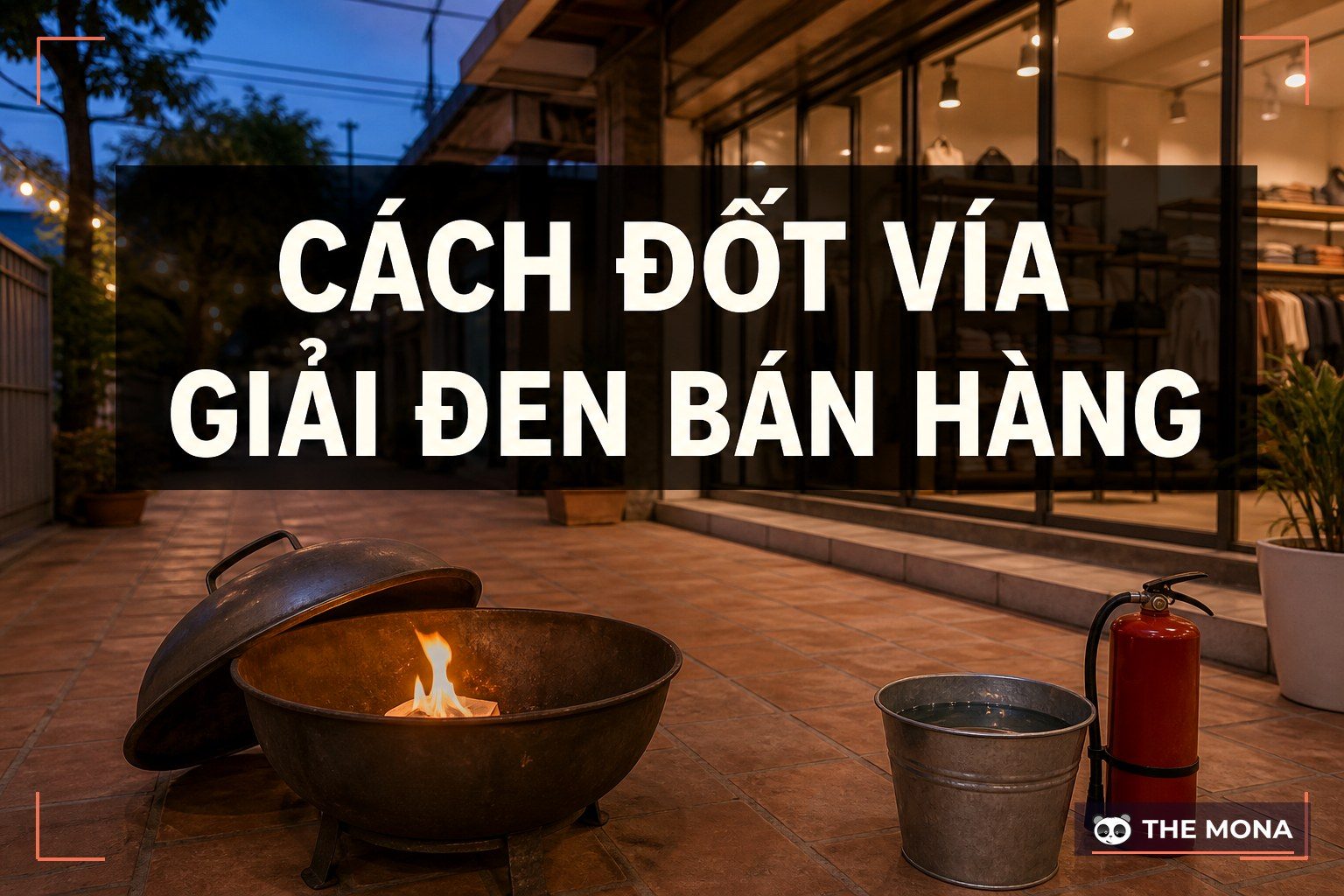
If your family burns votive paper, do it in a permitted place, with a shield around it and water or a fire extinguisher nearby. Shops in apartment buildings, markets or office towers must follow the management board's rules. If there is no safe spot, skip the burning.
Online shops with a warehouse or packing table at home still make the offering where the altar already stands. If your home already worships Thần Tài, change the water, make the offering, then state your shop's name and operating address in the prayer. If you have no altar, there is no need to buy a statue and incense bowl and set up a corner just because you opened a sales channel. Setting up an altar should follow family custom, with guidance from an elder.
Phones, laptops, batteries, label printers and paper parcels must stay away from incense and candles. Shop owners in smoke-free apartments use electric lamps, flowers, fruit and clean water. An online Thần Tài offering does not need to be livestreamed to prove sincerity. Take an accessories shop that starts processing orders at 9:00: the offering table sits 2 m from the packing area, 3 paper parcels are moved to the next room, and the person on duty then checks twice within 10 minutes before lighting incense.
Keep flame away from the packing table.
After the offering, open your store page and test one order from the moment the customer places it to when the system deducts stock. Check shipping fees, discount codes, confirmation messages and the return process too. Belief gives peace of mind; orders still need a process.
For more luck-bringing rituals for sellers, see: shop opening offering ritual · how to clear bad luck with salt for merchants · how to burn off bad luck and clear the black cloud over sales.
On ordinary days, many shops make the offering in the morning, about 15 to 30 minutes before welcoming customers. On the 10th of the first lunar month, families who consult an auspicious hour follow a single chosen calendar. There is no one time slot for every age, every year and every locality. We usually fix the time 1 day ahead and tell the counter staff and the delivery person together, so the 30-minute offering is not interrupted by a call to receive a parcel.
One clear schedule is enough.
The number of sticks follows family custom and the kind of incense bowl you use. Many families light an odd number, usually 1 or 3. In an enclosed shop, or one with a fire alarm system or a smoke ban, use electric lamps and keep the offerings clean.
There is no need to make it up or worry that something bad will happen. Tidy the altar, change the water and carry on with the custom the next day. One day busy with deliveries does not decide the whole month's fortune.
No. Buying gold is a custom many people choose, not a condition for the prayer to be heard. If you need working capital to restock, keep your cash flow for the business rather than buying out of fear of missing good luck.
Worshipping Thần Tài regularly helps you keep the custom and start the selling day with a settled mind. The ritual is the heart of it, but whether you sell still depends on your goods, prices and how you care for customers. After changing the water and lighting incense, pending orders, stock mismatches and customers who have booked but not yet picked up still need to be tracked. See MONA's sales management software to bring those tasks together in one place, and for now pick only the parts your shop actually uses. We usually check twice a day, after the morning shift and 30 minutes before closing, so the money received matches the recorded orders and the stock actually left.
Keep your books as clean as the altar.
Consistency is what makes it a habit.

CEO & Founder · The MONA
The founder of The MONA built a service company of 60+ staff with 14,000+ projects delivered. Khánh Hùng shares his thinking on building self-running systems, automating a business, and the real lessons behind MONA's projects.
 316




Professional website
design services
Own a website with a beautiful, 100% exclusive design and a lifetime warranty, with the ability
to expand features flexibly as your business grows, starting today!






 MONA will never sell your information or send you spam


 MONA will never sell your information or send you spam
