
 MONA OS 2.0
 Partner with MONA


 Tự động hoá doanh nghiệp
 Cẩm nang SEO
 Digital Marketing
 Kinh nghiệm thiết kế website
 Hạ Tầng Server
 Giáo dục


 VI
 EN















Message us on
Zalo Official


 ProductsNew

 ProductsProducts
 Mới ra mắtKHA AI 2027App tự edit video, tự đăng mọi mạng xã hội, 2 phút mỗi ngày










 Website designLooks good and wins customers over.
SEO servicesBrings in customers searching for exactly what you sell.
 Tư vấn digital marketingKéo khách từ nhiều kênh, đo bằng số thật.
Corporate video productionVideos introducing your company, factory and team.
 NewAI video productionCompany story films made with AI.
 Custom software developmentCRM, ERP and HRM built for your business.
 Viết AI Agent theo yêu cầuĐặt riêng một trợ lý AI cho đúng việc của mình.
 Tư vấn chuyển đổi AIĐưa AI vào vận hành của cả công ty.
NewMONA LMSManagement for centers and schools.
MONA SkillHubInternal training for company staff.
 NHTQ systemEnd-to-end China–Vietnam shipping operations.
MONA JMSManagement for gold, diamond and pawn shops.
 MONA E-LearningA website with every feature you need to sell courses.
 How to sell online courses (course)More than 30 free lessons on selling courses on autopilot.
 MONA Cloudmonacloud.vnServers to get your apps and websites running.
 MONA Basemonabase.vnPostgres database, sign-in and file storage.
 MONA Mailmonamail.vnSend OTP, order and invoice emails from your software.
 MONA Paymonapay.vnAccept bank transfers via VietQR and notify your software when the money arrives.
 MONA eInvoiceComing soonIssue e-invoices that meet tax standards.
Gấu CườiTrả lời khách 24/7 trên web, Fanpage, Zalo và thu lead cho sale.
 Gấu TeleSalesGọi điện tư vấn, chăm khách như tổng đài viên thật.
Dê CườiTư vấn và chốt đơn cho shop ngay trong khung chat.
Gấu WebmasterNhắn nhóm Zalo là website được sửa xong.
 Gấu Pháp ChếSoạn hợp đồng, rà điều khoản trong vài phút.
 Gấu Báo GiáLên báo giá đúng mẫu và gửi khách ngay.
 AI chăm sóc khách hàngTheo dõi và giữ chân khách hàng cũ.
 Gấu Tuyển DụngLọc hồ sơ, hẹn lịch, phỏng vấn ứng viên.
 Mới ra mắt
KHA AI 2027
Xây kênh chuyên gia 2 phút mỗi ngày
Quay bằng điện thoại, AI tự edit video, tự đăng lên 16 nền tảng và tự trả lời bình luận, tin nhắn.
931.408lượt xem trên kênh CEO MONA sau 42 ngày
 Anh Khánh HùngCEO MONA đang dùng mỗi ngày
Xem app làm được gì
 AI
Gấu Cười MONA ĐANG TỰ XÀITrả lời khách 24/7 trên website, Zalo OA, Messenger và thu lead về cho sale.
Dê CườiChốt đơn bán lẻ và sàn: Shopee, TikTok Shop, web. Chăm cả khách sỉ, đại lý.
Gấu WebmasterCập nhật nội dung, tối ưu SEO website mỗi ngày.
Gấu TeleSalesGọi điện tư vấn, chăm khách như tổng đài viên thật.
Gấu Tuyển DụngLọc hồ sơ, hẹn lịch, phỏng vấn ứng viên tự động.
AI chăm sóc khách hàngGiữ khách cũ, cứu lead đã rớt cho phòng kinh doanh.
Gấu Pháp ChếSoạn hợp đồng, rà điều khoản trong vài phút.
Gấu Báo GiáLên báo giá đúng mẫu, gửi khách ngay khi có yêu cầu.
 Chuyển đổi AI toàn phầnGiải pháp tổng cho doanh nghiệp, 3 lớp triển khai.
 Viết AI Agent theo yêu cầuĐặt riêng một con AI gánh đúng nghiệp vụ của bạn.
 Custom softwareCRM, ERP and HRM with built-in AI automation.
 SEO & AEO thời đại AIĐược Google lẫn AI trích dẫn, không chỉ xếp hạng.
 Kiến thức AI cho doanh nghiệpBài phân tích, hướng dẫn ứng dụng AI vào vận hành.
 Free AI courses
 AI tools at work
App mới · KHA AI 2027
Xây kênh 2 phút mỗi ngày
AI tự edit video, tự đăng mọi mạng xã hội
Free consultation, 8am–10pm every day

07 August, 2026
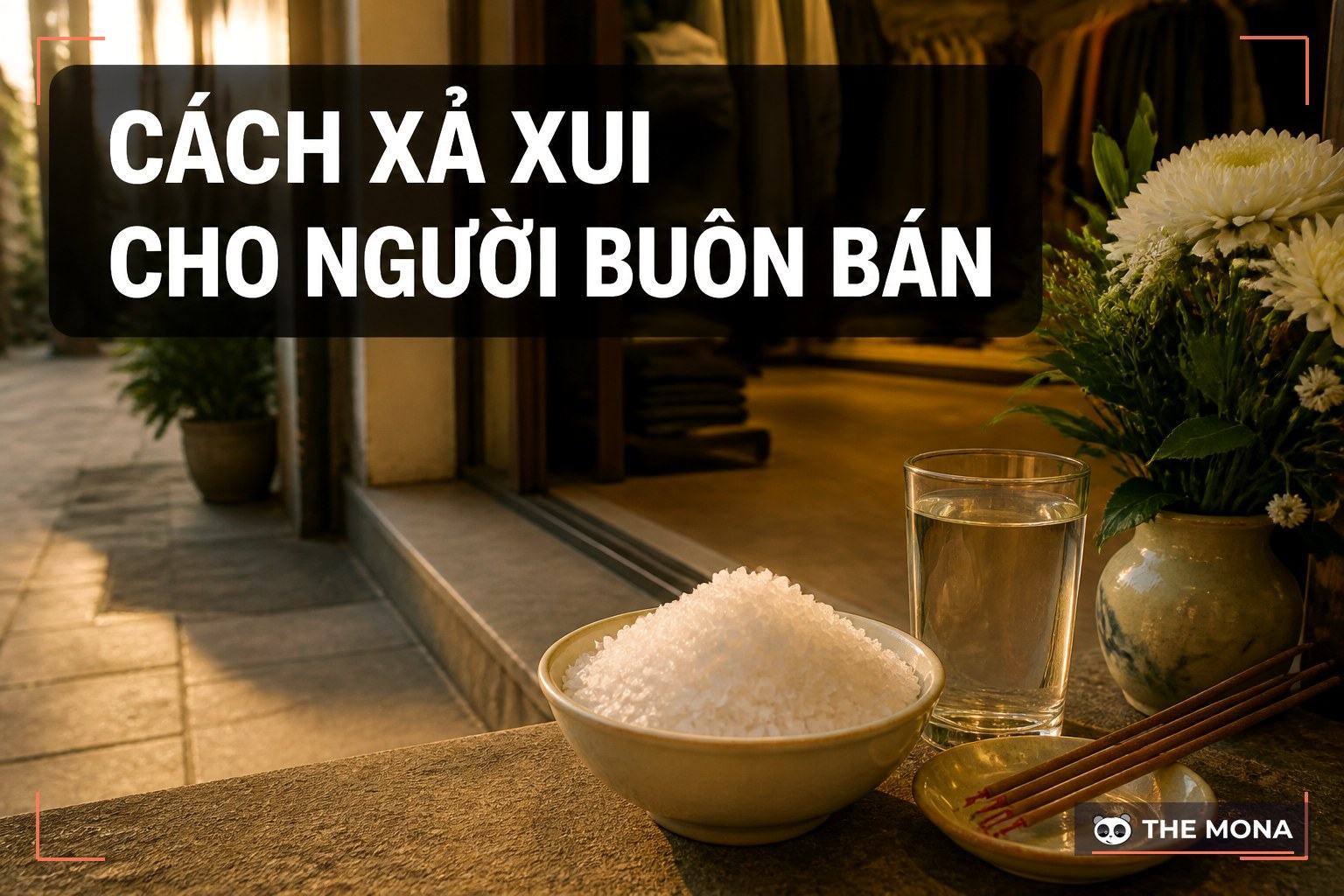
Three days in a row with few customers, an order just closed then canceled: many shop owners think of xả xui with salt (a ritual to shake off bad luck) to feel lighter and start fresh. In folk belief, salt stands for richness of flavor, cleanliness and the power to drive away what is unfavorable. The ritual needs only a pinch of coarse salt, a clean bowl and a sincere prayer. You don't need to scatter salt across the whole entrance, throw it at anyone or do anything that could endanger customers. We once helped our mother at her stall, with a stretch of 3 empty days and 2 canceled orders in a row, and still kept the salt tray tidy right at the counter.
Keep it simple, and don't overdo it.
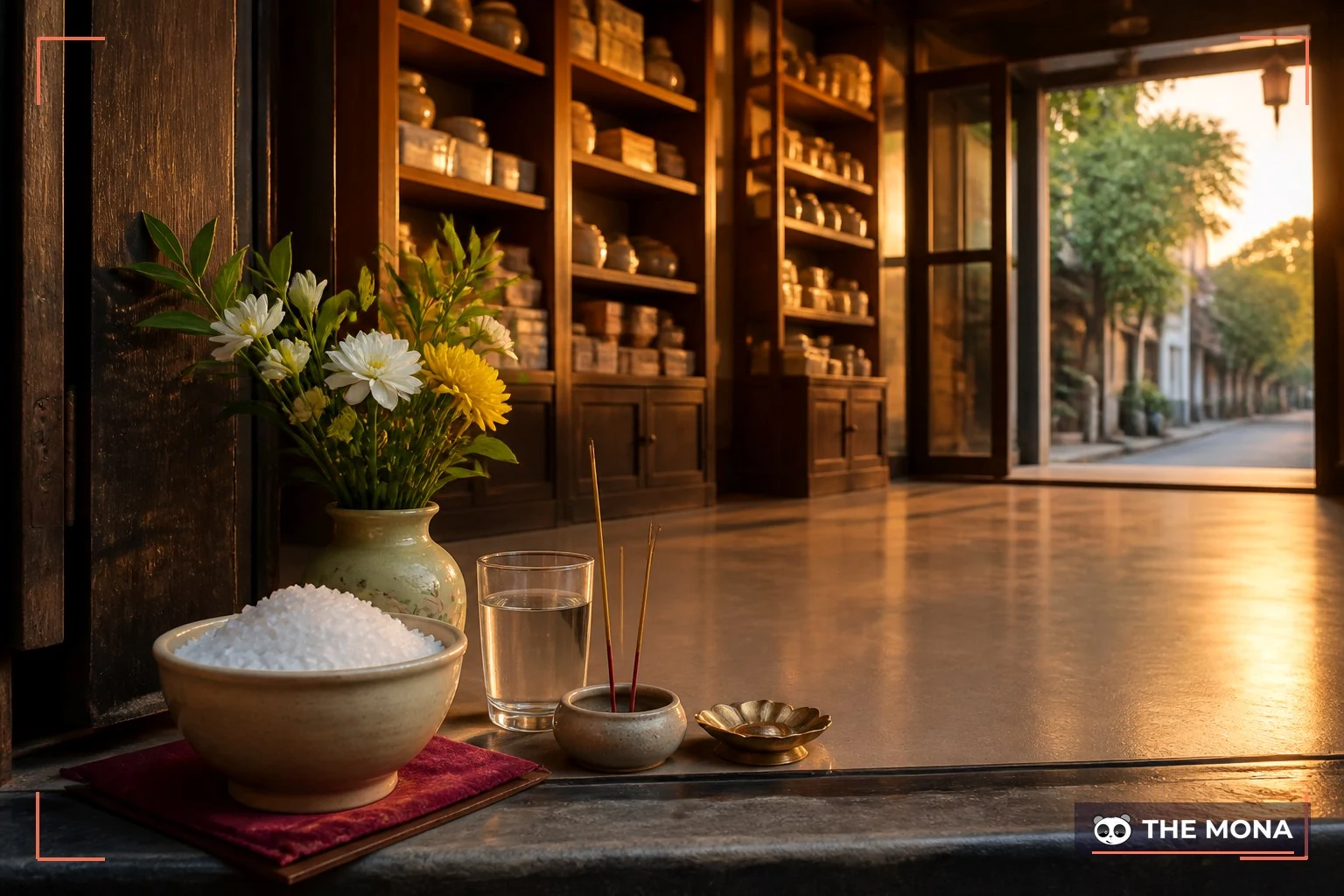
A stall owner who sits all morning without a sale often feels both anxious and shy about saying so. Online sellers staring at a screen with no order notifications feel the same. A small ritual helps you pause the worry, tidy up the shop and gather your spirits for the next selling shift. That is where its value is easiest to see. We then review one week of data and pull out the 4 canceled orders to find out whether customers were put off by price, shipping fees or waiting time.
Don't blame the customer.
Salt appears in many Vietnamese customs. The tradition of buying salt at the start of the year carries wishes for richness, abundance and peace; VOV also notes that folk belief holds that salt helps drive away bad things. This is a cultural belief, not scientific proof that sprinkling salt will raise revenue.
That is why the ritual is the heart, but whether you sell still depends on your goods, your prices and how you look after customers. After the ritual, go back to checking what can be measured: can customers see your shop, are your prices competitive, how long do messages wait, and which items sit in stock the longest. Don't use the words “heavy luck” (nặng vía, a person said to bring bad luck) to pin blame on a customer who just stopped by.
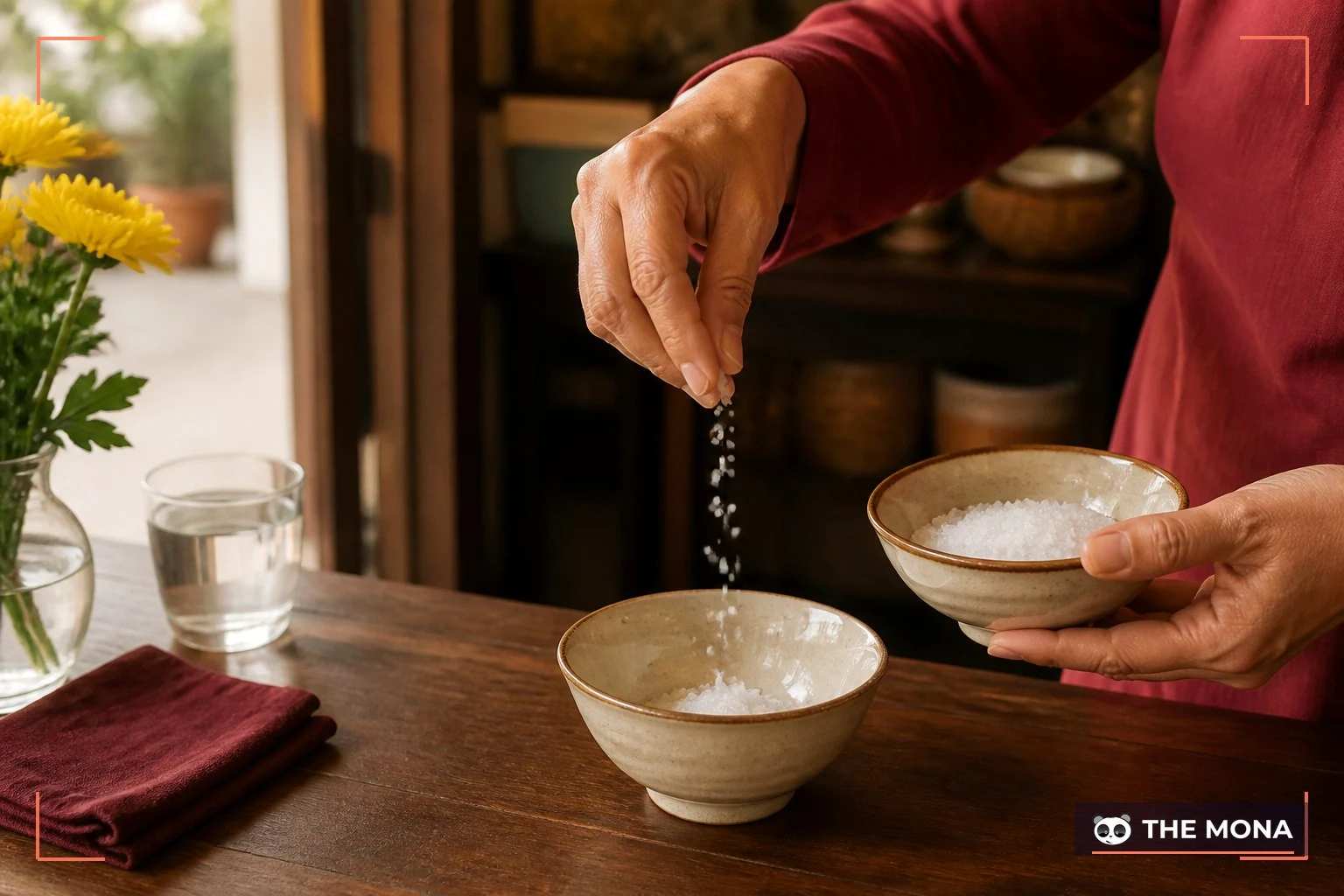
Xả xui with salt doesn't need a big offering tray. Sellers only need a handful, set in a sturdy container and done somewhere easy to clean. Flowers and incense are optional, not required. We set out two bowls a hand's width apart, spend 10 minutes on the ritual, then check the floor twice so no salt is left under the counter or near an outlet.
A pinch is enough.
| Group | What to prepare | Note |
|---|---|---|
| Base items | 1 bowl of clean coarse salt, 1 bowl or sheet of paper to catch it, a cloth | Use dry salt, with no chemicals or coloring mixed in |
| Ritual items | Clean water, fresh flowers, incense or an electric lamp | Choose according to family custom and the premises' rules |
| Cleaning up | A broom, a bag, a mop | Gather the salt right away so no customer slips on it |
| Reviewing the selling side | Order book, sales channel reports, list of slow stock | Use it after the ritual to find where the business is stuck |
Large-grain table salt is easy to see and easy to gather. You don't need to buy anything labeled feng shui or pay a premium. The bowl used for the ritual should be kept apart from eating bowls, washed clean and dried. If your family already has its own way of preparing, follow that.
Don't mix salt with alcohol, perfume or odd powders and burn it. Salt doesn't burn the way paper does, and a homemade mix creates a risk of burns and toxic smoke. The xả xui method with salt that is tidy and flame-free suits most shops better.
Folk tradition has many ways of using salt. Some throw it over the shoulder, some sprinkle it at the door, and some families set out a small bowl and replace it. There is no single version for every region. Shop owners should pick a way that doesn't dirty the walkway or affect people nearby. We prefer a method done once in about 5 minutes, with a catch bowl set out and a cloth right beside it.
Stand near the door with a pinch of salt in your right hand, say a prayer asking that what is unfavorable be closed off, and move your hand over your left shoulder. Rather than throwing it into the street, drop the salt into a bowl placed behind you, or ask a family member to hold the bowl. This keeps the folk gesture while the floor stays non-slip and the neighbors don't have to sweep up. One person holding the bowl and one performing the ritual is just right.
Afterwards, wrap that salt in paper, put it in the proper trash collection and wash your hands. Never throw salt at someone's face, clothes or vehicle because they are said to have “heavy luck”. That is disrespectful and easily causes conflict.
Place a small bowl of salt in a clean corner, out of customers' way and not touching metal items. Leave it during a break or through one selling shift, then wrap it up and throw it away. Avoid leaving it for days, when the salt absorbs moisture, runs and damages a wood floor. Before you reopen, take one more look at the floor.
If you have small children or pets at home, skip this method. Food shops also shouldn't put the ritual salt bowl next to ingredients, to avoid mix-ups. Keep the areas clearly separate.
Dissolve a small amount of salt in a bucket of clean water and wipe the doorstep, then wipe again with plain water and dry the floor. This suits water-resistant ceramic tile. Natural stone, wood floors, metal and coated surfaces can stain or corrode from salt, so test in a hidden corner or skip it. Finish with a plain-water wipe so the floor isn't left gritty.
Don't pour salt water on an altar, outlets, the cash register or merchandise. The point is to clean the entrance, not to turn the ritual into a repair job.
Sellers usually choose the time before opening, after closing, or after a run of events that left them uneasy. There is no rule that you must wait for a particular lunar calendar date. Pick a moment when the shop is quiet, the floor dries quickly and you won't have to drop the ritual to serve a customer. For a shop that opens at 7 a.m., we start 15 minutes early, enough time to wrap the salt, wipe the doorstep dry and put the bowl away before rolling up the shutter.
Before you start, pack away any food, cover goods that gather dust and let whoever is on shift with you know. When you finish, clear away all the salt before opening. Ten tidy minutes beat a ritual dragging on in the middle of a busy hour.
If there has just been an accident, a theft or an argument, deal with the practical side first: help anyone who was hurt, check the cameras, report to the authorities if needed and settle the damage. The ritual comes afterwards. Don't let xả xui destroy evidence or delay something that needs handling right now.
The sequence below is for the method of taking a pinch of salt and dropping it into a catch bowl. It is a clean option and needs no flame. Read the whole thing before you begin, so you aren't holding salt while searching for the prayer on your phone. We prepare everything in 10 minutes, then walk the customer path twice to look for stray grains, a bowl that sits in the way or water that makes the floor slippery.
Others in the shop don't need to join. One person leading is enough, while the other minds the door and asks early customers to wait a few minutes. Keeping it discreet makes the ritual more dignified than filming it and drawing curious stares.
Folk tradition has no single xả xui prayer with salt used identically in every region, the way the prayers for death anniversaries or shop openings are. What follows is a reference prayer, written in the structure of a traditional Vietnamese prayers handed down among the people, respectfully addressed to the spirits who watch over the home and the place of business. If you follow a different religion, belief or family custom, adjust the form of address accordingly.
Nam mô A Di Đà Phật! (3 times)
I bow before Hoàng Thiên Hậu Thổ (Heaven and Earth) and all the revered deities.
I respectfully bow before the local Tutelary Deity (Thành hoàng), the household Earth God (Thổ Địa), the God of Wealth (Tài thần), the Lord of the Land and Dragon Vein, and all the spirits who govern this area.
I, the devotee, am…
Residing at…, running a shop of… at…
Today is the day… month… year…
I, the devotee, sincerely prepare clean water, clean salt, incense and flowers to offer before the altar. Because work has not gone smoothly of late and my heart is unsettled, I now hold this small ritual and respectfully report to all the venerable spirits.
We humbly ask the deities to witness our sincerity, to let what was unfortunate be closed, and to let everyone in the shop keep a clear mind, speak kindly, do honest business, and have customers who buy willingly, so that work steadily settles.
We vow to correct what we did poorly: to recheck our goods, prices and service, to keep our word, and not to blame anyone without cause.
We respectfully ask the deities to protect this place with peace, so that the team works in harmony and everyone comes and goes safely.
I come with a modest offering and a sincere heart, bowing before the altar and humbly asking you to bear witness.
Nam mô A Di Đà Phật! (3 times)
If you don't keep an altar or don't follow the formal prayer rituals, use a short line instead: “May what went against us end here. From today I keep a calm mind, work honestly, treat customers well and fix what is still lacking.” What matters is that the words fit your own beliefs, not reading an unfamiliar script just because you fear getting it wrong.
Salt on a polished floor makes customers slip. Salt left on metal stains and corrodes it. Those two problems are far more real than any vague worry, so check them first. We walk the entrance twice in the final minute, looking close at shelf bases and tile grooves, because a few white grains are hard to see on a light floor when the shop is poorly lit.
Clean up first, then open the doors.
| What to avoid | Risk | A tidier way to do it |
|---|---|---|
| Throwing salt on the sidewalk or shared road | It dirties the walkway and others can slip | Drop it into a catch bowl, then wrap and discard |
| Sprinkling it on a customer or their vehicle | It is offensive and causes arguments | Don't blame “bad luck” on any one person |
| Leaving salt next to machines | Grains and moisture damage equipment | Keep it on a separate shelf, away from electronics and metal |
| Burning a mix of salt, alcohol and paper | Risk of burns, fire and smoke | Choose a ritual that uses no flame |
| Doing the ritual, then ignoring your sales numbers | You never find out where the shop is really stuck | Review visits, closing rate, stock and customer feedback |
Don't reuse ritual salt for cooking. Don't taste it, don't let children play with it and don't mix it in with your goods. After the ritual, wash the bowl separately and store it in a fixed place.
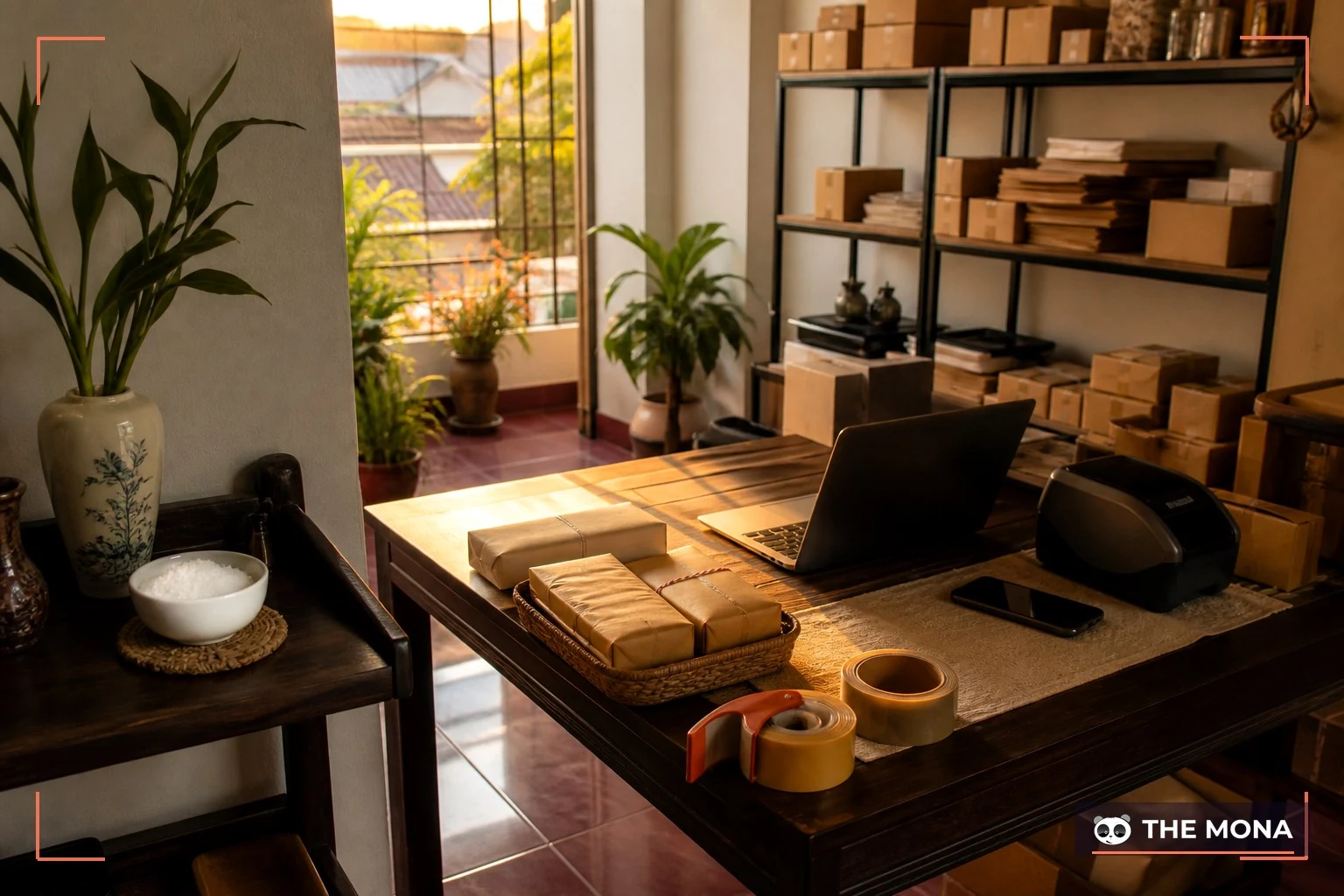
An online shop has no glass door or checkout counter, but it still has a place where orders are received and handled. Clear the table, throw out damaged boxes and check the label printer, then place the salt bowl on a separate shelf, away from laptops, phones and batteries. If you want the over-the-shoulder gesture, use a catch bowl, and never throw salt over a keyboard or parcels. We once watched an accessories shop do the ritual at 8 PM, then run 2 test orders on the exact sales channel before taking real orders.
The packing table must be dry.
After the prayer, open your sales channel report and look at four things: how many people saw the product, clicks, messages, and completed orders. Many views but few clicks means the photo or price has a problem. Many messages but few orders means your replies, shipping fee or return policy is putting customers off. This is the part of how to turn around slow sales that a shop owner can check on their own.
Don't publicly post a customer's name and call them “heavy-spirited” because they canceled an order; log the order, apply a confirmation process and limit payment methods when needed. A bad-luck cleansing for sellers should close off the frustration, not open another fight online.
For more luck-bringing rituals for sellers, see: shop opening offering ritual · how to make daily and 10th-of-the-month offerings to Thần Tài for sellers · how to burn off bad luck and clear the black cloud over sales.
Take a pinch of salt, say the prayer, then drop it over your left shoulder into a catch bowl placed behind you. Wrap the used salt, discard it at a proper collection point and wipe the floor again. There's no need to throw it outside. We check twice in the 10 minutes after the ritual, from the counter base to the doorstep, so no grains get stuck in the tile grooves and then cling to customers' shoes.
Pick a time before opening or after closing, when few people pass by and you have time to clean up. There is no single fixed hour for every seller. If the shop is busy with customers, hold off.
The folk ritual has no required number of repetitions that applies to every region. Do it once fully, clean up, then watch your sales; that makes more sense than repeating it all day. If the unease lingers, take a rest and talk with someone you trust.
Wrap it tightly and put it in household waste collection. Don't reuse it for cooking, don't scatter it at the neighbor's, don't pour it down the drain and don't leave it in a plant pot.
The xả xui method cleansing with salt helps you close a heavy stretch of selling; the ritual is the heart, while whether the shop sells still depends on your goods, prices and how you treat customers. Once the bowl is put away, review visits, message counts, closed orders and unsold stock to see what needs fixing. If those numbers are scattered across notebooks and several sales channels, take a look at MONA's sales management software and pick just the part that helps you track things more clearly, without overhauling how you operate in a single day. That is the next step after the cleansing ritual. We will compare sales after 1 day and check at least 2 times that closed orders and money received match the stock actually left in the warehouse.
After the ritual, look back at the numbers.

CEO & Founder · The MONA
The founder of The MONA built a service company of 60+ staff with 14,000+ projects delivered. Khánh Hùng shares his thinking on building self-running systems, automating a business, and the real lessons behind MONA's projects.
 461




Professional website
design services
Own a website with a beautiful, 100% exclusive design and a lifetime warranty, with the ability
to expand features flexibly as your business grows, starting today!






 MONA will never sell your information or send you spam


 MONA will never sell your information or send you spam
