
 MONA OS 2.0
 Partner with MONA


 Tự động hoá doanh nghiệp
 Cẩm nang SEO
 Digital Marketing
 Kinh nghiệm thiết kế website
 Hạ Tầng Server
 Giáo dục


 VI
 EN











Message us on
Zalo Official


 ProductsNew

 ProductsProducts
 Mới ra mắtKHA AI 2027App tự edit video, tự đăng mọi mạng xã hội, 2 phút mỗi ngày










 Website designLooks good and wins customers over.
SEO servicesBrings in customers searching for exactly what you sell.
 Tư vấn digital marketingKéo khách từ nhiều kênh, đo bằng số thật.
Corporate video productionVideos introducing your company, factory and team.
 NewAI video productionCompany story films made with AI.
 Custom software developmentCRM, ERP and HRM built for your business.
 Viết AI Agent theo yêu cầuĐặt riêng một trợ lý AI cho đúng việc của mình.
 Tư vấn chuyển đổi AIĐưa AI vào vận hành của cả công ty.
NewMONA LMSManagement for centers and schools.
MONA SkillHubInternal training for company staff.
 NHTQ systemEnd-to-end China–Vietnam shipping operations.
MONA JMSManagement for gold, diamond and pawn shops.
 MONA E-LearningA website with every feature you need to sell courses.
 How to sell online courses (course)More than 30 free lessons on selling courses on autopilot.
 MONA Cloudmonacloud.vnServers to get your apps and websites running.
 MONA Basemonabase.vnPostgres database, sign-in and file storage.
 MONA Mailmonamail.vnSend OTP, order and invoice emails from your software.
 MONA Paymonapay.vnAccept bank transfers via VietQR and notify your software when the money arrives.
 MONA eInvoiceComing soonIssue e-invoices that meet tax standards.
Gấu CườiTrả lời khách 24/7 trên web, Fanpage, Zalo và thu lead cho sale.
 Gấu TeleSalesGọi điện tư vấn, chăm khách như tổng đài viên thật.
Dê CườiTư vấn và chốt đơn cho shop ngay trong khung chat.
Gấu WebmasterNhắn nhóm Zalo là website được sửa xong.
 Gấu Pháp ChếSoạn hợp đồng, rà điều khoản trong vài phút.
 Gấu Báo GiáLên báo giá đúng mẫu và gửi khách ngay.
 AI chăm sóc khách hàngTheo dõi và giữ chân khách hàng cũ.
 Gấu Tuyển DụngLọc hồ sơ, hẹn lịch, phỏng vấn ứng viên.
 Mới ra mắt
KHA AI 2027
Xây kênh chuyên gia 2 phút mỗi ngày
Quay bằng điện thoại, AI tự edit video, tự đăng lên 16 nền tảng và tự trả lời bình luận, tin nhắn.
834.192lượt xem trên kênh CEO MONA sau 27 ngày
 Anh Khánh HùngCEO MONA đang dùng mỗi ngày
Xem app làm được gì
 AI
Gấu Cười MONA ĐANG TỰ XÀITrả lời khách 24/7 trên website, Zalo OA, Messenger và thu lead về cho sale.
Dê CườiChốt đơn bán lẻ và sàn: Shopee, TikTok Shop, web. Chăm cả khách sỉ, đại lý.
Gấu WebmasterCập nhật nội dung, tối ưu SEO website mỗi ngày.
Gấu TeleSalesGọi điện tư vấn, chăm khách như tổng đài viên thật.
Gấu Tuyển DụngLọc hồ sơ, hẹn lịch, phỏng vấn ứng viên tự động.
AI chăm sóc khách hàngGiữ khách cũ, cứu lead đã rớt cho phòng kinh doanh.
Gấu Pháp ChếSoạn hợp đồng, rà điều khoản trong vài phút.
Gấu Báo GiáLên báo giá đúng mẫu, gửi khách ngay khi có yêu cầu.
 Chuyển đổi AI toàn phầnGiải pháp tổng cho doanh nghiệp, 3 lớp triển khai.
 Viết AI Agent theo yêu cầuĐặt riêng một con AI gánh đúng nghiệp vụ của bạn.
 Custom softwareCRM, ERP and HRM with built-in AI automation.
 SEO & AEO thời đại AIĐược Google lẫn AI trích dẫn, không chỉ xếp hạng.
 Kiến thức AI cho doanh nghiệpBài phân tích, hướng dẫn ứng dụng AI vào vận hành.
 Free AI courses
 AI tools at work
App mới · KHA AI 2027
Xây kênh 2 phút mỗi ngày
AI tự edit video, tự đăng mọi mạng xã hội
Free consultation, 8am–10pm every day

04 June, 2025
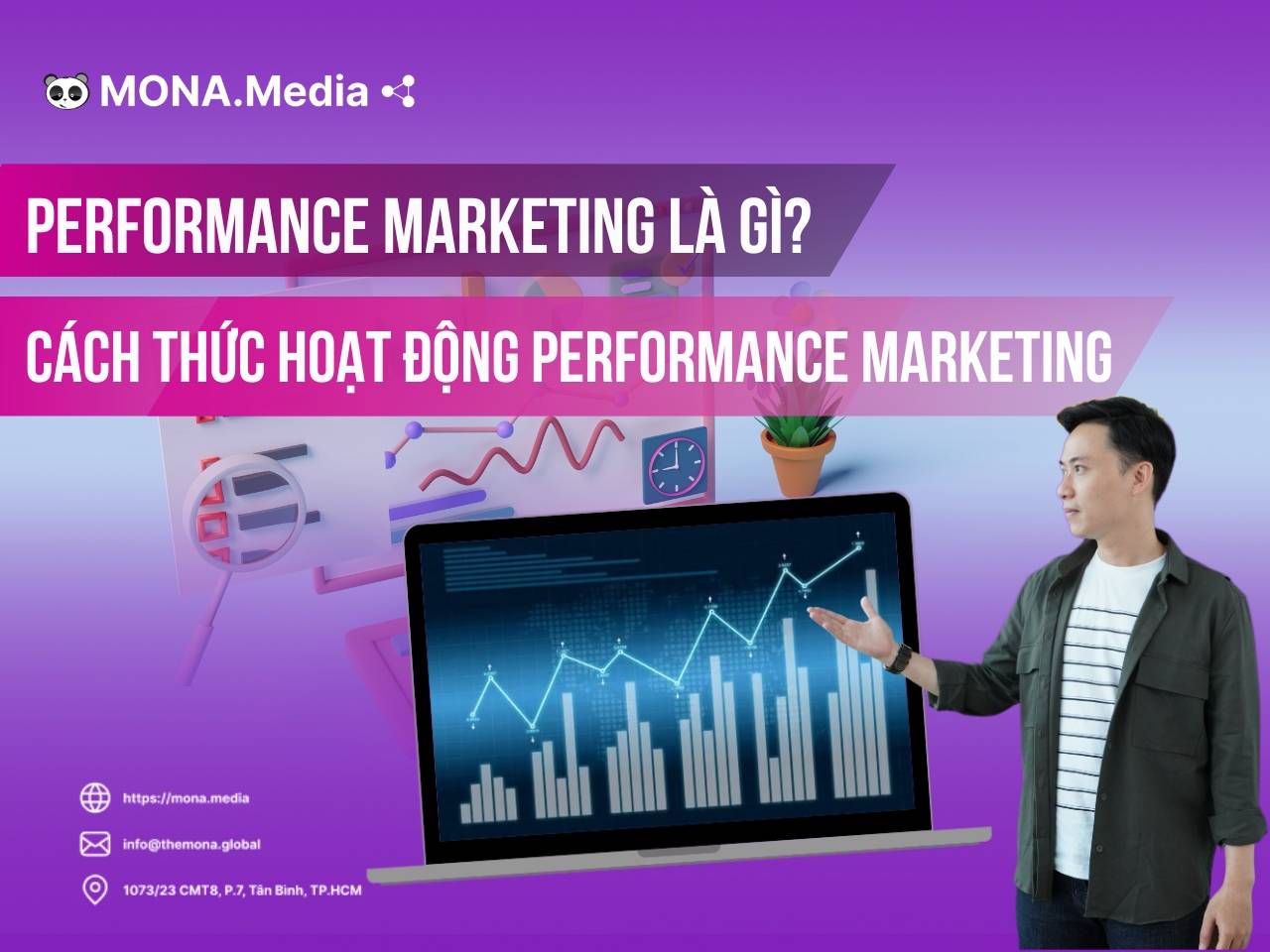
Performance Marketing is no longer unfamiliar among today's marketing strategies, but turning a performance marketing budget into measurable results is another matter. In this article, Mona Media will help you understand what Performance Marketing is, how pay-for-results works, which KPIs to track and how to run it effectively for your business.
Performance Marketing is in fact part of Digital Marketing. Performance Marketing can be understood as marketing based on performance, where performance is a specific result the business wants, such as an order or a click.
In particular, the business pays the individuals or organizations that promote its products (collectively called publishers) only when a result is delivered.

Performance Marketing has many advantages that bring real benefits to businesses, such as:
Besides the advantages above, Performance Marketing also carries risks. Running a Digital Performance Marketing campaign is not easy. If it is done wrongly, the campaign can cost you a lot of money with nothing to show for it.
Also, if your business lacks knowledge of Digital Performance Marketing and simply invests money and leaves staff to run ads, or hands everything over to Agencyor publishers, it is very easy to lose money. And if you work with publishers or agencies that are careless or irresponsible, the business is the one that suffers.
So before you apply a Performance Marketing strategy to your Marketing projects, make sure you have the ability and knowledge to run the campaign effectively and successfully.
Performance Marketing is divided into four groups: retailers/merchants, affiliates or publishers, affiliate networks and third-party tracking platforms, and affiliate managers or affiliate management organizations.
Each group has its own role and works best in that role, which keeps Performance Marketing effective.
In Performance Marketing, retailers and merchants are collectively called advertisers. They are businesses that want to promote their products and services to the market, and this promotion is carried out through affiliates or publishers.

Today, retailers and businesses in fashion, beauty, F&B, health and sports have achieved clear success with this method, because consumers increasingly trust recommendations from influencers, especially when researching a purchase.
This group is seen as the “marketing partner” in performance-based marketing. They promote the business's products or brand in exchange for a commission.
The group takes many forms, such as product review sites, blogs, online magazines, loyalty sites and coupon sites.

Influencers are also publishers. They create and publish content through their blogs and social media channels, giving their followers trustworthy information and guidance based on their own experience or reviews.
Influencers also like to be the first to promote new products or exclusive offers, and they often run giveaways for their fans.
This cooperation brings many benefits to businesses. It builds trust between influencers and brands, and boosts sales and product or brand awareness in the market.
Affiliate networks and third-party tracking platforms are important parts of Performance Marketing. These networks and platforms act like a “marketplace”, providing tools such as banners, text links, product information, the promotions and even setting up commission structures such as bonuses and handling returned goods.

Well-known affiliate networks and tracking platforms in the Performance Marketing industry include Partnerize, AWIN, Avantlink, Impact, Commission Junction and HasOffers.
However, different affiliate networks and tracking platforms each have their own strengths and weaknesses. Consider your product, brand or business conditions carefully before choosing one.
Affiliate managers and affiliate management companies are another group with an important role in Performance Marketing. Many businesses have a team responsible for proposing how to promote products and services, promotional tools, handling issues and more.
Businesses can also hire affiliate management companies. Depending on the business's needs, these companies run the whole program independently or support and work together with the in-house team.
Affiliate Marketing (affiliate marketing) is the term most commonly used when talking about Performance Marketing. Put simply, it works like a kind of “brokerage”.

You ask a group of publishers to sell your products. Each product has its own affiliate link. If publishers bring in orders or clicks through that link, they earn a commission from you.
The payment model businesses prefer most for this form is CPA, and you can also use CPC, CPM. CPA is the cost per order, click or form submission. CPM is the cost per 1,000 impressions. CPC is the cost paid for each click.
Also a form of paid media (paid media), but Native Advertising differs from other paid formats such as ads and display ads, because Native Ads tends to follow the natural form and function of the site it is placed on. The most common payment models for native ads are CPM and CPC.
Display ads, or display advertising, is a form of online advertising that combines images, text and a URL linking to a website where customers can learn more about the product they want to buy or how to buy it. This lets customers receive the message quickly and easily without spending much time.

This form of Performance Marketing is widely used by influencers and content sites. They publish a post to introduce and promote a brand or product in exchange for payment.
Depending on the business, payment can be products, free experiences, or payment under Performance Marketing models such as CPA, CPM or CPC.
Social Media Marketing is a type of Performance Marketing that uses social platforms such as Facebook and Instagram to raise traffic to a certain level or increase brand awareness. The numbers usually measured here are mainly engagement: total likes, clicks and sales.

Search Engine Marketing is marketing that uses two kinds of search, organic and paid. In paid search, the advertiser pays for their content to appear on the search results page.
Organic search (Organic Search) is the opposite. It uses only free methods such as optimizing SEO or relying on the search engine's own algorithm to get content into the top search results.
CPM, or Cost per 1,000 impressions, is the cost a business pays for 1,000 impressions on Google. In other words, each time your ad appears on a customer's screen it counts as one impression, also called a view.

Before running ads, digital marketers set a bid to pay for every 1,000 times the ad appears in different placements where customers can see it.
Cost per click, abbreviated CPC, is the cost a business pays for each click from its potential customers. With this payment model, the business pays whenever a viewer clicks, whether or not that viewer buys anything or signs up for any service. So businesses should think carefully before choosing this model, because CPC is fairly expensive

CPE stands for Cost per engagement, the cost paid when a viewer interacts with your ad. Interactions include any action on the ad, such as likes, shares, comments and reactions. Even scrolling down to read comments or reacting to other people's comments counts as an engagement.
This payment model is usually used for rich media, meaning ads that combine several media elements such as sound, images, video ads… to increase viewer engagement. Popular rich media platforms include TikTok, Facebook, YouTube and Instagram.
You may also be interested in:
- Running Facebook ads fast results
- TikTok advertising service editing techniques
- Run Zalo ads reputable and effective
CPL, or Cost per lead, is the cost paid for each potential customer who shows interest or asks for more information about the business's service or product.

They leave basic details such as their name and phone number by filling in a survey form. The business can then contact them again to advertise further or give more specific advice about its products or services.
CPS, or Cost per sale, is the cost a business pays for each successful purchase. The process runs from the customer entering their details, ordering, receiving the goods and paying, until the seller receives the bank transfer or COD cash.
It is also the most expensive of the payment models. But if the business is focused on growing sales, it is a sensible option, since CPS is highly effective and the business pays only once an order is completed.
CPA is an ad model where the advertiser pays per action, such as filling in a survey, answering a question, playing a minigame or signing up for a course. CPA is currently popular and the most widely used method.

The CPA cost is calculated per completed action, and you receive a commission from advertisers. However, the action must be carried out through the affiliate link that you provide to the customer.
The first step in building a Performance Marketing strategy is defining goals. They fall into two main groups: building the brand, and improving business performance.
Each main goal includes smaller goals. So you must define the main goal, the smaller goals under it and the priority of each goal in the campaign. That way you avoid missing a goal or losing direction while running the campaign.

Common goals of a Performance Marketing strategy include:
The next step is choosing the channels for your Performance Marketing campaign. Instead of focusing on a single channel, you should use multi-channel advertising to increase the visibility and reach of the campaign.
For example, use a range of social networks such as Facebook, TikTok and Instagram, or expand the ad formats beyond image ads to include native ads. This increases your chances of success with a Performance Marketing strategy.
Creating and running the strategy is another step you cannot skip. Creating campaigns means defining the target audience and understanding their wants and difficulties. You also create ads with messages that catch their attention.
The better you understand your target audience, the easier it is to find ways to catch their attention with your products and services. You can then build and create images, headlines, ad schedules and more for the best results.
However, each platform or channel has different requirements for ad size, character limits and images. So when you start creating and running the strategy, pay attention to this to avoid wasting time and effort.
Performance Marketing campaigns usually start generating data as soon as they are set up and running. Marketers can then optimize individual campaigns to get the best performance across all the channels they use.
Businesses also need to track and analyze the numbers to see which traffic sources perform best, then allocate ad spend accordingly.

Common metrics for measuring the results of a Performance Marketing campaign are:
The last step is handling the risks of the strategy. Any strategy carries certain risks. Businesses need to identify, assess and control the threats so they can respond promptly if something unexpected happens.
Risks you may face when running a Performance Marketing strategy include:
One effective way to reduce these problems is to concentrate your resources on high-quality social networks and ad platforms, which can handle issues such as brand safety and data privacy. This limits unwanted losses for the business.
That is our overview of the Performance Marketing is. We hope this information helps you understand this marketing method better, so you can apply it to improve your advertising results.
Mona Media is a company that provides website services such as website design, full-scope SEO services. Helping get your website to the top of Google search results. We have more than 10+ years of experience, and have carried out more than 300+ projects for more than 10,000+ clients across many different fields and industries.

MONA commits to delivering results for your business and to put your business at the top of the market. See the details of our SEO services and call HOTLINE 1900 636 648 for a full-scope SEO quote with full details.

CEO & Founder · The MONA
Founder of The MONA, who built a services company of 200+ staff with 14,000+ projects delivered. Khánh Hùng shares how he thinks about building systems that run themselves, automating a business, and the real lessons from delivering projects at MONA.
 1,5K




Professional website
design services
Own a website with a beautiful, 100% exclusive design and a lifetime warranty, with the ability
to expand features flexibly as your business grows, starting today!






 MONA will never sell your information or send you spam


 MONA will never sell your information or send you spam
