
 MONA OS 2.0
 Partner with MONA


 Tự động hoá doanh nghiệp
 Cẩm nang SEO
 Digital Marketing
 Kinh nghiệm thiết kế website
 Hạ Tầng Server
 Giáo dục


 VI
 EN















Message us on
Zalo Official


 ProductsNew

 ProductsProducts
 Mới ra mắtKHA AI 2027App tự edit video, tự đăng mọi mạng xã hội, 2 phút mỗi ngày










 Website designLooks good and wins customers over.
SEO servicesBrings in customers searching for exactly what you sell.
 Tư vấn digital marketingKéo khách từ nhiều kênh, đo bằng số thật.
Corporate video productionVideos introducing your company, factory and team.
 NewAI video productionCompany story films made with AI.
 Custom software developmentCRM, ERP and HRM built for your business.
 Viết AI Agent theo yêu cầuĐặt riêng một trợ lý AI cho đúng việc của mình.
 Tư vấn chuyển đổi AIĐưa AI vào vận hành của cả công ty.
NewMONA LMSManagement for centers and schools.
MONA SkillHubInternal training for company staff.
 NHTQ systemEnd-to-end China–Vietnam shipping operations.
MONA JMSManagement for gold, diamond and pawn shops.
 MONA E-LearningA website with every feature you need to sell courses.
 How to sell online courses (course)More than 30 free lessons on selling courses on autopilot.
 MONA Cloudmonacloud.vnServers to get your apps and websites running.
 MONA Basemonabase.vnPostgres database, sign-in and file storage.
 MONA Mailmonamail.vnSend OTP, order and invoice emails from your software.
 MONA Paymonapay.vnAccept bank transfers via VietQR and notify your software when the money arrives.
 MONA eInvoiceComing soonIssue e-invoices that meet tax standards.
Gấu CườiTrả lời khách 24/7 trên web, Fanpage, Zalo và thu lead cho sale.
 Gấu TeleSalesGọi điện tư vấn, chăm khách như tổng đài viên thật.
Dê CườiTư vấn và chốt đơn cho shop ngay trong khung chat.
Gấu WebmasterNhắn nhóm Zalo là website được sửa xong.
 Gấu Pháp ChếSoạn hợp đồng, rà điều khoản trong vài phút.
 Gấu Báo GiáLên báo giá đúng mẫu và gửi khách ngay.
 AI chăm sóc khách hàngTheo dõi và giữ chân khách hàng cũ.
 Gấu Tuyển DụngLọc hồ sơ, hẹn lịch, phỏng vấn ứng viên.
 Mới ra mắt
KHA AI 2027
Xây kênh chuyên gia 2 phút mỗi ngày
Quay bằng điện thoại, AI tự edit video, tự đăng lên 16 nền tảng và tự trả lời bình luận, tin nhắn.
886.668lượt xem trên kênh CEO MONA sau 36 ngày
 Anh Khánh HùngCEO MONA đang dùng mỗi ngày
Xem app làm được gì
 AI
Gấu Cười MONA ĐANG TỰ XÀITrả lời khách 24/7 trên website, Zalo OA, Messenger và thu lead về cho sale.
Dê CườiChốt đơn bán lẻ và sàn: Shopee, TikTok Shop, web. Chăm cả khách sỉ, đại lý.
Gấu WebmasterCập nhật nội dung, tối ưu SEO website mỗi ngày.
Gấu TeleSalesGọi điện tư vấn, chăm khách như tổng đài viên thật.
Gấu Tuyển DụngLọc hồ sơ, hẹn lịch, phỏng vấn ứng viên tự động.
AI chăm sóc khách hàngGiữ khách cũ, cứu lead đã rớt cho phòng kinh doanh.
Gấu Pháp ChếSoạn hợp đồng, rà điều khoản trong vài phút.
Gấu Báo GiáLên báo giá đúng mẫu, gửi khách ngay khi có yêu cầu.
 Chuyển đổi AI toàn phầnGiải pháp tổng cho doanh nghiệp, 3 lớp triển khai.
 Viết AI Agent theo yêu cầuĐặt riêng một con AI gánh đúng nghiệp vụ của bạn.
 Custom softwareCRM, ERP and HRM with built-in AI automation.
 SEO & AEO thời đại AIĐược Google lẫn AI trích dẫn, không chỉ xếp hạng.
 Kiến thức AI cho doanh nghiệpBài phân tích, hướng dẫn ứng dụng AI vào vận hành.
 Free AI courses
 AI tools at work
App mới · KHA AI 2027
Xây kênh 2 phút mỗi ngày
AI tự edit video, tự đăng mọi mạng xã hội
Free consultation, 8am–10pm every day

18 March, 2023

In business, a lower selling price is more attractive to consumers. That is why many companies use a low-cost strategy to gain an edge over their competitors. Let's look at MONA Media look at what a low-cost strategy is and which factors help you carry it out most effectively.
A low-cost strategy is a business and marketing approach that focuses on cutting product costs to gain a stronger competitive position.
Businesses that use a low-cost strategy try to bring their unit cost below the general market level or, at the very least, below their direct competitors.
A lower price attracts more customers and lets a business reach a larger number of consumers. It also helps win market share and reach the broadest segments of the market.
Note that offering cheaper products under a low-cost strategy does not mean lower quality, or even dumping. Instead, businesses have to find different ways to cut production, labor and premises costs so they can make cheaper products that are still good enough to compete.
So a low-cost strategy is not a stopgap, an improvisation, or a willingness to take losses just to lure shoppers. It is a systematic business development plan that brings lasting benefits if you stay with it over the long term.
See more: The most detailed way to write a business plan

To carry out a low-cost strategy, a business needs to find ways to cut production costs. This makes the product more attractive to consumers and also improves the company's finances considerably.
Cutting production costs (without lowering product quality) raises the profit on each product. You spend less to make an item, and even though you sell it cheaper than other competitors on the market, the margin is still a little higher than before.
In addition, the money saved in production can go to other work, such as marketing, bidding for projects, or research & development.
The most notable advantage of selling below the general market price is that it attracts more people. Everyone likes a bargain, and a more affordable product gets more attention.
When buying on digital platforms (website online stores, the biggest e-commerce marketplaces, shopping apps and so on), shoppers are usually given tools to filter and sort products as they like.
Sorting products by price from lowest to highest is one of the most popular choices. This shows how much a low price matters: it gets your product shown and seen ahead of competing products.
Besides looking more attractive, an affordable price also helps you reach mainstream consumers.
It isn't only wealthy customers who bring your company big profits. People with limited budgets don't stop buying; they just buy what fits their wallets. In fact, the mainstream segment is very large, and serving it can bring in more profit than other groups.
A typical example of a low-cost strategy aimed at mainstream customers is Xiaomi, the king of cheap phones. Xiaomi is known for offering smartphones with specs on par with big brands like Samsung or Oppo at a very low price. This approach helped a young Chinese manufacturer grow into a giant in mobile retail.
The example above shows that selling below the general market price can help you reach the mid and low segments, which are large in volume, and beat your competitors to win market share.
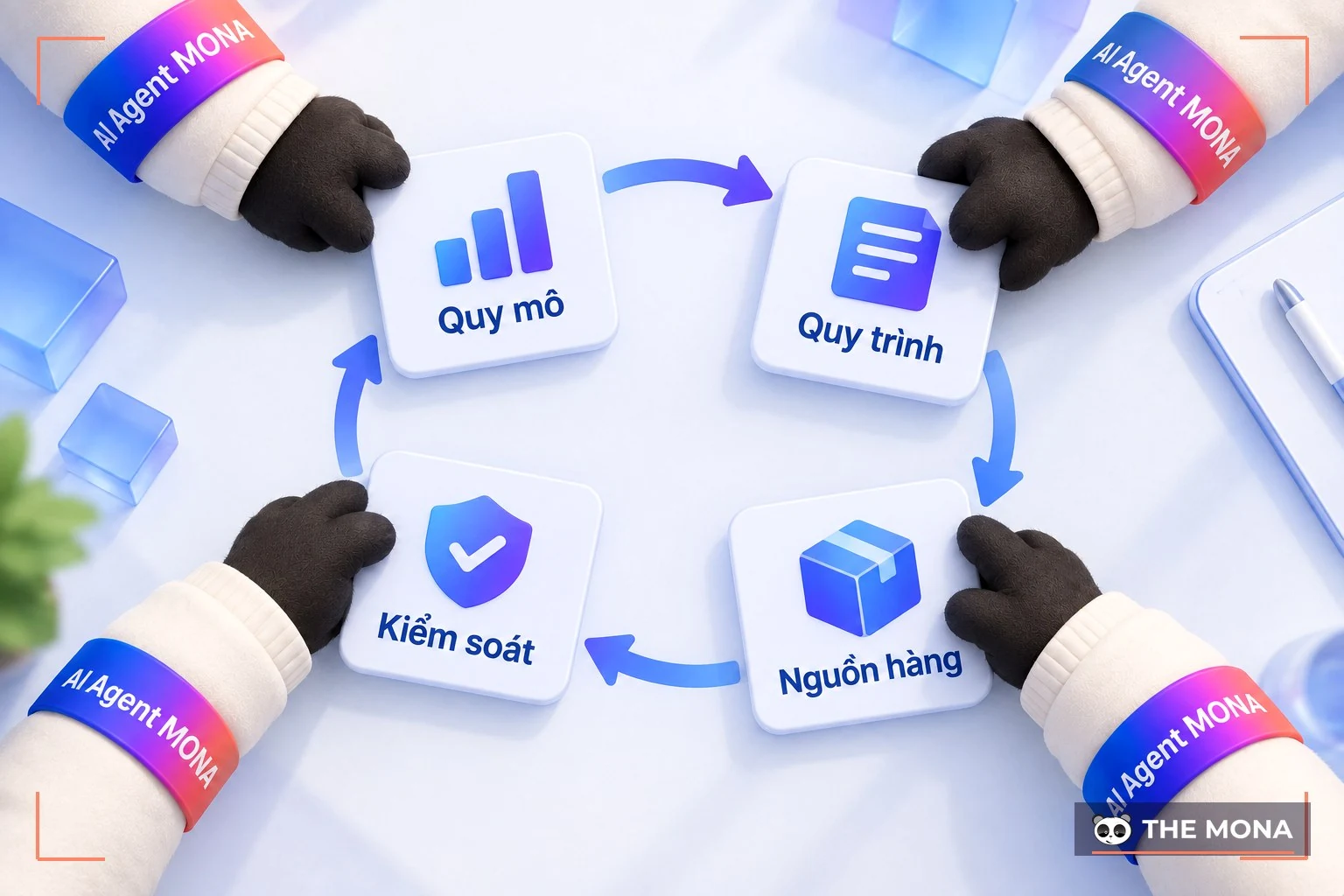
As noted above, the core of low-cost strategy is keeping quality while lowering the unit cost. To do this, the first and best way is to raise production efficiency.
Raising production efficiency, or productivity, means making more products in the same amount of time or with the same amount of input resources. It also means cutting waste and errors in production as far as possible.
To raise productivity, you need to improve the efficiency of the production line and find new ways to use fewer resources per product.
Businesses need to study and adopt the latest production techniques. Applying high technology, and AI in particular, will push productivity to a new level because production steps become automated. The labor required will also shrink.
You also need to pay attention to monitoring and checking production efficiency. Assign skilled, disciplined people to supervise the different stages, so that resources are not lost and work is not delayed or neglected.
In addition, combine this with software that checks and monitors production performance, material status and so on. Managing and tracking with software is more effective and more complete than relying on people alone. Businesses that sell should have a suitable and effective sales management software of their own.
See also:
Besides the cost of making the product, there are other costs such as premises, warehousing, shipping, maintenance, cold storage and so on.
A low-cost strategy also focuses on removing or cutting these costs as much as possible in order to bring the unit cost down further.
Back to the Xiaomi example: one of the main reasons the company can sell good smartphones at such low prices is that its premises cost is almost zero. From the start, Xiaomi sold 100% online. It had no showroom or official store; everything was promoted and sold online. As a result, Xiaomi can sell around the world without each phone carrying any premises cost.
So to carry out low-cost strategy, a business needs to look for cheaper solutions for premises, yards, warehouses and so on. That could be a new location, a new landlord, or a longer-term contract in exchange for a lower rent.
A small business has the advantage of a lower final unit cost than its competitors. Small scale means a simpler production line, and other costs such as inventory and premises are lower too.
If your business only serves local customers, you can cut shipping costs and push the unit cost lower still, making your offer more attractive.
See more: Determining market size in business
A product's selling price includes the value of the components and raw materials it is made from. So when you can cut raw material costs, the unit cost naturally falls too.
However, the goal of low-cost strategy is to keep product quality at an acceptable level, so what you need to do is replace your raw material source with one of equivalent quality at a more affordable price.
For example, you can swap a premium material for a secondary one, such as moving from a solid wood table to one made of plywood. Plywood is less durable than wood but still acceptable in quality, and it has other advantages such as being light and compact.
There are countless ways to move to cheaper materials, and businesses have to explore and test them. Sometimes you can even change the formula of the product, as long as the final quality still satisfies consumers and builds customer loyalty.
There are also other ways for a business to cut material costs. One is to look for more affordable suppliers and sign longer contracts in exchange for a lower cost of goods, while building close relationships with suppliers to get exclusive deals and discounts.
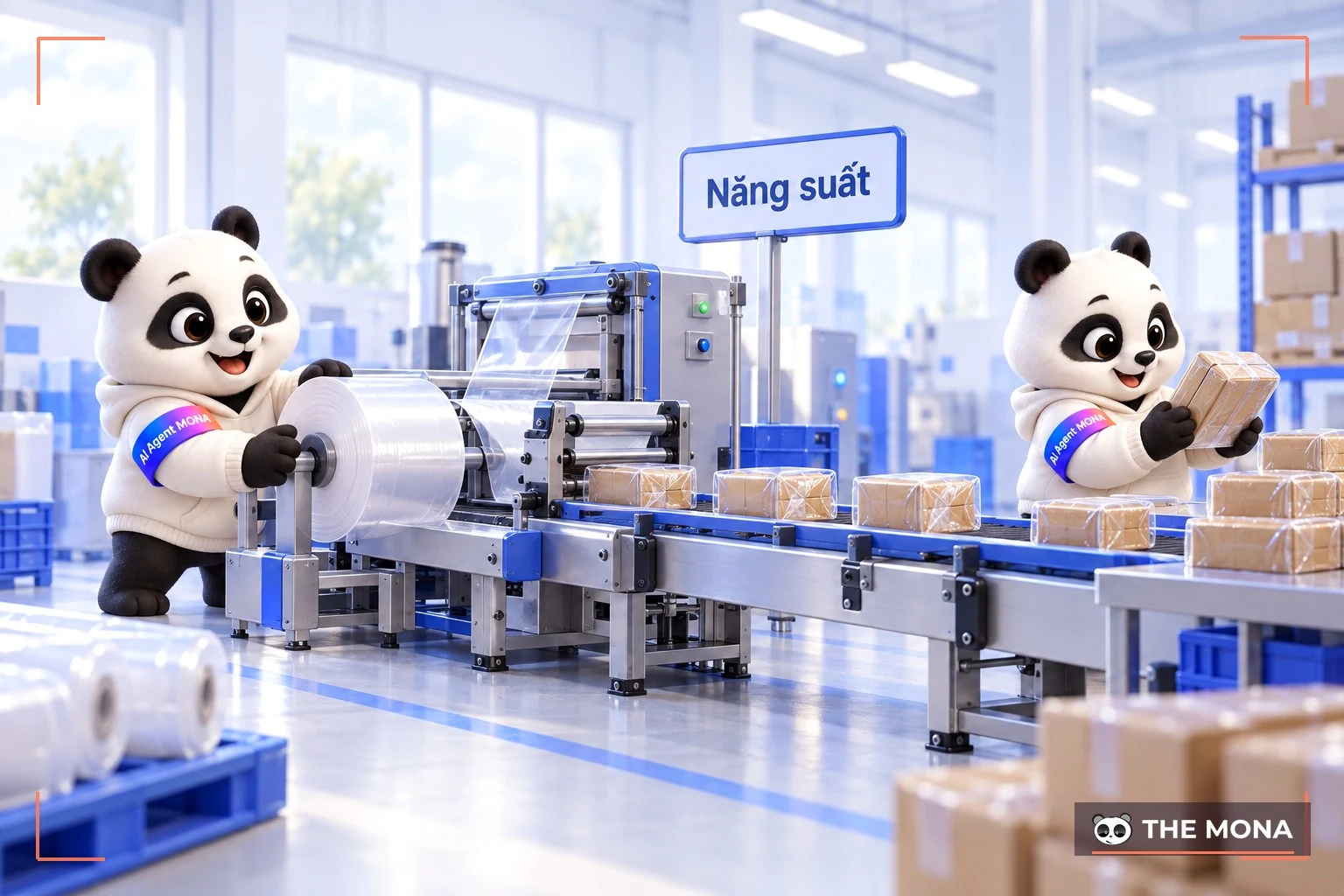
Another way to apply low-cost strategy is to use a low-cost labor market. In developed countries, businesses often run a low-cost strategy by hiring foreign workers, mostly from developing and less developed countries.
In Vietnam, however, domestic labor makes up almost all of the workforce. Very few foreign workers are employed in production at Vietnamese companies. So the best way to hire low-cost labor is to open factories in suburban areas, where living costs and the labor market are cheaper.
A low-cost strategy is one of the 3 most common business and marketing strategies, alongside differentiation and focus. It has undeniable advantages, but it also has certain drawbacks.
When you apply When you adopt a low-cost strategy, you risk starting a price war among competitors in the market. When competing businesses see a low-cost player taking their customers, they may also race to cut their prices.
When the number of businesses using a low-cost strategy rises significantly, market value is lost.
The result is that profit from selling the product, and brand value as well, decline with it.
Moreover, a product's cost can only fall to a certain level before quality starts to suffer. So it is not possible for too many businesses, let alone all of them, to head in the same direction and adopt a low-cost strategy together.
A business needs to find a strategy that fits its scale, its culture, or the exclusive resources it owns.
The strength of low-cost strategy is that it can reach and meet the needs of most consumers in the market. But there are many other customer segments for whom “cheap” is not the top buying criterion.
Some people would rather spend a large sum on a premium product that is durable and useful for a long time. High-income individuals prefer to pay more for higher-end, more convenient features that suit their personality. For them, price is not an issue.
So a low-cost strategy can make you overlook these focused, highly differentiated segments. They are not a large share of the market, but they are still an attractive and stable source of revenue.
A low-cost strategy also makes branding and marketing harder, and makes it harder to spread your brand. In practice, your one standout trait is almost only “cheap”, and that alone is not enough to leave a deep impression on consumers.
Branding becomes more complicated because you have no other distinctive cultural traits to set you apart from competitors in the market. Your marketing will also revolve around “low price”, lacking variety, making it hard to stand out and draw more attention from users.
That is the explanation of what a low-cost strategy is, along with the factors needed to carry out a low-cost strategy effectively. It is a very effective way to grow a business, one that can help you reach mainstream customers and win market share.

CEO & Founder · The MONA
Founder of The MONA, who built a services company of 60+ staff with 14,000+ projects delivered. Khánh Hùng shares how he thinks about building systems that run themselves, automating a business, and the real lessons from delivering projects at MONA.
 1,5K




Professional website
design services
Own a website with a beautiful, 100% exclusive design and a lifetime warranty, with the ability
to expand features flexibly as your business grows, starting today!






 MONA will never sell your information or send you spam


 MONA will never sell your information or send you spam
