
 MONA OS 2.0
 Partner with MONA


 Tự động hoá doanh nghiệp
 Cẩm nang SEO
 Digital Marketing
 Kinh nghiệm thiết kế website
 Hạ Tầng Server
 Giáo dục


 VI
 EN











Message us on
Zalo Official


 ProductsNew

 ProductsProducts
 Mới ra mắtKHA AI 2027App tự edit video, tự đăng mọi mạng xã hội, 2 phút mỗi ngày










 Website designLooks good and wins customers over.
SEO servicesBrings in customers searching for exactly what you sell.
 Tư vấn digital marketingKéo khách từ nhiều kênh, đo bằng số thật.
Corporate video productionVideos introducing your company, factory and team.
 NewAI video productionCompany story films made with AI.
 Custom software developmentCRM, ERP and HRM built for your business.
 Viết AI Agent theo yêu cầuĐặt riêng một trợ lý AI cho đúng việc của mình.
 Tư vấn chuyển đổi AIĐưa AI vào vận hành của cả công ty.
NewMONA LMSManagement for centers and schools.
MONA SkillHubInternal training for company staff.
 NHTQ systemEnd-to-end China–Vietnam shipping operations.
MONA JMSManagement for gold, diamond and pawn shops.
 MONA E-LearningA website with every feature you need to sell courses.
 How to sell online courses (course)More than 30 free lessons on selling courses on autopilot.
 MONA Cloudmonacloud.vnServers to get your apps and websites running.
 MONA Basemonabase.vnPostgres database, sign-in and file storage.
 MONA Mailmonamail.vnSend OTP, order and invoice emails from your software.
 MONA Paymonapay.vnAccept bank transfers via VietQR and notify your software when the money arrives.
 MONA eInvoiceComing soonIssue e-invoices that meet tax standards.
Gấu CườiTrả lời khách 24/7 trên web, Fanpage, Zalo và thu lead cho sale.
 Gấu TeleSalesGọi điện tư vấn, chăm khách như tổng đài viên thật.
Dê CườiTư vấn và chốt đơn cho shop ngay trong khung chat.
Gấu WebmasterNhắn nhóm Zalo là website được sửa xong.
 Gấu Pháp ChếSoạn hợp đồng, rà điều khoản trong vài phút.
 Gấu Báo GiáLên báo giá đúng mẫu và gửi khách ngay.
 AI chăm sóc khách hàngTheo dõi và giữ chân khách hàng cũ.
 Gấu Tuyển DụngLọc hồ sơ, hẹn lịch, phỏng vấn ứng viên.
 Mới ra mắt
KHA AI 2027
Xây kênh chuyên gia 2 phút mỗi ngày
Quay bằng điện thoại, AI tự edit video, tự đăng lên 16 nền tảng và tự trả lời bình luận, tin nhắn.
895.765lượt xem trên kênh CEO MONA sau 37 ngày
 Anh Khánh HùngCEO MONA đang dùng mỗi ngày
Xem app làm được gì
 AI
Gấu Cười MONA ĐANG TỰ XÀITrả lời khách 24/7 trên website, Zalo OA, Messenger và thu lead về cho sale.
Dê CườiChốt đơn bán lẻ và sàn: Shopee, TikTok Shop, web. Chăm cả khách sỉ, đại lý.
Gấu WebmasterCập nhật nội dung, tối ưu SEO website mỗi ngày.
Gấu TeleSalesGọi điện tư vấn, chăm khách như tổng đài viên thật.
Gấu Tuyển DụngLọc hồ sơ, hẹn lịch, phỏng vấn ứng viên tự động.
AI chăm sóc khách hàngGiữ khách cũ, cứu lead đã rớt cho phòng kinh doanh.
Gấu Pháp ChếSoạn hợp đồng, rà điều khoản trong vài phút.
Gấu Báo GiáLên báo giá đúng mẫu, gửi khách ngay khi có yêu cầu.
 Chuyển đổi AI toàn phầnGiải pháp tổng cho doanh nghiệp, 3 lớp triển khai.
 Viết AI Agent theo yêu cầuĐặt riêng một con AI gánh đúng nghiệp vụ của bạn.
 Custom softwareCRM, ERP and HRM with built-in AI automation.
 SEO & AEO thời đại AIĐược Google lẫn AI trích dẫn, không chỉ xếp hạng.
 Kiến thức AI cho doanh nghiệpBài phân tích, hướng dẫn ứng dụng AI vào vận hành.
 Free AI courses
 AI tools at work
App mới · KHA AI 2027
Xây kênh 2 phút mỗi ngày
AI tự edit video, tự đăng mọi mạng xã hội
Free consultation, 8am–10pm every day

13 August, 2026

The twelfth course, closing MONA's free AI course series: writing cold outreach emails, following a 4-hour curriculum that treats this craft as a behavioral psychology science rather than a writing talent. Why does an AI course series end with a course on… writing letters? Because it is the last piece of the picture: every machine you have learned to build (scanning prospects, personalizing, sending automatically) only amplifies the quality of the letter inside: a bad letter multiplied by a thousand is still a bad letter times a thousand. And one more reason, very much to our taste: this curriculum takes a contrarian view of using AI to write sales letters, and says up front that it recommends it very sparingly: read Part 7 and you will see why people who live off automation advise this, and why we nod along. In Vietnam, "cold email" also takes the form of Zalo, LinkedIn and Facebook messages: all the principles in this article apply to those channels.
Course contents
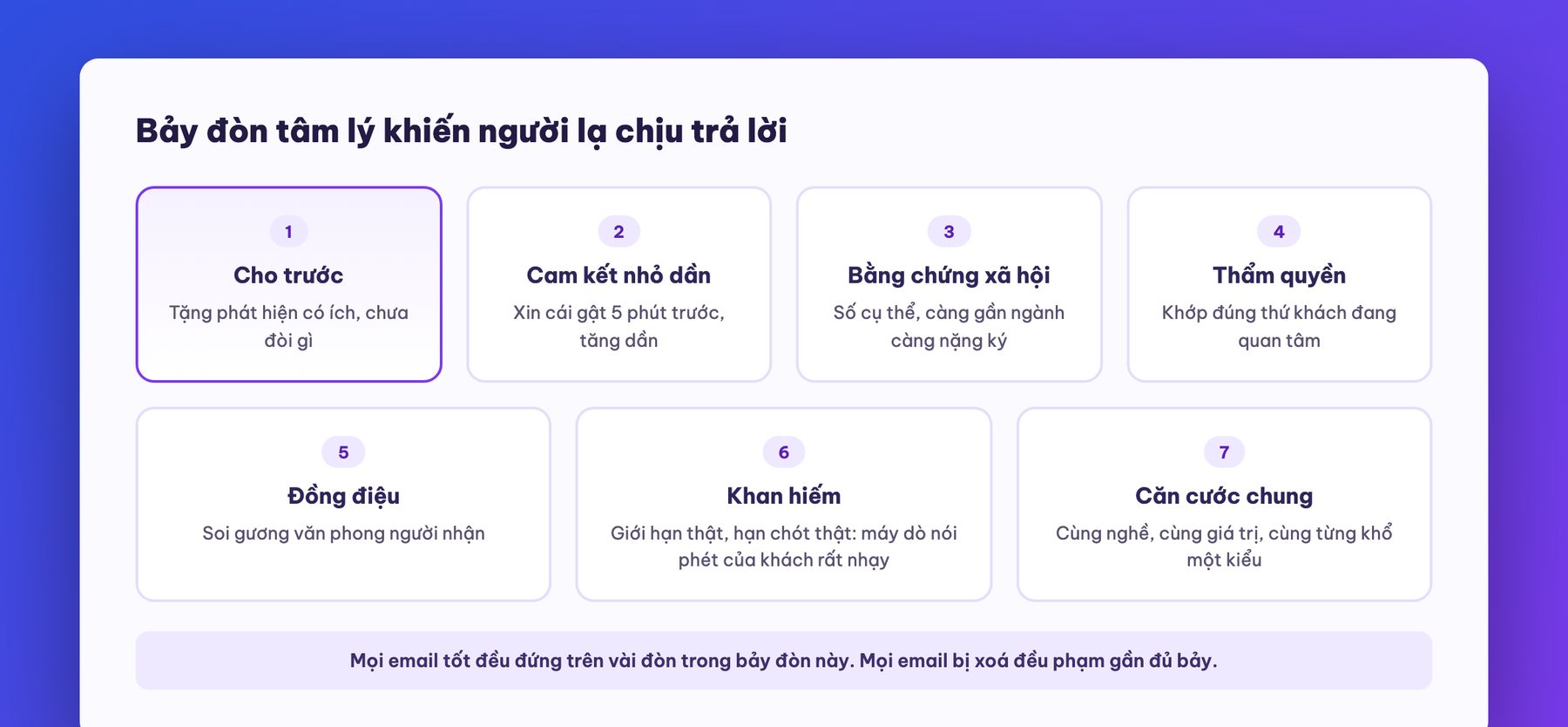
The foundation of the whole course is seven classic principles of influence (in the Cialdini tradition), retold in a salesperson's language:
The template for every letter in the course, four steps in the exact order the recipient reads them:
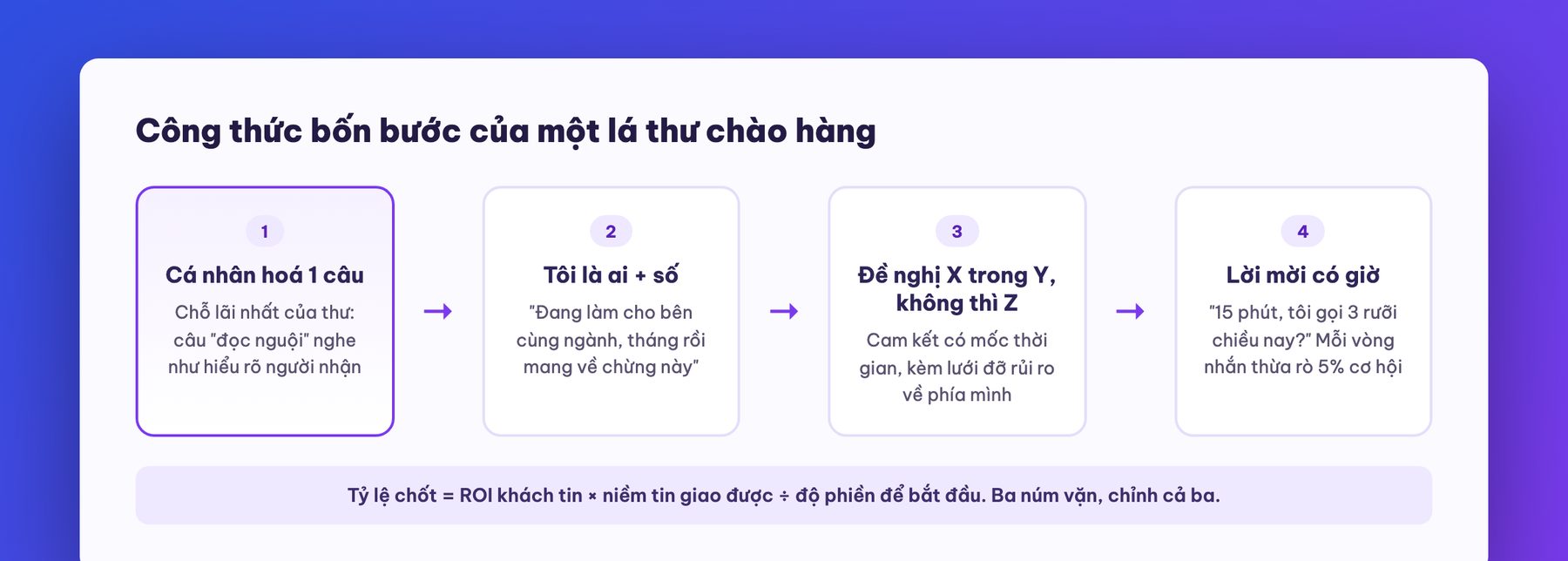
The tightest and sharpest piece of thinking in the course: the closing rate of an offer = (value the customer believes they will get) times (the trust you can deliver) divided by (the hassle of getting started). Three dials: ROI must be quantified and time-bound ("20 meetings in 60 days" rather than "lots of meetings"); trust is built with the four levers you have learned (proof, authority, similarity, identity); friction is reduced by stating it only takes a few minutes, with a ready-made way in, and by reversing the risk onto yourself (no results, no payment). The curriculum cites a stack of real offers that made money in exactly this pattern: a commitment to a number of meetings in 60 days or no fee; building a free sample product within 48 hours, and working together only if the customer likes it; writing the first 500 words for free. The common thread is easy to see: the seller carries the risk for the buyer: it hurts the wallet in the short term and wins trust in the long term. And one distinction worth engraving: understand the system rather than memorize the templates: no matter how good a template is, it wears out when everyone uses it; grasp the principle and you can generate new templates all year.
Nearly half the course is spent "dissecting" a dozen real emails received in the wild, scoring them against the seven levers and rewriting them. The classic mistakes are gathered in one place so you can check your own letters:
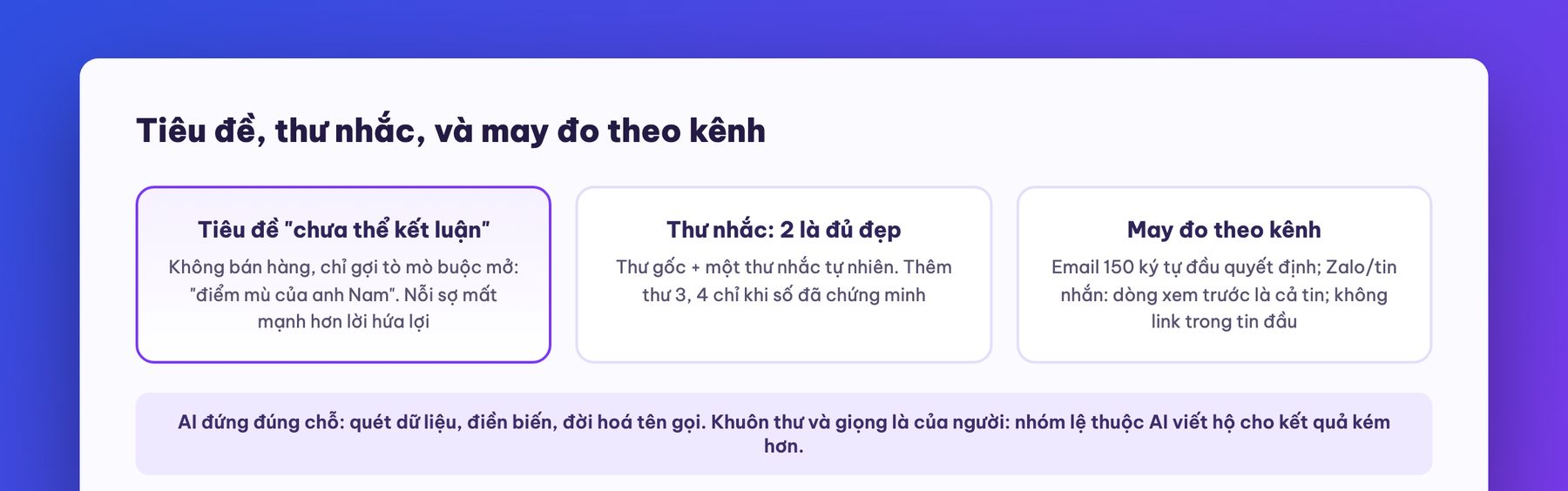
This is the part we want you to read slowest, because it runs against every pitch out there: an automation curriculum, taught by someone who lives off automation, declares that they rarely use AI to write sales letters. The reason comes with real data from the curriculum's own community of thousands of practitioners: AI takes a newcomer to 70-80% of the skill very quickly, but a 70-80 point letter now falls below the passing line: the whole market has AI, so the "read it and delete it" bar keeps rising, and the group that relies on AI to write for them gets worse results than the group that writes systematically themselves. Where AI that are is used, and used wisely: filling small variables into a fixed template (picking each customer's "most notable asset" to fit into a genuine compliment); a "humanizing" layer (shortening company names and place names to how insiders say them, creating a real sense of familiarity); and scanning and enriching data: exactly the machines you built in the n8n and agentic courses. In other words: the machine does the muscle work, the human keeps the voice: it should sound familiar, because it is the philosophy we have repeated throughout the series, and how we run content at MONA ourselves.
The course also lists the "gray" techniques spreading out there: buying pre-warmed accounts, mass calling with parallel auto-dialers, faking iPhone text messages: listed so you can recognize and avoid them, because the price is accounts that vanish and legal risk, not to mention that in Vietnam the decree against spam messages is no joke. Our principle: decent cold outreach is the right person, few but good, give before you ask: that road is a few weeks slower but you can walk it for years.
That completes the set: from using AI for work, building your own software, setting up self-running workflows, through to launching a service and the opening sales letter. Looking back, you will see a thread running through it that we kept on purpose: machines amplify, humans steer: a machine can scan a thousand prospects but the greeting has to carry a human voice; a machine can build an app in one session but the safety boundaries are drawn by people; a machine can run a workflow all night but the signature that takes responsibility is a person's. The businesses that win in the AI era, from what we have seen after over 10 years and 14,000+ projects, are those that learn the machine part fast and hold the human part firmly.
A simple closing invitation to the series: if you want to apply these courses to your company and want a team alongside you, from roadmap consulting and building systems to training your staff, call 1900 636 648 or send it to info@themona.global. MONA listens first, gives a free assessment and a transparent quote, and what we sign is the price we deliver. And if your problem does not need us yet, we will say so plainly, just as we have said things plainly through all twelve courses.
Does cold email still work? Yes, provided you do it scientifically: real personalization, an offer with a commitment, and enough samples in your tests. The campaigns in the curriculum reached 4-15% reply rates, while mass emails are happy with 1%.
How many emails a day is safe? A few dozen per mailbox per day, spread across natural hours, with a plain-text first email and no links, and a sending domain separate from your main domain. Raising volume before quality is secure is how you burn a domain.
Should AI write sales emails? Not the whole letter. Use AI for the muscle work: scanning data, filling variables in a template, shortening names so they sound natural; the template and the voice should be human. Data from a community of thousands of practitioners shows that the group relying on AI to write for them gets worse results.
How does this apply to Zalo and Facebook in Vietnam? The principles stay the same: the first line decides, tone fits the channel, no links in the first message, give before you ask. Swap "email" for "message" and the subject line for an opening line: the seven levers and the four-step formula work as they are.
What tools do I need to start? A dedicated sending tool with A/B testing, a source of prospect data, and the personalization engine you learned in the n8n or agentic workflow courses. But the right order is: hand-write your first 50 emails to find your voice, then plug in the amplifying machine.
MONA's free AI course series pauses here. The full list of 12 courses is in the AI coursessection, and new courses will keep being added. Wherever you get stuck as you learn, just call us.

CEO & Founder · The MONA
The founder of The MONA built a service company of 60+ staff with 14,000+ projects delivered. Khánh Hùng shares his thinking on building self-running systems, automating a business, and the real lessons behind MONA's projects.
 248




Professional website
design services
Own a website with a beautiful, 100% exclusive design and a lifetime warranty, with the ability
to expand features flexibly as your business grows, starting today!






 MONA will never sell your information or send you spam


 MONA will never sell your information or send you spam
