
 MONA OS 2.0
 Partner with MONA


 Tự động hoá doanh nghiệp
 Cẩm nang SEO
 Digital Marketing
 Kinh nghiệm thiết kế website
 Hạ Tầng Server
 Giáo dục


 VI
 EN








Message us on
Zalo Official


 ProductsNew

 ProductsProducts
 Mới ra mắtKHA AI 2027App tự edit video, tự đăng mọi mạng xã hội, 2 phút mỗi ngày










 Website designLooks good and wins customers over.
SEO servicesBrings in customers searching for exactly what you sell.
 Tư vấn digital marketingKéo khách từ nhiều kênh, đo bằng số thật.
Corporate video productionVideos introducing your company, factory and team.
 NewAI video productionCompany story films made with AI.
 Custom software developmentCRM, ERP and HRM built for your business.
 Viết AI Agent theo yêu cầuĐặt riêng một trợ lý AI cho đúng việc của mình.
 Tư vấn chuyển đổi AIĐưa AI vào vận hành của cả công ty.
NewMONA LMSManagement for centers and schools.
MONA SkillHubInternal training for company staff.
 NHTQ systemEnd-to-end China–Vietnam shipping operations.
MONA JMSManagement for gold, diamond and pawn shops.
 MONA E-LearningA website with every feature you need to sell courses.
 How to sell online courses (course)More than 30 free lessons on selling courses on autopilot.
 MONA Cloudmonacloud.vnServers to get your apps and websites running.
 MONA Basemonabase.vnPostgres database, sign-in and file storage.
 MONA Mailmonamail.vnSend OTP, order and invoice emails from your software.
 MONA Paymonapay.vnAccept bank transfers via VietQR and notify your software when the money arrives.
 MONA eInvoiceComing soonIssue e-invoices that meet tax standards.
Gấu CườiTrả lời khách 24/7 trên web, Fanpage, Zalo và thu lead cho sale.
 Gấu TeleSalesGọi điện tư vấn, chăm khách như tổng đài viên thật.
Dê CườiTư vấn và chốt đơn cho shop ngay trong khung chat.
Gấu WebmasterNhắn nhóm Zalo là website được sửa xong.
 Gấu Pháp ChếSoạn hợp đồng, rà điều khoản trong vài phút.
 Gấu Báo GiáLên báo giá đúng mẫu và gửi khách ngay.
 AI chăm sóc khách hàngTheo dõi và giữ chân khách hàng cũ.
 Gấu Tuyển DụngLọc hồ sơ, hẹn lịch, phỏng vấn ứng viên.
 Mới ra mắt
KHA AI 2027
Xây kênh chuyên gia 2 phút mỗi ngày
Quay bằng điện thoại, AI tự edit video, tự đăng lên 16 nền tảng và tự trả lời bình luận, tin nhắn.
834.956lượt xem trên kênh CEO MONA sau 27 ngày
 Anh Khánh HùngCEO MONA đang dùng mỗi ngày
Xem app làm được gì
 AI
Gấu Cười MONA ĐANG TỰ XÀITrả lời khách 24/7 trên website, Zalo OA, Messenger và thu lead về cho sale.
Dê CườiChốt đơn bán lẻ và sàn: Shopee, TikTok Shop, web. Chăm cả khách sỉ, đại lý.
Gấu WebmasterCập nhật nội dung, tối ưu SEO website mỗi ngày.
Gấu TeleSalesGọi điện tư vấn, chăm khách như tổng đài viên thật.
Gấu Tuyển DụngLọc hồ sơ, hẹn lịch, phỏng vấn ứng viên tự động.
AI chăm sóc khách hàngGiữ khách cũ, cứu lead đã rớt cho phòng kinh doanh.
Gấu Pháp ChếSoạn hợp đồng, rà điều khoản trong vài phút.
Gấu Báo GiáLên báo giá đúng mẫu, gửi khách ngay khi có yêu cầu.
 Chuyển đổi AI toàn phầnGiải pháp tổng cho doanh nghiệp, 3 lớp triển khai.
 Viết AI Agent theo yêu cầuĐặt riêng một con AI gánh đúng nghiệp vụ của bạn.
 Custom softwareCRM, ERP and HRM with built-in AI automation.
 SEO & AEO thời đại AIĐược Google lẫn AI trích dẫn, không chỉ xếp hạng.
 Kiến thức AI cho doanh nghiệpBài phân tích, hướng dẫn ứng dụng AI vào vận hành.
 Free AI courses
 AI tools at work
App mới · KHA AI 2027
Xây kênh 2 phút mỗi ngày
AI tự edit video, tự đăng mọi mạng xã hội
Free consultation, 8am–10pm every day

18 March, 2023

The after-sales customer care process is the work of a customer care team, and it keeps the business in good relations with its customers. If you want to keep customers for the long term, after-sales care is the answer. Don't miss the useful tips shared by Mona Media below!
Any organization or business that wants to operate effectively and consistently needs to follow a process.
The same goes for after-sales customer care, also called after-sales service. It is a series of activities that handle issues arising from a product or service so that customers stay satisfied with what they bought. Put simply, it is how you interact with customers after the sale.
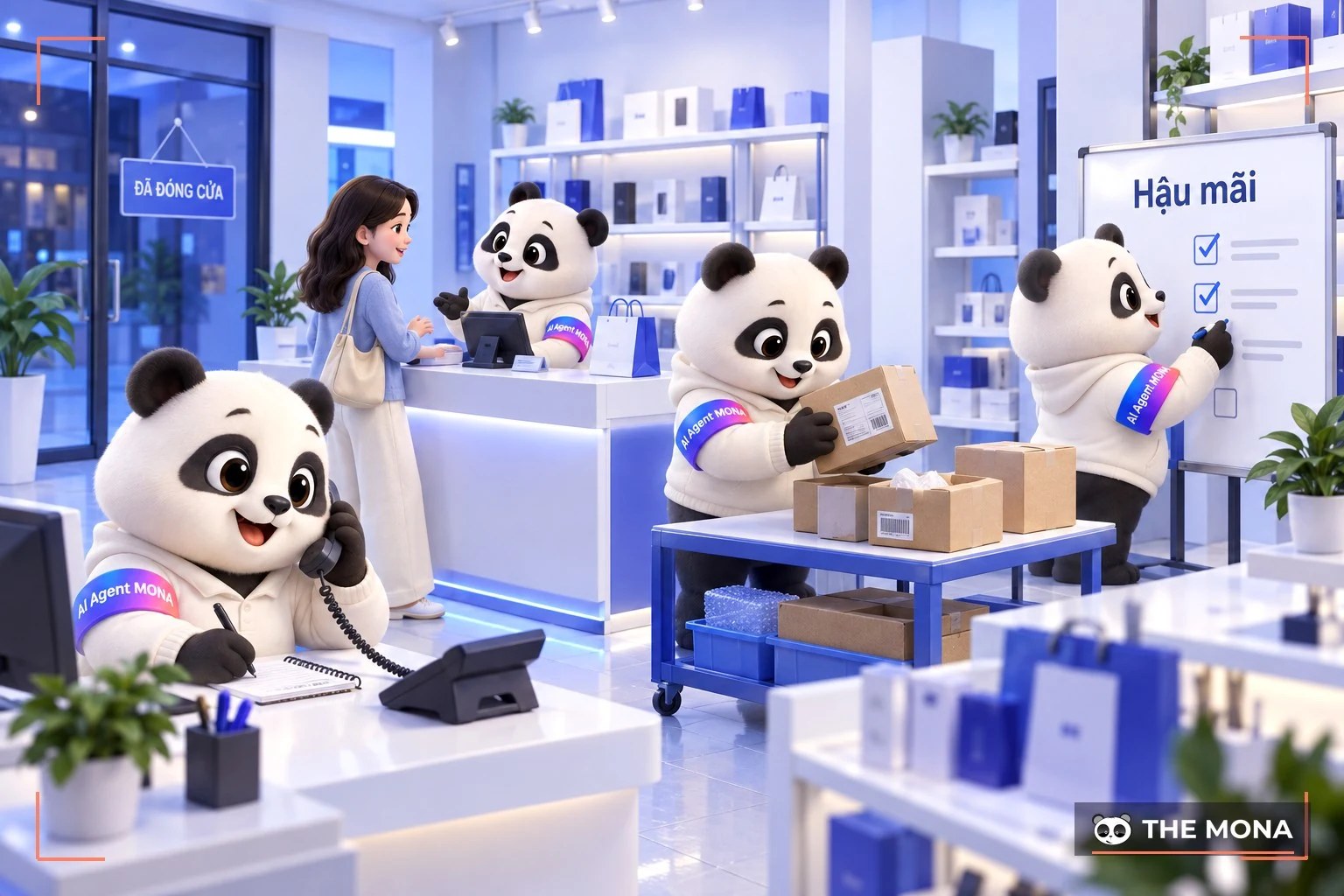
The content of an after-sales customer care process varies with the product the business offers. It can include: usage instructions, inspection, installation, free services, warranty, maintenance, and repair if the product breaks down or malfunctions.
When you solve the problems customers run into after buying, they are satisfied and become long-term customers.
According to a study by the U.S. Small Business Administration and the U.S. Chamber of Commerce, acquiring a new customer costs 5-7 times more than keeping an existing one. Harvard Business School also concluded that raising customer retention by 5% can increase profit by 25% to 95%.
So besides finding new customers, loyal existing customers are what keep your business alive and growing.
See more: 7 factors that influence the decision to buy online

In Vietnam, consumers tend to follow the crowd. If a business satisfies its current customers, they pass the product or service on to people they know, and without realizing it they become salespeople for the company.
Thanks to these benefits, the business saves a good deal on advertising and also sells to potential customers.
This matters for businesses today, when word-of-mouth marketing spreads fast with the growth of the internet. Looking after existing customers brings in new potential customers. This is a basic principle of success used by many large corporations worldwide, such as Toyota, Apple and Amazon.
In reality, no product can meet every customer need when it launches. Feedback and questions from customers give the business a chance to meet market demand with better products.
After-sales care brings many benefits, so businesses should invest in building an after-sales customer care process to improve business results.
After-sales customer care processes vary a lot, depending on the product, the industry and related fields. Still, some steps are common to all of them. They are the foundation that businesses can adapt to their own operating model and target audience.
This is one of the traditional forms of customer care, and it still holds its place in the digital age. It shows respect and gratitude to customers and lays the groundwork for the rest of the care process.

Depending on the product or service, you can choose the form of thank-you letter, such as handwritten or sent by email. Customers usually prefer handwritten letters because they show sincerity and effort from the business. But if speed and saving cost and time matter more, consider a thank-you email.
You have probably received a thank-you letter from a seller, a corporation or a business yourself. With professionalism and dedication, together with a solid after-sales care process, it is not hard for a company to grow into a big business.
Business owners and companies need to reach out again, collect customers' opinions, feedback and experiences, and then resolve their problems and dissatisfaction. This step is essential in an after-sales customer care process.
This should come from genuine care for customers rather than from advertising or sales activity.
When you reach out depends on your product or service. For electronics or technology products, customers need some time to try the product (about 1-2 months). For everyday goods and essentials, you should follow up with customers after a few days.
Collect accurate, honest feedback, because it is the data that tells the business how satisfied customers are and what they want, so you can improve your product quality.
Staying in touch with customers is a strategic card for driving your business.
Share valuable information related to what your customers are looking for through fanpage posts, videos, blogs, podcasts and more. After a while, you will earn their attention.
This step takes a team of content marketing creative people and a long-term plan. Content for nurturing your customer base should spend 80% on answering customers' pain points, wishes and questions. The other 20% covers the product and sales.
After buying a product, customers rarely contact the supplier on their own. They usually just give simple praise or criticism. If they do get in touch, they have almost certainly run into a problem with the product, and they need it solved right away. If you are slow here, customers are likely to be dissatisfied, lose trust and switch to another brand.
That is why building a customer care support team that is ready to take complaints and resolve them anytime, anywhere is important. You should open more support channels so customers can reach you easily and get thorough, fast answers.
Promoting new products or offering deals and promotions to customers is a smart way to build their loyalty. It shows the business cares about and values its existing customers, with information that ordinary customers cannot get.

You should send loyal customer groups special offers, whether or not they relate to the product. Everyone likes a deal, and it is an important and effective way to stimulate demand.
When customers see they are getting special deals, they feel special to the brand. That builds a much closer relationship between the customer and the brand.
The hardest part of an after-sales process to keep up is reminding the right person at the right time: checking in after delivery, warranty reminders, suggesting a repurchase. Done by hand, it gets forgotten; done at scale, it takes a lot of people. A business can hand this part to a AI chatbot for existing customers that runs on a schedule, while staff only step in on cases where the customer has actually replied.
A professional customer care process after the sale reaching high, optimal results takes a lot of effort, care and, above all, an understanding of your customers. If you follow all the steps above, your company's after-sales customer care process will surely succeed!

CEO & Founder · The MONA
The founder of The MONA built a service company of 60+ staff with 14,000+ projects delivered. Khánh Hùng shares his thinking on building self-running systems, automating a business, and the real lessons behind MONA's projects.
 1,5K




Professional website
design services
Own a website with a beautiful, 100% exclusive design and a lifetime warranty, with the ability
to expand features flexibly as your business grows, starting today!






 MONA will never sell your information or send you spam


 MONA will never sell your information or send you spam
