
 MONA OS 2.0


 Tự động hoá doanh nghiệp
 Cẩm nang SEO
 Digital Marketing
 Kinh nghiệm thiết kế website
 Hạ Tầng Server
 Giáo dục



 VI
 EN




Message us on
Zalo Official


 ProductsNew

 ProductsProducts
 Mới ra mắtKHA AI 2027App tự edit video, tự đăng mọi mạng xã hội, 2 phút mỗi ngày










 Website designLooks good and wins customers over.
SEO servicesBrings in customers searching for exactly what you sell.
 Tư vấn digital marketingKéo khách từ nhiều kênh, đo bằng số thật.
Corporate video productionVideos introducing your company, factory and team.
 NewAI video productionCompany story films made with AI.
 Custom software developmentCRM, ERP and HRM built for your business.
 Viết AI Agent theo yêu cầuĐặt riêng một trợ lý AI cho đúng việc của mình.
 Tư vấn chuyển đổi AIĐưa AI vào vận hành của cả công ty.
NewMONA LMSManagement for centers and schools.
MONA SkillHubInternal training for company staff.
 NHTQ systemEnd-to-end China–Vietnam shipping operations.
MONA JMSManagement for gold, diamond and pawn shops.
 MONA E-LearningA website with every feature you need to sell courses.
 How to sell online courses (course)More than 30 free lessons on selling courses on autopilot.
 MONA Cloudmonacloud.vnServers to get your apps and websites running.
 MONA Basemonabase.vnPostgres database, sign-in and file storage.
 MONA Mailmonamail.vnSend OTP, order and invoice emails from your software.
 MONA Paymonapay.vnAccept bank transfers via VietQR and notify your software when the money arrives.
 MONA eInvoiceComing soonIssue e-invoices that meet tax standards.
Gấu CườiTrả lời khách 24/7 trên web, Fanpage, Zalo và thu lead cho sale.
 Gấu TeleSalesGọi điện tư vấn, chăm khách như tổng đài viên thật.
Dê CườiTư vấn và chốt đơn cho shop ngay trong khung chat.
Gấu WebmasterNhắn nhóm Zalo là website được sửa xong.
 Gấu Pháp ChếSoạn hợp đồng, rà điều khoản trong vài phút.
 Gấu Báo GiáLên báo giá đúng mẫu và gửi khách ngay.
 AI chăm sóc khách hàngTheo dõi và giữ chân khách hàng cũ.
 Gấu Tuyển DụngLọc hồ sơ, hẹn lịch, phỏng vấn ứng viên.
 Mới ra mắt
KHA AI 2027
Xây kênh chuyên gia 2 phút mỗi ngày
Quay bằng điện thoại, AI tự edit video, tự đăng lên 16 nền tảng và tự trả lời bình luận, tin nhắn.
356.373lượt xem trên kênh CEO MONA sau 21 ngày
 Anh Khánh HùngCEO MONA đang dùng mỗi ngày
Xem app làm được gì
 AI
Gấu Cười MONA ĐANG TỰ XÀITrả lời khách 24/7 trên website, Zalo OA, Messenger và thu lead về cho sale.
Dê CườiChốt đơn bán lẻ và sàn: Shopee, TikTok Shop, web. Chăm cả khách sỉ, đại lý.
Gấu WebmasterCập nhật nội dung, tối ưu SEO website mỗi ngày.
Gấu TeleSalesGọi điện tư vấn, chăm khách như tổng đài viên thật.
Gấu Tuyển DụngLọc hồ sơ, hẹn lịch, phỏng vấn ứng viên tự động.
AI chăm sóc khách hàngGiữ khách cũ, cứu lead đã rớt cho phòng kinh doanh.
Gấu Pháp ChếSoạn hợp đồng, rà điều khoản trong vài phút.
Gấu Báo GiáLên báo giá đúng mẫu, gửi khách ngay khi có yêu cầu.
 Chuyển đổi AI toàn phầnGiải pháp tổng cho doanh nghiệp, 3 lớp triển khai.
 Viết AI Agent theo yêu cầuĐặt riêng một con AI gánh đúng nghiệp vụ của bạn.
 Custom softwareCRM, ERP and HRM with built-in AI automation.
 SEO & AEO thời đại AIĐược Google lẫn AI trích dẫn, không chỉ xếp hạng.
 Kiến thức AI cho doanh nghiệpBài phân tích, hướng dẫn ứng dụng AI vào vận hành.
 Free AI courses
 AI tools at work
App mới · KHA AI 2027
Xây kênh 2 phút mỗi ngày
AI tự edit video, tự đăng mọi mạng xã hội
Free consultation, 8am–10pm every day

18 March, 2023
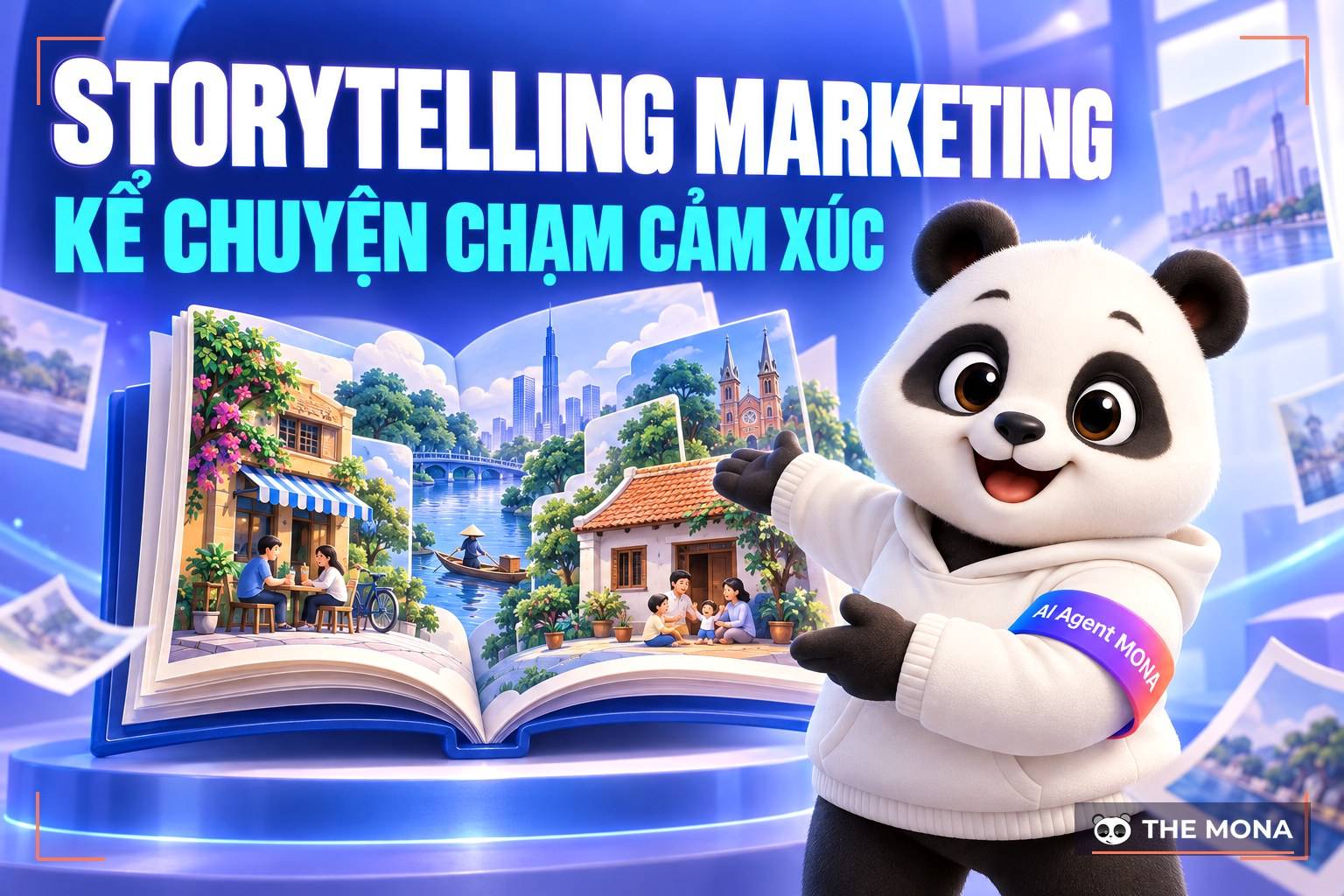
Storytelling marketing (promoting by telling stories) is used by many brands when they plan their campaigns brand building. Marketing through stories spreads your brand through the story you tell and everything people say about it. So do you understand what storytelling marketing is yet? If not, read on to Mona Media see how the storytelling method works.
Put simply, storytelling marketing is promotion by telling a story. Facts and useful information about a product or brand are pulled together and retold as a complete, coherent story.
Storytelling is one of the oldest ways to pass on information. Some stories have been handed down from before people could read, all the way to today. Its effectiveness is beyond debate.

What is storytelling marketing?
The most basic purpose of storytelling is marketing: introducing your products, services and brand. But that is not its only use.
A story carries a message that can connect with your audience. The closer the message is to how customers think and feel, the more empathy it earns and the better the story's call-to-action call to action performs.
That makes storytelling a useful tool for educating customers, positioning your brand and building a loyal community.
The biggest strength of storytelling is emotion. A story does more than tell something: it opens a conversation and shares feelings with the viewer.
A story is always built around solving a conflict, which is the audience's pain point. It feels familiar and close to home, and viewers see a bit of themselves in your characters and story.
That empathy makes it easy for viewers to understand the message you put into the story. Storytelling inspires people and encourages them to follow the call to action you want.

An emotional weapon
A story also stirs positive feelings toward your product or brand. People remember you more deeply than they do ordinary ads, which tend to rely on the viewer's curiosity.
Since the first civilizations, people have used stories to pass on information. Stories are easy to remember and retell, and just as easy to understand. A coherent story with a beginning, an end and clear characters is very easy to follow. Audiences from any country or culture, speaking any language, can still understand it.
Western fairy tales and fables such as Snow White, The Little Match Girl or the Grimm tales are known by heart by Vietnamese children. Wise teachers have long begun a life lesson with a story. Giving the example first and the explanation after lets listeners grasp the message, sometimes before the speaker has even finished.
Because stories "say little and get understood", storytelling marketing is popular in sensitive areas such as women's health, relationships, marriage and reproductive health. Said bluntly, these topics feel impolite and awkward, and viewers turn away. Delivering the message through a story and characters makes people far more open to it.
The ease of following a story also saves promotion time. With market competition and busy lifestyles, a video ad spot is now very short. On online platforms, viewers can skip an ad after just 5 seconds.
So the demand today is to get the marketing message across in as little time as possible. Storytelling marketing is a very effective way to race against the clock, against KPI, against deadlines.
When your story speaks to what viewers feel, they come to love it and love your brand. Storytelling creates a bond between you and your customers and turns them into loyal users.
Users can also share it with each other through social media. That gives you not just one loyal customer but a whole community of them.
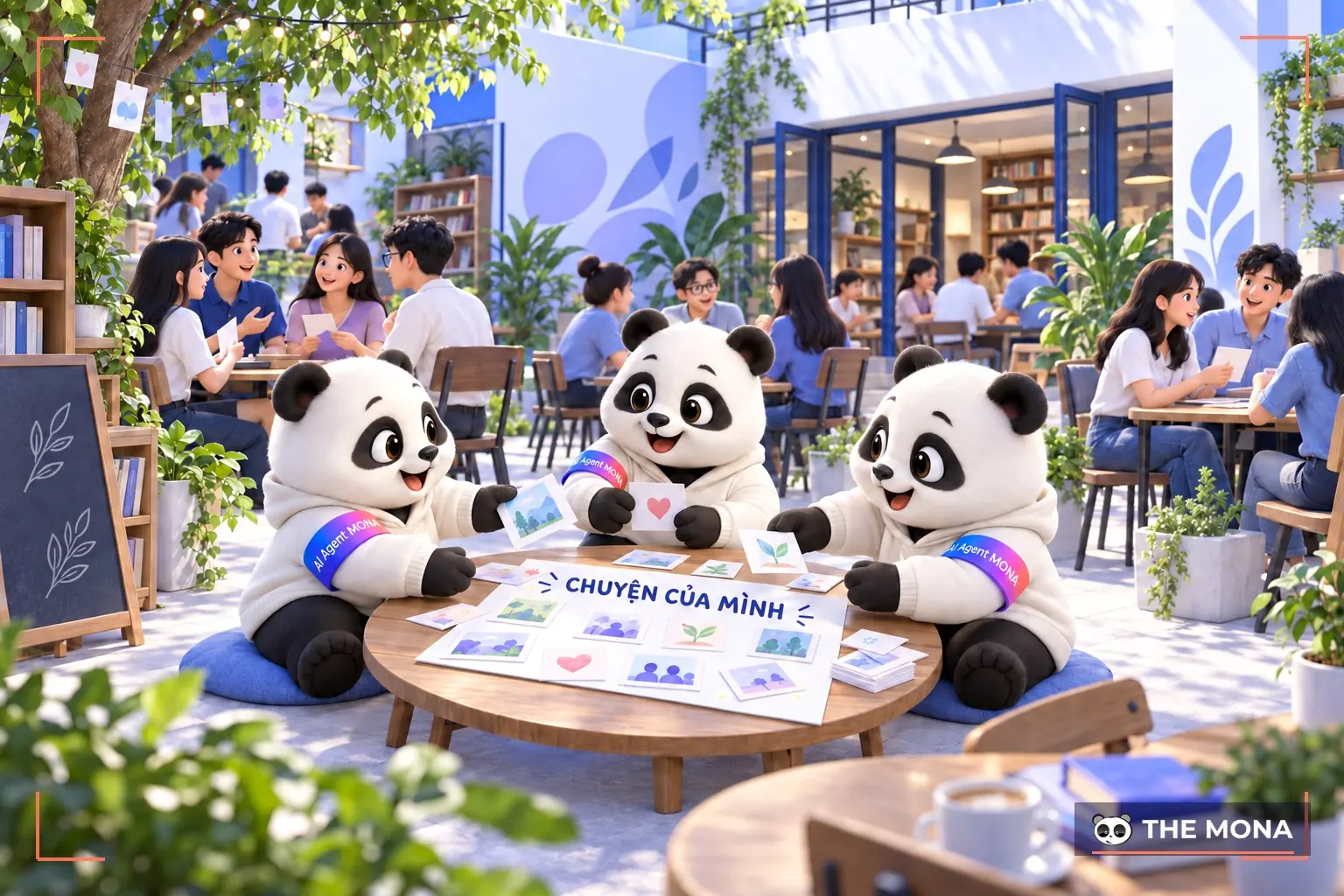
Building a community
A network of loyal users is the foundation of any brand's success. They also carry your brand further, to more potential customers.
|
If storytelling connects with customers through the emotion and empathy of a brand story, then SEO is a way to reach customers with practical information and knowledge and answer their questions right away. With SEO, you can bring your brand closer to customers while also growing website traffic entirely organically, without spending a single dong on ads. At Mona Media, we often recommend that clients choose an effective SEO service because it includes a brand development strategy and takes your business to the top of search results. On top of that, full-scope SEO at Mona Media delivers more lasting value through a detailed, step-by-step SEO process that helps your business become number 1 in its online market. 5x or 10x revenue has never been easier with a single tool: full-scope SEO. 
|
Those are the benefits, but not everyone uses a storytelling marketing strategy because of how demanding it is.
The biggest difficulty is budget. A storytelling campaign has many items to pay for. First is the story itself: a good one means paying for a skilled scriptwriter.
Next, the story may be split into several parts for a longer-term strategy. Each part must connect to or continue the others, and the message of the whole series must stay consistent across parts.
Each part of the series also has to run again and again so the audience remembers the plot. Overall, a storytelling marketing strategy can be large and long-running, and it needs a certain level of investment and budget.
To judge whether a storytelling campaign is effective, people use the GREAT criteria.

Storytelling strategy
The message in your story must connect with the real feelings and pain points of your users. The main character should be a mirror of your user, so they can easily relate and trust the story completely.
The message needs to promise a reward, the result of following it. That could be a personal change, losing weight, becoming more attractive, improving health or financial success.
Emotion plays the decisive role in drawing viewers in and moving them to follow your calls to action. The story needs plot points, images or sound that amplify the right emotions to make the marketing work.
Your story should be built on real events. It need not be 100% factual, but it should reflect real-life problems honestly. The setting can be fictional and so can the characters, but the plot, psychology and motives must feel as human as possible.
The goal of the campaign and the story must fit the target group. A target group shares behavior, lifestyle and buying psychology. You cannot ask customers to do more than they are able to, however much they relate to the story.
Every story needs characters. The main character is the bridge between the story and the viewer; whenever they see the character, they recall your story and message.
Your character needs distinctive traits that set them apart from others. Some characters are even designed with looks, clothing and details that match the brand logo or identity. A character like that makes brand positioning in a marketing campaign even stronger.
However, creating characters from the brand identity is not always the right move. Done clumsily, they come across as fantasy and unrealistic. Without authenticity, it is hard to build a bond with viewers, and the story becomes hard to follow and hard to feel.

The main character
Most important is that the character reflects your potential users, with similar traits, psychology and actions in real life. That similarity helps customers relate to the character, understand the story and follow your calls to action.
Besides characters, your story needs to be built around some conflict.
From the audience's point of view, a story has to move from conflict to resolution before it can end. Only with conflict is there a need to resolve it, and only then do characters take action and make decisions. That gives the story a climax and makes it compelling.
Without conflict, your story is nothing more than an ad or an introduction.
Conflict in the story is also the viewer's own problems and pain points. Your customers see themselves when the character runs into trouble and struggles to resolve it.
A good story must have a sensible ending. In storytelling marketing the ending does not have to be happy, although most are. That is because a happy ending is usually easier to write, not because it is perfect.
What matters most is that you distill a message strong enough to move viewers. It must be memorable enough that the audience recalls it whenever someone mentions your story or character.
|
You have the idea and the story, but not the skill to put it into words. You also lack the time to follow trends and polish a great story. Mona Media's storytelling writing service is for you. We have a young team of content creators who keep up with trends and study the market to produce content that fits what readers like. In addition, we. 6,000+ businesses have chosen Marketing services at Mona Media, and 90% of them trust Mona as a reliable partner for their online marketing campaigns. 
|
With the analysis above, we hope you now understand what a story-driven marketing strategy is. Contact Mona Media on the hotline 1900 636 648 for detailed advice on the how to build a storytelling marketing strategy.
Please contact us via:
Hotline: 1900 636 648
Email: info@mona-media.com
Address: 1073/23 Cach Mang Thang Tam, Ward 7, Tan Binh, Ho Chi Minh City
You may also be interested in:

CEO & Founder · The MONA
Founder of The MONA, who built a services company of 200+ staff with 14,000+ projects delivered. Khánh Hùng shares how he thinks about building systems that run themselves, automating a business, and the real lessons from delivering projects at MONA.
 1,5K




Professional website
design services
Own a website with a beautiful, 100% exclusive design and a lifetime warranty, with the ability
to expand features flexibly as your business grows, starting today!






 MONA will never sell your information or send you spam


 MONA will never sell your information or send you spam
