
 MONA OS 2.0
 Partner with MONA


 Tự động hoá doanh nghiệp
 Cẩm nang SEO
 Digital Marketing
 Kinh nghiệm thiết kế website
 Hạ Tầng Server
 Giáo dục


 VI
 EN













Message us on
Zalo Official


 ProductsNew

 ProductsProducts
 Mới ra mắtKHA AI 2027App tự edit video, tự đăng mọi mạng xã hội, 2 phút mỗi ngày










 Website designLooks good and wins customers over.
SEO servicesBrings in customers searching for exactly what you sell.
 Tư vấn digital marketingKéo khách từ nhiều kênh, đo bằng số thật.
Corporate video productionVideos introducing your company, factory and team.
 NewAI video productionCompany story films made with AI.
 Custom software developmentCRM, ERP and HRM built for your business.
 Viết AI Agent theo yêu cầuĐặt riêng một trợ lý AI cho đúng việc của mình.
 Tư vấn chuyển đổi AIĐưa AI vào vận hành của cả công ty.
NewMONA LMSManagement for centers and schools.
MONA SkillHubInternal training for company staff.
 NHTQ systemEnd-to-end China–Vietnam shipping operations.
MONA JMSManagement for gold, diamond and pawn shops.
 MONA E-LearningA website with every feature you need to sell courses.
 How to sell online courses (course)More than 30 free lessons on selling courses on autopilot.
 MONA Cloudmonacloud.vnServers to get your apps and websites running.
 MONA Basemonabase.vnPostgres database, sign-in and file storage.
 MONA Mailmonamail.vnSend OTP, order and invoice emails from your software.
 MONA Paymonapay.vnAccept bank transfers via VietQR and notify your software when the money arrives.
 MONA eInvoiceComing soonIssue e-invoices that meet tax standards.
Gấu CườiTrả lời khách 24/7 trên web, Fanpage, Zalo và thu lead cho sale.
 Gấu TeleSalesGọi điện tư vấn, chăm khách như tổng đài viên thật.
Dê CườiTư vấn và chốt đơn cho shop ngay trong khung chat.
Gấu WebmasterNhắn nhóm Zalo là website được sửa xong.
 Gấu Pháp ChếSoạn hợp đồng, rà điều khoản trong vài phút.
 Gấu Báo GiáLên báo giá đúng mẫu và gửi khách ngay.
 AI chăm sóc khách hàngTheo dõi và giữ chân khách hàng cũ.
 Gấu Tuyển DụngLọc hồ sơ, hẹn lịch, phỏng vấn ứng viên.
 Mới ra mắt
KHA AI 2027
Xây kênh chuyên gia 2 phút mỗi ngày
Quay bằng điện thoại, AI tự edit video, tự đăng lên 16 nền tảng và tự trả lời bình luận, tin nhắn.
889.618lượt xem trên kênh CEO MONA sau 36 ngày
 Anh Khánh HùngCEO MONA đang dùng mỗi ngày
Xem app làm được gì
 AI
Gấu Cười MONA ĐANG TỰ XÀITrả lời khách 24/7 trên website, Zalo OA, Messenger và thu lead về cho sale.
Dê CườiChốt đơn bán lẻ và sàn: Shopee, TikTok Shop, web. Chăm cả khách sỉ, đại lý.
Gấu WebmasterCập nhật nội dung, tối ưu SEO website mỗi ngày.
Gấu TeleSalesGọi điện tư vấn, chăm khách như tổng đài viên thật.
Gấu Tuyển DụngLọc hồ sơ, hẹn lịch, phỏng vấn ứng viên tự động.
AI chăm sóc khách hàngGiữ khách cũ, cứu lead đã rớt cho phòng kinh doanh.
Gấu Pháp ChếSoạn hợp đồng, rà điều khoản trong vài phút.
Gấu Báo GiáLên báo giá đúng mẫu, gửi khách ngay khi có yêu cầu.
 Chuyển đổi AI toàn phầnGiải pháp tổng cho doanh nghiệp, 3 lớp triển khai.
 Viết AI Agent theo yêu cầuĐặt riêng một con AI gánh đúng nghiệp vụ của bạn.
 Custom softwareCRM, ERP and HRM with built-in AI automation.
 SEO & AEO thời đại AIĐược Google lẫn AI trích dẫn, không chỉ xếp hạng.
 Kiến thức AI cho doanh nghiệpBài phân tích, hướng dẫn ứng dụng AI vào vận hành.
 Free AI courses
 AI tools at work
App mới · KHA AI 2027
Xây kênh 2 phút mỗi ngày
AI tự edit video, tự đăng mọi mạng xã hội
Free consultation, 8am–10pm every day

26 February, 2026
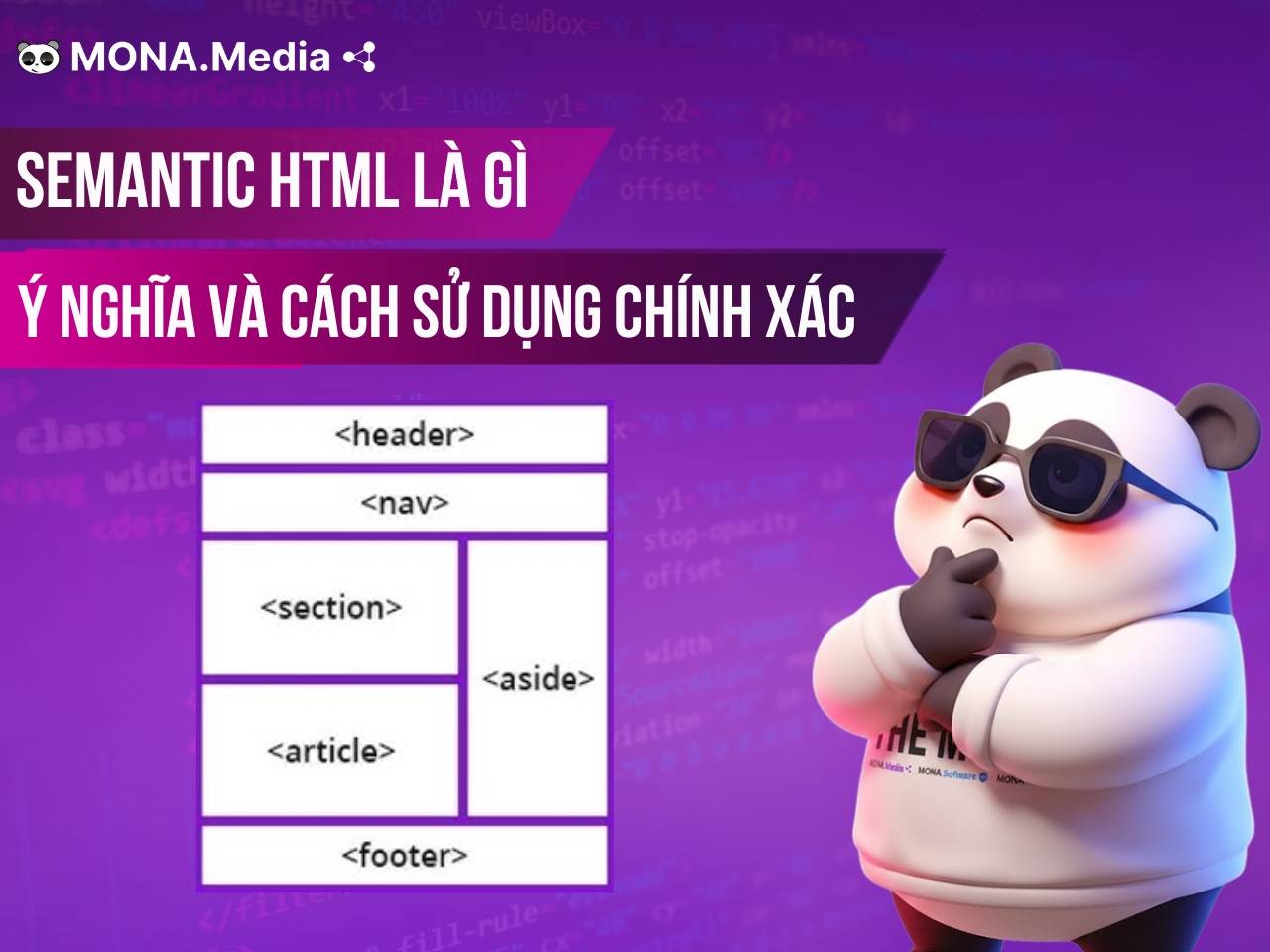
What is Semantic HTML and why does it matter more and more in modern web development? Instead of only caring about how a page looks, semantic HTML tags help browsers, search engines and assistive technology understand what each element on the page means. In this article, MONA Media will help you understand what semantic HTML really is and how to use semantic tags in line with SEO and technical standards.
What is Semantic HTML? In simple terms, it is a way of writing HTML code with tags that have a clear meaning and reflect the role of the content inside. Instead of using generic tags like <div> hay <span> for everything, Semantic HTML encourages html semantic tags such as <header>, <nav>, <main>, <article> hay <footer> to show the structure and relationships between the content on a page.

So what does semantic html do in practice? Semantic html tags make an HTML file easy to read and understand even when it isn't rendered in a browser. This matters most for screen readers, search bots and other developers who need to read, analyze or maintain the source code. With html semantic tags, a website doesn't just display better. It becomes a logically structured document that is clearer and friendlier to both SEO and user experience.
Understanding what semantic HTML is shows you that a website needs more than correct display. It also needs a clear structure inside. Semantic HTML uses tags with specific meaning to describe the role of the content, so people and search engines can both read the site better.
First, html semantic tags make source code easier to read and maintain. Writing semantic html with tags like <header>, <nav>, <main> and <footer> lets developers spot the page structure quickly, instead of leaning on generic <div> tags.

Second, html semantic in website design is also tied to accessibility and SEO. Assistive tools for visually impaired users rely on semantic tags to interpret content accurately, while Google uses semantic structure to identify the important content, which helps the site stay user-friendly and rank better.
You may also be interested in:
- what Semantic SEO is? A summary of what you need to know about Semantic SEO
- What is semantic search? How to optimize SEO for semantic search
To really understand what semantic HTML is, put it next to Non-semantic HTML, two ways of organizing code that differ completely in meaning. Non-semantic HTML mostly uses neutral tags like div or span, which are just a "wrapper" for layout and CSS and say nothing about how important the content inside is. With this approach, search engines and assistive tools can barely understand the real structure of a page.

Semantic HTML tags, on the other hand, exist to describe what the content does. When you write semantic HTML with tags like header, nav, main or article, browsers, search engines and assistive technology can all tell which part is navigation, which is the main content and which is the end of the page. That is the answer to what semantic HTML does: it turns HTML from "only displayable" into "readable and understandable".
In short, Non-semantic HTML makes a website's structure depend on how you name classes, while Semantic HTML is clear by its very nature. The difference doesn't just give you cleaner code. It also builds a solid foundation for SEO-ready website design, accessibility and long-term scalability of the website.
When learning what semantic HTML is, you need to know the html semantic tags used most often in HTML5. Semantic tags don't just give a website a clearer structure. They also answer directly what semantic HTML does. Here are the key semantic HTML tags to know when writing semantic HTML correctly.
The <section> tag divides a web page into separate content areas by topic. It is often used for parts such as an intro, services or contact on the same page. Note that <section> doesn't describe specific content. It only groups related content together.
Structure: <section></section>
Example:
|
<section> <h1>Title</h1> <p>Content, images …</p> </section> |
The <article> tag is for self-contained content that keeps its meaning when pulled out and shown on its own. Typical examples are a blog post, news story, product or review. When you use this tag correctly, you are applying the right semantic HTML tag to content that has value on its own.
Structure: <article></article>
Example:
|
<article> <section> <h1>Title</h1> <p>Content, images …</p> </section> </article> |
The <aside> tag holds content that supports the main content, such as a sidebar, related posts or extra notes. Content inside <aside> can be removed without breaking the main flow of the page. This is how semantic HTML separates the main content from the supplementary content.
Structure: <aside></aside>
Example:
|
<main> |
The <header> tag is usually used for the opening of a page or of each section/article, and can hold a title, a short description or a navigation menu. The <footer> tag is used for the closing part, usually with contact details, copyright or related links. <header> and <footer> make the page structure clearer when you apply html semantic tags.
Structure: <header> </header>; <footer> </footer>
Example:
|
<footer> <p>Contact information </p> <p> Phone: 1900 636 648 </p> <p> Email: info@themona.global</p> <p> Địa chỉ: 1073/23 Cách Mạng Tháng Tám, P. Tân Sơn Nhất, TPHCM</p> </footer> |
In HTML5, the <main> tag represents the most important main content of the page, and each page should have only one <main> tag. It doesn't include the header, footer or sidebar. Using <main> correctly is key when writing semantic HTML that is good for SEO and accessibility.
<div> carries no semantic meaning and isn't considered semantic. Use it only when no suitable semantic HTML tag exists, or when you need to wrap content for layout or CSS. Remember that overusing <div> is a sign you haven't applied semantic HTML properly in practice.
Understanding what semantic HTML is isn't enough. If you use html semantic tags wrongly, your site structure can become incoherent and hurt your SEO. Here are the common mistakes with semantic HTML tags to watch out for.
Looking at the mistakes above, you will notice one clear thing in common. Building a website with semantic HTML isn't hard, but getting it right from the start and keeping it consistent across the whole site is not simple. Just mixing up section and article, overusing header and footer, or putting headings in the wrong order can leave the site's meaning muddled, make bots read it poorly and keep content from standing out where it should. The result is that the longer you run SEO, the more it costs to fix the foundation.
So if your business sees SEO as a long-term marketing channel, start with a an SEO-ready website right from the code structure. A website built on semantic HTML helps search engines understand which content is primary and which is secondary, spreads SEO strength sensibly, supports better indexing, and gives you a stable base for speed, user experience, schema and internal links later on.
At MONA, our engineers always build websites right from the foundation: proper semantics, solid technical SEO, clear heading structure, flexible layouts for long content, and a setup that is easy to crawl and extend when you add categories, landing pages, blogs and more.

If you want to rebuild your website or build a new one to run SEO properly, contact MONA via HOTLINE 1900 636 648 to get advice on a structure that fits your industry and a full rollout, so your website is beautiful, easy to run and a base for lasting SEO growth.

Understanding what is semantic html and applying it correctly does more than clean up your code. It also strongly improves SEO, accessibility and user experience. Using semantic HTML tags accurately is an important foundation for sustainable websites in the era of AI Search. If you want to roll out semantic html properly and optimize everything, we hope the in-depth tips from MONA Media in this article are a useful reference.

CEO & Founder · The MONA
Founder of The MONA, who built a services company of 60+ staff with 14,000+ projects delivered. Khánh Hùng shares how he thinks about building systems that run themselves, automating a business, and the real lessons from delivering projects at MONA.
 1,5K




Professional website
design services
Own a website with a beautiful, 100% exclusive design and a lifetime warranty, with the ability
to expand features flexibly as your business grows, starting today!






 MONA will never sell your information or send you spam


 MONA will never sell your information or send you spam
