
 MONA OS 2.0
 Hợp tác với MONA


 Tự động hoá doanh nghiệp
 Cẩm nang SEO
 Digital Marketing
 Kinh nghiệm thiết kế website
 Hạ Tầng Server
 Giáo dục


 VI
 EN













Message us on
Zalo Official


 ProductsNew

 ProductsProducts
 Mới ra mắtKHA AI 2027App tự edit video, tự đăng mọi mạng xã hội, 2 phút mỗi ngày










 Thiết kế websiteVừa đẹp vừa thuyết phục được khách.
Dịch vụ SEOKéo về khách đang tìm đúng thứ anh chị bán.
 Tư vấn digital marketingKéo khách từ nhiều kênh, đo bằng số thật.
Quay video doanh nghiệpVideo giới thiệu công ty, nhà xưởng, đội ngũ.
 MớiDựng video AIDựng phim câu chuyện công ty bằng AI.
 Custom software developmentCRM, ERP and HRM built for your business.
 Viết AI Agent theo yêu cầuĐặt riêng một trợ lý AI cho đúng việc của mình.
 Tư vấn chuyển đổi AIĐưa AI vào vận hành của cả công ty.
NewMONA LMSManagement for centers and schools.
MONA SkillHubInternal training for company staff.
 NHTQ systemEnd-to-end China–Vietnam shipping operations.
MONA JMSManagement for gold, diamond and pawn shops.
 MONA E-LearningA website with every feature you need to sell courses.
 How to sell online courses (course)More than 30 free lessons on selling courses on autopilot.
 MONA Cloudmonacloud.vnServers to get your apps and websites running.
 MONA Basemonabase.vnPostgres database, sign-in and file storage.
 MONA Mailmonamail.vnSend OTP, order and invoice emails from your software.
 MONA Paymonapay.vnAccept bank transfers via VietQR and notify your software when the money arrives.
 MONA eInvoiceComing soonIssue e-invoices that meet tax standards.
Gấu CườiTrả lời khách 24/7 trên web, Fanpage, Zalo và thu lead cho sale.
 Gấu TeleSalesGọi điện tư vấn, chăm khách như tổng đài viên thật.
Dê CườiTư vấn và chốt đơn cho shop ngay trong khung chat.
Gấu WebmasterNhắn nhóm Zalo là website được sửa xong.
 Gấu Pháp ChếSoạn hợp đồng, rà điều khoản trong vài phút.
 Gấu Báo GiáLên báo giá đúng mẫu và gửi khách ngay.
 AI chăm sóc khách hàngTheo dõi và giữ chân khách hàng cũ.
 Gấu Tuyển DụngLọc hồ sơ, hẹn lịch, phỏng vấn ứng viên.
 Mới ra mắt
KHA AI 2027
Xây kênh chuyên gia 2 phút mỗi ngày
Quay bằng điện thoại, AI tự edit video, tự đăng lên 16 nền tảng và tự trả lời bình luận, tin nhắn.
881.303lượt xem trên kênh CEO MONA sau 36 ngày
 Anh Khánh HùngCEO MONA đang dùng mỗi ngày
Xem app làm được gì
 AI
Gấu Cười MONA ĐANG TỰ XÀITrả lời khách 24/7 trên website, Zalo OA, Messenger và thu lead về cho sale.
Dê CườiChốt đơn bán lẻ và sàn: Shopee, TikTok Shop, web. Chăm cả khách sỉ, đại lý.
Gấu WebmasterCập nhật nội dung, tối ưu SEO website mỗi ngày.
Gấu TeleSalesGọi điện tư vấn, chăm khách như tổng đài viên thật.
Gấu Tuyển DụngLọc hồ sơ, hẹn lịch, phỏng vấn ứng viên tự động.
AI chăm sóc khách hàngGiữ khách cũ, cứu lead đã rớt cho phòng kinh doanh.
Gấu Pháp ChếSoạn hợp đồng, rà điều khoản trong vài phút.
Gấu Báo GiáLên báo giá đúng mẫu, gửi khách ngay khi có yêu cầu.
 Chuyển đổi AI toàn phầnGiải pháp tổng cho doanh nghiệp, 3 lớp triển khai.
 Viết AI Agent theo yêu cầuĐặt riêng một con AI gánh đúng nghiệp vụ của bạn.
 Custom softwareCRM, ERP and HRM with built-in AI automation.
 SEO & AEO thời đại AIĐược Google lẫn AI trích dẫn, không chỉ xếp hạng.
 Kiến thức AI cho doanh nghiệpBài phân tích, hướng dẫn ứng dụng AI vào vận hành.
 Free AI courses
 AI tools at work
App mới · KHA AI 2027
Xây kênh 2 phút mỗi ngày
AI tự edit video, tự đăng mọi mạng xã hội
Free consultation, 8am–10pm every day

23 October, 2025
Launched in 2021, the Google MUM algorithm marked a major turning point for Google in understanding natural language and search intent. It is more than a routine algorithm update. MUM uses advanced technology to process varied data across 75 languages quickly and more accurately. This has changed how Google evaluates and ranks content, and businesses need to adjust their SEO strategy to keep their search rankings. Let's MONA Media find out what Google MUM is, how it works, and its real impact on AI SEO in the article below.
Google MUM (Multitask Unified Model) is a new generation of AI search technology that Google built on the Transformer architecture in 2021. In the past, Google's algorithms stopped at understanding single phrases or sentences. Google MUM can analyze, combine and reason across many angles to understand the context, the search purpose and the deeper meaning behind a user's query. This is because Google MUM can process text, images, video and information in 75 languages of all kinds.

This is also one of the reasons Google MUM is rated as much as 1,000 timesmore powerful than BERT, marking a leap in how well the search engine understands natural language and information. Trained with deep learning on a huge body of data, the Google MUM update can answer complex questions in a single search, instead of needing several queries as before.
Compared with older models like RankBrain or BERT, the Google MUM algorithm stands out because it can be “multitasking” and “multimodal”. For the most objective view, take a look at the comparison table MONA put together below:
| Criterion | RankBrain | BERT | Google MUM |
| Year launched | 2015 | 2019 | 2021 |
| Core technology | Machine Learning | Deep Learning – Transformer | Multitask Unified Model – advanced Transformer |
| Language processing ability | Understands basic search intent | Understands two-way text context | Understands multiple languages and contexts and handles complex queries |
| Accuracy | Lower | Lower | Higher (1,000 times stronger than BERT) |
| Multimedia processing |
❌ Processes text only |
❌ Processes text only |
✅ Understands text, audio, images, video |
| Multitasking | ❌ | ❌ |
✅ Can handle several tasks at the same time |
| Multilingual learning | ❌ |
✅ Better than RankBrain |
✅ Deep understanding of 75+ languages |

The Google MUM algorithm is built on advanced Transformer technology, so it can understand deeply, analyze accurately and connect information across different contexts. Specifically:
Once you know what Google MUM is, it is clear that Google MUM technology is more than a search algorithm. It is an AI foundation that reshapes how people get to information. Here are the standout applications MUM brings in practice:
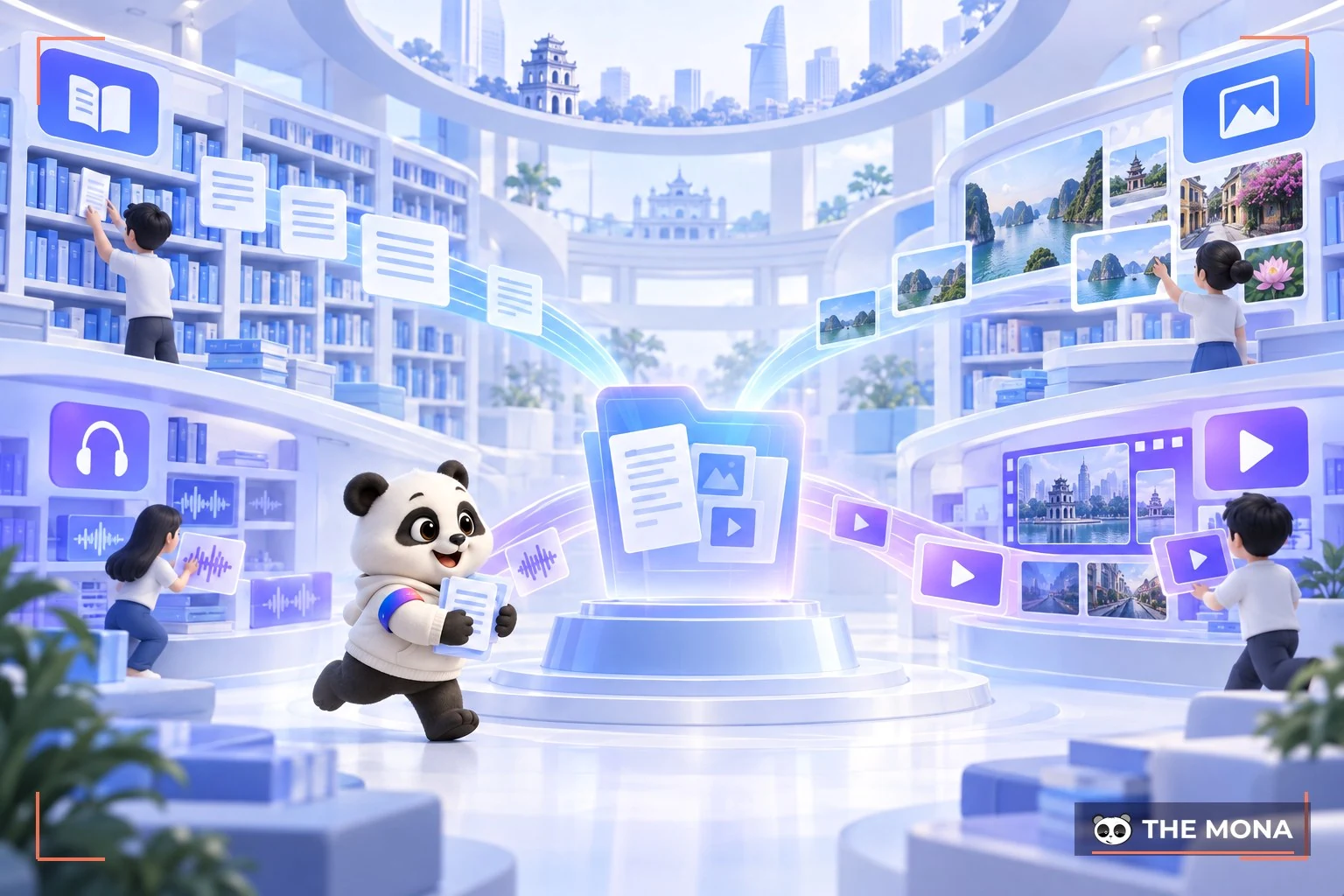
With strong context analysis, Google MUM can understand complex queries and search across many kinds of data, from text and images to video. For example, when a user asks “I need a water-resistant, compact handbag suitable for work, under 2 million VND in Ho Chi Minh City”, Google MUM combines data from many sources (blogs, review videos, e-commerce sites) to create an “AI Overview” shown at the top of the search results.
The Google MUM update is also widely used in Google Translate, making translations not only accurate but also smoother and closer to the original tone. Instead of translating word by word, MUM understands the context of the whole sentence and the emotional nuance, giving more natural translations that work well for complex or specialized content.

For long texts such as technical documents or research reports, Google MUM is also used to condense content. The MUM algorithm automatically produces a short, concise summary that still covers the main points, saving you time and effort when reading.
Thanks to its grasp of natural language and deep context, Google MUM is being built into chatbots and automated customer care systems. It helps AI respond more flexibly and accurately, and helps content creators with ideas, error checks and optimizing articles to match search queries.
The arrival of Google MUM marked a major turning point in SEO, pushing SEO Expert to shift their thinking from keyword optimization to optimizing for search intent and user experience. This Multitask Unified Model requires websites to prove depth, expertise and the ability to fully solve the reader's real problem.
Rather than stuffing keywords, Google MUM aims to judge search intent and how useful the content is. Sites that only “trick” the system with SEO techniques or high keyword density will no longer work.

To optimize for search SEO AI, content published on a website must cover the topic fully and give explanations or detailed guidance that help users solve real problems. Accordingly, content SEO-standard articles with depth, tightly connected ideas and information from many angles will be rated highly by this algorithm.
With its ability to understand context and assess how reliable content is, the Google MUM algorithm favors websites that clearly show expertise and authenticity. This is especially true in YMYL (Your Money Your Life) areas such as health, finance and education, where Google rates articles highly when they are verified by experts and have clear, transparent and trustworthy sources.
This means that to hold your position in search results, a business needs to invest in content quality, strengthen E-E-A-T SEO and make sure every article carries real practical value.

As mentioned, Google MUM handles multimodal input very well. So articles that include tutorial videos, infographics or podcasts will be favored by Google, with a better chance of appearing in more kinds of search results and creating a better user experience.
The Google MUM update was trained on more than 75 languages, helping Google understand and connect content across countries. This opens a big opportunity for businesses that want to grow SEO Global, helping brands reach global customers more naturally and accurately without creating separate content versions for each country.

Beyond content, Google MUM pays particular attention to UX (User Experience), meaning how users experience your website. Fast page loading, a clear layout, mobile-friendliness and high interactivity will become important criteria for judging site quality.
Since Google MUM (Multitask Unified Model) launched, SEO website is no longer just about optimizing keywords. It is about understanding users and delivering a more complete search experience. For your Content SEO to work as well as possible with the Google MUM algorithm, a business needs to focus on these 6 core factors:
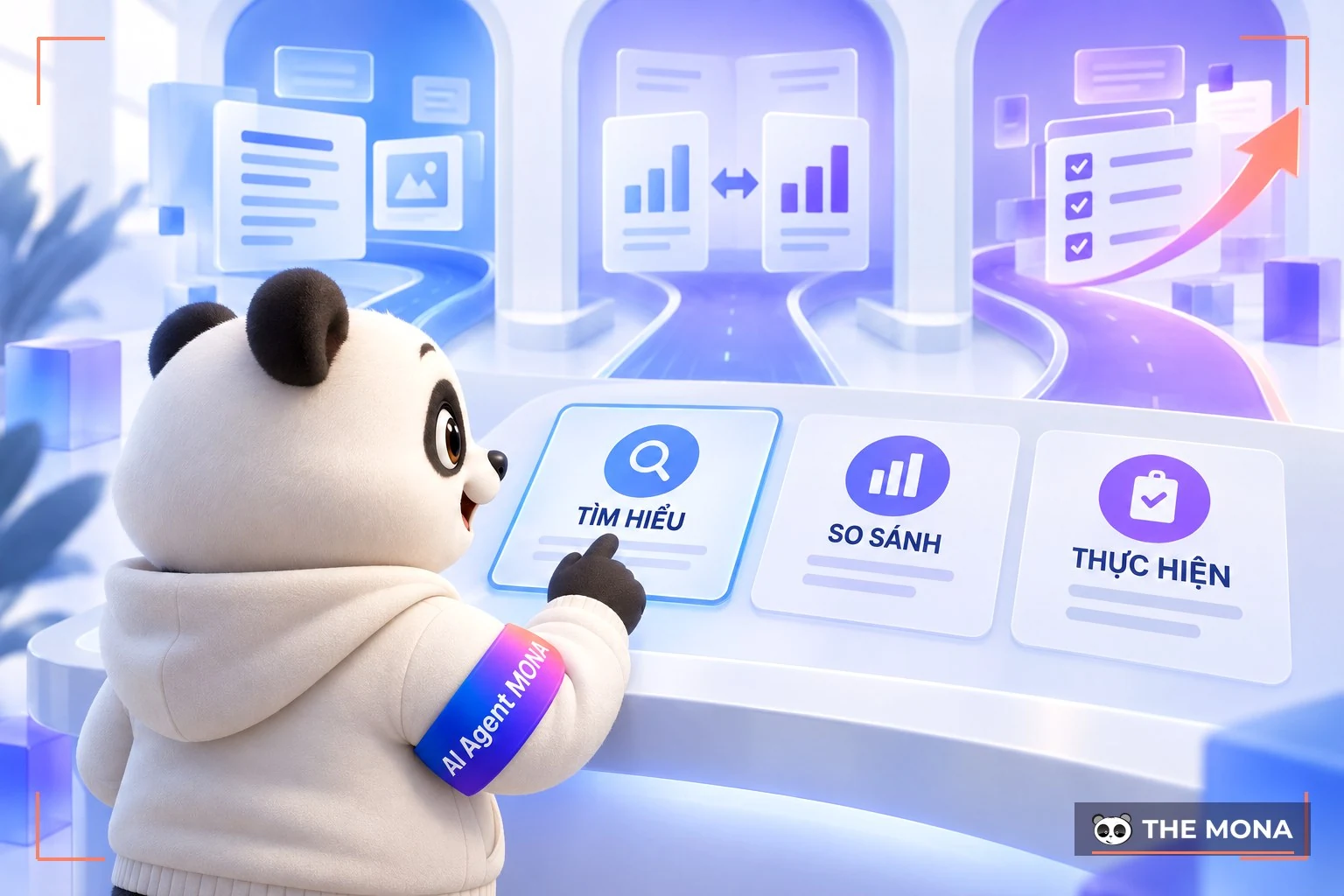
Understanding Search Intent helps you choose the right format, CTA and information, which increases time on page, lowers bounce rate and improves SEO rankings. Before you build content, define the purpose of the query clearly:
To hold your rankings in the era of AI SEO and the Google MUM algorithm update, you should organize your content in the Topic Cluster model to show expertise and tight links between topics.
Google MUM technology can process data in many formats, so use a mix of content formats to make your articles more visual:

To have your content rated highly by Google MUM, focus on strengthening E-E-A-T signals (Experience – Expertise – Authoritativeness – Trustworthiness).
By optimizing Semantic SEO, Google MUM will rate the depth of your article highly and improve how your content shows up across many kinds of search, from text to images and video. So what is the most accurate way to do it?
Interested in
AI & Vibe Coding?
A community group for sharing experience and turning ideas into electronic products that actually earn money with AI


For the Google MUM algorithm, speed and user experience are vital, so optimize these 4 criteria to keep your SEO working:
According to Google, in Q1 2025 alone, the AI Overviews (AIOs) feature reached more than 1.5 billion users a month, or 18.3% of the world's population. This shows that search behavior is shifting strongly toward platforms with AI. For a business that wants to keep its visibility, that means paying attention to optimizing for the Google MUM algorithm, because it is the foundation that helps Google understand context deeply and combine results from many data sources.
If you want to optimize your website fully and get ahead in the AI SEO era, let MONA Media work with you through a complete AI SEO services service. We will help your business stay ahead of the trend with the right SEO strategy approach, combining technology, data and high-quality content that matches intent and user insight.
MONA commits to helping your website:
Contact MONA Media through the hotline 1900 636 648 for a full AI SEO strategy consultation that helps your business adapt and lead in the Google MUM and AI search era.
1. Is Google MUM an SEO penalty?
The answer is NO. Google MUM is not a penalty for SEO. It is an upgrade that helps Google understand natural language more deeply. However, if your website content lacks expertise, misses the search purpose or is low quality, your rankings will drop.
2. Which kinds of websites are most affected by MUM?
Websites in the YMYL group such as health, finance and legal are affected most clearly. These areas demand a high level of accuracy, expertise and trust. So the Google MUM algorithm looks harder at quality, how reliable the sources are, and whether the content gives readers real value.
3. Do I need to rewrite my whole website for MUM?
There is no need to redo everything. Instead, review and optimize your older content to make it deeper, more useful and accurate.
4. Do I need video or images to do well in SEO in the MUM era?
Not required, but they give you a competitive edge. Since MUM can process multimedia (multimodal), adding images, video or infographics helps Google understand the content more deeply and optimizes search more effectively.
From the analysis of the Google MUM algorithm in the article above, the best way to lead in the AI SEO era is to invest seriously in the core quality of your content. From expertise and transparency (E-E-A-T) to making use of multimedia content, everything should revolve around real value for the reader. If you need an experienced, expert partner to help optimize AI SEO, click the button below to talk it through and get a free consultation.
See other Google algorithms:

CEO & Founder · The MONA
Founder of The MONA, who built a services company of 60+ staff with 14,000+ projects delivered. Khánh Hùng shares how he thinks about building systems that run themselves, automating a business, and the real lessons from delivering projects at MONA.
 1,5K



Professional website
design services
Own a website with a beautiful, 100% exclusive design and a lifetime warranty, with the ability
to expand features flexibly as your business grows, starting today!











 MONA will never sell your information or send you spam


 MONA will never sell your information or send you spam
