
 MONA OS 2.0
 Partner with MONA


 Tự động hoá doanh nghiệp
 Cẩm nang SEO
 Digital Marketing
 Kinh nghiệm thiết kế website
 Hạ Tầng Server
 Giáo dục


 VI
 EN


















Message us on
Zalo Official


 ProductsNew

 ProductsProducts
 Mới ra mắtKHA AI 2027App tự edit video, tự đăng mọi mạng xã hội, 2 phút mỗi ngày










 Website designLooks good and wins customers over.
SEO servicesBrings in customers searching for exactly what you sell.
 Tư vấn digital marketingKéo khách từ nhiều kênh, đo bằng số thật.
Corporate video productionVideos introducing your company, factory and team.
 NewAI video productionCompany story films made with AI.
 Custom software developmentCRM, ERP and HRM built for your business.
 Viết AI Agent theo yêu cầuĐặt riêng một trợ lý AI cho đúng việc của mình.
 Tư vấn chuyển đổi AIĐưa AI vào vận hành của cả công ty.
NewMONA LMSManagement for centers and schools.
MONA SkillHubInternal training for company staff.
 NHTQ systemEnd-to-end China–Vietnam shipping operations.
MONA JMSManagement for gold, diamond and pawn shops.
 MONA E-LearningA website with every feature you need to sell courses.
 How to sell online courses (course)More than 30 free lessons on selling courses on autopilot.
 MONA Cloudmonacloud.vnServers to get your apps and websites running.
 MONA Basemonabase.vnPostgres database, sign-in and file storage.
 MONA Mailmonamail.vnSend OTP, order and invoice emails from your software.
 MONA Paymonapay.vnAccept bank transfers via VietQR and notify your software when the money arrives.
 MONA eInvoiceComing soonIssue e-invoices that meet tax standards.
Gấu CườiTrả lời khách 24/7 trên web, Fanpage, Zalo và thu lead cho sale.
 Gấu TeleSalesGọi điện tư vấn, chăm khách như tổng đài viên thật.
Dê CườiTư vấn và chốt đơn cho shop ngay trong khung chat.
Gấu WebmasterNhắn nhóm Zalo là website được sửa xong.
 Gấu Pháp ChếSoạn hợp đồng, rà điều khoản trong vài phút.
 Gấu Báo GiáLên báo giá đúng mẫu và gửi khách ngay.
 AI chăm sóc khách hàngTheo dõi và giữ chân khách hàng cũ.
 Gấu Tuyển DụngLọc hồ sơ, hẹn lịch, phỏng vấn ứng viên.
 Mới ra mắt
KHA AI 2027
Xây kênh chuyên gia 2 phút mỗi ngày
Quay bằng điện thoại, AI tự edit video, tự đăng lên 16 nền tảng và tự trả lời bình luận, tin nhắn.
898.629lượt xem trên kênh CEO MONA sau 37 ngày
 Anh Khánh HùngCEO MONA đang dùng mỗi ngày
Xem app làm được gì
 AI
Gấu Cười MONA ĐANG TỰ XÀITrả lời khách 24/7 trên website, Zalo OA, Messenger và thu lead về cho sale.
Dê CườiChốt đơn bán lẻ và sàn: Shopee, TikTok Shop, web. Chăm cả khách sỉ, đại lý.
Gấu WebmasterCập nhật nội dung, tối ưu SEO website mỗi ngày.
Gấu TeleSalesGọi điện tư vấn, chăm khách như tổng đài viên thật.
Gấu Tuyển DụngLọc hồ sơ, hẹn lịch, phỏng vấn ứng viên tự động.
AI chăm sóc khách hàngGiữ khách cũ, cứu lead đã rớt cho phòng kinh doanh.
Gấu Pháp ChếSoạn hợp đồng, rà điều khoản trong vài phút.
Gấu Báo GiáLên báo giá đúng mẫu, gửi khách ngay khi có yêu cầu.
 Chuyển đổi AI toàn phầnGiải pháp tổng cho doanh nghiệp, 3 lớp triển khai.
 Viết AI Agent theo yêu cầuĐặt riêng một con AI gánh đúng nghiệp vụ của bạn.
 Custom softwareCRM, ERP and HRM with built-in AI automation.
 SEO & AEO thời đại AIĐược Google lẫn AI trích dẫn, không chỉ xếp hạng.
 Kiến thức AI cho doanh nghiệpBài phân tích, hướng dẫn ứng dụng AI vào vận hành.
 Free AI courses
 AI tools at work
App mới · KHA AI 2027
Xây kênh 2 phút mỗi ngày
AI tự edit video, tự đăng mọi mạng xã hội
Free consultation, 8am–10pm every day

24 December, 2025

Customers do not always ask about everything they worry about. Most buying barriers sit in hidden questions that have never been typed into a search box. FLUQs was created to close exactly that gap. As AI Search increasingly acts as the middleman that answers questions, the brands that understand and handle FLUQs well will be the ones AI mentions first. So what are FLUQs? Let's MONA Media explore how to turn “hidden questions” into quality traffic in this article.
FLUQs (Friction-Inducing Latent Unasked Questions) are hidden questions that users do not ask on their own, and may not even realize they are wondering about. But if these questions go unanswered, they get in the way of the buying decision. In other words, they sit in the gap between what users already know and what they need to know to decide, but have never been typed into a search bar.
*This gap is also where AI tends to produce wrong information, or where customers hesitate.

FLUQs are not there just to “answer enough questions.” They exist to build trust and content authority for your website, and to make AI tools treat your content as a reliable source worth citing.
Instead of only answering the obvious questions, FLUQs give fuller, deeper answers that fill information gaps. When your content clears up these factors, your website becomes a trusted reference for AI to draw on, which brings steady traffic from search engines.
Say you are a business thinking about using SEO services. The common questions (FAQs) people usually ask are:
But behind those are questions that really shape the decision, which users do not ask directly, such as:
This is where FLUQs come in: the content that explains where revenue comes from, in what context SEO website works well, and when SEO is not the right choice. A website that makes these points clear becomes a source AI prefers to use, even when no user has ever asked the question.
There is no clear search data for the question: “Does SEO generate revenue under my current business conditions?” but you still have to find the answer to these concerns.
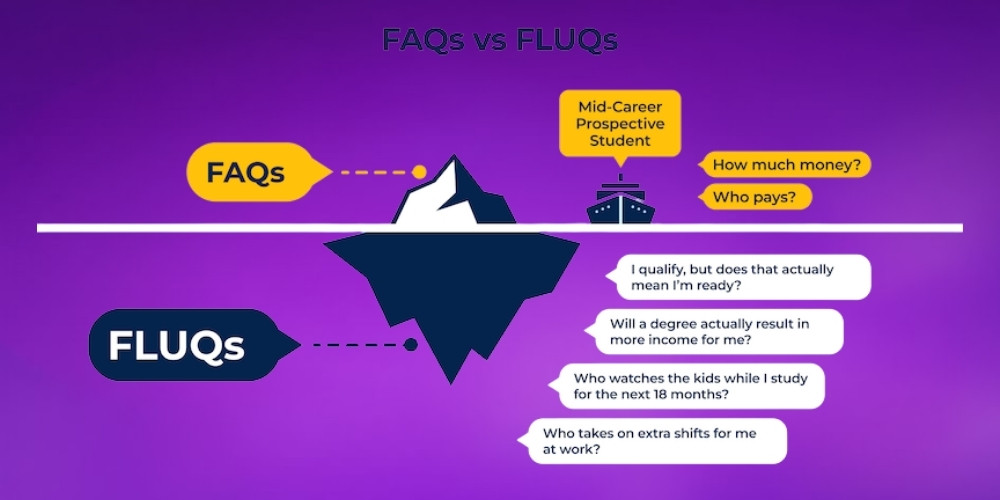
Although both are question formats, FAQs answer what customers ask out loud, while FLUQs focus on what they hesitate about but never say. The comparison table below makes the difference easier to see:
|
Criterion |
FAQs |
FLUQs |
|
Nature |
Clear questions that get asked again and again |
Hidden worries, doubts and barriers that customers do not voice |
|
Goals |
Solve basic problems |
Build trust and remove psychological barriers |
|
Mindset |
Reactive Answer what users ask |
Proactive Anticipate and resolve what customers are wondering about |
|
Source |
Data from emails and direct messages |
Analysis of negative reviews, forum comments and customer interviews |
|
Impact |
Helps customers complete a purchase |
Helps customers trust and choose the brand's product or service |
You may also be interested in: Top 12 SEO questions that SEOers need to know
For FLUQs to create real value in AI Search, a business cannot rely on gut feeling. You need a clear process, from finding the right “hidden questions” and proving their business value to presenting content so AI can understand and cite it.
FLUQs do not start with a keyword. They start with hesitation. Customers rarely state these barriers outright, but they show up all over customer insights that businesses tend to overlook. That is why MONA always advises businesses to listen actively to:
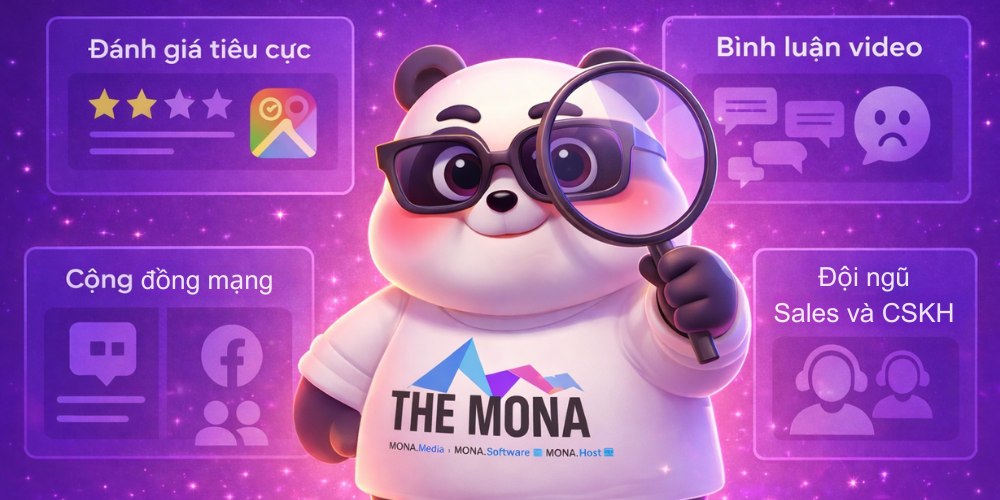
At this step, you can use AI to distill about 20 to 30 negative reviews or comments, then use Chat GPT, Gemini and others to identify the most important FLUQs. So how should you prompt it? prompt ?
For AI to understand and give you the result you want, you can use the sample prompt below from MONA:
Role: You are an expert in consumer behavior analysis, able to read deep customer insight and psychology.
Context: I run [describe your product/service, for example: “website design service for businesses”]. Below is a collection of reviews, unhappy feedback and customer comments about similar providers on the market.
Input data:
[Paste all relevant reviews and comments here]
Request: Based on the data provided, help me identify the 5 most important FLUQs, meaning the hidden concerns customers usually do not ask about directly but that strongly affect their decision to sign a contract. For each FLUQ, briefly explain why that worry becomes a barrier in the customer's decision process.
Once you have found many promising FLUQs, SEO specialists you need to pick which ones to tackle first. You also need a convincing basis to defend that decision to leadership. That is the role of FRFYs (FLUQ Resolution Foresight Yield).
In short, FRFYs are a way to estimate the business benefit if a specific barrier is removed. For example: how many percentage points answering this worry could add to the conversion rate, or how it might contribute to future revenue.
FRFYs do not require a complex model. Their core value is turning customer feelings (qualitative insight) into potential numbers. That way, FLUQs content proposals are no longer gut-feel ideas but evidence-based decisions, which makes budget and resource allocation go more smoothly.
To get AI to cite your content, it is not enough to answer the FLUQs correctly. How you organize the information matters too. At this step, MONA suggests applying 2 core techniques:

For example, take a FLUQ in web design services: “Will a finished website actually bring in customers, or is it just for show?”
Compared with generic writing, this structure is more direct, gives specific information and creates “citable facts,” which AI strongly prefers when assembling answers.
Beyond answering FLUQs in a blog post on your website, a business needs to turn that answer into a consistent message that appears at the right time and place across the whole customer journey. You should proactively roll out content built around the FLUQs answer on several channels, such as:
When the same FLUQs answer appears repeatedly and strategically, you do more than strengthen user trust. You also create many consistent signals for AI to verify the brand's credibility, which improves the business's Authority and Trust.
A FLUQs strategy will not deliver instant results like a traffic spike within days. But a business can still verify its impact through indirect indicators such as:
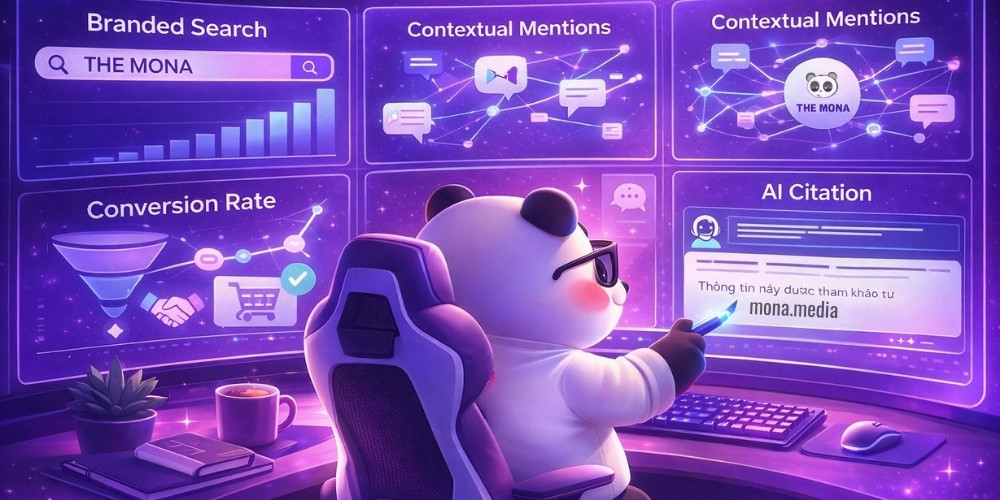
These signals show your content is answering users' core concerns, even when they never asked directly. That is how FLUQs turn into a lasting advantage in the AI Search ecosystem.
Interested in
AI & Vibe Coding?
A community group for sharing experience and turning ideas into electronic products that actually earn money with AI

The business's AI search engines has become the middleman that answers in place of websites, and the biggest challenge for content is no longer the topic but whether AI chooses to use it. The section below shows you how to test and apply FLUQs in a way you can measure and use in practice.
The goal of this step is to work on content that already has “credibility” with Google instead of starting from zero, which saves a fair amount of time and effort.
MONA suggests using Google Analytics or an equivalent tool such as tracking website traffic to filter out the pages with the highest traffic and deep enough content (at least about 1,500 words). You can pick articles that already rank high in search results, ideally in Google's top 3.
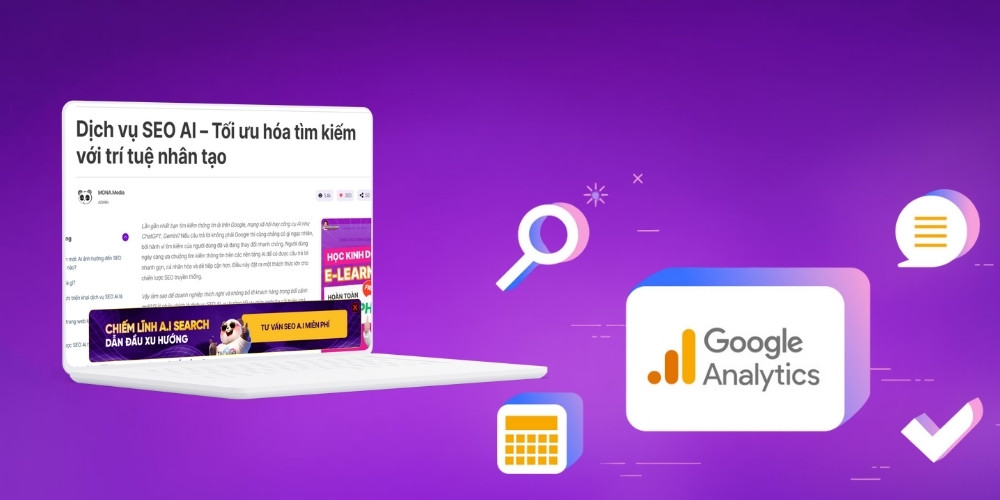
Example: If you sell project management software, pick an article like “How to roll out project management software for teams of 20 to 50 people” rather than a company intro page. Pages like these usually hold plenty of context for finding FLUQs.
At this step, you need to find the missing pieces of information that directly affect customers' decisions (Friction-Inducing Fact Gaps). To save time, businesses can use the FLUQ-finder method by writing prompts for AI to help. Here are 3 sample prompts you can use:
Prompt 1. Analyze directly from existing content
Suppose my target customer group is: [DESCRIBE CUSTOMER GROUP]
Read this content: [PASTE YOUR CONTENT]
Based on the content provided, what UNANSWERED questions does this customer group not know they need to ask, yet which directly affect their success?
Please list these questions by:
Prompt 2. Analyze market feedback
My target customer group is: [DESCRIBE CUSTOMER GROUP]
These are reviews from my customers:
[PASTE REVIEWS FROM GOOGLE OR YOUR WEBSITE]
Based on these reviews, which FLUQs are likely to exist?
Please identify:
Prompt 3. Check the AI hallucination points Hallucination (AI producing false information)
I am an expert in: [YOUR FIELD]
My customers often ask: [LIST COMMON QUESTIONS]
When answering these questions, AI systems often:
So I want you to identify:
*Nuance: Small, subtle differences that are not obvious at first glance but are very important for understanding an issue more deeply.
Not every FLUQ deserves to be handled first. Your job at this step is to pinpoint the 1 hidden question with the most weight. So how do you find it?

Example:
Once you have identified the core FLUQ, present the answer in a way AI can analyze, extract and reuse with its meaning intact. A business can choose one of three formats:
1. Causal Triplet
A Causal Triplet is the simplest structure but enough to make the logic clear in a short block of information. It consists of:
Example:
2. FAQs with a clear structure
You can use the following template:
Question: [Your FLUQs]
**Answer (3-4 sentences)**:
**Real example**: [Give your own specific example]
A more concrete example:
FLUQ: What should a business prepare before rolling out a CRM to the whole sales team?
Answer:
Real example: Minh, head of sales, decided to roll out a CRM to track the pipeline but did not tell the team beforehand that they would have to update lead status every day. In the first week the data was incomplete, reports were wrong and staff pushed back about being “over-controlled.”
If Minh had held a meeting first and said clearly: “Each rep only needs to update for 5 minutes at the end of the day. The CRM is not for monitoring individuals, it is for distributing leads and helping close deals,” the team would have understood the goal and cooperated from day one.
3. Checklist
This format works especially well for actionable FLUQs. MONA suggests the following sample prompt:
Before you [do something], check:
Why this matters: [Short explanation]
Result if skipped: [State the specific consequence]
Finally, put the EchoBlock where AI can reach it and verify the information. Roll it out on three groups of platforms at the same time:
This includes tasks such as:
Here is a code snippet you can use as a reference:
<!– Example HTML structure that is easy for AI to parse –>
<div class=”fluq-block”>
<h3>Question: [Your FLUQs]</h3>
<p class=”answer”>[Causal triplet answer]</p>
<p class=”source”>Based on a [year] survey of [number] participants</p>
</div>
You can publish content as guest posts, joint reports or analysis pieces on reputable industry platforms, or on Medium, LinkedIn and Reddit. This gets your information confirmed by more independent sources.
To roll this out, you can follow these steps:
Make sure your website is fully indexed, uses clear headings and proper schema markup so AI can read and understand the meaning. When an answer to a FLUQs appears consistently in many places, AI tends to trust it and reuse it in its synthesized answers.
The code a business can use is:
<script type=”application/ld+json”>
{
“@context”: “https://schema.org”,
“@type”: “FAQPage”,
“mainEntity”: [{
“@type”: “Question”,
“name”: “[Your FLUQ]”,
“acceptedAnswer”: {
“@type”: “Answer”,
“text”: “[Your EchoBlock answer]”
}
}]
}
</script>
After you have built content around FLUQs, the next step is to verify whether AI actually “reads,” “understands” and uses your content. This is not guesswork. You can track it in the specific ways below.
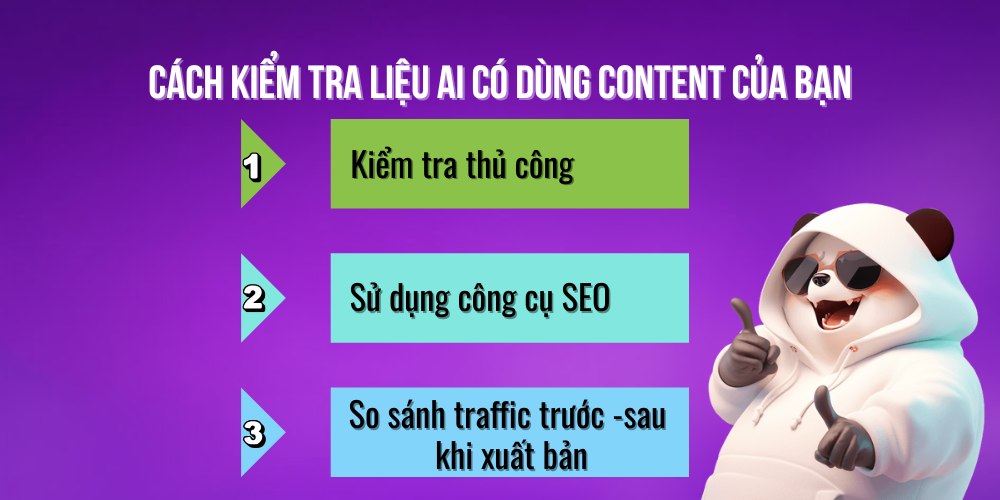
The answer is YES.
FLUQs are not just a short-term SEO technique. They are a strategic way of thinking about how a brand understands its customers. When AI can produce endless look-alike content, the competitive edge lies in answering what customers are wondering about but do not know how to ask.
Investing in finding and resolving FLUQs shows that a brand has real-world experience, because you understand the hidden barriers in the decision journey, and solid expertise, because your solution hits the root of the problem. Credibility and trust then form naturally, in line with the criteria of E-E-A-T SEO that Google and AI systems both prioritize.
If your business worries that its website will lose its position as AI answers in place of search results, you can use AI SEO services professional from MONA Media. With over 10 years of experience and 500+ SEO projects delivered, we will help your website hold its rankings and get cited in AI answers.

What will your business get when you roll out AI SEO with us?
Contact us for an assessment of your current content and a practical, sustainable AI SEO strategy proposal for the period ahead.
1. Does answering FLUQs expose a business's weak points?
No. In practice, avoiding the worries that every customer quietly thinks about is the bigger risk. Raising those hidden concerns openly and offering a fitting way to resolve them makes customers trust you more.
2. Can FLUQs fully replace keyword research?
No. FLUQs do not replace keyword research. They add a deeper strategic layer. Keywords show you common information needs, while FLUQs make your content stand out, hit the real psychological barriers and build a lasting competitive edge.
3. How do you identify FLUQs when the product is new and has few reviews?
In this case, analyze substitute products or indirect competitors. A business can also interview its first group of users, which helps you spot early the hidden questions that affect buying decisions.
We hope this article has helped you understand FLUQs and why “hidden questions” are becoming a deciding factor in AI Search. As users stop searching the traditional way, content is only valuable if it answers the concerns they have not yet voiced. Starting with FLUQs is also the first step to getting your content trusted and cited by AI and bringing lasting traffic.

CEO & Founder · The MONA
Founder of The MONA, who built a services company of 60+ staff with 14,000+ projects delivered. Khánh Hùng shares how he thinks about building systems that run themselves, automating a business, and the real lessons from delivering projects at MONA.
 1,5K


Professional website
design services
Own a website with a beautiful, 100% exclusive design and a lifetime warranty, with the ability
to expand features flexibly as your business grows, starting today!












 MONA will never sell your information or send you spam


 MONA will never sell your information or send you spam
