
 MONA OS 2.0
 Hợp tác với MONA


 Tự động hoá doanh nghiệp
 Cẩm nang SEO
 Digital Marketing
 Kinh nghiệm thiết kế website
 Hạ Tầng Server
 Giáo dục


 VI
 EN




















Message us on
Zalo Official


 ProductsNew

 ProductsProducts
 Mới ra mắtKHA AI 2027App tự edit video, tự đăng mọi mạng xã hội, 2 phút mỗi ngày










 Thiết kế websiteVừa đẹp vừa thuyết phục được khách.
Dịch vụ SEOKéo về khách đang tìm đúng thứ anh chị bán.
 Tư vấn digital marketingKéo khách từ nhiều kênh, đo bằng số thật.
Quay video doanh nghiệpVideo giới thiệu công ty, nhà xưởng, đội ngũ.
 MớiDựng video AIDựng phim câu chuyện công ty bằng AI.
 Custom software developmentCRM, ERP and HRM built for your business.
 Viết AI Agent theo yêu cầuĐặt riêng một trợ lý AI cho đúng việc của mình.
 Tư vấn chuyển đổi AIĐưa AI vào vận hành của cả công ty.
NewMONA LMSManagement for centers and schools.
MONA SkillHubInternal training for company staff.
 NHTQ systemEnd-to-end China–Vietnam shipping operations.
MONA JMSManagement for gold, diamond and pawn shops.
 MONA E-LearningA website with every feature you need to sell courses.
 How to sell online courses (course)More than 30 free lessons on selling courses on autopilot.
 MONA Cloudmonacloud.vnServers to get your apps and websites running.
 MONA Basemonabase.vnPostgres database, sign-in and file storage.
 MONA Mailmonamail.vnSend OTP, order and invoice emails from your software.
 MONA Paymonapay.vnAccept bank transfers via VietQR and notify your software when the money arrives.
 MONA eInvoiceComing soonIssue e-invoices that meet tax standards.
Gấu CườiTrả lời khách 24/7 trên web, Fanpage, Zalo và thu lead cho sale.
 Gấu TeleSalesGọi điện tư vấn, chăm khách như tổng đài viên thật.
Dê CườiTư vấn và chốt đơn cho shop ngay trong khung chat.
Gấu WebmasterNhắn nhóm Zalo là website được sửa xong.
 Gấu Pháp ChếSoạn hợp đồng, rà điều khoản trong vài phút.
 Gấu Báo GiáLên báo giá đúng mẫu và gửi khách ngay.
 AI chăm sóc khách hàngTheo dõi và giữ chân khách hàng cũ.
 Gấu Tuyển DụngLọc hồ sơ, hẹn lịch, phỏng vấn ứng viên.
 Mới ra mắt
KHA AI 2027
Xây kênh chuyên gia 2 phút mỗi ngày
Quay bằng điện thoại, AI tự edit video, tự đăng lên 16 nền tảng và tự trả lời bình luận, tin nhắn.
879.625lượt xem trên kênh CEO MONA sau 35 ngày
 Anh Khánh HùngCEO MONA đang dùng mỗi ngày
Xem app làm được gì
 AI
Gấu Cười MONA ĐANG TỰ XÀITrả lời khách 24/7 trên website, Zalo OA, Messenger và thu lead về cho sale.
Dê CườiChốt đơn bán lẻ và sàn: Shopee, TikTok Shop, web. Chăm cả khách sỉ, đại lý.
Gấu WebmasterCập nhật nội dung, tối ưu SEO website mỗi ngày.
Gấu TeleSalesGọi điện tư vấn, chăm khách như tổng đài viên thật.
Gấu Tuyển DụngLọc hồ sơ, hẹn lịch, phỏng vấn ứng viên tự động.
AI chăm sóc khách hàngGiữ khách cũ, cứu lead đã rớt cho phòng kinh doanh.
Gấu Pháp ChếSoạn hợp đồng, rà điều khoản trong vài phút.
Gấu Báo GiáLên báo giá đúng mẫu, gửi khách ngay khi có yêu cầu.
 Chuyển đổi AI toàn phầnGiải pháp tổng cho doanh nghiệp, 3 lớp triển khai.
 Viết AI Agent theo yêu cầuĐặt riêng một con AI gánh đúng nghiệp vụ của bạn.
 Custom softwareCRM, ERP and HRM with built-in AI automation.
 SEO & AEO thời đại AIĐược Google lẫn AI trích dẫn, không chỉ xếp hạng.
 Kiến thức AI cho doanh nghiệpBài phân tích, hướng dẫn ứng dụng AI vào vận hành.
 Free AI courses
 AI tools at work
App mới · KHA AI 2027
Xây kênh 2 phút mỗi ngày
AI tự edit video, tự đăng mọi mạng xã hội
Free consultation, 8am–10pm every day

23 July, 2025

With SEO trends changing constantly, such as AI Overview, Featured Snippets or Google core updates, getting information in time is key to holding your rankings. And Deep Research is the “a powerful helper” that helps SEOs keep up with the market, optimize content and push a website to the top quickly.
Find out with MONA Media Let’s explore what Deep Research is and how to use this tool to optimize your SEO strategy more effectively.
Interested in
AI & Vibe Coding?
A community group for sharing experience and turning ideas into electronic products that actually earn money with AI

Deep Research Colocation is a AI agent (AI agent) developed by OpenAI, built directly into ChatGPT, designed to carry out in-depth, multi-step and complex research tasks on the Internet automatically.
Unlike traditional AI models that respond quickly to single queries, Deep Research mimics a real human research process and can take 5 to 30 minutes (or more) to gather information from hundreds of sources, including text, images, PDFs and spreadsheets. It then analyzes the data from many angles, reasons through it and presents the result as a complete report with clear source citations to keep things transparent and reliable
Today, many big tech companies such as OpenAI, Google, Perplexity, xAI… have launched their own Deep Research versions. Among them, OpenAI’s Deep Research is highly rated for handling information at an expert level.
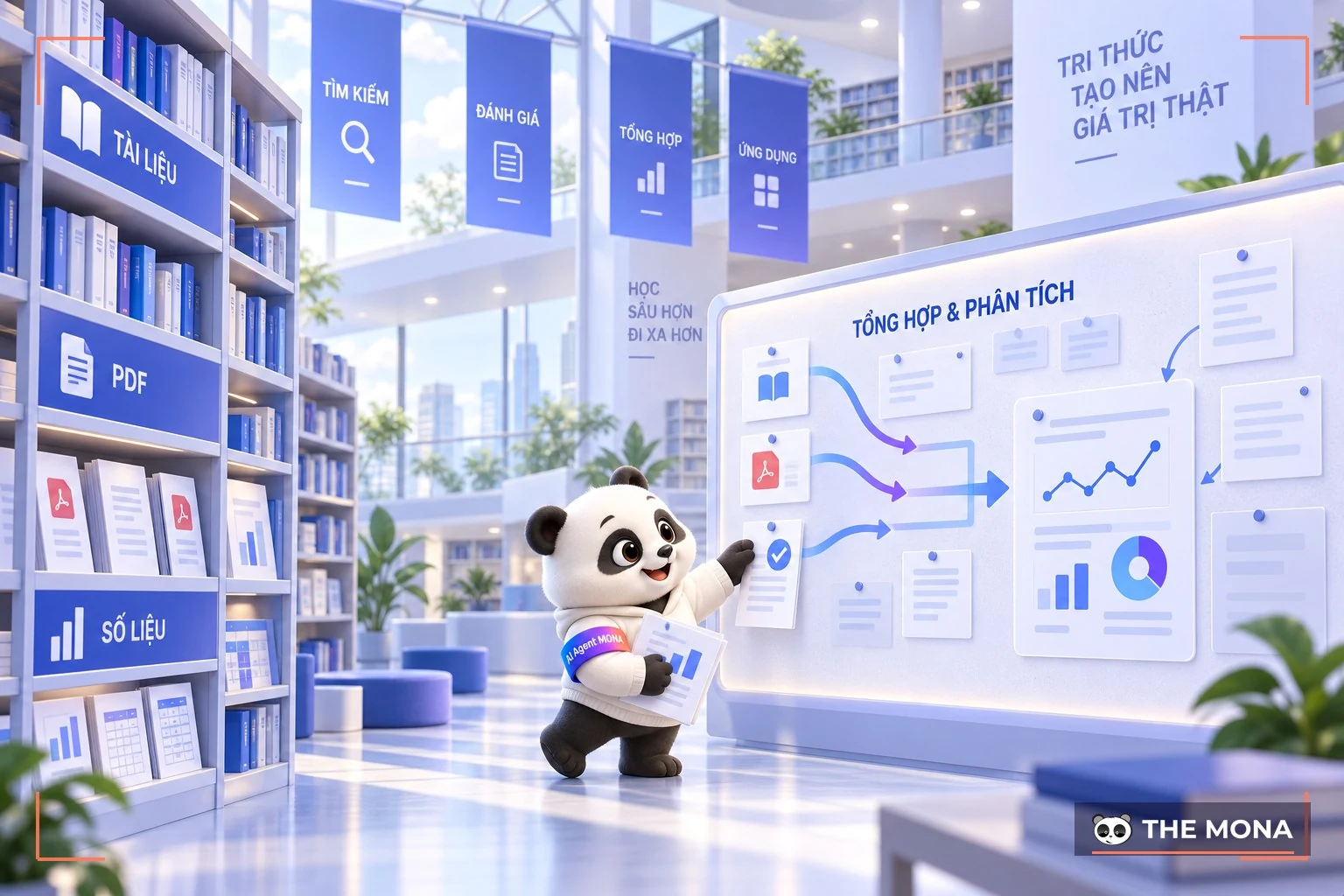
Deep Research AI tools is a powerful assistant that will help you:
According to the most demanding AI test available, OpenAI’s Deep Research clearly outperforms other AI models. Specifically, the Deep Research model currently leads an AI accuracy test called Humanity’s Last Exam, an expert-level benchmark of AI ability across fields such as mathematics, natural sciences, social sciences and the humanities.
With web browsing and Python tools, Deep Research reached an accuracy of 26,6%, far ahead of other models such as GPT-4o (3.3%) and o3-mini-high (only 13% with plain text).
Before going deeper into how to use Deep Research to optimize SEO strategy, let’s review the difference between regular ChatGPT and Deep Research below.
If you need quick ideas or an explanation of foundational knowledge, you can use the regular ChatGPT versions (for example GPT-4o, GPT4o-mini,…)
It also supports in-depth research, especially for tasks such as:
If SEOs SEO copywriting and content creators need to research information and evidence in depth, they can use Deep Research.
Suppose you want to understand how Google’s latest core update affects search rankings.
→ ChatGPT answers by combining information from earlier updates, but it has no latest data, cites no sources and may be inaccurate for today.
→ Deep Research pulls analysis from reputable SEO sites, synthesizes it, attaches 13 full citations and gives an analysis 1.068 in detail.
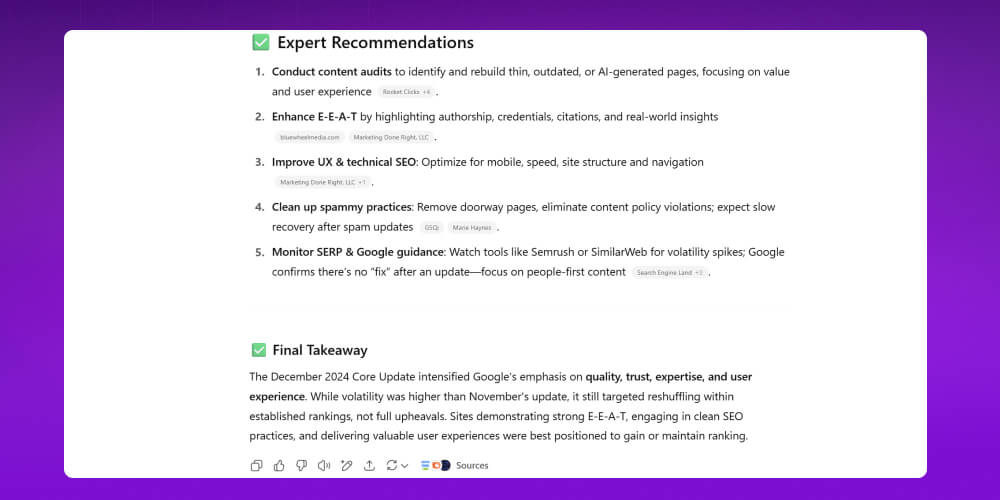 For example, when we tried the prompt above, Deep Research returned a 1,068-word analysis (not counting the list of 13 citations with links). Here is an excerpt:
“The 12/2024 update from Google favors websites with high-quality, trustworthy content and cracks down harder on low-quality or spam content[^1]. SEO experts note that Google keeps stressing the importance of original, high-quality content that clearly shows E-E-A-T[^2]. Websites with thin or duplicate content, especially in the YMYL group, saw clear ranking drops[^3]. AI-generated content is also more tightly controlled, especially automated content that does not meet quality standards[^4].”
The notes and citations in Deep Research responses let SEOs know exactly who said what and where, making it easier to judge reliability and make smarter decisions.
According to SimilarWeb statistics, as of 5/2025, organic traffic to news sites has dropped from 2.3 billion visits to 1.7 billion, since Google launched AI Overview.
Notably, the share of users who do not click any link after viewing the AI-provided summary also rose from 56% to 69%. The statistics clearly show users now get the information they need straight from Google’s answer with cited sources.
Given this clear shift, optimizing your website to improve ranking in AI Overview is no longer optional, it is an important strategy when running AEO service.
With over 10 years of experience delivering SEO for hundreds of businesses, MONA Media commits to:

Contact with MONA Media to get advice and a fast SEO service quote.
To optimize a structured full-scope with OpenAI’s Deep Research, you can use the tool’s features to analyze real-time data and find in-depth information. Specifically, ways to use Deep Research AI cho SEO effectively.
One of the most effective ways to use Deep Research to optimize your strategy SEO web is analyzing competitors and tracking search results (SERP) in real time. This step is extremely important if you want to know what competitors are doing, what content gets them to the top, and where the opportunities are for your website to rank on Google.

For example: Suppose you are producing SEO content for the keyword “best SEO tools for AI 2026”. Instead of compiling by hand or relying on old information, you can enter a prompt into Deep Research like this:
“Summarize the 5 most effective SEO tools for AI in 2026, summarizing features, pricing, pros/cons and attaching source links.”
Deep Research immediately analyzes and responds with many different sources, takes the latest information and organizes it logically into an overview comparison table. This lets you:
Instead of “guessing” or writing on gut feeling, a Deep Research tool gives you a broader view so you can build an effective content strategy.
Planning content is not just about finding keywords. You need to work out what users are really searching for, pick the right topic, and back it up with credible evidence so the article stands out.
With Deep Research, you can:
Example prompt for blog ideas: “What are the new trends in AI search optimization in 2026? Are there any reports or experts commenting on this?”
Within seconds, Deep Research returns a list of trends with specific references, so you can come up with content ideas fast.
Google increasingly favors quality content that clearly shows the E-E-A-T criteria (Experience, Expertise, Authoritativeness, and Trustworthiness)
With a Deep Research model, you can easily:

Example prompt to optimize E-E-A-T: “Find studies that analyze the impact of AI content on SEO rankings.”
The results usually come with specific citations and source links, helping you write articles that are in-depth, verified and well regarded by Google.
Effective SEO takes more than a good strategy. It also means using your time well when you execute full-scope SEO.
With a Deep Research model, you can use it to:
To get the most out of Deep Research for your website's SEO, keep a few things in mind when you build your prompt:
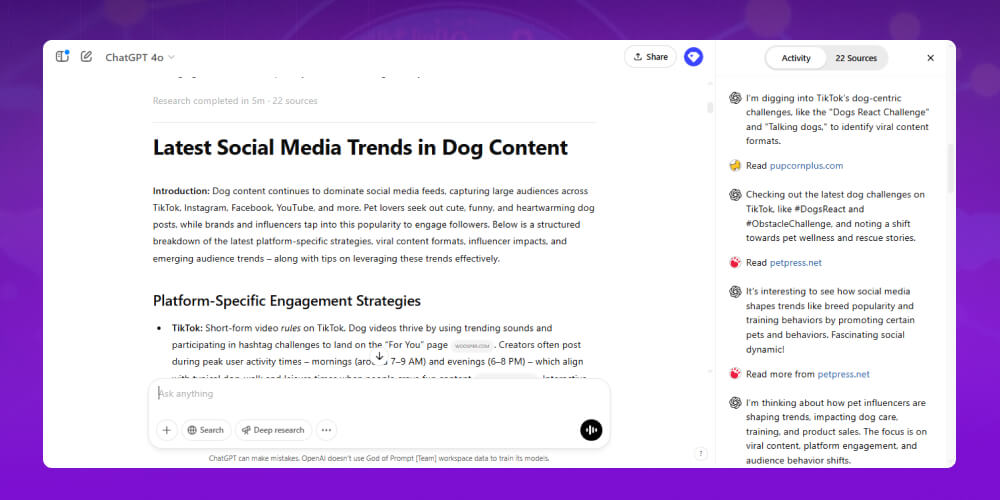
A clear prompt for a Deep Research model needs to balance specific detail with enough flexibility for the AI to ask back when needed. You should also state the presentation style you want and ask for source citations.
Deep Research is more than a smart search tool. It has become a strong ally in modern SEO strategy. By understanding user requests in depth, analyzing from many angles and pulling together information from many credible sources, Deep Research helps businesses reach accurate information faster and more completely than ever.

CEO & Founder · The MONA
Founder of The MONA, who built a services company of 60+ staff with 14,000+ projects delivered. Khánh Hùng shares how he thinks about building systems that run themselves, automating a business, and the real lessons from delivering projects at MONA.
 1,5K



Professional website
design services
Own a website with a beautiful, 100% exclusive design and a lifetime warranty, with the ability
to expand features flexibly as your business grows, starting today!












 MONA will never sell your information or send you spam


 MONA will never sell your information or send you spam
