
 MONA OS 2.0
 Partner with MONA


 Tự động hoá doanh nghiệp
 Cẩm nang SEO
 Digital Marketing
 Kinh nghiệm thiết kế website
 Hạ Tầng Server
 Giáo dục


 VI
 EN












Message us on
Zalo Official


 ProductsNew

 ProductsProducts
 Mới ra mắtKHA AI 2027App tự edit video, tự đăng mọi mạng xã hội, 2 phút mỗi ngày










 Website designLooks good and wins customers over.
SEO servicesBrings in customers searching for exactly what you sell.
 Tư vấn digital marketingKéo khách từ nhiều kênh, đo bằng số thật.
Corporate video productionVideos introducing your company, factory and team.
 NewAI video productionCompany story films made with AI.
 Custom software developmentCRM, ERP and HRM built for your business.
 Viết AI Agent theo yêu cầuĐặt riêng một trợ lý AI cho đúng việc của mình.
 Tư vấn chuyển đổi AIĐưa AI vào vận hành của cả công ty.
NewMONA LMSManagement for centers and schools.
MONA SkillHubInternal training for company staff.
 NHTQ systemEnd-to-end China–Vietnam shipping operations.
MONA JMSManagement for gold, diamond and pawn shops.
 MONA E-LearningA website with every feature you need to sell courses.
 How to sell online courses (course)More than 30 free lessons on selling courses on autopilot.
 MONA Cloudmonacloud.vnServers to get your apps and websites running.
 MONA Basemonabase.vnPostgres database, sign-in and file storage.
 MONA Mailmonamail.vnSend OTP, order and invoice emails from your software.
 MONA Paymonapay.vnAccept bank transfers via VietQR and notify your software when the money arrives.
 MONA eInvoiceComing soonIssue e-invoices that meet tax standards.
Gấu CườiTrả lời khách 24/7 trên web, Fanpage, Zalo và thu lead cho sale.
 Gấu TeleSalesGọi điện tư vấn, chăm khách như tổng đài viên thật.
Dê CườiTư vấn và chốt đơn cho shop ngay trong khung chat.
Gấu WebmasterNhắn nhóm Zalo là website được sửa xong.
 Gấu Pháp ChếSoạn hợp đồng, rà điều khoản trong vài phút.
 Gấu Báo GiáLên báo giá đúng mẫu và gửi khách ngay.
 AI chăm sóc khách hàngTheo dõi và giữ chân khách hàng cũ.
 Gấu Tuyển DụngLọc hồ sơ, hẹn lịch, phỏng vấn ứng viên.
 Mới ra mắt
KHA AI 2027
Xây kênh chuyên gia 2 phút mỗi ngày
Quay bằng điện thoại, AI tự edit video, tự đăng lên 16 nền tảng và tự trả lời bình luận, tin nhắn.
883.362lượt xem trên kênh CEO MONA sau 36 ngày
 Anh Khánh HùngCEO MONA đang dùng mỗi ngày
Xem app làm được gì
 AI
Gấu Cười MONA ĐANG TỰ XÀITrả lời khách 24/7 trên website, Zalo OA, Messenger và thu lead về cho sale.
Dê CườiChốt đơn bán lẻ và sàn: Shopee, TikTok Shop, web. Chăm cả khách sỉ, đại lý.
Gấu WebmasterCập nhật nội dung, tối ưu SEO website mỗi ngày.
Gấu TeleSalesGọi điện tư vấn, chăm khách như tổng đài viên thật.
Gấu Tuyển DụngLọc hồ sơ, hẹn lịch, phỏng vấn ứng viên tự động.
AI chăm sóc khách hàngGiữ khách cũ, cứu lead đã rớt cho phòng kinh doanh.
Gấu Pháp ChếSoạn hợp đồng, rà điều khoản trong vài phút.
Gấu Báo GiáLên báo giá đúng mẫu, gửi khách ngay khi có yêu cầu.
 Chuyển đổi AI toàn phầnGiải pháp tổng cho doanh nghiệp, 3 lớp triển khai.
 Viết AI Agent theo yêu cầuĐặt riêng một con AI gánh đúng nghiệp vụ của bạn.
 Custom softwareCRM, ERP and HRM with built-in AI automation.
 SEO & AEO thời đại AIĐược Google lẫn AI trích dẫn, không chỉ xếp hạng.
 Kiến thức AI cho doanh nghiệpBài phân tích, hướng dẫn ứng dụng AI vào vận hành.
 Free AI courses
 AI tools at work
App mới · KHA AI 2027
Xây kênh 2 phút mỗi ngày
AI tự edit video, tự đăng mọi mạng xã hội
Free consultation, 8am–10pm every day

31 July, 2026
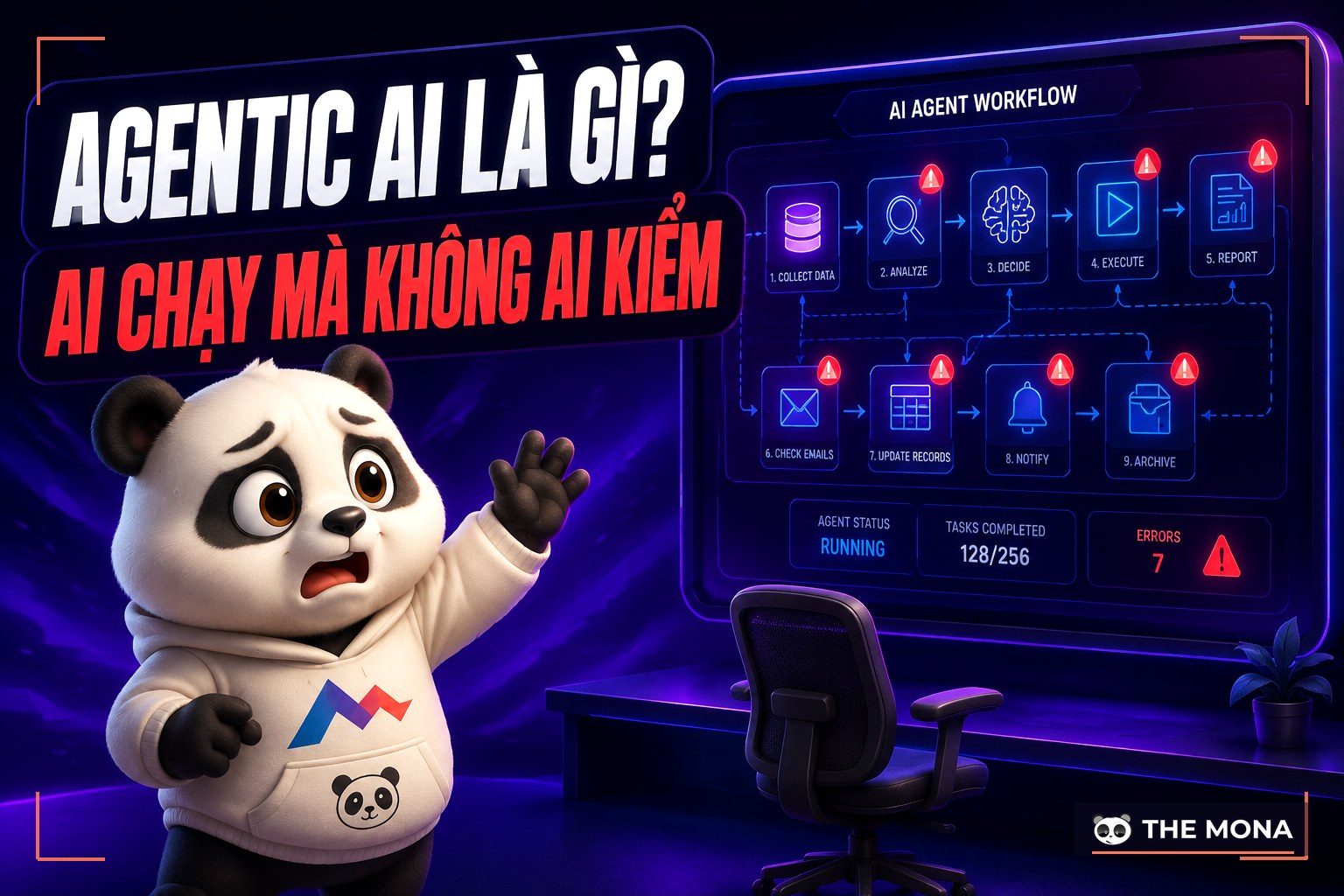
What is Agentic AI? It is an AI system that can take a goal, plan for itself, carry out multiple steps of work, check its own results and adjust when it spots a deviation, instead of waiting for a person to enter each small command.
Picture two employees in your company. One only works when given each separate task, such as sending an email, checking figures or updating a spreadsheet. The other takes a goal, splits up the work, handles it step by step and reports back with the result. Agentic AI is closer to the second way of working.
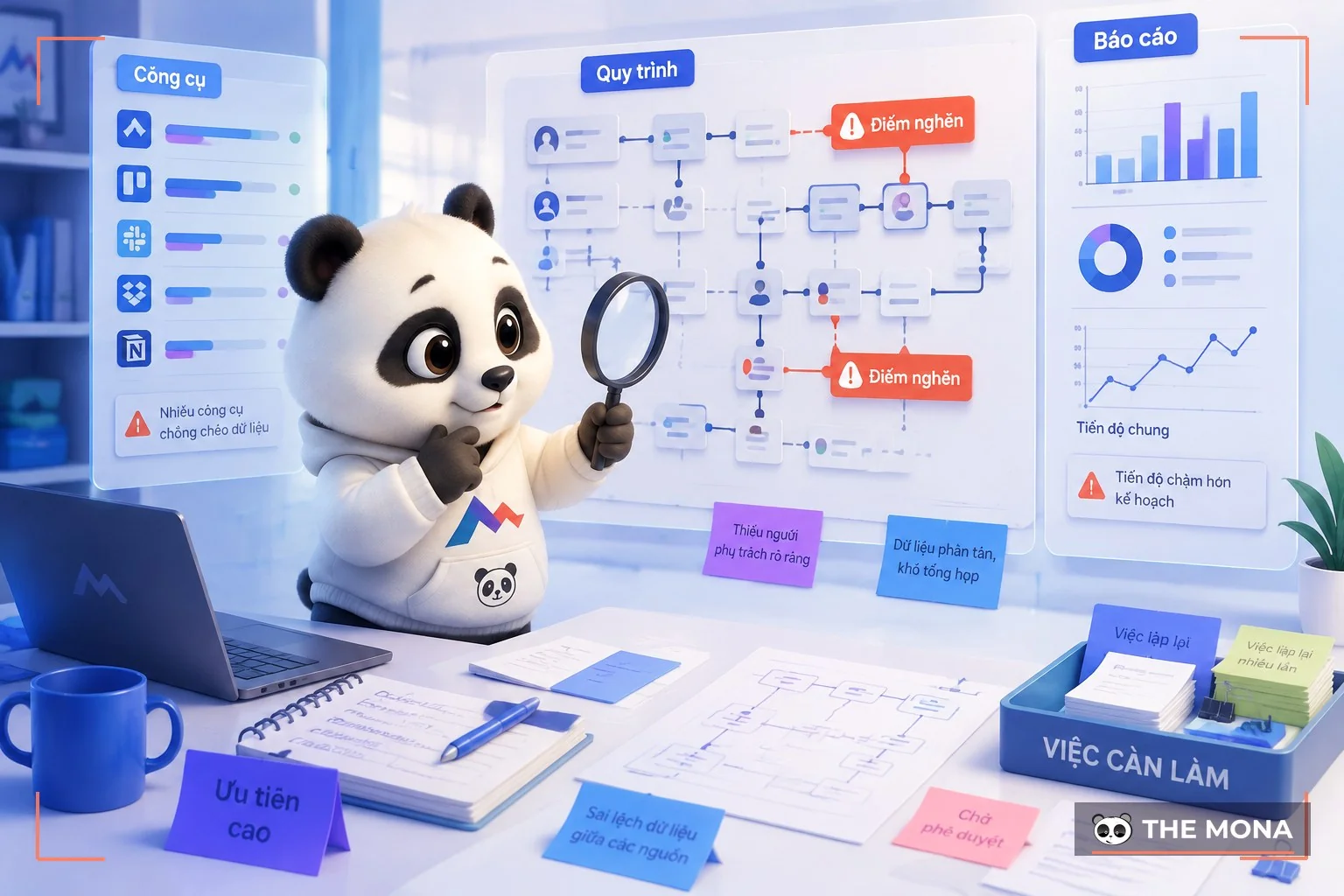
Many Vietnamese business owners have invested in management software, bought ChatGPT accounts, hired more staff and built internal processes. But after a few months, many bottlenecks are still there: work is slow, strong people are overloaded, and costs keep rising.
You may have seen a sales team use AI to write customer care content. Staff get answers faster, but they still have to check, edit and send each message by hand. AI helps with one small piece, while the whole process behind it stays the same.
Money usually leaks out through work that is hard to see. One employee spends hours compiling reports, a manager spends evenings checking progress, and a customer messages after hours but doesn't get a reply until the next morning. Each small item adds up to a significant cost.
A business with 15 to 30 branches rarely lacks data. The hard part is that the data sits in many places, passes through many hands, and nobody can see overall progress at the same time.
Sometimes you don't lack people. You lack the ability to know where work is sitting, who is holding it, and why one small step slows down the whole operation.
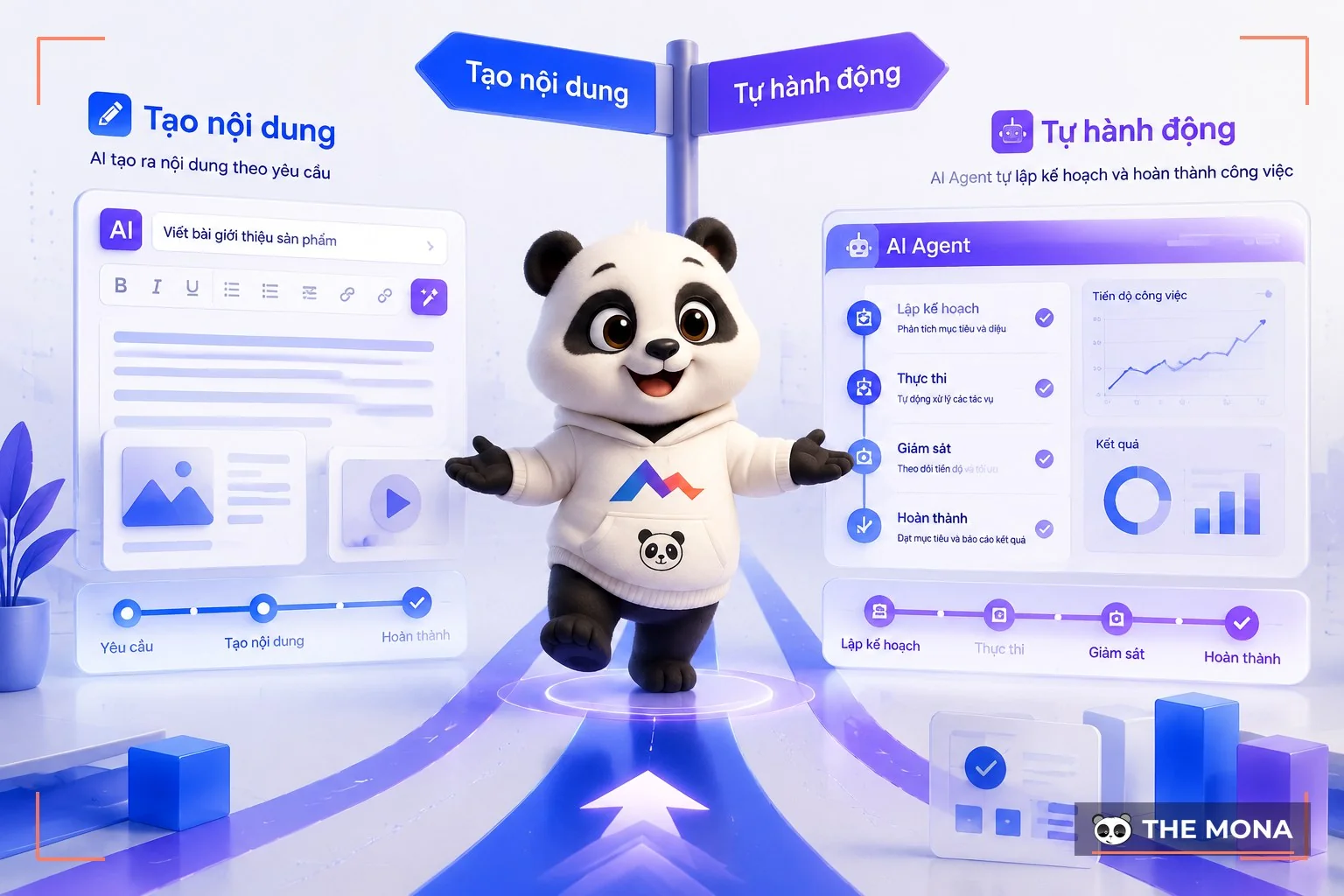
To understand what agentic AI is, look at the three stages of AI development in business. Each type has its own role and suits a different group of tasks.
| Type of AI | How it works | What it suits | Limits |
|---|---|---|---|
| Suggestion AI | Answers requests, creates content and analyzes information when a person gives a command. | Drafting, finding ideas, helping with lookups. | Does not run a whole process on its own. |
| AI agent | Carries out one specific task toward a defined goal. | Customer care, handling one group of requests, checking data. | Needs a clearly defined scope of work. |
| Agentic AI | Breaks a goal into parts, carries out multiple steps, checks and adjusts. | Multi-step processes that need data to be coordinated. | Needs control over access rights and accountability. |
If you want to understand the foundation first, the article what is an AI agent will help you see clearly which type of AI can carry out a specific task in your business.
Agentic AI differs from generative AI at its core. Generative AI mainly creates content on request. Agentic AI aims to organize and carry out a chain of work to reach a goal.
According to Gartner, businesses rolling out AI need to focus on governance, data and how the technology fits into real processes. What matters is not just having a tool, but that the tool solves the right job.
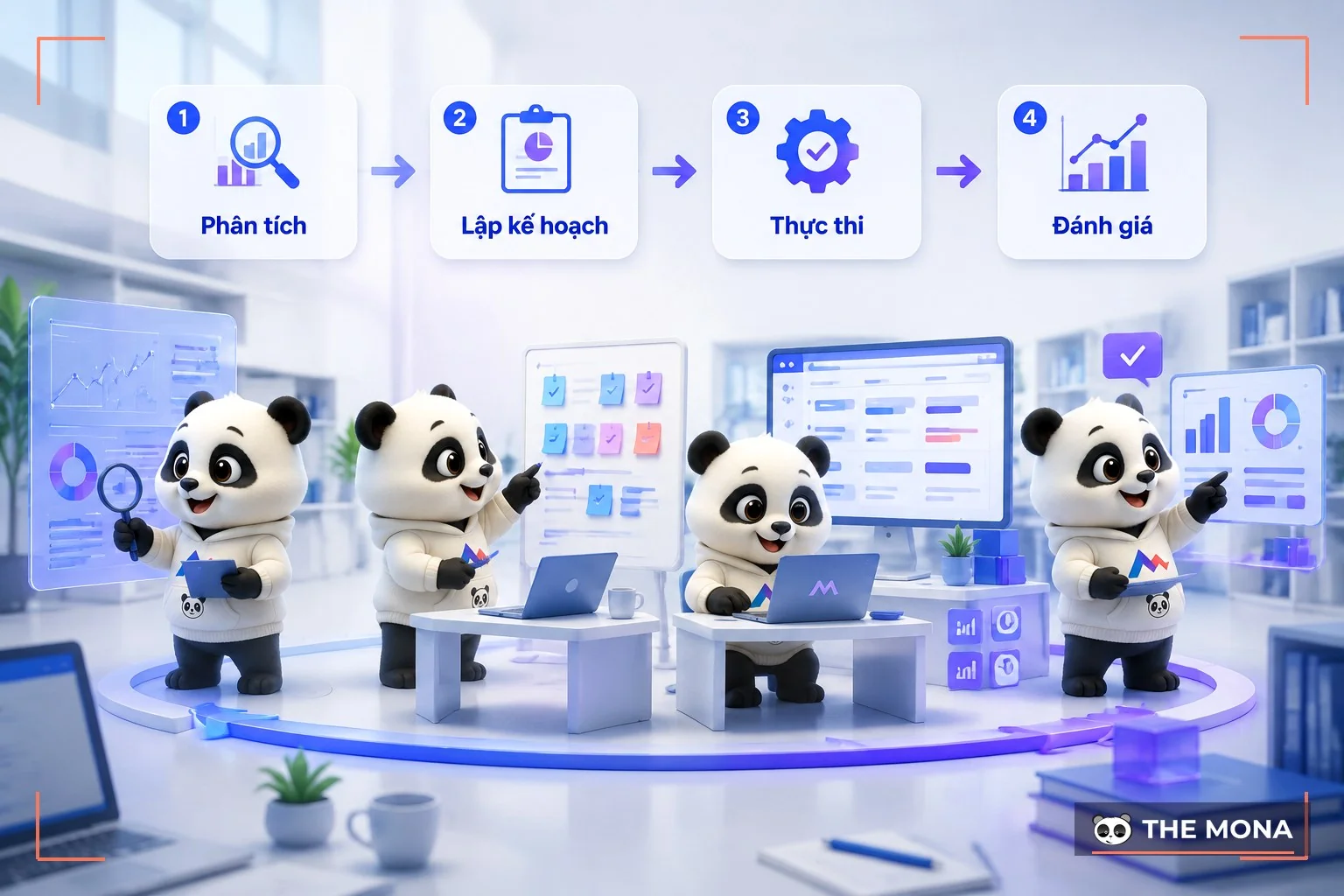
Agentic AI is not a box that can do everything. It works as a chain of clearly designed steps, with defined permissions and checkpoints.
For example, a sales team gives the goal of following up with 500 customers. The system takes the goal and looks at the data it is allowed to use.
The AI breaks the goal into smaller parts. It can identify which customers to contact, which to send information to, and which to hand over to the responsible staff member.
The system can pull data from internal software, create suitable content, update statuses and record results. Important actions still need control rules.
If data is missing or the result looks abnormal, the AI can go back and check. This works like a staff member reviewing a spreadsheet before sending it to their manager.
Think of a debt collection process. The AI takes the list of overdue amounts, groups customers, prepares the contact messages, records responses and reports the cases that need a person to handle.
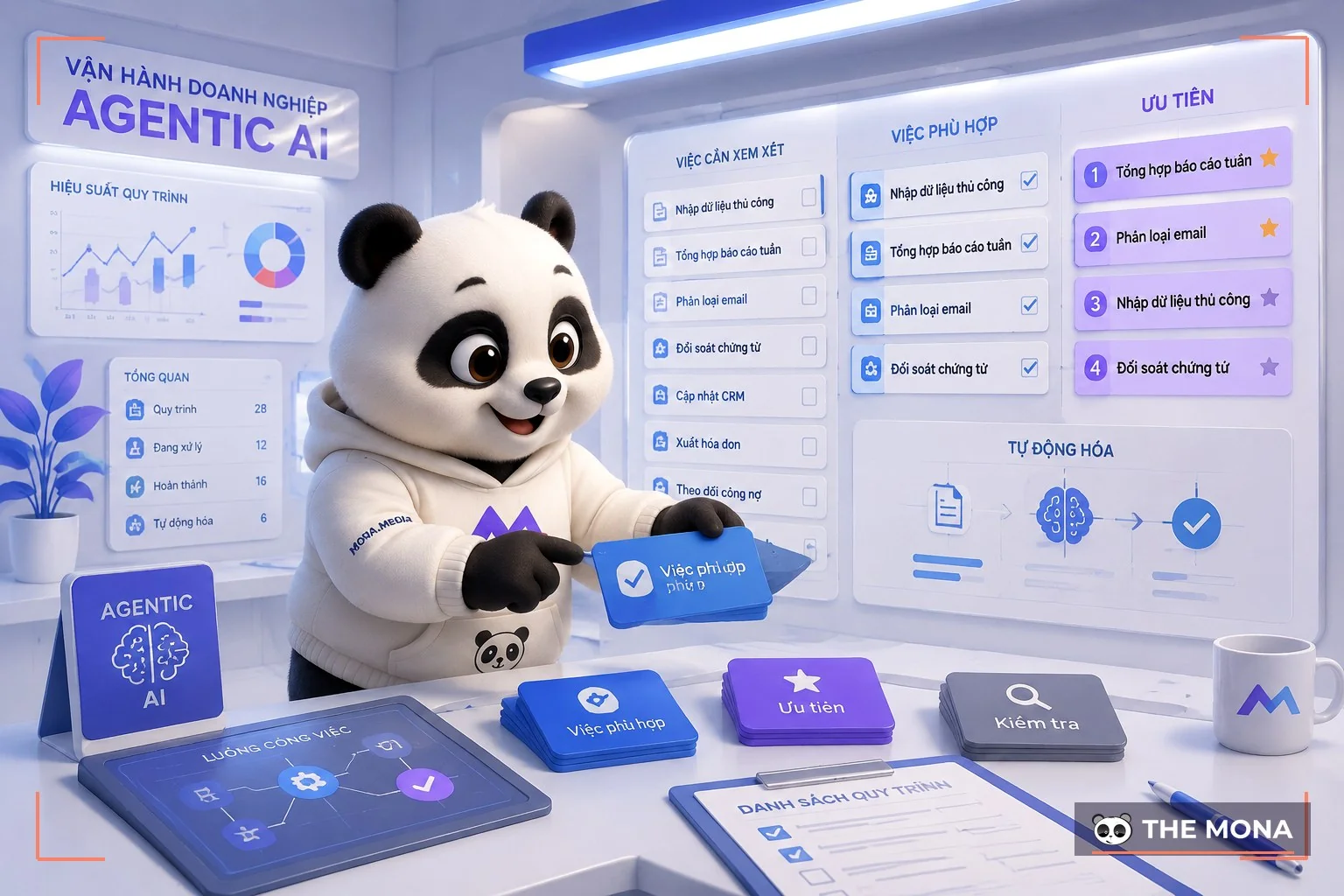
Agentic AI suits work with a clear process, enough data and measurable results. Examples include customer care, report compilation, handling repeated requests and tracking sales progress.
MONA always treats AI as a tool for specific work. Some jobs suit AI, and some need people to keep the decision-making power.
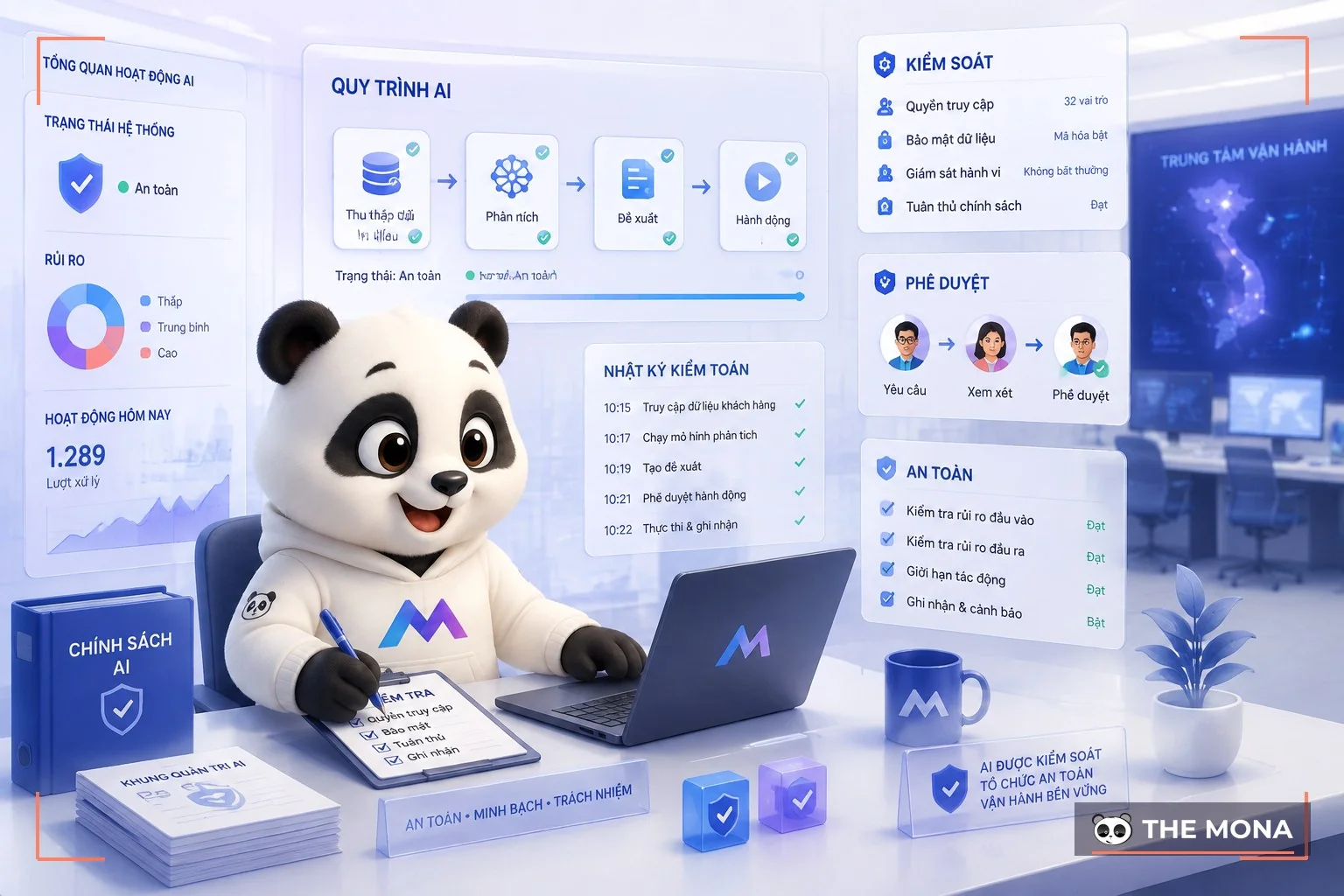
Many businesses care about speed and forget about control. When a system is allowed to access data, its permissions need to be designed clearly from the start.
The first risk is access rights. AI should only see the data needed for its assigned task. One department's data should not be opened freely to another.
The second risk is customer data. Contact details, purchase history and conversations need to be protected with permission controls, audit trails and checks.
The third risk is inaccurate answers. That is why important processes need a human review step.
According to McKinsey, businesses that want to create value from AI need to combine the technology with changes to processes and ways of operating. Technology only works when it is tied to a specific problem.
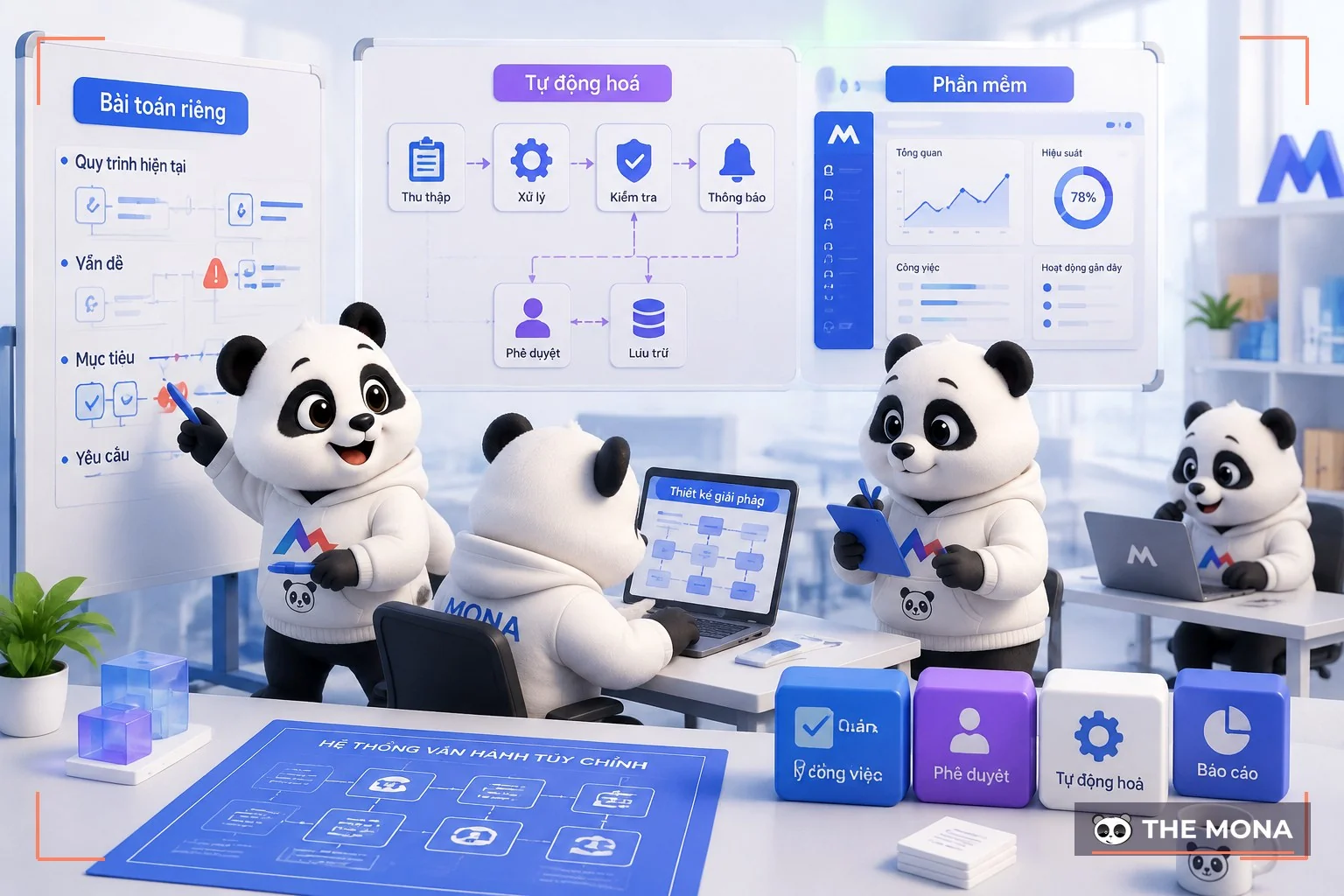
MONA doesn't see Agentic AI as a piece of technology to bolt on everywhere. We focus on building automation software for each business's specific operating problem.
MONA builds systems with its own code, including a closed chain of modules, user permissions and audit logs. The goal is to let you know what the system is doing, which data it uses and what the results are.
For businesses that need to build an AI agent around their own process, you can look at the building an AI agent for your business or custom AI agent development.
MONA was founded in 2016, has delivered 14,000+ projects and has an 85% repeat customer rate. We approach automation from an operations point of view, not just a technology one.
You can also look at AI agent suite to understand the application directions for specific needs.
The multi-step capability of Agentic AI can be applied to many industries. Each industry needs a different design based on its data and operational responsibilities.
MONA has built many software products such as MONA EduCenter, UniMaster, LMS, Elearning, SkillHub, eCommerce, JMS, spa, salon and nail software, and China sourcing software.
Agentic AI takes over some repetitive tasks and helps staff handle work faster. Important decisions still need a person who is accountable.
Agentic AI is a term for AI systems that can carry out tasks toward a goal. Businesses usually use it for processes that need multiple steps.
Businesses should start with one process that takes a lot of time or money. Once the results are measured, the system can be expanded.
The big money losses in a business usually come from many small tasks that still need someone to do them by hand every day.
If reports take several days, customers wait for replies after hours, or staff ask AI and still redo the work from scratch, that is the time to review your process.
MONA can work with you to analyze a specific process and see which parts suit automation software built on Agentic AI, and which parts still need human control.
You may already spend hours every day on reports, checking and manual handling, even after trying to cope with extra hires, AI tools or new processes, and many business owners still hit breaking points because they lack automation software designed for their actual operating flow. Talk to MONA on hotline 1900 636 648.
If you want to learn more about building products with modern technology, read the article what is vibe coding for another perspective.
On the same topic, you can also read agentic AI in marketing and websites the architecture and autonomous loop of agentic AI to look at the issue from two other angles before deciding what to do with your own system.

CEO & Founder · The MONA
The founder of The MONA built a service company of 60+ staff with 14,000+ projects delivered. Khánh Hùng shares his thinking on building self-running systems, automating a business, and the real lessons behind MONA's projects.
 241




Professional website
design services
Own a website with a beautiful, 100% exclusive design and a lifetime warranty, with the ability
to expand features flexibly as your business grows, starting today!






 MONA will never sell your information or send you spam


 MONA will never sell your information or send you spam
