
 MONA OS 2.0


 Tự động hoá doanh nghiệp
 Cẩm nang SEO
 Digital Marketing
 Kinh nghiệm thiết kế website
 Hạ Tầng Server
 Giáo dục



 VI
 EN







Message us on
Zalo Official


 ProductsNew

 ProductsProducts
 Mới ra mắtKHA AI 2027App tự edit video, tự đăng mọi mạng xã hội, 2 phút mỗi ngày










 Website designLooks good and wins customers over.
SEO servicesBrings in customers searching for exactly what you sell.
 Tư vấn digital marketingKéo khách từ nhiều kênh, đo bằng số thật.
Corporate video productionVideos introducing your company, factory and team.
 NewAI video productionCompany story films made with AI.
 Custom software developmentCRM, ERP and HRM built for your business.
 Viết AI Agent theo yêu cầuĐặt riêng một trợ lý AI cho đúng việc của mình.
 Tư vấn chuyển đổi AIĐưa AI vào vận hành của cả công ty.
NewMONA LMSManagement for centers and schools.
MONA SkillHubInternal training for company staff.
 NHTQ systemEnd-to-end China–Vietnam shipping operations.
MONA JMSManagement for gold, diamond and pawn shops.
 MONA E-LearningA website with every feature you need to sell courses.
 How to sell online courses (course)More than 30 free lessons on selling courses on autopilot.
 MONA Cloudmonacloud.vnServers to get your apps and websites running.
 MONA Basemonabase.vnPostgres database, sign-in and file storage.
 MONA Mailmonamail.vnSend OTP, order and invoice emails from your software.
 MONA Paymonapay.vnAccept bank transfers via VietQR and notify your software when the money arrives.
 MONA eInvoiceComing soonIssue e-invoices that meet tax standards.
Gấu CườiTrả lời khách 24/7 trên web, Fanpage, Zalo và thu lead cho sale.
 Gấu TeleSalesGọi điện tư vấn, chăm khách như tổng đài viên thật.
Dê CườiTư vấn và chốt đơn cho shop ngay trong khung chat.
Gấu WebmasterNhắn nhóm Zalo là website được sửa xong.
 Gấu Pháp ChếSoạn hợp đồng, rà điều khoản trong vài phút.
 Gấu Báo GiáLên báo giá đúng mẫu và gửi khách ngay.
 AI chăm sóc khách hàngTheo dõi và giữ chân khách hàng cũ.
 Gấu Tuyển DụngLọc hồ sơ, hẹn lịch, phỏng vấn ứng viên.
 Mới ra mắt
KHA AI 2027
Xây kênh chuyên gia 2 phút mỗi ngày
Quay bằng điện thoại, AI tự edit video, tự đăng lên 16 nền tảng và tự trả lời bình luận, tin nhắn.
311.630lượt xem trên kênh CEO MONA sau 17 ngày
 Anh Khánh HùngCEO MONA đang dùng mỗi ngày
Xem app làm được gì
 AI
Gấu Cười MONA ĐANG TỰ XÀITrả lời khách 24/7 trên website, Zalo OA, Messenger và thu lead về cho sale.
Dê CườiChốt đơn bán lẻ và sàn: Shopee, TikTok Shop, web. Chăm cả khách sỉ, đại lý.
Gấu WebmasterCập nhật nội dung, tối ưu SEO website mỗi ngày.
Gấu TeleSalesGọi điện tư vấn, chăm khách như tổng đài viên thật.
Gấu Tuyển DụngLọc hồ sơ, hẹn lịch, phỏng vấn ứng viên tự động.
AI chăm sóc khách hàngGiữ khách cũ, cứu lead đã rớt cho phòng kinh doanh.
Gấu Pháp ChếSoạn hợp đồng, rà điều khoản trong vài phút.
Gấu Báo GiáLên báo giá đúng mẫu, gửi khách ngay khi có yêu cầu.
 Chuyển đổi AI toàn phầnGiải pháp tổng cho doanh nghiệp, 3 lớp triển khai.
 Viết AI Agent theo yêu cầuĐặt riêng một con AI gánh đúng nghiệp vụ của bạn.
 Custom softwareCRM, ERP and HRM with built-in AI automation.
 SEO & AEO thời đại AIĐược Google lẫn AI trích dẫn, không chỉ xếp hạng.
 Kiến thức AI cho doanh nghiệpBài phân tích, hướng dẫn ứng dụng AI vào vận hành.
 Free AI courses
 AI tools at work
App mới · KHA AI 2027
Xây kênh 2 phút mỗi ngày
AI tự edit video, tự đăng mọi mạng xã hội
Free consultation, 8am–10pm every day

18 March, 2023

You probably already know how important the About page is for a website. It is not only a place to present yourself, it is where customers and readers decide whether to choose you for their projects and needs. So you need to write your About page with care, to build credibility and stand out and attract people. How do you write a good, engaging About page ? The article below from MONA Media will answer that for you.
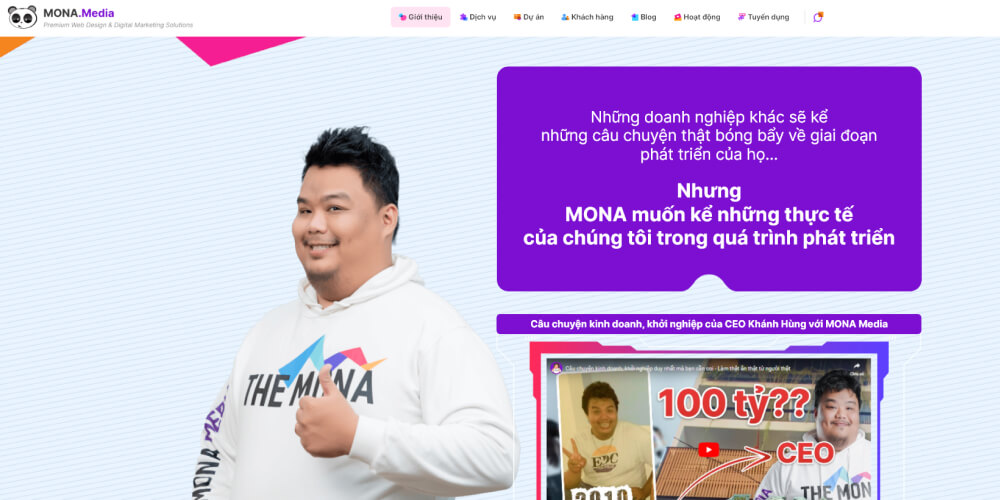
When someone who knows nothing about you or your business visits your website, the About page is almost certainly the first place they go. They are curious, and they want to know who you are, what you do and what you offer. This is exactly when you need to catch their attention.
Here you show them what you have, how you are different and why they can trust you, so they choose you over the many website others out there.
Internet users are usually in a hurry. So you need an About page that draws people in, with content you have put real effort into, or visitors will leave right away. Only then will they understand you better and see whether you fit their needs. From there they decide whether to become loyal readers (if you are a blogger) or real customers (if you are a company or business).
In short, you need an About page to YES claim your place in the market.
The truth is that there is no exact way to write an About page that is good, distinctive and engaging. Whether it reads well depends on the point of view, and whether it is “engaging” also depends on the taste of users, customers and audience.
But that's fine!
There is no formula, but MONA has 3 practical tips for you. And even if you can't follow the tips perfectly, there is still a list of 8 things you can add to improve your About page.
And 3 tips for writing a good About page
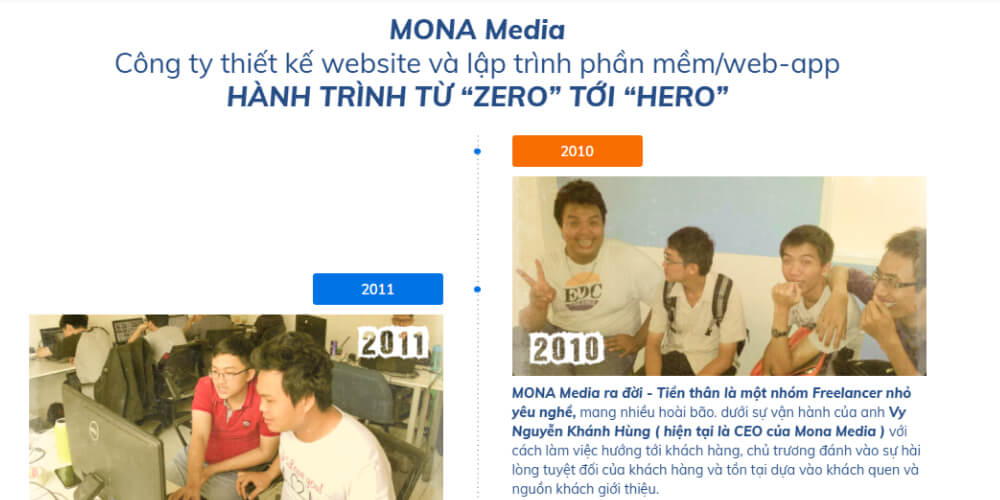
This matters a lot, but many people skip it. Read this excerpt from an About page and see how it feels:
“A is a foreign language center founded in 2012. A has been rated by customers as one of the foreign language centers with high training quality in Vietnam for many years in a row. To this day, A continues to maintain these values and tries to keep customers satisfied through the training quality and the customer services that A provides.”
How did that feel? Did the sentences seem clumsy? That is because the passage makes common Vietnamese writing mistakes: repeated words, redundant words, wrong words and style errors.
If the passage is rewritten like this, you will find it easier to read:
“Since its founding in 2012, A has been rated by customers as one of the high-quality foreign language centers in Vietnam. Today, A continues to keep up its good service and training quality to keep customers satisfied.”
The rewrite cuts the repeated words, so the sentences flow better. The word “value” in sentence 2 was also dropped because it was never mentioned in sentence 1. That was a wrong-word error, treating customers' high rating as a value. Also, “constantly” and “continue” are the same thing. That was a redundancy error.
This example shows why writing a coherent paragraph matters. It makes your content easier to read and your message clearer. So before you write well, write correctly.
-> Read more on running a language center:
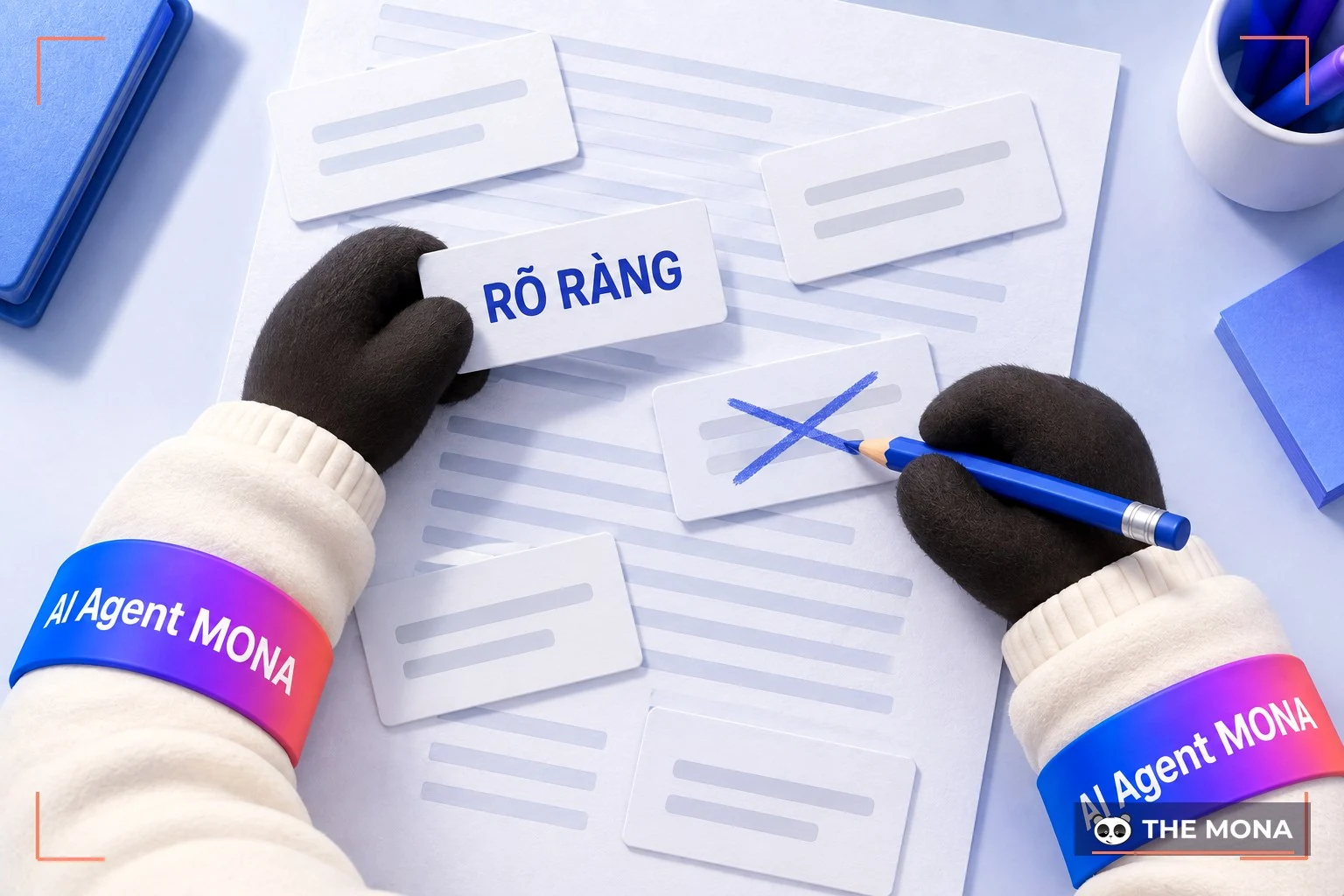
“Words cost nothing. Choose them so everyone is pleased.” (a Vietnamese saying)
If you understand this saying, you know how powerful words are. In daily conversation and in writing, using the right word at the right time gets the result you hope for.
So when you write, you should:
When you write an About page, use sentences and words that fit that fits them your field, the goals or style of your company, and the mindset of your potential customers or readers.
For example:
If you are a blogger, you can use a friendly, cheerful or slightly witty tone, depending on your personality. If you are a business, use polite, serious sentences to show professionalism.
But not every business or person is the same. How you write mostly depends on the audience you are aiming at. For young people, make the introduction lively. For couples, include some romantic lines. For gamers, favor the words they use, like “fight”, “grind”, “feed”, “gank”. For travelers on motorbikes, do not skip words like “ride”, “hug”, “group leader”, “hairpin turns”.
By choosing words your audience already knows from daily life, your content gets closer to them.
This one is a bit harder. Basically you need a wide vocabulary and a good understanding of your audience. Different audiences are drawn to, and impressed by, different words.
Take the two examples above, gamers and travelers:
Gamers get excited by words such as “win”, “beat the game”, “strong”. So if you sell gaming gear, you can use “powerful setup” thay cho “high-spec setup”, or even “monster setup”, since it carries a stronger feel than the other two.
Travelers, on the other hand, prefer “experience”, “challenge”, “explore”, “freedom” over the “rest”, “relaxation” that ordinary tourists look for. They also favor a place to sleep that is “budget” over the “comfortable”, and food that is “cheap and good” over the “fancy”, “top-notch”.
So you don't need to rack your brain for flowery sentences. If you understand your customers and pick words that fit “their mood”, you are already partway there.
-> Read more:
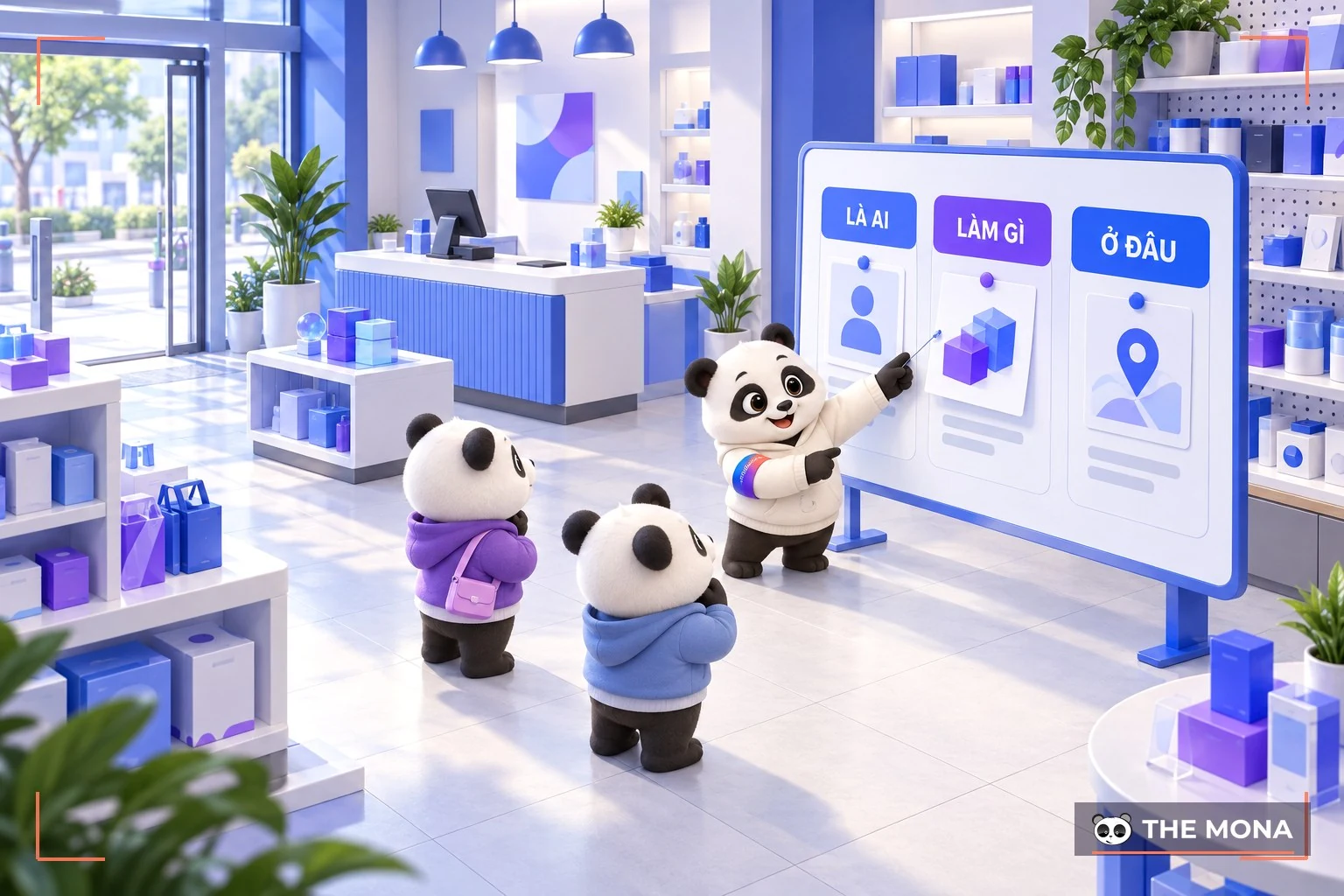
Nobody wants to read a shallow About page, because everyone wants plenty of information to judge a website.
A specific About page earns readers' trust more easily. For example, you will trust a business with “7 years of experience” rather than “” over the “many years of experience”, or a person who has “worked at Google or Apple” rather than one who “worked for big corporations””.
Also, many customers may not understand your field well. A detailed description helps them more.
For example, instead of writing:
“We are A […]. We provide professional, reliable SEO services with more than 20 staff who are experts in the field.”
You can write:
“We are A […]. We provide professional, reliable SEO services that make your website SEO-ready and move it quickly up search engines like Google, so more potential customers find you and you gain an edge over competitors in your industry. With more than 20 staff who are experts in the field, […]”.
As you can see, the second version explains SEO, and what you can do for customers, more clearly. You can also list the SEO services smaller services, such as keyword SEO and website SEO, or add a link to an article explaining SEO là gì (What is SEO) the topic for customers who want to learn more.
And this is only one example. Depending on your company's style, the message you want to send and the keywords you want to focus on, you can come up with an even better, more interesting and more engaging About page that makes customers more interested in your services.
In the section above, SEO Agency MONA gave you 3 useful tips for writing an About page. In this section we give you a list of 8 things to mention on an About page, to make it more distinctive and engaging, and even to lift your conversion rate and lowering the bounce rate results for your website.
When someone views an About page, besides who you are, what you do and where you are, they badly want to know what solution and benefit you will bring. So you must show readers what benefits your services and products give them.
You can split the benefits into sections and write about each in detail, or turn them into a clear list, or repeat them lightly across the page. Take the Highlands Coffee® About page below: it places the benefits in 2 different paragraphs under 2 fitting headings:
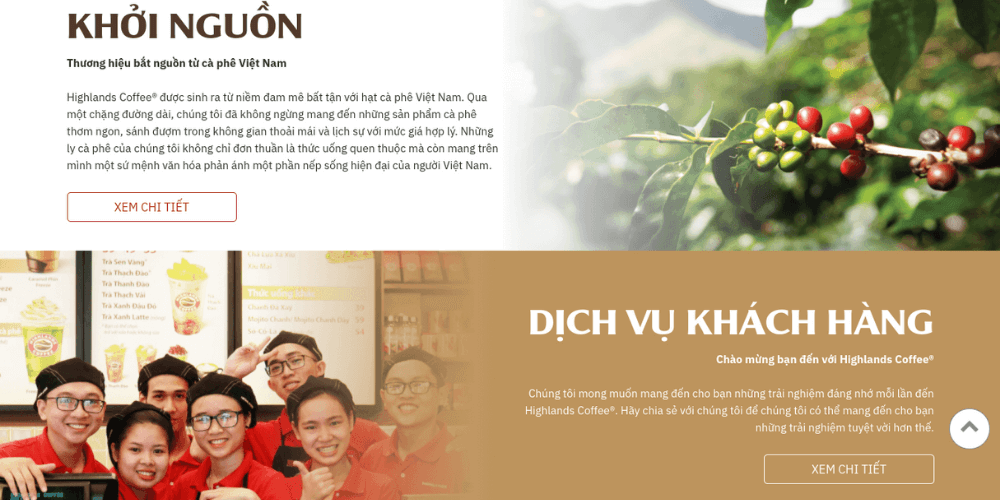
Highlands Coffee® weaves its benefits into the paragraphs.
In paragraph 1, the benefits are that customers enjoy “rich, fragrant coffee”, get “a comfortable, elegant space”, and pay “reasonable prices”. In paragraph 2, the benefit is “memorable experiences” each time you visit Highlands Coffee®. These benefits are woven into the sentences naturally, enough to promote the brand without annoying the reader.
Visually, you can make them stand out by choosing font a suitable font, bold, italics, color, highlighting, a frame and so on, whatever you like as long as it fits the page as a whole.
The truth is that many websites in your field already exist. So you need to state how you are different, to give customers something to compare.
But what if what you offer isn't very different?
That's fine too. Being different doesn't have to mean better quality of products or services.
So what can the difference be?
It could be better after-sales service than many competitors, a work process that is faster than average, the most reasonable price on the market, or simply that your product is easy to buy in every store in the country.
Don't worry too much if you can't find a difference, either. It is not the only thing customers care about. People buy for many reasons: from things like price and location to vague ones such as “because Mr. A or Ms. B recommended it”, hay “or because Company C's story was inspiring””.
So instead of focusing only on creating a difference to show off, you can put effort into promotion and spreading the word. Fit with consumers matters a lot too. You can focus on a niche market and find a way to lead it.
An About page that is all text is boring to look at. What is on it is not a useful tutorial, a research paper, a thesis or a work of literature that people will spend time on. So images and video are essential if you want to hold on to customers.
As the saying goes, “a picture is worth a thousand words”. Instead of writing 1,000 words to explain how dedicated your company is, you can post a photo of your staff hard at work. That saves your visitor reading time, and saves you the effort of writing a paragraph. Of course, don't forget to add a short description to each photo, because not everyone will see what you mean.
As for video, it is excellent if you can give customers an impressive one. This kind of media has been rising in marketing trends lately. If you can shoot or edit a short overview video of your company, that is great.
Combining sound and picture, video gives viewers a lively experience, makes them more interested in your company, and earns even more trust if it shows real scenes and real work rather than animation.
Showing numbers that speak for themselves is the best way to earn customers' trust.
So don't hesitate to state how many projects you have completed, how many customers you have served, how many years your company has been running, the rating customers give you, or the number of members, events, articles, software products and so on.
You should also post comments from customers, members and partners. Many companies use this to build trust. Some even add the customer's details, such as a Facebook page or website, to make it more authentic.
One note: only use real numbers and real comments. They work as proof, awards and certificates for the quality of your service. You also don't want to be “called out” if someone finds out you faked it. That would seriously hurt your reputation later.
-> Read more:
Whether it is a contact form, a link to a good article, or other call-to-action buttons , place them skillfully on your About page. After all, what you want is real customers, and call-to-action sentences, words and buttons are the stepping stone to that.
That said, don't put in too many calls to different actions. If you want people to buy right away, send them to the product page. Likewise, if you want people to get your emails, include only the sign-up form. Don't expect people to sign up, buy, read articles and leave their details all at once. Many studies have shown that the more choices, the lower the conversion rate.
In other words, if you want customers to act, pick just 1 fitting action to lead them into. Then make it simple and quick.
Every About page has its own story. After all, every person and every business has been through a lot to get where they are. So tell your readers your story. You can talk about why you started, how you came to be and how the company developed, so readers understand more.
As for how to present it, you can tell it in prose, put text over photos, use video, or build a lively timeline. Tell your story honestly, successes and failures alike. In a time when real and fake are mixed together, transparency is truly valuable. With it, people will trust you.
In practice, not every business has its own in-house Content Marketing team to run content campaigns when needed.
Most businesses choose to use outsourced Content Marketing services to:
MONA Mediis a leading provider of Services full-scope online marketing solutions for businesses, including:
The more than 10 years of experience in the SEO and marketing market, working alongside more than 12,000 clients in Vietnam and abroad on thousands of successful projects across many fields, the MONA team is confident it can give you the best communication results and standing in today's digital market. Please CONTACT US with MONA via hotline 1900 636 648 for full details.
If you can, show customers your work or production process. It is one way to show the transparency of a business or an individual.
Say you are a company that grows and sells tea. You could describe how you make fine tea leaves: from picking and rolling the leaves to drying, sorting and packing. At MONA Media, we walk clients through our project process on the About page.
This way customers understand better how you work. It is also a chance to show how clear and professional your business is.
Everyone trusts a company more when they can see the faces behind it. So if you are a business, show photos of your staff and introduce them, so customers can feel confident about “choosing the right people to trust”.
Of course, pick serious, clear photos; a cheerful one is fine in moderation. Don't use goofy selfies packed with filters, because they make you look less professional and less trustworthy.
-> See also: A collection of About-page templates for many industries
Writing an About page is really advertising too. But don't advertise openly; write sincerely and don't exaggerate. Avoid “blowing your own trumpet””.
Your introduction should be accurate, clear and focused on what customers need to know about the brand. So words such as “best”, “cheapest”, hay “top-quality” must never be used. If you still want such words to appear, express them more modestly, with words or phrases such as “one of the”, “among the”, “can”, “within our ability”, “under favorable conditions”, v.v.
Example: “one of the companies voted the best in Vietnam”, “as secure as possible”, and so on.
That way readers won't find it off-putting and will trust you more. Of course, write for your audience, as covered in the tips above. Put yourself in the customer's position, keep them at the center, and you will write an About page that reaches people.
A well-written About page does a lot to build customer trust. But if it isn't looked after regularly, it can still destroy that trust.
So if your staff changes, your product quality improves or your work process gets better, update the About page right away. If you spot errors such as typos or design faults, fix them. If you think adding a video or a contact form would raise your conversion rate, try adding it.
Everything gets tested. You should try refreshing and improving your About page so it gets better results.
A well-optimized About page brings you a higher conversion rate. You surely don't want to miss the visitors who reach your About page through search engines like Google.
The About page shouldn't focus on just one keyword. There are many keywords to optimize for: your brand name, product names, service names and the key terms in your field. Optimizing for several different keywords helps a lot in building your brand.
As a tip, the simplest way to optimize for a keyword is to write a title that contains it.
Example: Instead of just writing “About A”, “About us” or “Introduction”, you can write “A is a company that specializes in [keywords]” or “About me: a [keyword] expert with more than 10 years in the industry”.
Of course, how you write it is up to you. The title should be catchy enough to spark readers' curiosity, but the content is still the most important part. So mention your keywords in moderation, throughout the About page, for strong SEO results.
-> See more: What keyword density is good for website SEO?
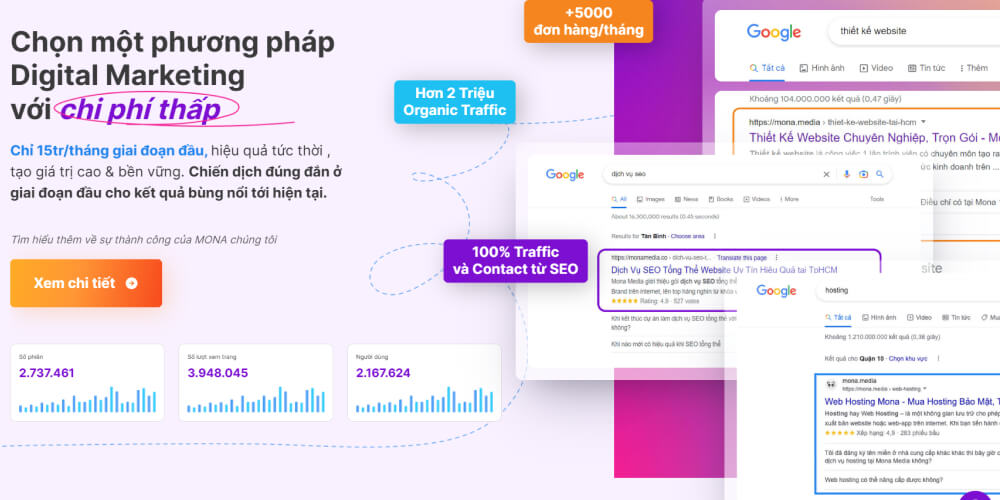
Many statistics show that users spend more time on the top part of a website than the bottom. Very few people scroll a whole page to see what the site is about, unless the content and the way it is delivered are really interesting.
So, setting aside whether your content is good, first put the most important part at the top of the page. That is also why you see many About pages that start with “A is […]”. For one thing, it is the most important information; for another, it is what readers want to know first.
You don't have to copy that format, though. The title and introduction don't have to come first. If you have a photo that stirs strong feeling in viewers and sums up you or your company, put it at the top. Likewise, if you have a well-made video, put it at the top.
Instead of a generic conclusion, MONA leaves you one last example. It is a truly good, distinctive and engaging About page, and it comes from none other than the creative giant Google.
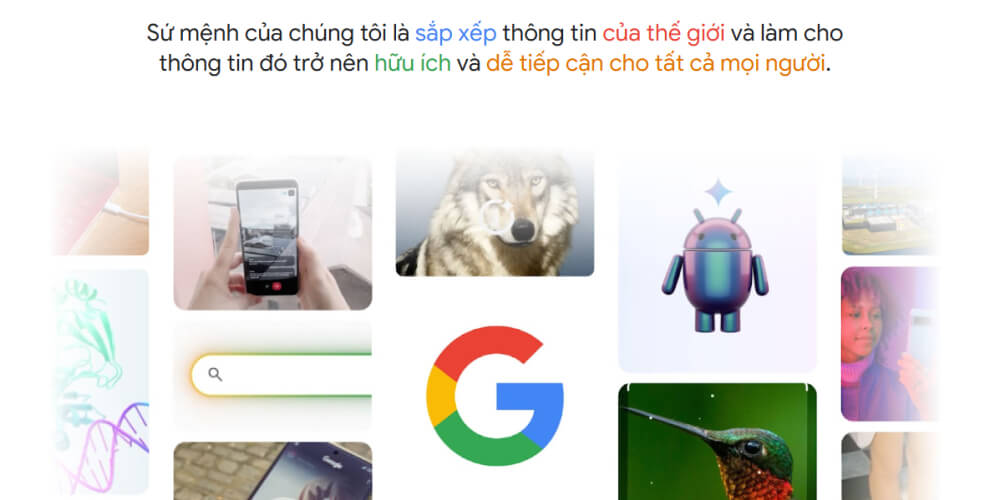
Did you notice how neatly Google says what it does (organize – organize), what it provides (information – information), the value of its product (useful – useful), and the benefit it brings (universally accessible – easy to reach for everyone) – all in 1 sentence?
And that is just the wording.
Visually, Google skillfully uses the colors of its logo to highlight those points and strengthen brand recognition. It also uses its own exclusive font: Product Sans – a product made to build its brand – all its own.
That alone shows that Google puts what people care about most, the most important point, at the top, in a creative yet fitting way. That way, even without scrolling, customers know who Google is, what it does, how it does it and what solution it offers them.
A perfect About page needs not only good content but good presentation too. No one wants to read a “letter” of 2,000-3,000 words, or a “photo gallery” with no idea what the photos mean.
So you need to combine the different types of content in a balanced, sensible way. Small details such as whether a video goes on the right or left, small in the middle or full screen, should also fit your brand and your website design.
The same goes for color. Red may stand out, and you may want to color important things red to attract customers. But if your website is minimalist with a black-and-white palette, you still shouldn't. Instead, use different shades of gray, or enlarge and bold the words you want in those 2 main colors.
There are many ways to do it, and you don't have to use colors said to have a specific power to drive action. The more you overuse them, the more you clutter the overall design and tire the user's eyes.
-> See also:
Above is a guide to how to write a website About page plus the details you need to follow or avoid. We hope the sincere advice from MONA has shown you how to write a company About page that is good, distinctive and engaging! We hope your website About page is a great success.

CEO & Founder · The MONA
Founder of The MONA, who built a services company of 200+ staff with 14,000+ projects delivered. Khánh Hùng shares how he thinks about building systems that run themselves, automating a business, and the real lessons from delivering projects at MONA.
 1,7K




Professional website
design services
Own a website with a beautiful, 100% exclusive design and a lifetime warranty, with the ability
to expand features flexibly as your business grows, starting today!



NHẬN TƯ VẤN SEO MIỄN PHÍ !






 MONA will never sell your information or send you spam


 MONA will never sell your information or send you spam
