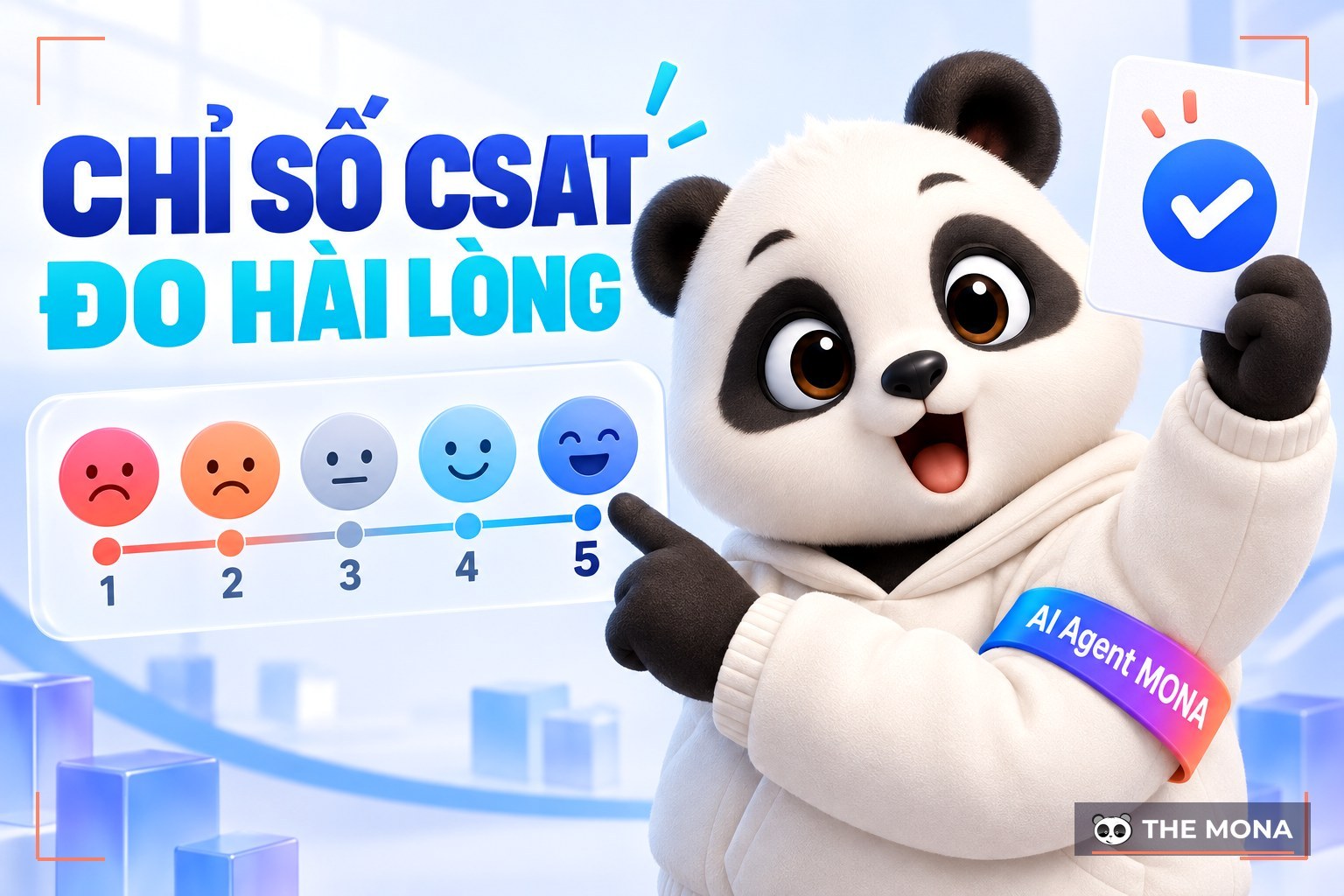
Quick summary: CSAT is a way to measure customer satisfaction after customers have used a business's product or service.
Measuring customer experience is arguably the most effective way to assess satisfaction with the products and services a business brings to market. Managers can then set development strategies that fit. That is why the CSAT score was created, to give a more detailed view of the customer experience. But what is the CSAT score? And how do you use it? Mona Media will answer these questions in this article
What does the term CSAT mean?
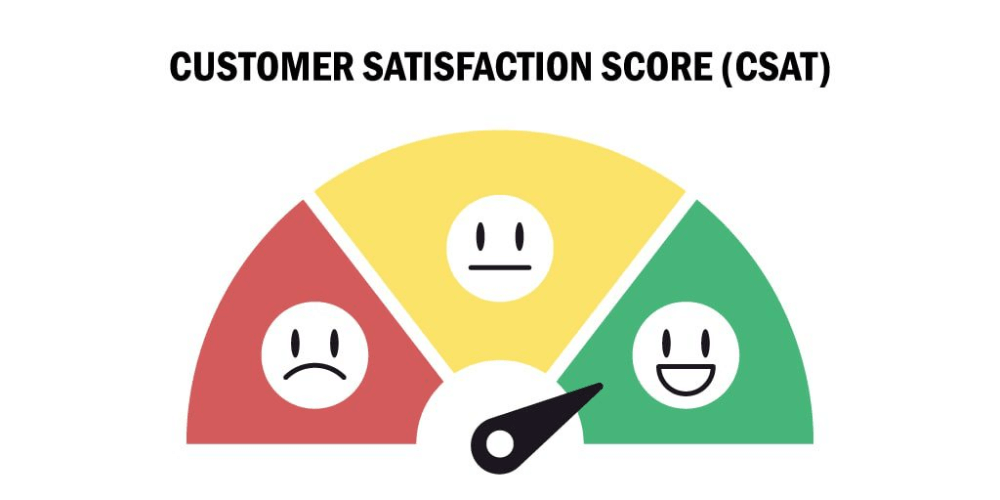
The CSAT score (short for Customer Satisfaction) is a way to measure customer satisfaction after customers have used any business's product or service. It is usually determined by collecting customer feedback through short questions and a score from 1 to 5 or from 1 to 10. This gives important information about customer satisfaction, helping a business assess and improve the quality of its products and services in future.
->See more: Loyalty Program What Is It? The 6 Most Common Types of Loyalty Program

Why the CSAT metric matters for a business
Here are the main functions of CSAT in a business that you should know:
Improve service quality
With the CSAT score, a business can easily collect information about product or service quality and the issues affecting the customer experience. It can then come up with the best solutions to raise quality and grow. By measuring customer satisfaction through rating questions, a business can see its strengths and weaknesses, what needs improving and which adjustments will increase satisfaction and improve the customer experience.
By measuring CSAT regularly, a business can keep adjusting its business strategy and customer service to meet customers' needs and expectations. It creates positive interaction and maintains long-term relationships with customers.
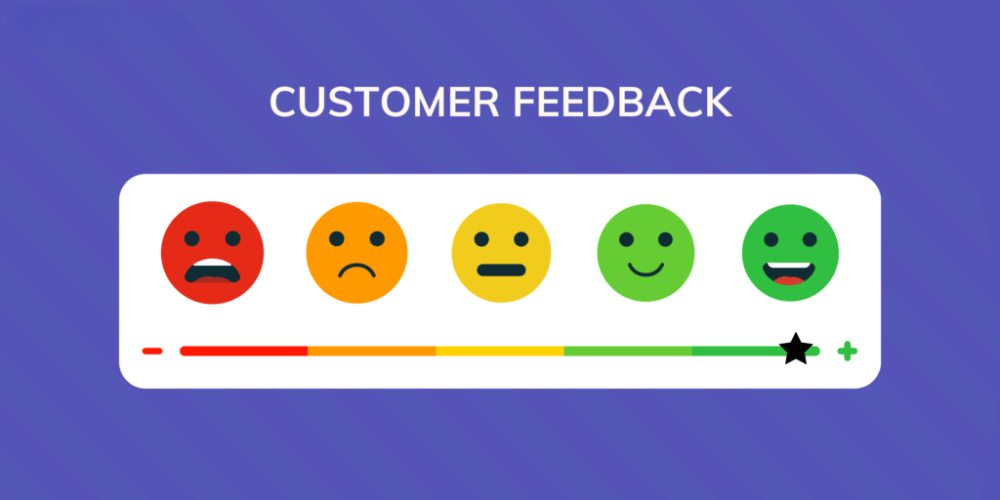
A measure of customer trust in the business
CSAT plays an important role in helping a business understand customers' buying behavior. This helps avoid bad reviews on media such as website, fanpage and avoid direct revenue loss. Even one 'Dissatisfied' rating can lead customers to ignore the business, causing great damage to sales.
A place for new customers to look and try
The CSAT score not only helps new customers decide to buy quickly, but also gives customers who have never used the business's product or service a reliable basis for choosing. Existing customers' experience is an important factor for new customers assessing a product or service. Raising the satisfaction of current customers is the best way to attract more new ones. When current customers are satisfied and have a good experience with a product or service, they naturally share and recommend the business to others. This builds credibility and raises the chance of attracting new customers. ->See more: What Is D2C? How to Build an Effective D2C Model for Your Business
Formula for calculating the CSAT score
So how do you calculate the CSAT score? According to experts who study how businesses and corporations run and develop projects, the general formula is:
CSAT score = (Number of customers rating satisfied / Total number of people invited to the survey) * 100
There are 4 possible cases, depending on CSAT:
Below 40%: Low satisfaction with the product or service
From 40% to 60%: Acceptable satisfaction with the product or service
Roughly 60 to 80%: High satisfaction with the product or service
Above 80%: Excellent satisfaction with the product or service
A concrete example: a business surveys CSAT among 150 customers who have used its product, and finds 100 positive responses, 40 neutral customers and 10 who said they did not like it. The product's CSAT score (%) is: (100/150) * 100 = 67%
How to use the CSAT score in your company's operations
Currently businesses use 2 CSAT scales across the whole company. Mona will go through each scale so readers can picture it easily.
On a scale of 1 to 3
On the CSAT scale, there are 3 levels of customer satisfaction:
Level 1: This is a bad rating, showing the customer is dissatisfied with the product or service they experienced
Level 2: A neutral rating: the customer has no clear like or dislike for your business. They may choose a similar product or service from competitors
Level 3: This is the positive rating every business wants, showing the customer's complete satisfaction and goodwill toward the product or service. Customers at this level tend to keep supporting and using your product or service in future
These levels help a business understand customers' feelings and attitudes better. It can then take steps to improve and optimize, to raise satisfaction and keep customers' support.
On a scale of 1 to 5
The CSAT scale can be broken down in more detail into 5 levels:
Levels 1 and 2: Customers who feel unfavorable and do not rate the quality of the business's product or service highly. They may give negative reviews and be unhappy with their experience. This can affect the business significantly, because bad reviews can spread and damage its image and revenue
Level 3: A neutral rating: the customer shows no clear attitude. They may have no particular feeling about your product or service, or rate it as average. This level gives the business a chance to improve and strengthen the customer experience.
Levels 4 and 5: The highest, positive rating, showing the customer's satisfaction and goodwill toward the business's product or service. Customers at this level tend to like and rate your product or service highly. They are likely to become loyal customers and bring potential revenue to the business.
Pros and cons of CSAT
Advantages
CSAT is an important metric for measuring how customers feel at each experience and interaction with a business. Short, lively questionnaires that customers can read and understand easily let them rate the business's product or service quickly
With the CSAT score, a business can review its service quality and find its strengths and weaknesses. This helps it fix and improve outstanding issues, which raises the customer experience and increases satisfaction
Another important benefit of CSAT is that it applies to every business field. With flexible questionnaires, CSAT can be customized and applied across many industries, from products to services
Disadvantages
It is very hard to produce a 100% accurate CSAT result, and accuracy is only relative. The actual CSAT score depends on many factors, including the business's industry and field, and the level of competition from rivals
CSAT needs to be measured regularly to catch changes in customer expectations. Customer requirements and experiences can change over time, and measuring CSAT periodically helps a business track these changes and adjust accordingly, which makes it relatively costly
One last difficulty is collecting data from neutral or dissatisfied customers. These customers may lack the motivation or interest to take part in surveys, leading to incomplete data. This can skew CSAT results and reduce accuracy
->See more: What Is M-Commerce? The Growth Potential of M-Commerce for Businesses
Other metrics related to CSAT that businesses should know
Besides CSAT, managers also need to know the 2 metrics below so they can coordinate smoothly in developing and shaping the business's products and services.
Customer Effort Score – CES
The CES (Customer Effort Score) metric uses a single question for customers to rate how much effort they had to put in to use a product or solve a problem. The usual question is 'How much effort did you have to put in to solve this problem?' and customers answer on a scale of 1 to 7 or 1 to 5. If the effort required is low but many customers still come back, the customer experience has been made simple and convenient. It means the business has met its goal of reducing customers' hassle and effort, creating a positive experience that brings customers back.
Net Promoter Score – NPS
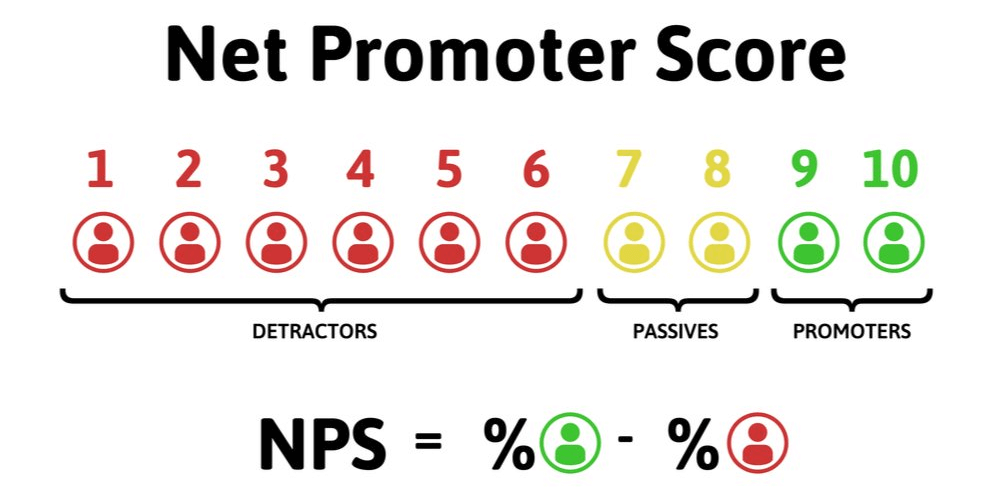
NPS (Net Promoter Score) is a metric that measures the overall customer experience. It is measured by asking customers one simple question: 'On a scale of 0 to 10, how likely are you to recommend our product or service to others?'
Based on the answers, customers fall into three groups:

Promoters: Scores of 9 to 10. These customers are very satisfied and very likely to recommend the product or service to others
Passives: Scores of 7 to 8. These customers are satisfied, but have little motivation to recommend the product or service
Detractors: Scores of 0 to 6. These customers are dissatisfied and may have negative opinions about the business's product or service
Useful information about the metric CSAT what it is, and Mona Media We hope you can now picture this and apply it in practice to understand the different factors on the customer side, then set strategies to adjust and develop your products and services as well as possible. ->See more: What is influencer marketing? How to run influencer marketing effectively
Frequently asked questions about CSAT
What is CSAT?
CSAT is a way to measure customer satisfaction after customers have used a business's product or service.
About The MONA Group: Founded in 2016, with 60+ staff, MONA has delivered 14,000+ projects with an 85% client retention rate. MONA provides website design, full-scope SEO, custom software and AI automation solutions for businesses. Consultation hotline: 1900 636 648. Explore MONA SEO services and AI tools at work.
MONA has a podcast: listen instead of readingEpisodes on AI, automation & SEO for Vietnamese businesses
Founder of The MONA, who built a services company of 60+ staff with 14,000+ projects delivered. Khánh Hùng shares how he thinks about building systems that run themselves, automating a business, and the real lessons from delivering projects at MONA.
Own a website with a beautiful, 100% exclusive design and a lifetime warranty, with the ability
to expand features flexibly as your business grows, starting today!