
 MONA OS 2.0
 Partner with MONA


 Tự động hoá doanh nghiệp
 Cẩm nang SEO
 Digital Marketing
 Kinh nghiệm thiết kế website
 Hạ Tầng Server
 Giáo dục


 VI
 EN






Message us on
Zalo Official


 ProductsNew

 ProductsProducts
 Mới ra mắtKHA AI 2027App tự edit video, tự đăng mọi mạng xã hội, 2 phút mỗi ngày










 Website designLooks good and wins customers over.
SEO servicesBrings in customers searching for exactly what you sell.
 Tư vấn digital marketingKéo khách từ nhiều kênh, đo bằng số thật.
Corporate video productionVideos introducing your company, factory and team.
 NewAI video productionCompany story films made with AI.
 Custom software developmentCRM, ERP and HRM built for your business.
 Viết AI Agent theo yêu cầuĐặt riêng một trợ lý AI cho đúng việc của mình.
 Tư vấn chuyển đổi AIĐưa AI vào vận hành của cả công ty.
NewMONA LMSManagement for centers and schools.
MONA SkillHubInternal training for company staff.
 NHTQ systemEnd-to-end China–Vietnam shipping operations.
MONA JMSManagement for gold, diamond and pawn shops.
 MONA E-LearningA website with every feature you need to sell courses.
 How to sell online courses (course)More than 30 free lessons on selling courses on autopilot.
 MONA Cloudmonacloud.vnServers to get your apps and websites running.
 MONA Basemonabase.vnPostgres database, sign-in and file storage.
 MONA Mailmonamail.vnSend OTP, order and invoice emails from your software.
 MONA Paymonapay.vnAccept bank transfers via VietQR and notify your software when the money arrives.
 MONA eInvoiceComing soonIssue e-invoices that meet tax standards.
Gấu CườiTrả lời khách 24/7 trên web, Fanpage, Zalo và thu lead cho sale.
 Gấu TeleSalesGọi điện tư vấn, chăm khách như tổng đài viên thật.
Dê CườiTư vấn và chốt đơn cho shop ngay trong khung chat.
Gấu WebmasterNhắn nhóm Zalo là website được sửa xong.
 Gấu Pháp ChếSoạn hợp đồng, rà điều khoản trong vài phút.
 Gấu Báo GiáLên báo giá đúng mẫu và gửi khách ngay.
 AI chăm sóc khách hàngTheo dõi và giữ chân khách hàng cũ.
 Gấu Tuyển DụngLọc hồ sơ, hẹn lịch, phỏng vấn ứng viên.
 Mới ra mắt
KHA AI 2027
Xây kênh chuyên gia 2 phút mỗi ngày
Quay bằng điện thoại, AI tự edit video, tự đăng lên 16 nền tảng và tự trả lời bình luận, tin nhắn.
891.360lượt xem trên kênh CEO MONA sau 36 ngày
 Anh Khánh HùngCEO MONA đang dùng mỗi ngày
Xem app làm được gì
 AI
Gấu Cười MONA ĐANG TỰ XÀITrả lời khách 24/7 trên website, Zalo OA, Messenger và thu lead về cho sale.
Dê CườiChốt đơn bán lẻ và sàn: Shopee, TikTok Shop, web. Chăm cả khách sỉ, đại lý.
Gấu WebmasterCập nhật nội dung, tối ưu SEO website mỗi ngày.
Gấu TeleSalesGọi điện tư vấn, chăm khách như tổng đài viên thật.
Gấu Tuyển DụngLọc hồ sơ, hẹn lịch, phỏng vấn ứng viên tự động.
AI chăm sóc khách hàngGiữ khách cũ, cứu lead đã rớt cho phòng kinh doanh.
Gấu Pháp ChếSoạn hợp đồng, rà điều khoản trong vài phút.
Gấu Báo GiáLên báo giá đúng mẫu, gửi khách ngay khi có yêu cầu.
 Chuyển đổi AI toàn phầnGiải pháp tổng cho doanh nghiệp, 3 lớp triển khai.
 Viết AI Agent theo yêu cầuĐặt riêng một con AI gánh đúng nghiệp vụ của bạn.
 Custom softwareCRM, ERP and HRM with built-in AI automation.
 SEO & AEO thời đại AIĐược Google lẫn AI trích dẫn, không chỉ xếp hạng.
 Kiến thức AI cho doanh nghiệpBài phân tích, hướng dẫn ứng dụng AI vào vận hành.
 Free AI courses
 AI tools at work
App mới · KHA AI 2027
Xây kênh 2 phút mỗi ngày
AI tự edit video, tự đăng mọi mạng xã hội
Free consultation, 8am–10pm every day

15 June, 2023
Do you still think celebrity advertising is just an expensive game for big players? In fact, Influencer Marketing is becoming the "ace" for startups and corporations alike: a single authentic review video from a micro-influencer can be enough to bring in thousands of orders. This article by MONA Media will help you understand what Influencer Marketing is, why it dominates communications budgets in 2025, and most importantly how to run a proper Influencer Marketing campaign with measurable ROI instead of "throwing money out the window".
Influencer Marketing, or marketing through "people of influence", is when a brand works with individuals who have built credibility and a loyal audience to present its products, services or values. These individuals are called Influencers. Instead of hearing a business talk about itself, consumers are persuaded by the voice of someone they already trust: a beauty blogger suggesting a lipstick, a streamer unboxing a phone, a doctor sharing healthy-living tips.
In Vietnam, the "Đi cà phê chất lừ" campaign ("a cool coffee outing") by Highlands Coffee with a line-up of Gen Z TikTokers is a familiar example: within one week the hashtag #highlandsgenz passed 70 million views, and sales of the new drink set rose by double digits.
Today, the formats of Influencer Marketing campaigns are more varied than ever. Besides TV, these campaigns Marketing online also appear widely on social networks such as Facebook, TikTok and YouTube, or are promoted directly on a company's website.
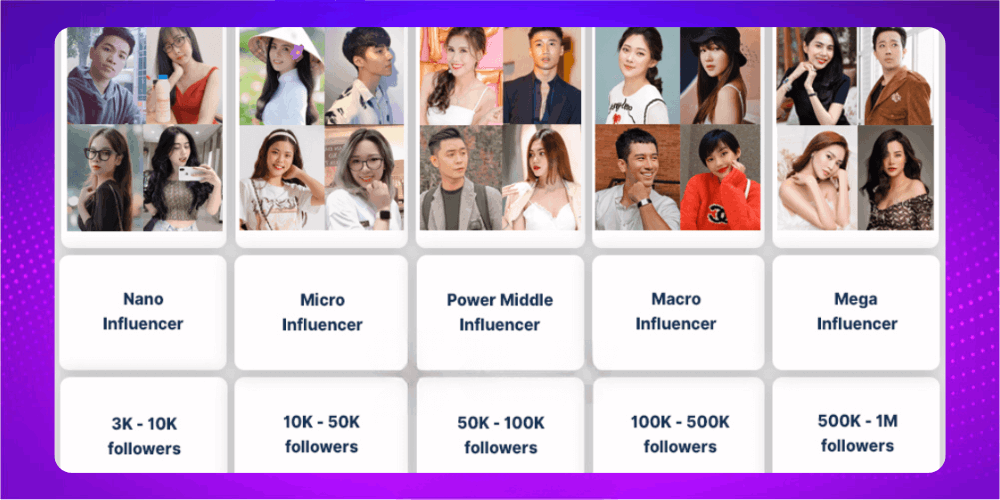
There are many ways to group influencers, but the simplest is by number of followers on social media: the bigger the number, the wider the reach, though the engagement rate (ER) also rises:
| Segment | Followers | Key traits |
|---|---|---|
| Nano – Influencers | 1,000 to 10,000 | Close, authentic, highest ER, low cost |
| Micro – Influencers | 10,000 to 50,000 | Niche audience, in-depth content |
| Mid‑tier – Influencers | 50,000 to 100,000 | Enough reach while keeping a personal feel |
| Macro – Influencers | 100,000 to 500,000 | Wide reach, suits mid-size brands |
| Mega – Influencers | 500,000 to over 1 million | Strong influence, high cost |
| Celebrity | over 1 million | Mass reach, suits wide-scale campaigns |
Most influencers on social media have thousands to millions of viewers every day. According to a survey, the 50 most-followed influencers on Instagram have 2.5 billion followers across their accounts.
On that basis, when a business works with an influencer, it can enter a niche market that suits its products and services. This is a good chance to raise brand awareness and widen the reach to target customers.
Marketing through influencers makes it possible to talk to customers in a feasible, unobtrusive way. It lets marketers reach Millennials and Gen Z effectively, groups known for being very open to information received through social media.
Influencers are people whom others already recognize as experts in their fields. They have built trusting, respectful relationships with their fans, so people trust the opinions, advice and recommendations they give.
Khi Influencer product video, services or brand, followers will not see it as pure advertising. As a result, people are more open to using the business's brand.
Influencers drive customers' purchase decisions in several ways. It can be the respect and trust people have for the products and services they recommend, or the fact that the influencer has actually used them where followers can see.
According to the research and data analytics firm Digital Marketing Institute, 49% of respondents said they had made a purchase decision based on a recommendation from a well-known person. Among teenagers the figure is 70%. After seeing a product or service on Facebook, YouTube or Instagram, about 40% of those surveyed bought it.
Influencers interact with their followers every day and are skilled at using social media to spread a message. They have many ways multi-channel advertising to bring a product, service or brand to their fans. It could be a Facebook post, an inspiring Instagram story, or video marketing trial or product review formats on YouTube, or handing out promo codes.
When influencers are active on a platform, their fans also engage with them actively there and on the other platforms they use. A multi-channel audience means a message spreads quickly and has almost unlimited potential to be shared.
Influencers exist in every field: health, fitness, beauty, technology, science, business, marketing and more. Whatever your product or service, and whatever the size of your business, you can find influencers and an Influencer Marketing strategy that fit.
For example, if your small business operates in northern Vietnam, you can look for influencers in that region to keep costs down. A global business, on the other hand, may consider global celebrities such as Taylor Swift to promote its brand.
Influencer Marketing brings big benefits to a business's communications campaign, but the downside of "borrowing" a KOL's credibility can arrive very fast if the brand does not keep tight control:

These challenges are not barriers that cannot be overcome, but they are a reminder to choose KOLs carefully, sign clear contracts, use tools to screen for bots and follow advertising law before you "press the button" on a campaign.
A successful Influencer Marketing campaign always starts with a clear roadmap: set goals, find the right influencers, manage content and measure continuously. Research from Sprout Social and HubSpot shows that the more detailed a celebrity marketing campaign is at the preparation stage, the higher the ROI, especially in 2025, when the cost of booking KOLs is up 18% on two years ago. Below are the detailed steps for running an effective Influencer Marketing campaign:
Setting goals is the first step in any form of communication with users. What is the business's overall goal? Raise sales within 7 days, build brand awareness, or increase service sign-ups? Usually the overall goal a campaign needs to reach is a combination of several smaller goals.
Once the goals are set, you need KPIs to measure how far you have got. KPIs must be clear numbers. The campaign's performance will be measured and adjusted against them.
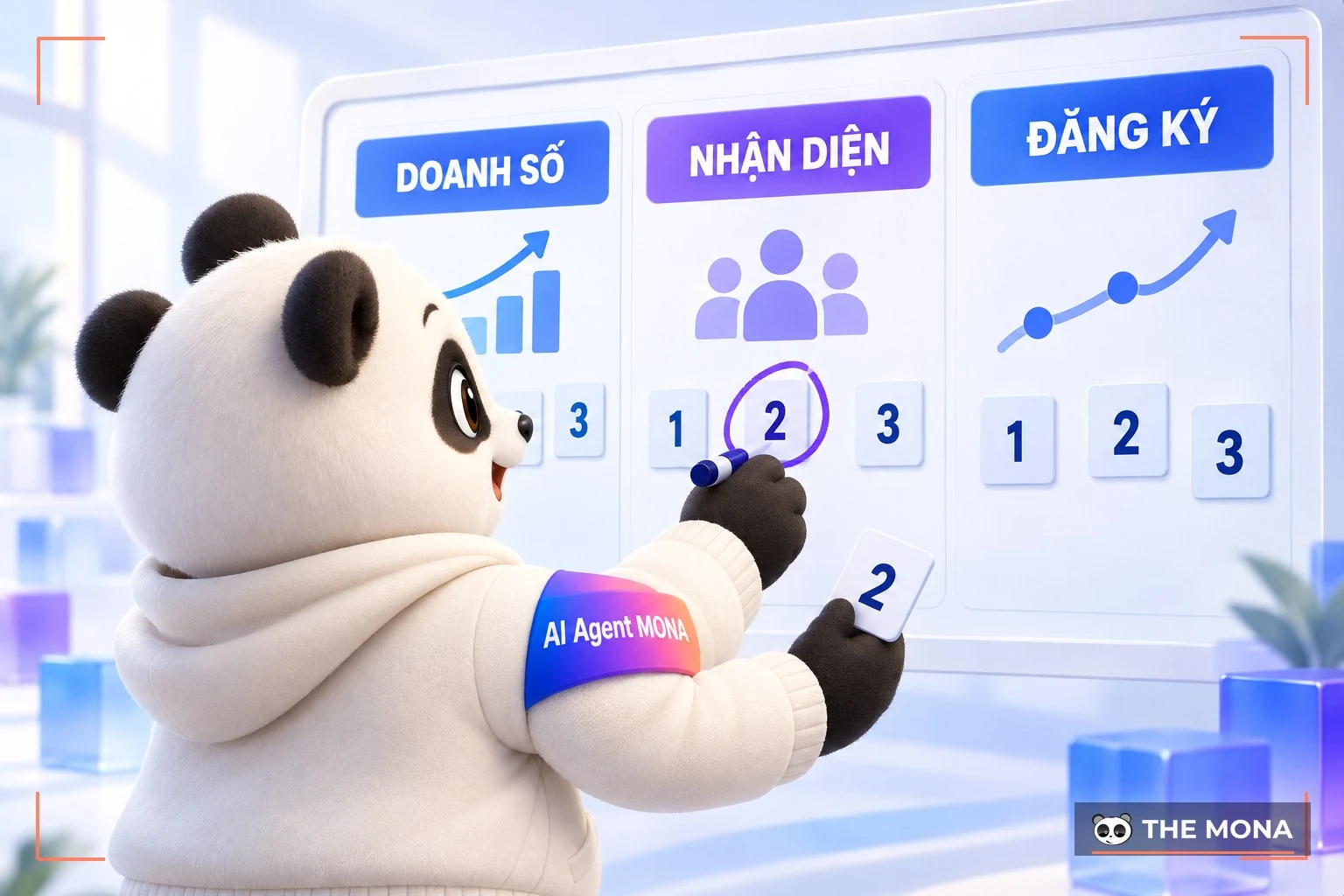
Example: In the OPPO Reno7 "Unlimited Me, in Portrait" campaign in Vietnam, OPPO's marketing team wanted to make a splash for the new portrait camera, so it set a goal of 30,000 pre-orders and EMV of 3 times the budget. Detailed KPIs included orders, livestream views at the sales launch and the rate of hashtag challenge participation.
Before choosing an influencer, a business needs to define its target customer profile. Once that is built, it needs to check whether the profile fits the influencer's fans. Criteria can combine age, behavior, mindset, gender, income level, location and so on.
Example: Reno7 targeted Gen Z customers who love selfies, live on TikTok and Instagram and like vivid colors. From these insights OPPO chose Sơn Tùng M-TP, a style icon for young people, as its brand ambassador.
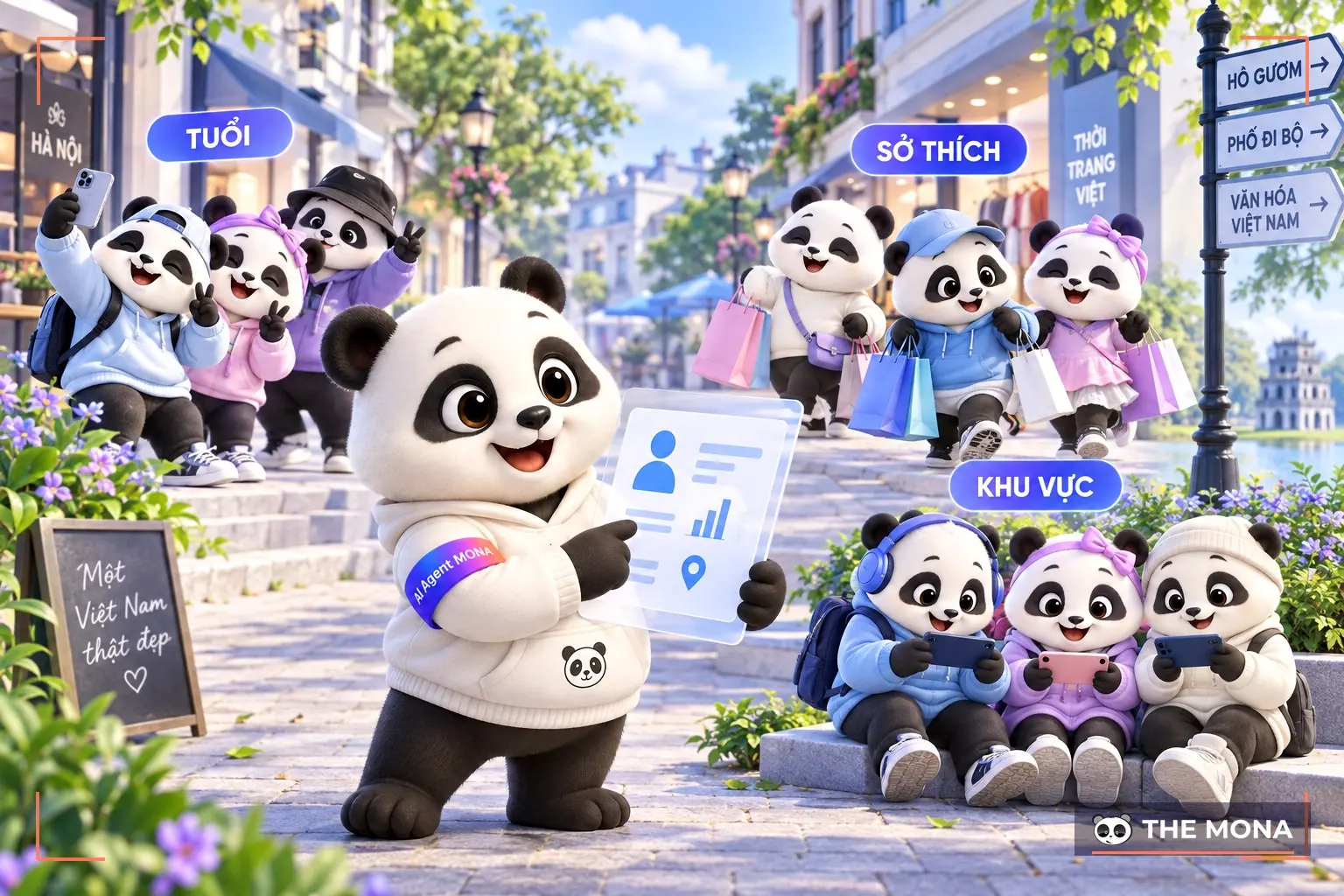
The rollout plan should cover:
Example: OPPO's marketing team made a clear plan and split the campaign into 8 weeks: 2 weeks of "teasing" with 7 colored posters, 1 week of 3D billboards, 1 week of a product launch livestream, and 4 weeks of UGC content to keep momentum.
Some types of campaign used in Influencer Marketing:
Example: OPPO's celebrity marketing campaign combined a livestream with the #UnlimitedMe hashtag challenge on TikTok, and gave affiliate links to tech KOLs so orders could be measured directly.
After deciding which type of influencer campaign to run, the next step is to decide which brand assets to emphasize in the plan. They could be the logo, the slogan, a new product or a flagship product.
You also need to decide how to reach customers: with tutorial videos or with photos and captions. Depending on the brand, you can give creative guidelines or let the influencer develop the content freely.
Example: OPPO required KOLs to always mention the "Unlimited Me" message, highlight the bokeh effect on the camera, and show the "Rainbow Spectrum" color in at least 30% of the frame.
By completing all seven steps below for finding influencers, a brand finds not only the right "face" but also builds a lasting working relationship, reducing risk and maximizing ROI for every Influencer Marketing campaign.
Step 1: "Hunt" for KOLs
First, list the channels (TikTok, Instagram, YouTube and so on) that match your customers' buying journey, then scan the trending hashtags, videos and the influencers your competitors work with. Manual searching should be combined with dedicated influencer evaluation tools such as CreatorIQ, Aspire and Upfluence. These platforms suggest KOL profiles, report engagement and track contracts automatically, saving many hours of manual filtering.
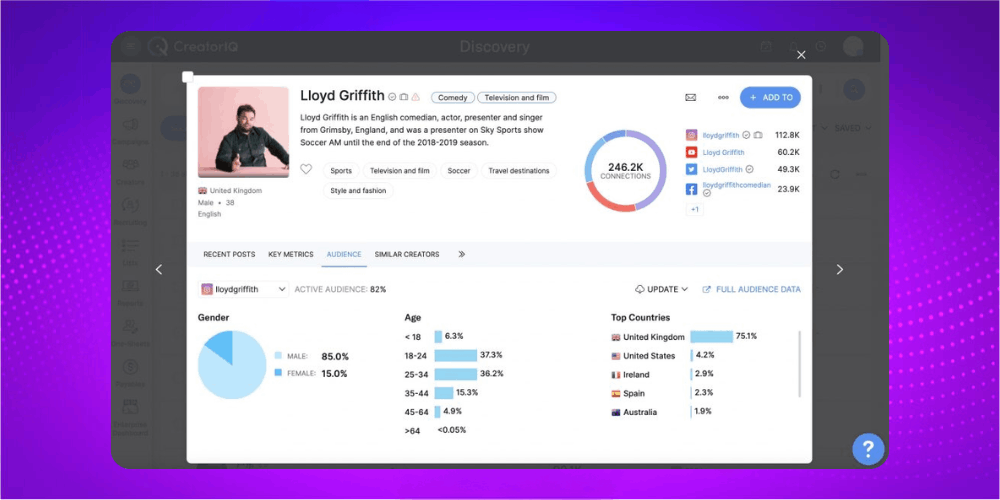
Step 2: Screen with the 4R framework
Sprout Social suggests four key criteria for evaluating a quality influencer: Reach (reach), Relevance (whether the content fits the brand), Resonance (real engagement) and Relationship (long-term commitment). If a food blogger has 40K followers but often posts fast food while you promote healthy eating, the Relevance score is close to zero and they should be dropped early.
Step 3: Check how "clean" the audience is
Statistics for 2025 show that 1 in 4 influencers has bought followers, and on Instagram alone 9.5% of accounts are bots. Use the "fake-follower audit" features of HypeAuditor or SparkToro to determine True Reach the number of real people who can see a post. Profiles with more than 15% suspicious followers should be reconsidered or negotiated down in price.
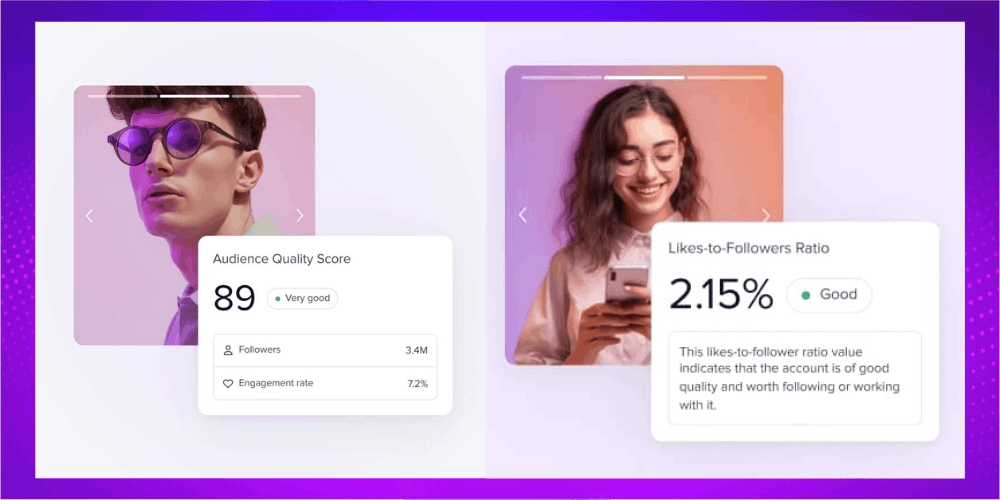
Step 4: Read engagement metrics in the context of the industry
A travel account with 100K followers but only 0.3% engagement (ER), below the 2025 Instagram average of 0.50 to 0.55%, shows the content has gone "cold". On the other hand, a nano-influencer with a 3 to 5% ER, even with small reach, is a gold mine when the goal is conversion rate.
You may also be interested in: What is conversion advertising? How to run Facebook conversion ads
Step 5: Calculate value with Earned Media Value (EMV)
After cutting most of the low-quality or poorly matched influencers from the list, compare the booking cost with EMV, the estimated media value if you had to pay for ads delivering the same number of impressions. If the expected EMV is lower than the booking price, negotiate or look for another KOL.

Step 6: Make sure legal requirements and brand safety are covered
The FTC's 2023 Endorsement Guides require clear #ad or #sponsored hashtags, and brands must monitor KOL content. Violations can be fined up to tens of thousands of USD per post. Also review the influencer's political views and any improper conduct to avoid negative spillover.
Step 7: Move on to negotiation and a long-term relationship
When the shortlist is down to 5 to 10 names, send brief them a brief stating the goals, message, KPIs and rights to reuse the content. The detailed contract must include: the posting schedule, requirements for hashtags and the #ad label, compensation clauses if the KOL breaches the terms, and periodic reports. The key is to respect creativity: let the influencer adapt their style while staying within the brand framework, because that is why their audience trusts them.
Example: In OPPO's Influencer Marketing campaign, besides Sơn Tùng M-TP, OPPO invited 150 more KOLs, from macro to nano reviewers, to cover multiple platforms and raise credibility.
Once you have found the right influencers, it is time to start the Influencer Marketing campaign. During launch, keep close contact with the influencer and settle the type of content they produce and when they post. This helps the business control the promotional content and limit as far as possible any communications crisis that may arise.
Example: OPPO launched its Influencer Marketing campaign with a 3D Sơn Tùng billboard on Pham Ngoc Thach street, which produced thousands of check-in clips. Right after, the singer livestreamed on TikTok, drew more than 1 M views and pre-orders surged.
Tracking and measuring an Influencer Marketing campaign lets a business see how it is going and how successful it is. The metric ROI will be one of the criteria for judging effectiveness. You also need to refer to the KPIs set earlier. These metrics help the business adjust so it stays in line with the overall plan.
Example: OPPO's real-time dashboard reported 33,000 pre-orders (10% over target) and EMV of 3.6 times the cost. It hit the desired ROI and confirmed the outstanding success of the Influencer Marketing campaign.
Mona Media has shared detailed content about Influencer Marketing what it is, how to choose influencers that fit your business, and how to run an effective Influencer Marketing campaign. We hope the information above adds useful knowledge about this form of communication. If you need a detailed roadmap or a KOL selection checklist, feel free to contact advertising film companies a leading, reputable agency, Mona Media, through HOTLINE 1900 636 648, and we are always ready to work with you to turn influencers' voices into real benefits for your business.

CEO & Founder · The MONA
Founder of The MONA, who built a services company of 60+ staff with 14,000+ projects delivered. Khánh Hùng shares how he thinks about building systems that run themselves, automating a business, and the real lessons from delivering projects at MONA.
 1,5K




Professional website
design services
Own a website with a beautiful, 100% exclusive design and a lifetime warranty, with the ability
to expand features flexibly as your business grows, starting today!






 MONA will never sell your information or send you spam


 MONA will never sell your information or send you spam
