
 MONA OS 2.0
 Partner with MONA


 Tự động hoá doanh nghiệp
 Cẩm nang SEO
 Digital Marketing
 Kinh nghiệm thiết kế website
 Hạ Tầng Server
 Giáo dục


 VI
 EN










Message us on
Zalo Official


 ProductsNew

 ProductsProducts
 Mới ra mắtKHA AI 2027App tự edit video, tự đăng mọi mạng xã hội, 2 phút mỗi ngày










 Website designLooks good and wins customers over.
SEO servicesBrings in customers searching for exactly what you sell.
 Tư vấn digital marketingKéo khách từ nhiều kênh, đo bằng số thật.
Corporate video productionVideos introducing your company, factory and team.
 NewAI video productionCompany story films made with AI.
 Custom software developmentCRM, ERP and HRM built for your business.
 Viết AI Agent theo yêu cầuĐặt riêng một trợ lý AI cho đúng việc của mình.
 Tư vấn chuyển đổi AIĐưa AI vào vận hành của cả công ty.
NewMONA LMSManagement for centers and schools.
MONA SkillHubInternal training for company staff.
 NHTQ systemEnd-to-end China–Vietnam shipping operations.
MONA JMSManagement for gold, diamond and pawn shops.
 MONA E-LearningA website with every feature you need to sell courses.
 How to sell online courses (course)More than 30 free lessons on selling courses on autopilot.
 MONA Cloudmonacloud.vnServers to get your apps and websites running.
 MONA Basemonabase.vnPostgres database, sign-in and file storage.
 MONA Mailmonamail.vnSend OTP, order and invoice emails from your software.
 MONA Paymonapay.vnAccept bank transfers via VietQR and notify your software when the money arrives.
 MONA eInvoiceComing soonIssue e-invoices that meet tax standards.
Gấu CườiTrả lời khách 24/7 trên web, Fanpage, Zalo và thu lead cho sale.
 Gấu TeleSalesGọi điện tư vấn, chăm khách như tổng đài viên thật.
Dê CườiTư vấn và chốt đơn cho shop ngay trong khung chat.
Gấu WebmasterNhắn nhóm Zalo là website được sửa xong.
 Gấu Pháp ChếSoạn hợp đồng, rà điều khoản trong vài phút.
 Gấu Báo GiáLên báo giá đúng mẫu và gửi khách ngay.
 AI chăm sóc khách hàngTheo dõi và giữ chân khách hàng cũ.
 Gấu Tuyển DụngLọc hồ sơ, hẹn lịch, phỏng vấn ứng viên.
 Mới ra mắt
KHA AI 2027
Xây kênh chuyên gia 2 phút mỗi ngày
Quay bằng điện thoại, AI tự edit video, tự đăng lên 16 nền tảng và tự trả lời bình luận, tin nhắn.
901.078lượt xem trên kênh CEO MONA sau 37 ngày
 Anh Khánh HùngCEO MONA đang dùng mỗi ngày
Xem app làm được gì
 AI
Gấu Cười MONA ĐANG TỰ XÀITrả lời khách 24/7 trên website, Zalo OA, Messenger và thu lead về cho sale.
Dê CườiChốt đơn bán lẻ và sàn: Shopee, TikTok Shop, web. Chăm cả khách sỉ, đại lý.
Gấu WebmasterCập nhật nội dung, tối ưu SEO website mỗi ngày.
Gấu TeleSalesGọi điện tư vấn, chăm khách như tổng đài viên thật.
Gấu Tuyển DụngLọc hồ sơ, hẹn lịch, phỏng vấn ứng viên tự động.
AI chăm sóc khách hàngGiữ khách cũ, cứu lead đã rớt cho phòng kinh doanh.
Gấu Pháp ChếSoạn hợp đồng, rà điều khoản trong vài phút.
Gấu Báo GiáLên báo giá đúng mẫu, gửi khách ngay khi có yêu cầu.
 Chuyển đổi AI toàn phầnGiải pháp tổng cho doanh nghiệp, 3 lớp triển khai.
 Viết AI Agent theo yêu cầuĐặt riêng một con AI gánh đúng nghiệp vụ của bạn.
 Custom softwareCRM, ERP and HRM with built-in AI automation.
 SEO & AEO thời đại AIĐược Google lẫn AI trích dẫn, không chỉ xếp hạng.
 Kiến thức AI cho doanh nghiệpBài phân tích, hướng dẫn ứng dụng AI vào vận hành.
 Free AI courses
 AI tools at work
App mới · KHA AI 2027
Xây kênh 2 phút mỗi ngày
AI tự edit video, tự đăng mọi mạng xã hội
Free consultation, 8am–10pm every day

18 March, 2023
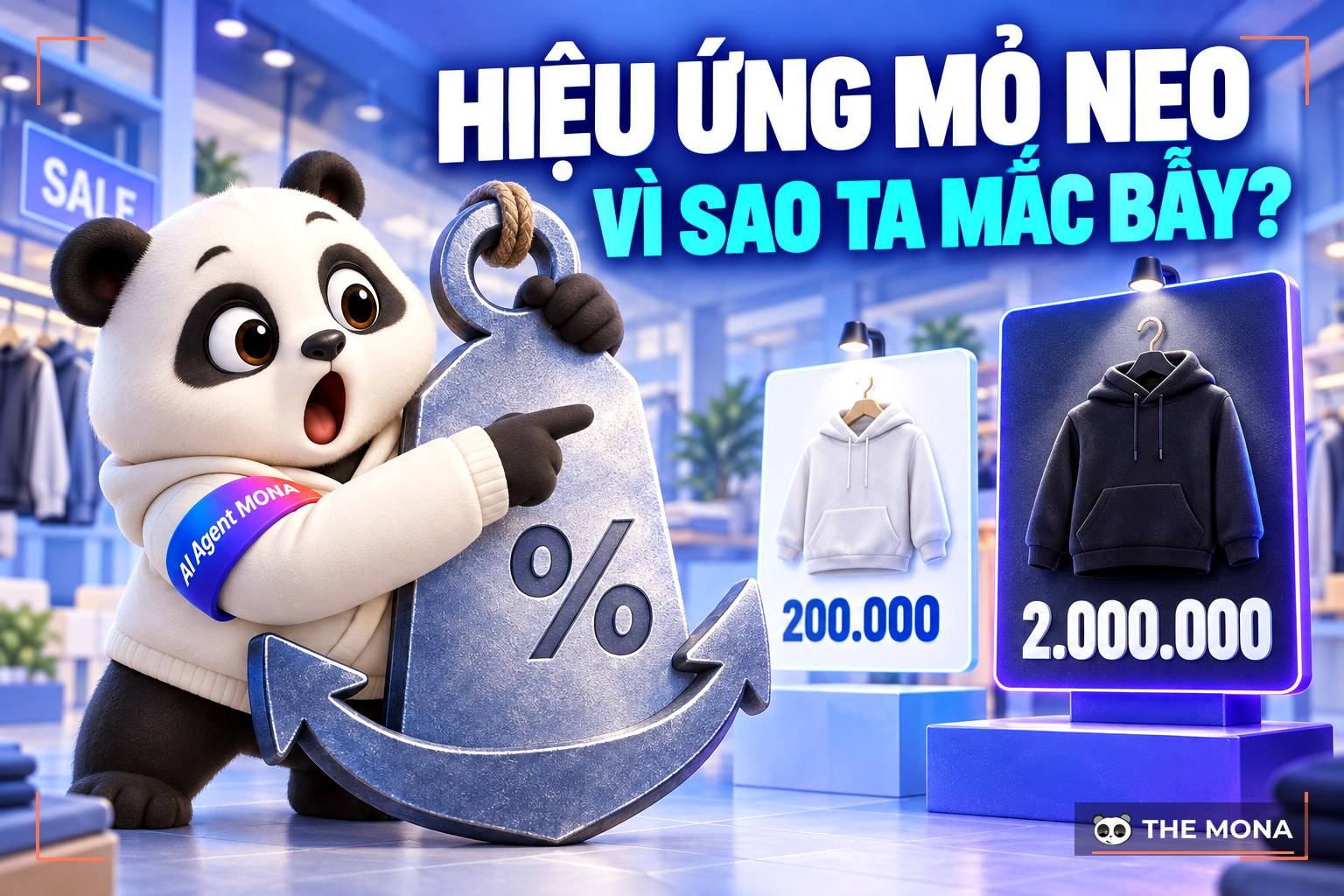
In business, the anchoring effect is one of the strategies sellers cannot do without. Many people probably still do not know what the anchoring effect is or its nature and use in business. Let's learn together Mona Media what the anchoring effect is in the article below.
The anchoring effect is seen as a cognitive bias that describes a common human tendency. It is an over-reliance on the first piece of information given. In decision-making, anchoring happens when you use initial information to make later judgments. Once the anchor is set, judgments are made efficiently. This works by adjusting how you interpret information around that anchor.

A typical example is the starting price given for a newly released computer, followed by another, used computer. The first price becomes the standard for the discussion. When the second price comes up, it has to seem reasonable compared with the first, even when it is higher than the real value of the used computer.
The nature of using the anchoring effect is to draw customers' attention when a product first appears. Customers are then pulled along by that information. At the same time, they automatically form a view and decide whether to buy.
You are probably very familiar with buying and haggling when shopping. When the seller names a price of 50 thousand VND, you bargain down to 40 or 45 thousand VND. But you forget the other factors around that price, such as product quality, market prices, your basic spending limit,… The 50 thousand price is the anchor that makes consumers judge and get pulled along by it, even though in reality the amount may be worth more than the item.
Here is another example: motorbike A is a new product and B is a used motorbike. The seller needs to know the general price of bike A and wants the customer to guess the price of bike B. Because of the anchoring effect, the customer relies on the price of bike A to calculate and predict. The result is a number around the value of bike A, but not necessarily right for bike B.
 In practice, the anchoring effect can be applied to many different goals, such as business negotiation, buying and selling, or boosting work productivity. One thing to remember is that, from any angle and whatever the purpose, you must always pay attention to the influence of the anchor.
When you take the active position of creating anchors, you will see countless benefits, whether you are the buyer or the seller. When selling, instead of just putting up an ordinary fixed price tag, attach a larger number in front, while still showing customers that it has been replaced by a lower price than the original. That way, customers may be drawn in by the first price and accept the second price easily.
As a buyer, you “drop the anchor” by offering a price lower than the amount you actually have. This way, the seller's plan is influenced by the number you suggested.
The anchoring effect from negotiation also often happens when setting goals, where it affects the final result. Research by business experts shows that when goals are more challenging, people always do better than those who set lower or unclear goals. Even if the goals are not fully met, work performance still improves significantly.
However, this approach still has some hidden limits. If you set goals that are too ambitious and beyond your ability, even if your result is still good or even exceeds your plan, your satisfaction will be affected somewhat. It can even lead to negative thoughts that hurt your willpower and cause wrong judgments about your own abilities.
When you are not the one in control, you need ways to avoid being influenced by the anchoring effect. This certainly takes a steady mindset and firm reasoning. Combined with your own experience and knowledge, you can then escape the “anchors” set by whoever gives the first piece of information.
Before any deal or trade, you should decide on the specific type of product you need. Then research the market information about it and the price you expect. For pre-set “anchors”, you just need to focus on your original estimates. You can quietly ignore it or choose to counter by “dropping an anchor” the other way.
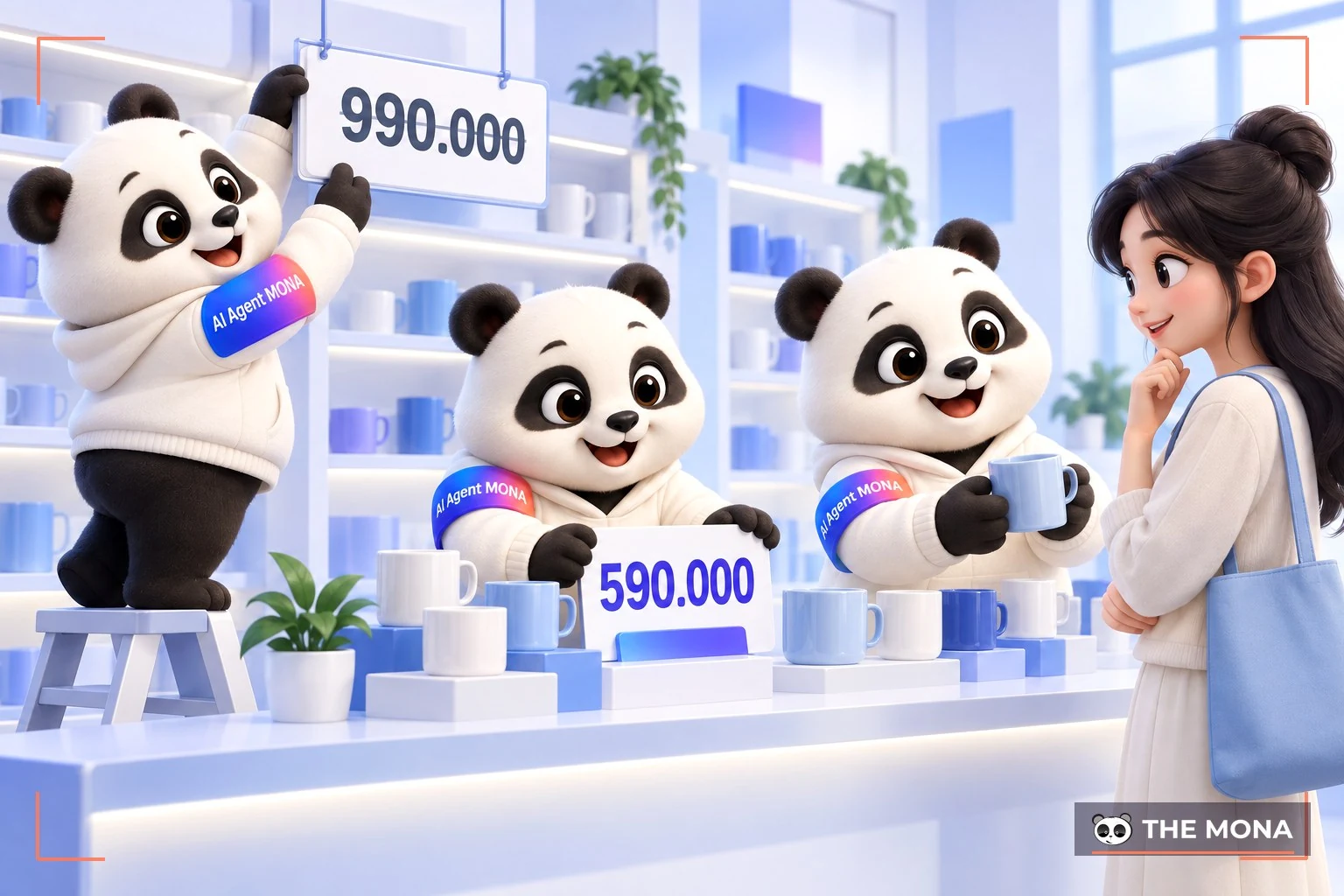
Because it is simple to carry out, the anchoring effect is widely used, especially in business. Its influence helps businesses grow and earn more profit than expected. The most common ways to apply the anchoring effect today are:
The first pieces of information customers receive have a big influence on their decisions, without them realizing it. So businesses should drop an “anchor” here with unrelated information. The goal is to attract customers before talking directly about each product's price.
With a price that has four digits, customers tend to be “anchored” to that price and guess amounts in the thousands. Conversely, a company can offer a more attractive figure such as 299k. The unit that “anchors” the customer's judgment adjusts to make them feel they are getting a reasonable product. It must not affect the business's revenue quality either.
This method is commonly used in the promotions of products. For example, an order with a total price of 300,000 VND drops to just 240,000 VND after a voucher. If your order costs 80,000 VND plus a delivery fee of 90,000 VND. You should also weave in promotions to make the business even more effective.
Some people think they must make a great first impression, but you can still drop an “anchor” with a weaker product. Then introduce other products with better deals or higher quality. Based on the initial “anchor”, the following products are always judged more favorably in customers' eyes.
Business owners can easily see the benefit of adding the anchoring effect at supermarket shelves, shopping sites, cafes,… Instead of the traditional arrangement from low to high or the reverse, sellers usually drop an “anchor” by putting high-priced products on top. When customers look down to lower prices, they feel this is a reasonable price and decide to buy.
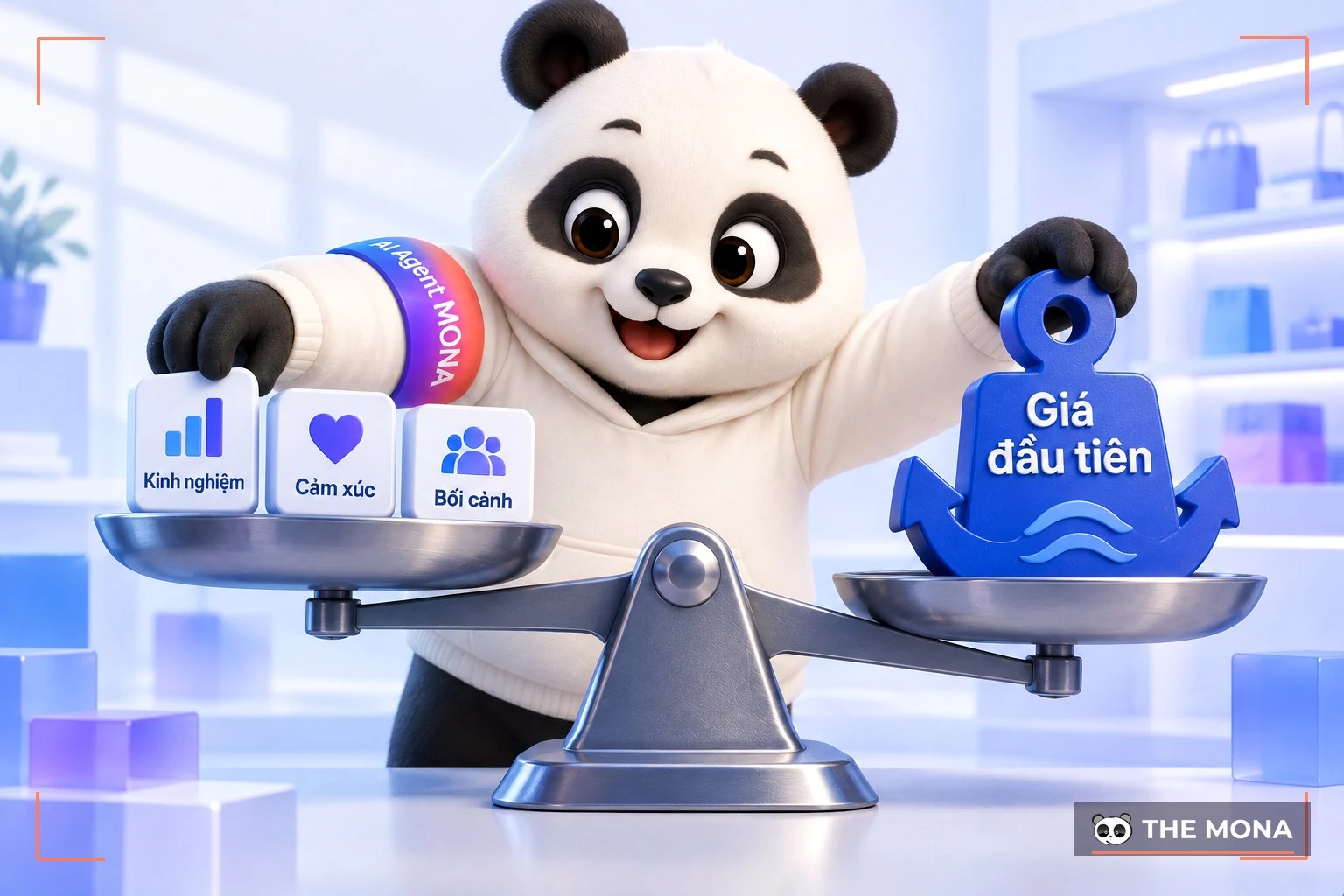
For the anchoring method to work at its best before consumers decide on a product, businesses should consider these factors that affect the result:
With the information above, you now have solid knowledge about what the anchoring effect is? Its nature and proper use in business. You should apply it at the right moment and time to bring high economic results.
You may also be interested in:

CEO & Founder · The MONA
The founder of The MONA built a service company of 60+ staff with 14,000+ projects delivered. Khánh Hùng shares his thinking on building self-running systems, automating a business, and the real lessons behind MONA's projects.
 1,5K




Professional website
design services
Own a website with a beautiful, 100% exclusive design and a lifetime warranty, with the ability
to expand features flexibly as your business grows, starting today!






 MONA will never sell your information or send you spam


 MONA will never sell your information or send you spam
