
 MONA OS 2.0
 Partner with MONA


 Tự động hoá doanh nghiệp
 Cẩm nang SEO
 Digital Marketing
 Kinh nghiệm thiết kế website
 Hạ Tầng Server
 Giáo dục


 VI
 EN




















Message us on
Zalo Official


 ProductsNew

 ProductsProducts
 Mới ra mắtKHA AI 2027App tự edit video, tự đăng mọi mạng xã hội, 2 phút mỗi ngày










 Website designLooks good and wins customers over.
SEO servicesBrings in customers searching for exactly what you sell.
 Tư vấn digital marketingKéo khách từ nhiều kênh, đo bằng số thật.
Corporate video productionVideos introducing your company, factory and team.
 NewAI video productionCompany story films made with AI.
 Custom software developmentCRM, ERP and HRM built for your business.
 Viết AI Agent theo yêu cầuĐặt riêng một trợ lý AI cho đúng việc của mình.
 Tư vấn chuyển đổi AIĐưa AI vào vận hành của cả công ty.
NewMONA LMSManagement for centers and schools.
MONA SkillHubInternal training for company staff.
 NHTQ systemEnd-to-end China–Vietnam shipping operations.
MONA JMSManagement for gold, diamond and pawn shops.
 MONA E-LearningA website with every feature you need to sell courses.
 How to sell online courses (course)More than 30 free lessons on selling courses on autopilot.
 MONA Cloudmonacloud.vnServers to get your apps and websites running.
 MONA Basemonabase.vnPostgres database, sign-in and file storage.
 MONA Mailmonamail.vnSend OTP, order and invoice emails from your software.
 MONA Paymonapay.vnAccept bank transfers via VietQR and notify your software when the money arrives.
 MONA eInvoiceComing soonIssue e-invoices that meet tax standards.
Gấu CườiTrả lời khách 24/7 trên web, Fanpage, Zalo và thu lead cho sale.
 Gấu TeleSalesGọi điện tư vấn, chăm khách như tổng đài viên thật.
Dê CườiTư vấn và chốt đơn cho shop ngay trong khung chat.
Gấu WebmasterNhắn nhóm Zalo là website được sửa xong.
 Gấu Pháp ChếSoạn hợp đồng, rà điều khoản trong vài phút.
 Gấu Báo GiáLên báo giá đúng mẫu và gửi khách ngay.
 AI chăm sóc khách hàngTheo dõi và giữ chân khách hàng cũ.
 Gấu Tuyển DụngLọc hồ sơ, hẹn lịch, phỏng vấn ứng viên.
 Mới ra mắt
KHA AI 2027
Xây kênh chuyên gia 2 phút mỗi ngày
Quay bằng điện thoại, AI tự edit video, tự đăng lên 16 nền tảng và tự trả lời bình luận, tin nhắn.
882.681lượt xem trên kênh CEO MONA sau 36 ngày
 Anh Khánh HùngCEO MONA đang dùng mỗi ngày
Xem app làm được gì
 AI
Gấu Cười MONA ĐANG TỰ XÀITrả lời khách 24/7 trên website, Zalo OA, Messenger và thu lead về cho sale.
Dê CườiChốt đơn bán lẻ và sàn: Shopee, TikTok Shop, web. Chăm cả khách sỉ, đại lý.
Gấu WebmasterCập nhật nội dung, tối ưu SEO website mỗi ngày.
Gấu TeleSalesGọi điện tư vấn, chăm khách như tổng đài viên thật.
Gấu Tuyển DụngLọc hồ sơ, hẹn lịch, phỏng vấn ứng viên tự động.
AI chăm sóc khách hàngGiữ khách cũ, cứu lead đã rớt cho phòng kinh doanh.
Gấu Pháp ChếSoạn hợp đồng, rà điều khoản trong vài phút.
Gấu Báo GiáLên báo giá đúng mẫu, gửi khách ngay khi có yêu cầu.
 Chuyển đổi AI toàn phầnGiải pháp tổng cho doanh nghiệp, 3 lớp triển khai.
 Viết AI Agent theo yêu cầuĐặt riêng một con AI gánh đúng nghiệp vụ của bạn.
 Custom softwareCRM, ERP and HRM with built-in AI automation.
 SEO & AEO thời đại AIĐược Google lẫn AI trích dẫn, không chỉ xếp hạng.
 Kiến thức AI cho doanh nghiệpBài phân tích, hướng dẫn ứng dụng AI vào vận hành.
 Free AI courses
 AI tools at work
App mới · KHA AI 2027
Xây kênh 2 phút mỗi ngày
AI tự edit video, tự đăng mọi mạng xã hội
Free consultation, 8am–10pm every day

20 June, 2025
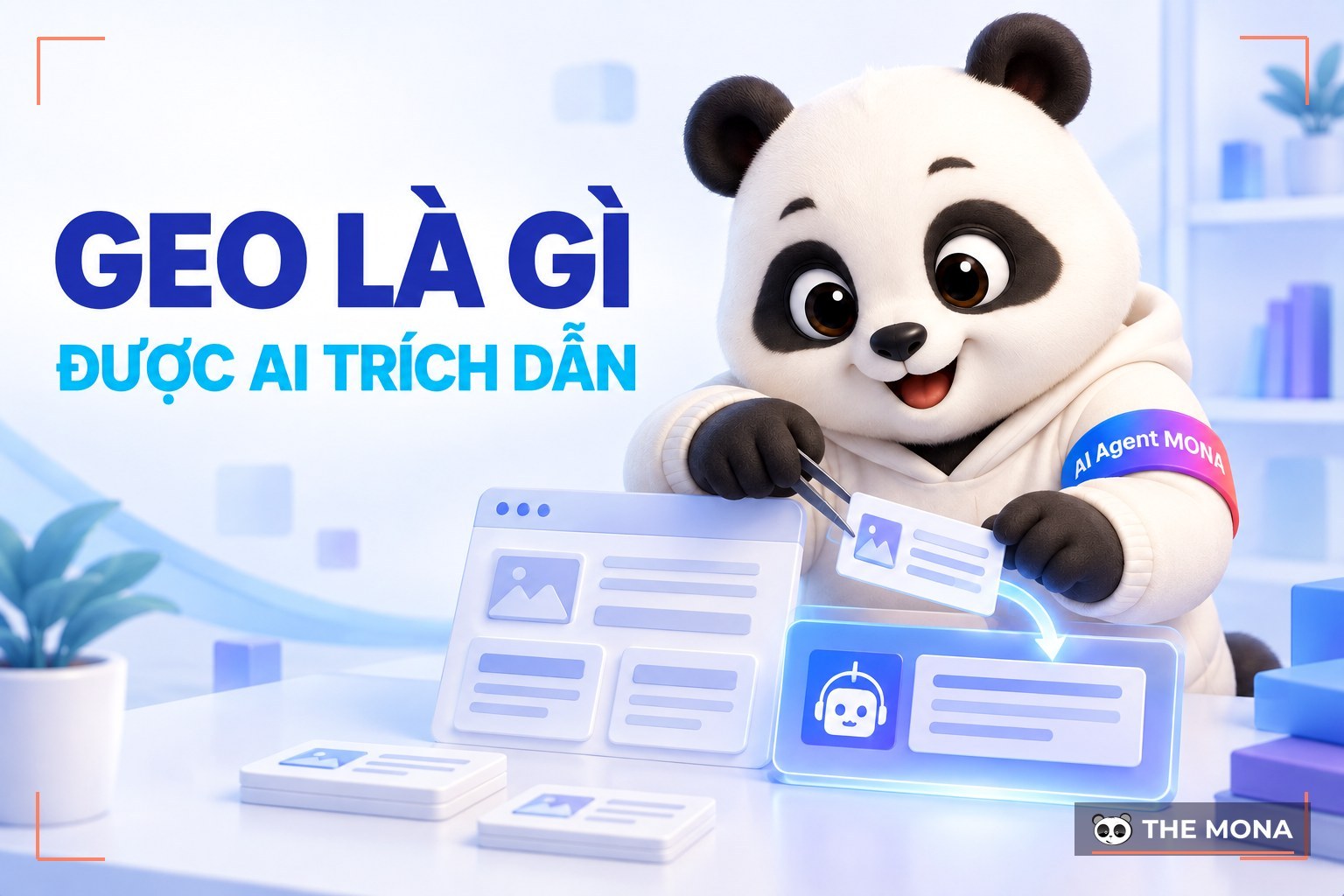
Artificial intelligence is driving a global boom, and 2026 promises to be even stronger. Theo Precedence Research, the AI market could reach $638 billion this year and is expected to exceed $3,600 billion by 2034. This shows AI is not a passing trend but a technology foundation shaping the future. In that context, Generative Engine Optimization is a way to optimize your website not only to rank better on search engines but also to appear in answers generated by AI tools. So what is GEO? And how do you optimize GEO effectively to seize the chance to reach potential customers in the AI era? Find out with MONA Media find out in this article.
GEO (Generative Engine Optimization), also called generative engine optimization, is the practice of building and optimizing content so a brand appears in answers produced by artificial intelligence (AI), such as ChatGPT, Perplexity, Gemini, Copilot or Google AI Overviews, which are the “destinations” of GEO.

Unlike traditional SEO, which focuses on ranking on Google's search results page, GEO aims to position the brand so it appears in AI-generated responses when users ask questions related to a business's products, services or field.
Main goals of a GEO strategy:
As search behavior shifts strongly from “typing keywords” to “asking AI questions”, GEO has become an essential step in digital marketing, making sure businesses are not left behind in the AI-led search era.
Watch the full version on YouTube: GEO: what content your website needs to be recommended by ChatGPT, Gemini and Claude.
GEO did not appear by chance. It comes from changes in user behavior in the AI era. Three main factors form its foundation:
The boom of artificial intelligence in search: AI has changed how people reach information. With Google Search Generative Experience (SGE) and AI Overviews, users no longer just type keywords to browse links; they increasingly ask direct questions and get smart answers right away.
A variety of generative AI platforms: It is not only Google. Tools like ChatGPT, Gemini and Copilot have also become familiar places for finding information. This gives businesses a chance to appear on many platforms, but also raises a challenge: how do you get your content understood, trusted and cited by AI?
The need for optimization beyond Google: Traditional SEO mainly focuses on ranking on the SERP. GEO was created to optimize content in a way AI can easily grasp and use, making sure the brand is mentioned in AI's own answers.
The overlap of these three factors formed GEO, a natural step forward in digital marketing strategy that helps a brand not only show up but stand out in the AI-led search era.
According to Gartner, by 2026, 25% of traffic from Google and traditional search tools will decline because of AI. With AI reshaping the whole search ecosystem, understanding what GEO Marketing is and doing it right not only helps businesses keep up with the trend but also gives them a strong competitive edge in the digital market:
With giants like Google and Microsoft pushing AI into their products, GEO is no longer optional but an unavoidable trend. Businesses that adopt it early will save costs, work more efficiently marketing and take over a new market that few competitors are working yet.
GEO and SEO (Search Engine Optimization) both play an important role in improving a website's visibility, but each strategy has different goals and methods. Knowing how SEO and GEO are alike and different will help you build a lasting content strategy that covers multiple channels and stays ahead of new search behavior.
GEO and SEO overlap in how they optimize content for users and search engines, specifically:
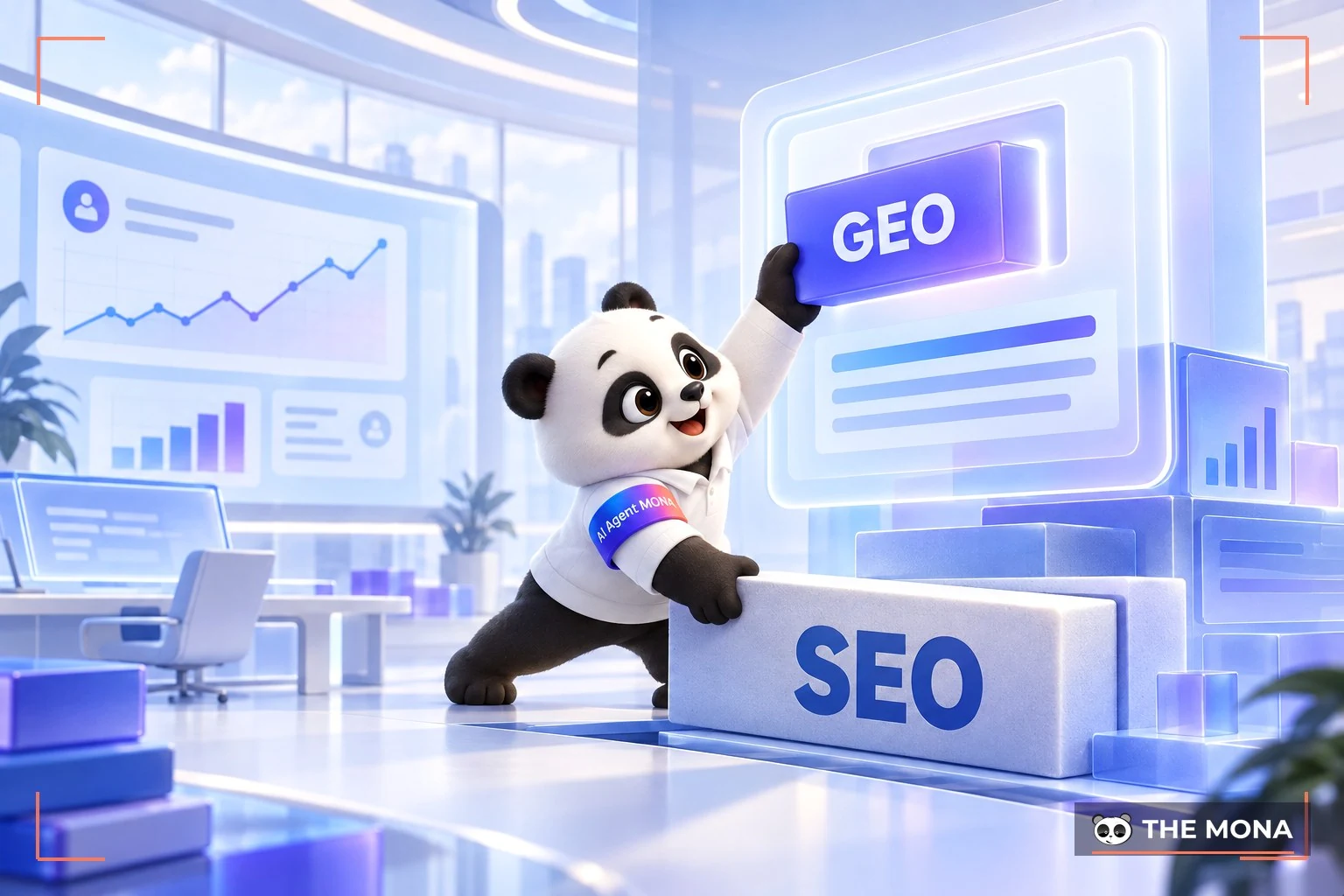
Although they have much in common, generative engine optimization (GEO) and SEO still differ on several criteria. Below is an overview comparison table of SEO and GEO for your reference:
| DETAILED GEO VS SEO COMPARISON TABLE |
||
| Criterion | SEO (Search Engine Optimization) | GEO (Generative Engine Optimization) |
| Main goal | Rank high for web pages in the search results list (SERPs). | Become the source of information that AI selects, cites or uses to build optimal answers (synthesized responses). |
| Optimization target | Traditional search engine algorithms (Google, Bing…). | Large language models (LLMs) and the algorithms of search and retrieval engines (ChatGPT, Gemini, Perplexity, AI Overviews…). |
| How it works | Crawl, index and rank based on signals such as keywords, content, backlinks,… | Analyze online, synthesize information from many sources and generate summarized answers based on broad context. |
| Optimization factors | Keywords, backlinks, page structure, technical signals. | Content quality and accuracy, relevance, authority, trustworthiness, freshness, citation frequency… |
| Effective content types | Keyword-optimized landing pages, blog posts, product pages. | In-depth content that answers questions directly, excerpts (headings, lists), structured data (schema), shown through E-E-A-T. |
| Measurement metrics | Keyword rankings, traffic Organic Traffic (organic visits), click-through rate (CTR), conversion rate… | Still limited: referral traffic from AI platforms, and features for tracking how AI answers change brand perception. |
As an SEO service company with over 10 years of quality work, MONA sees GEO and SEO as complementary rather than competing. SEO builds a solid foundation for a website, while GEO optimizes content so AI trusts it and picks it as the answer, which raises visibility and creates a competitive edge in the digital space.
If you want your brand to appear on both traditional Google and modern AI search tools, combining full-scope SEO and GEO is a smart and sustainable direction.
MONA has been working with more than 300+ projects websites on SEO. With over 10 years of experience working alongside more than 12,000 clients in Vietnam and abroad, we are confident in delivering comprehensive SEO solutions that help businesses reach the top 1 spot on Google.

When you choose SEO services at MONA, we not only help websites grow sustainably and expand online market share but also create real conversion value for businesses through commitments such as:
No matter how tough your requirements, or how hard your field or keyword is, MONA has the best solution and strategy for you, helping you break through on revenue after just 1 to 3 months. Contact MONA Media now via HOTLINE 1900 636 648 for detailed advice and to get detailed SEO quote accurate answers.
The goal of GEO is to help content be understood, trusted and cited by AI-powered search engines. So GEO is not just about technical factors; it needs a comprehensive content strategy designed around how AI models analyze and choose information.
Below are the GEO steps the MONA team has distilled from real projects, so your content is not only “found” but also “preferred” in AI-led search.
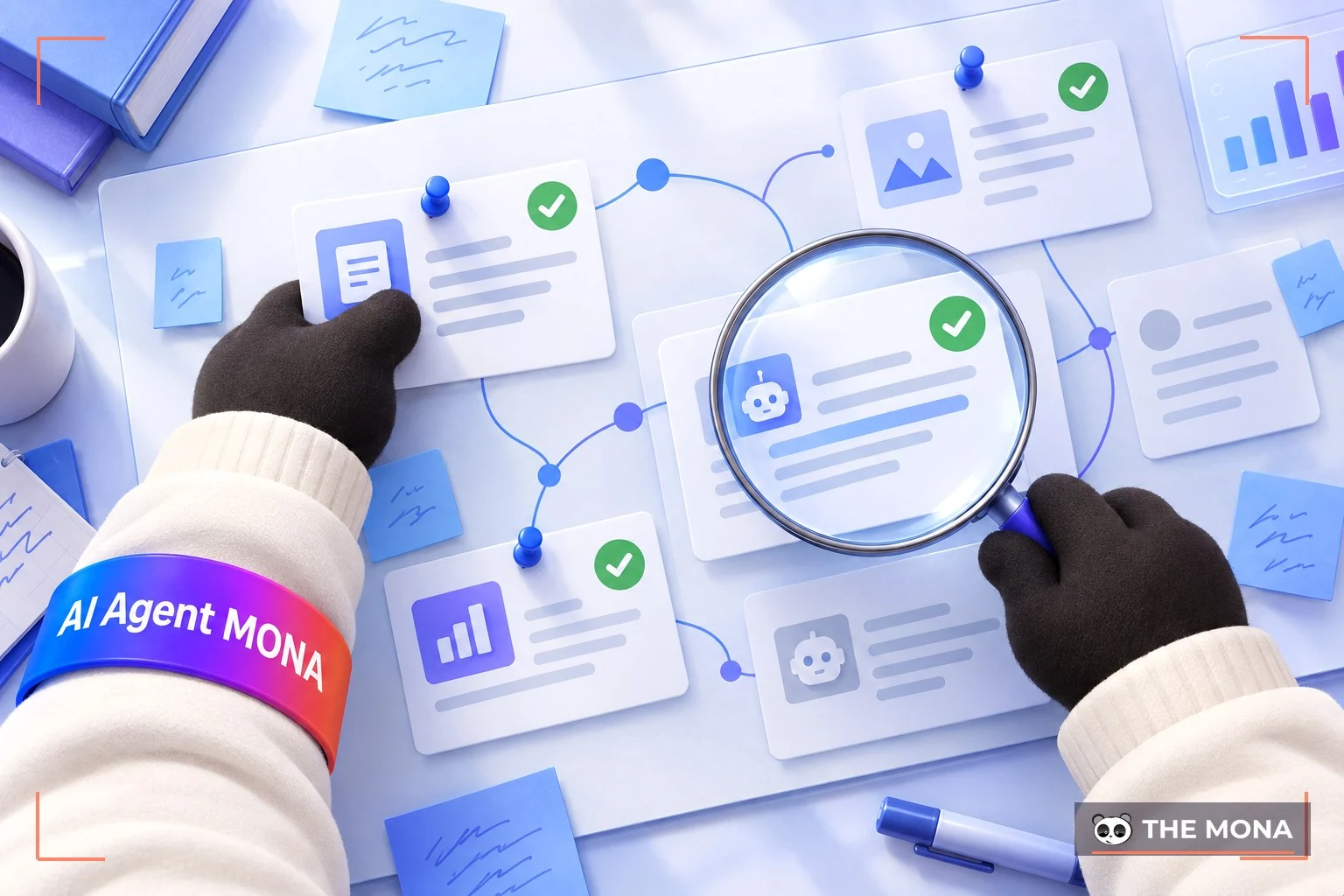
Before optimizing for generative engines, a business needs to analyze how AI search tools work and how competitors appear in AI.
Understand how each AI tool works: Each platform, such as ChatGPT, Perplexity or Google AI Overviews, has its own way of collecting, evaluating and presenting information. Understanding this “logic” helps you format and organize content so AI can easily recognize and cite it.
Research keywords by real search intent: GEO does not stop at short keywords like traditional SEO. Instead, focus on long queries, natural questions and specific contexts that match how people talk and ask AI questions (for example: SEO-standard content writing service what is special about MONA? MONA Media brand review)
Mastering these factors helps a business build a trustworthy content foundation that fits how AI processes data, and that is the starting point of an effective GEO strategy.
Content remains the core of GEO. Writing must be not only SEO-standard but also high quality, so users rate it well and AI trusts it. With hands-on experience, MONA shares how to build good, effective content that meets Google's E-E-A-T criteria.
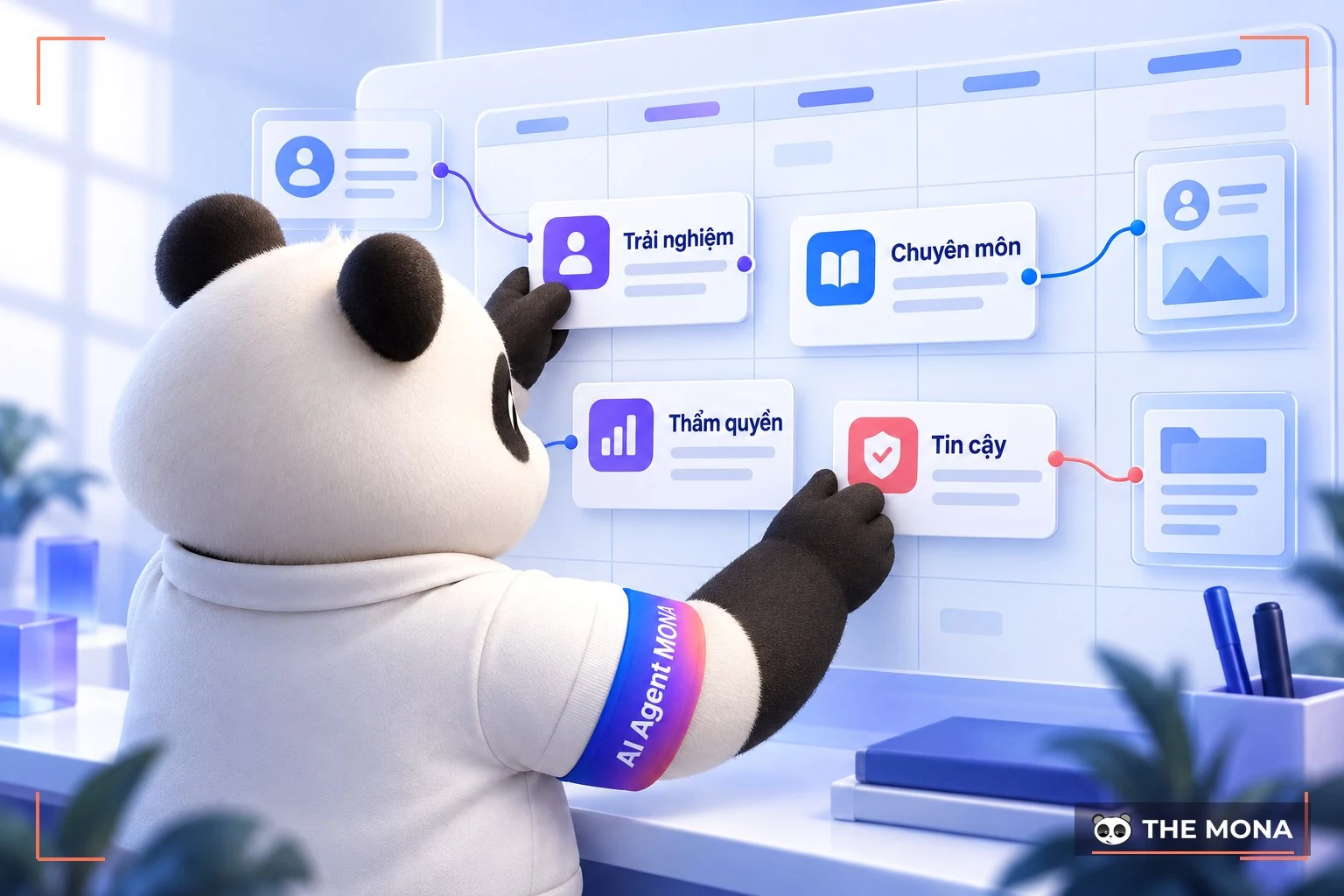
If you want to raise your chances of being cited by AI, focus on these key factors:
AI relies on logical analysis, understanding semantic links and synthesizing data to produce answers. So when doing GEO, present content clearly and logically while staying friendly, based on the technical factors below:
This is an essential step in an effective GEO strategy. By distributing across platforms such as social networks, industry forums or Q&A platforms like Quora and Reddit, your content spreads widely and has a better chance of reaching the right audience. It also shows you how much interest and popularity a topic has.

In addition, encouraging users to leave comments, reviews and real experiences is also a way to create authentic, natural content. Social signals such as engagement, shares and discussions are not direct ranking factors, but they play an important part in confirming the value of content.
In addition, building a loyal community on Facebook, Zalo or your own forum sustains ongoing engagement and gives AI more context to understand your brand and user needs.
Technical optimization matters not only for traditional SEO but is also a prerequisite for content to be detected, understood and cited accurately by generative AI. Businesses should focus on these factors:
Faster page loading: A slow website makes users leave quickly and also limits AI's ability to collect and process information.
Responsive design: Make sure your website displays well on every device, especially mobile, where most users search and interact with AI.
Standard HTML structure: Use heading tags (H1, H2, H3…), clear URLs, canonical tags and structured data (schema markup) so AI can easily analyze, identify the main content and understand the context correctly.
When the technical foundation is optimized, content is not only easy for users to access but also “read and understood” by AI and preferred for citation in search results.
Based on data and in-depth studies, MONA concludes that AI tends to prefer content from trusted sources. So building a reputable, highly trusted brand becomes a must in GEO.
To optimize for generative engines (GEO), you can follow the criteria below:
Generative Engine Optimization is not a “do it once and you are done” campaign but a continuous process of three steps: measure, learn, optimize. By keeping this loop going, businesses can keep pace with the rapid changes of AI tools and hold their position on both Google and AI Search platforms.
Track AI responses: Watch how platforms like ChatGPT, Perplexity or Google AI Overviews respond to your topic. See which content AI cites and which parts are not mentioned, so you can adjust your direction.
Test different kinds of content: Do not stick to one format. Try different styles such as long and short articles, lists, comparison tables or storytelling, to see which type AI cites most.
Keep optimizing from real data: Update old content, add new information and improve wording to better match search behavior and how AI understands context.
Only by keeping up constant measuring, testing and optimizing can a business adapt flexibly and hold its visibility in the AI-led search era.
GEO does not replace SEO but helps SEO enter a new phase. When a business balances both, its website not only reaches the top of Google but also has a chance to stand out in AI answers.
SEO AI case: Kim Thanh x MONA
Kim Thanh is a leading motorbike parts business in Ho Chi Minh City, a market with extremely high competition and hundreds of online rivals. Seeing that Kim Thanh's website was not reaching its full potential, the MONA Media team ran a full analysis, from technical structure and user behavior to the performance of existing content.
Building on a traditional SEO foundation, MONA developed an AI SEO strategy that combines content optimization around context and search intent, helping the website not only reach the top of Google but also get cited first by AI tools like ChatGPT and Perplexity.
After working together, website revenue grew by more than 400%, and the brand appeared prominently in both regular search results and AI responses. This is clear proof of what combining traditional SEO with the GEO strategy that MONA is pioneering can achieve. Let's explore this case study.

AI is not just a trend; it is also a tool that helps SEO and content teams work better. Here are ways you can use AI in your GEO plan:
Analyze content with AI: Use tools like ChatGPT or Perplexity to check how AI understands and responds to your content. This shows which parts are clear and which need more work to raise your chances of being cited by AI.
Optimize language and layout: Use Grammarly, Hemingway or GPT to check spelling, tighten sentences and improve presentation. When content reads more easily and naturally, AI rates it higher and users take it in more easily.
Suggest and develop content ideas: When you run out of ideas, AI can suggest topics, spot new search trends or propose article structures that fit reader behavior.
Using AI while carrying out your GEO plan helps you understand better how AI evaluates content, so you can optimize effectively and reach your goals faster.
GEO faces big challenges in both technology and content, yet it has strong growth potential ahead thanks to personalization, multimodal interaction and the conversational nature of intelligent search.
Interested in
AI & Vibe Coding?
A community group for sharing experience and turning ideas into electronic products that actually earn money with AI

As artificial intelligence advances, the way people look up and take in information will also become more natural, diverse and personalized. This opens new opportunities but also raises the bar for businesses and content teams. Some notable GEO trends include:
GEO opens new opportunities to optimize content for AI, but it also brings several challenges businesses should spot early, such as
Technology changes too fast: AI keeps updating its algorithms and the way it processes information. If you can't adapt in time, your GEO strategy quickly becomes outdated or less effective.
It takes time and deep expertise: GEO is not just an extension of SEO. It also requires understanding how AI “reads, understands and picks” content. Businesses need to train their team or invest in tools to do it the right way.
Content competition keeps getting fiercer: When AI lets anyone create content fast, the market gets saturated. Only content that is truly high quality, in depth and has its own point of view will stand out.
The challenge of building credibility and trust: AI tends to cite authoritative sources first. If a website lacks verifiable, transparent information or has weak expertise, its chances of being shown by AI drop sharply.
GEO is not just a technical race. It is also a race of quality, credibility and adaptability. The businesses that understand it properly and invest seriously will lead the era of AI search.
Knowing What is GEO, what the benefits of GEO Marketing are, and how blending SEO and GEO well is the key to getting ahead of your competitors. More importantly, in today's era of generative AI, changing your content strategy is unavoidable if you want to lead. If you need a team that does SEO properly and has already taken many websites to the top of both Google and AI, let the MONA team support you from A to Z. Contact us today to get SEO consulting the most detailed and optimized plan.
Learn more about what GEO is

CEO & Founder · The MONA
Founder of The MONA, who built a services company of 60+ staff with 14,000+ projects delivered. Khánh Hùng shares how he thinks about building systems that run themselves, automating a business, and the real lessons from delivering projects at MONA.
 1,7K



Professional website
design services
Own a website with a beautiful, 100% exclusive design and a lifetime warranty, with the ability
to expand features flexibly as your business grows, starting today!












 MONA will never sell your information or send you spam


 MONA will never sell your information or send you spam
