
 MONA OS 2.0
 Partner with MONA


 Tự động hoá doanh nghiệp
 Cẩm nang SEO
 Digital Marketing
 Kinh nghiệm thiết kế website
 Hạ Tầng Server
 Giáo dục


 VI
 EN
















Message us on
Zalo Official


 ProductsNew

 ProductsProducts
 Mới ra mắtKHA AI 2027App tự edit video, tự đăng mọi mạng xã hội, 2 phút mỗi ngày










 Website designLooks good and wins customers over.
SEO servicesBrings in customers searching for exactly what you sell.
 Tư vấn digital marketingKéo khách từ nhiều kênh, đo bằng số thật.
Corporate video productionVideos introducing your company, factory and team.
 NewAI video productionCompany story films made with AI.
 Custom software developmentCRM, ERP and HRM built for your business.
 Viết AI Agent theo yêu cầuĐặt riêng một trợ lý AI cho đúng việc của mình.
 Tư vấn chuyển đổi AIĐưa AI vào vận hành của cả công ty.
NewMONA LMSManagement for centers and schools.
MONA SkillHubInternal training for company staff.
 NHTQ systemEnd-to-end China–Vietnam shipping operations.
MONA JMSManagement for gold, diamond and pawn shops.
 MONA E-LearningA website with every feature you need to sell courses.
 How to sell online courses (course)More than 30 free lessons on selling courses on autopilot.
 MONA Cloudmonacloud.vnServers to get your apps and websites running.
 MONA Basemonabase.vnPostgres database, sign-in and file storage.
 MONA Mailmonamail.vnSend OTP, order and invoice emails from your software.
 MONA Paymonapay.vnAccept bank transfers via VietQR and notify your software when the money arrives.
 MONA eInvoiceComing soonIssue e-invoices that meet tax standards.
Gấu CườiTrả lời khách 24/7 trên web, Fanpage, Zalo và thu lead cho sale.
 Gấu TeleSalesGọi điện tư vấn, chăm khách như tổng đài viên thật.
Dê CườiTư vấn và chốt đơn cho shop ngay trong khung chat.
Gấu WebmasterNhắn nhóm Zalo là website được sửa xong.
 Gấu Pháp ChếSoạn hợp đồng, rà điều khoản trong vài phút.
 Gấu Báo GiáLên báo giá đúng mẫu và gửi khách ngay.
 AI chăm sóc khách hàngTheo dõi và giữ chân khách hàng cũ.
 Gấu Tuyển DụngLọc hồ sơ, hẹn lịch, phỏng vấn ứng viên.
 Mới ra mắt
KHA AI 2027
Xây kênh chuyên gia 2 phút mỗi ngày
Quay bằng điện thoại, AI tự edit video, tự đăng lên 16 nền tảng và tự trả lời bình luận, tin nhắn.
835.566lượt xem trên kênh CEO MONA sau 27 ngày
 Anh Khánh HùngCEO MONA đang dùng mỗi ngày
Xem app làm được gì
 AI
Gấu Cười MONA ĐANG TỰ XÀITrả lời khách 24/7 trên website, Zalo OA, Messenger và thu lead về cho sale.
Dê CườiChốt đơn bán lẻ và sàn: Shopee, TikTok Shop, web. Chăm cả khách sỉ, đại lý.
Gấu WebmasterCập nhật nội dung, tối ưu SEO website mỗi ngày.
Gấu TeleSalesGọi điện tư vấn, chăm khách như tổng đài viên thật.
Gấu Tuyển DụngLọc hồ sơ, hẹn lịch, phỏng vấn ứng viên tự động.
AI chăm sóc khách hàngGiữ khách cũ, cứu lead đã rớt cho phòng kinh doanh.
Gấu Pháp ChếSoạn hợp đồng, rà điều khoản trong vài phút.
Gấu Báo GiáLên báo giá đúng mẫu, gửi khách ngay khi có yêu cầu.
 Chuyển đổi AI toàn phầnGiải pháp tổng cho doanh nghiệp, 3 lớp triển khai.
 Viết AI Agent theo yêu cầuĐặt riêng một con AI gánh đúng nghiệp vụ của bạn.
 Custom softwareCRM, ERP and HRM with built-in AI automation.
 SEO & AEO thời đại AIĐược Google lẫn AI trích dẫn, không chỉ xếp hạng.
 Kiến thức AI cho doanh nghiệpBài phân tích, hướng dẫn ứng dụng AI vào vận hành.
 Free AI courses
 AI tools at work
App mới · KHA AI 2027
Xây kênh 2 phút mỗi ngày
AI tự edit video, tự đăng mọi mạng xã hội
Free consultation, 8am–10pm every day

18 March, 2023

Selling online means pushing harder on every campaign: full-scope SEO services, advertising visuals and conversion CTAs all need to be measured in advance. You need to know your chances of success when you aim at the right target. A/B testing helps you measure and evaluate using two versions, A and B. It is a market research technique and a way to analyze the success rate of online businesses. Questions related to What is A/B testing? How do you run an A/B test? The uses of A/B testing, and what to watch out for with this tool, are Mona Media covered in the article below.
A/B Testing is also known as split testing. It tests which of two versions (A and B) works better. The process compares the two in the same environment or situation, and the better version is the one used for online advertising. A/B testing can test almost anything, from a banner image to web pages, ad creatives and emails, CTA…

A/B Testing and it collects data on the many factors involved in optimizing a web page. This lets you decide from accurate data instead of feelings or guesses. It lowers the risk of launching a new product or ad campaign, because you can measure results and optimize before rolling out at scale.
A/B testing also helps improve the conversion rate of a website or marketing campaign. You can find the specific changes that improve how a website or campaign performs. It also saves money on marketing campaigns and raises website revenue. By finding the best version, a business can improve results without spending much.
A/B testing is a useful tool that plays an important role in website optimization. Its importance shows in the following ways:
Optimization user experience is a key factor in attracting and keeping users on your site. A/B testing helps you evaluate changes to the website and optimize the user experience. Running an A/B test does not guarantee more traffic. To increase traffic, you need to combine A/B testing with several other strategies.
A/B testing is an important tool for optimizing conversion rate on your website. By designing variants, analyzing the data and applying the best variants to the site, you can raise the conversion rate and make your website more successful. That is why so many people use A/B testing to optimize page conversion rates.

A/B testing can help reduce your site's Bounce Rate (bounce rate). Testing different variants of your pages helps you find the elements that cause a high bounce rate and improve them. To reduce bounce rate, though, you need to choose the right elements to test. You should also make sure your sample is large and representative enough to get reliable results from the test.
A/B testing can help reduce cart abandonment on your website. You can test and compare how different elements on the cart page perform. With A/B testing you can improve the user experience and raise the conversion rate on your cart page, which reduces abandoned carts and increases sales.
|
With digital technology developing as fast as it does today, SEO services is no longer unfamiliar to businesses selling online. So how do you run a great SEO campaign? You will find the answer when you CLICK the button below. 
|
The A/B testing process can vary with the project's goal or the complexity of the product. In general, it has these main steps:
The elements most often tested are:
- The CTA button: size, color and position.
- Components and categories on the site
- Issues related to the navigation bar or other customizable settings.
After this, the test runs. The tool measures, calculates, compares and analyzes the results, and finally gives you the outcome of the experiment.
|
If you still have questions about this process, or you don't have a marketing team, you can contact Mona Media. We have a professional SEO and user experience optimization team. For every request, we propose a suitable plan, and Mona Media sets up the variants for your A/B test professionally. 
|
A/B Testing SEO is a testing method that compares how two different versions perform. It helps webmasters and SEO specialists make accurate decisions and predict how changes to key page elements will affect organic search.

The page elements you can test with A/B Testing SEO include titles, page descriptions, keywords, the position of SEO elements on the page, content length, the ratio of links between pages, and more. Once you know what A/B testing is, you can make accurate decisions when optimizing a site to reach your SEO goals.
Here are the detailed steps for running an A/B test.
Before you run an A/B test, you need to do the following.

Which variants you test in SEO A/B testing depends on the site's optimization goals and on the SEO strategy judgment of the webmaster or SEO specialist. When choosing variants for an SEO A/B test, test only one variant at a time and have a clear test plan, so the results are accurate and meaningful.

Optimization goals vary with each website's and each person's SEO strategy. Common goals for SEO A/B testing include more traffic, a higher conversion rate, longer time on site, more returning customers, or building the brand image. An A/B test only helps you find the better variant. The final decision depends on the amount of data and the SEO specialist's understanding.
In an A/B test, creating a "control" and and a "challenger" is necessary to ensure accurate test results. The "control" is the unchanged variant, which keeps the product, interface or page as it is now. The control is also called variant A. The "challenger" is the changed variant, for example changing the red text on a "Buy now" button to blue. The challenger is also called variant B.
How you split test groups evenly at random in an SEO A/B test depends on the goal and structure of the product or site. The random test groups are usually divided into two types: the control group and the check groups and test group. In every case, the split must be random and the groups must be comparable, so the A/B test results are accurate and reliable.

Determining sample size in SEO A/B testing helps you calculate how many users you need to run the test and get reliable results. If the sample is too small, you may misjudge the results and pick the wrong strategy. "The larger the sample, the more reliable and accurate the results," which helps you make the right decision and run a more effective SEO campaign.
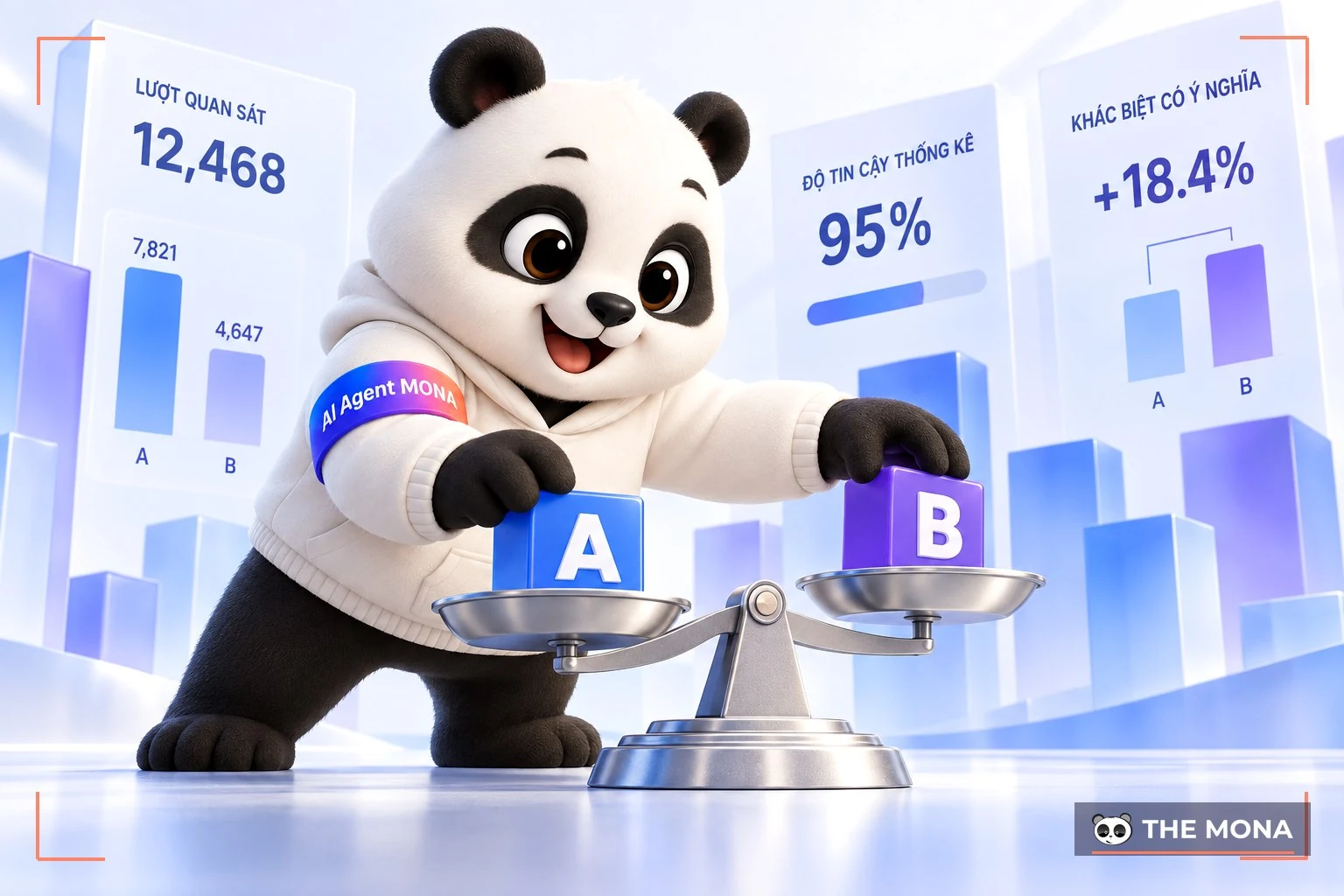
Determining the significance of the results is an important step in A/B testing. It ensures the results are accurate and decides whether the change should be rolled out.
The significance of A/B testing results is usually determined with two measures: "statistical confidence" (statistical significance) and "practical impact" (practical significance). This step checks whether the difference between the two variants is big enough to affect the business.
It is important that the test runs only during the same stage of the campaign. In SEO A/B testing, this avoids swings caused by seasonality, search engine algorithm updates or other outside factors. When the test runs within the same stage, you can be sure the results are accurate and valid, which leads to better SEO optimization decisions for your site.
Running an A/B test takes 4 simple steps: use an A/B testing tool, test 2 variants at the same time, allow enough time, and ask for feedback from real users.
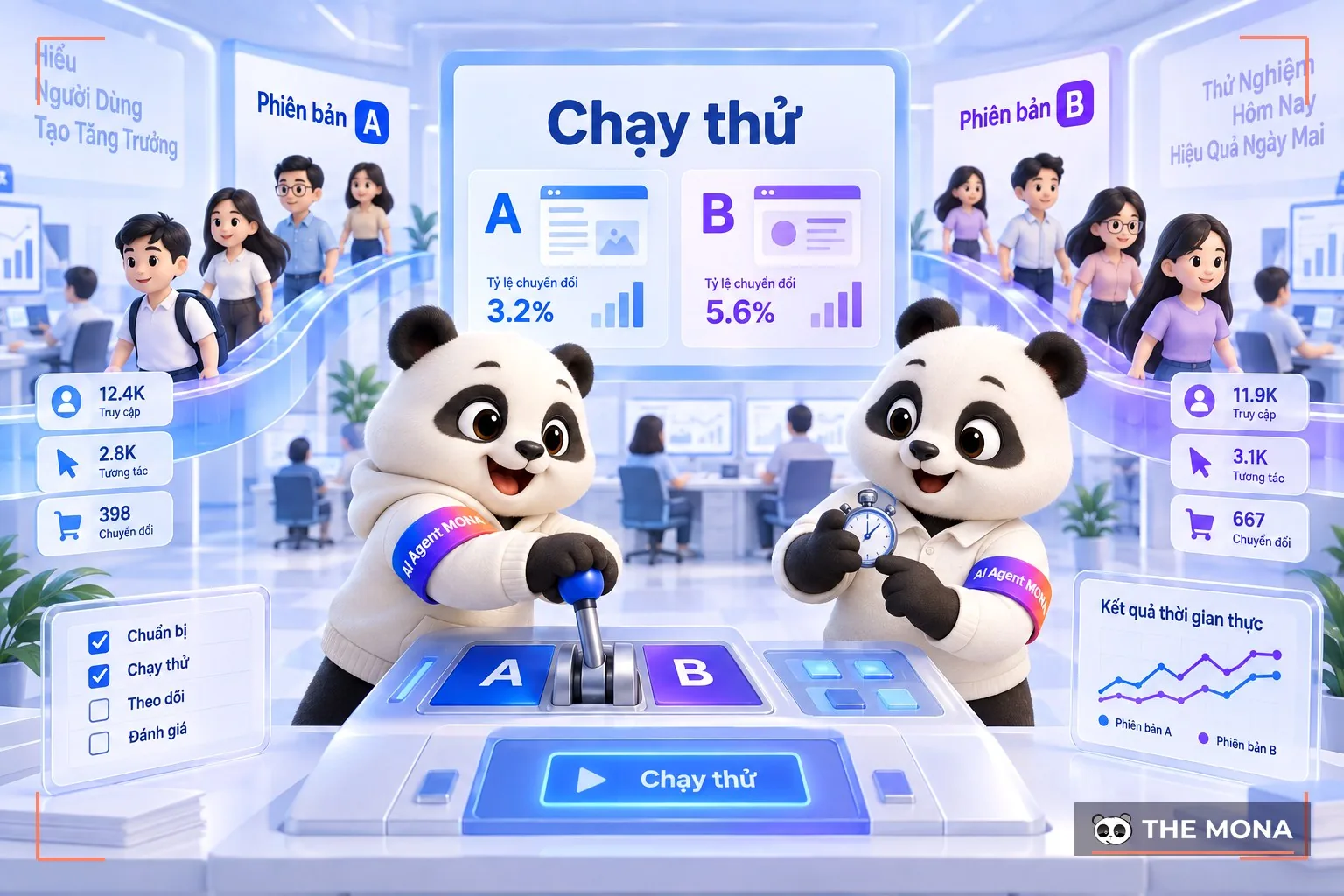
An A/B testing tool (also called split testing) helps you compare the performance of two or more variants of a web page, an email or an online ad campaign. You can see the effect of each element in your campaign and adjust to improve results.
Testing 2 variants at the same time (crossover testing) is an A/B testing method that checks the difference between variants A and B on the same test sample. To do it, split the test sample into two random groups. One group sees variant A first and then variant B, and the other sees variant B first and then variant A. When the test ends, compare the difference between the two groups.
Allowing enough time is important so you have enough data to judge how the variants perform. Don't rush to a decision after a short time. For the most effective test, give it enough time to collect data and analyze the results.
Real user feedback is an important part of A/B testing. It lets you judge how the campaign performs from the user's point of view. Through feedback, you can understand how users feel about, experience and respond to the campaign's variants.
After the A/B test is finished, do the following:

After the A/B test, checking and evaluating the target metrics lets you reach a conclusion and decide whether to keep rolling out the changes. The target metrics usually tracked include conversion rate, average time on page, bounce rate, the distribution of pages and products visited, and sales.

Measuring significance is an important part of analyzing test results and deciding which variant optimizes SEO performance best. There are several ways to measure significance in A/B testing. A/B testing calculators are useful tools built to make this measurement easier.
Based on the A/B test results, you calculate how variants A and B perform against each other and decide which gives the better result. Then you act on what you found. Calculating and applying A/B test results correctly and methodically leads to decisions that are more reliable and more practical.

The next A/B test plan should be set up carefully so that tests are run sensibly and deliver the most value. Use your experience from earlier A/B tests to plan the next one. The plan should also be based on the specific goals of each campaign you run.
To get the best results from A/B testing, apply the following principles:

Sometimes forgetting everything you know about your customers can be a positive way to approach designing tests that optimize your website. Setting aside your assumptions and information about users lets you form new assumptions about their behavior and needs. But it can also lead to wrong assumptions and failed tests.

To run an A/B test effectively, you need to set a specific goal for comparing variants A and B. The goal helps you measure the variants and decide which one is better. Different goals can be chosen depending on the purpose of the product or site and your optimization strategy.
When running A/B tests to raise your conversion rate (CRO), you should not apply it rigidly. CRO is an ongoing process, and it can take time to find the right changes to optimize your strategy. So apply a few more principles to make sure the A/B testing process runs effectively.
For effective A/B testing, you should test one element at a time. Testing several elements at once makes the results hard to control and hard to attribute to any one element. Testing them one by one lets you judge each element's effect and make the best decision for it.
The most important thing in A/B testing is to not rush to a conclusion before you have accurate statistics to decide with. You need enough samples and enough test time to keep the results scientific and reliable. Judging A/B test results on gut feeling or insufficient data leads to uncertain decisions and unwanted risks.
A/B testing is the most effective way to optimize the conversion rate (CRO) of your website. But to get the best results, you need to learn and research before you start. If you don't learn the A/B testing process, you may apply it the wrong way and not get the results you want.

When running A/B tests, gathering opinions from many sources is very important to make sure your final decision is right and gets the most out of your website. You can collect input from SEO experts, product managers and users through surveys. What matters is weighing and evaluating those opinions properly and making the best decision.
User behavior data usually comes from tracking customer actions and other information. Customer survey data is usually collected through surveys or direct interviews and covers customers' opinions, ratings and impressions of the product. The two kinds of data can conflict, so collect and use them separately and independently of each other.
One essential step in A/B testing is to define your success criteria clearly. These criteria tell you whether your test succeeded. Without them, it is very hard to get the right result for your campaign.
When running A/B tests, you should avoid testing unimportant elements. Doing so wastes time and money and brings no benefit to your campaign. Decide in advance which elements to measure and survey, and focus on those to get the results you want.
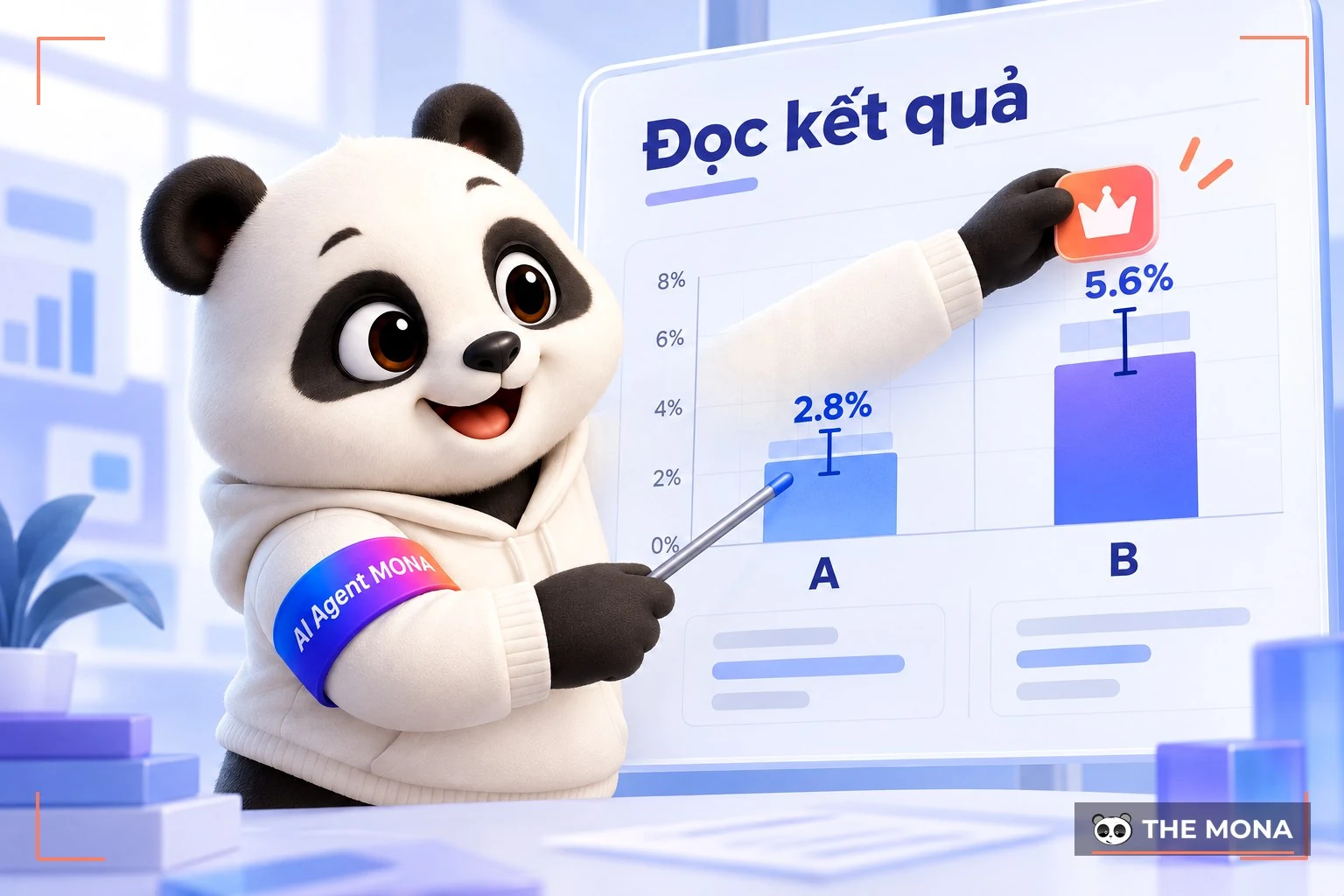
To read A/B test results accurately, you need to measure, check and compare carefully.
In an A/B test, measuring and checking the target metrics is essential to know the result of your test. Depending on your purpose and goals, there can be many different target metrics for judging the test. What matters is deciding in advance which target metrics you want to measure and track.
Comparing conversion rates is a simple method widely used in A/B testing. It compares the conversion rates of variants A and B to judge how they perform. The conversion rate is the number of conversions divided by the total number of trials. The variant with the higher conversion rate is the better one.
Audience segmentation is an important method for finding more insight in A/B testing. It splits users into groups based on specific attributes and characteristics, and checks how the A/B variants perform for each group. After segmenting, you can measure each variant's performance for each group. This helps you find new information and make better optimization decisions.
A/B testing is useful and widely applicable to websites, sales advertising, mobile apps and email marketing.

A/B testing can help you optimize your website's user experience and improve its performance and revenue. Time on site matters for increasing visits and sales.
With A/B testing, you can test different elements on your site to improve time on site and user productivity. A/B testing can also help you find the elements that affect page load speed and improve your site's performance.
A/B testing can improve the performance of your sales ads in these ways:
You can also use A/B testing to compare different content and find the most useful ad.

Mobile apps can use A/B testing to find the elements that raise download rates and user engagement. A/B tests can help find the home screen layout that best catches users' attention. Beyond the home screen, tests can also find other interface details that increase engagement, such as button position or element colors.
A/B testing helps you identify which features can improve the user experience or raise the app's download rate. It is also used to test security features or performance functions of a mobile app.

A/B testing is an important tool in Email Marketing to optimize your campaign and improve email open rate, click rate and conversion rate. You can test different subject lines to catch the recipient's attention and raise the open rate. Send time can also affect how an email campaign performs. A/B testing helps you find the best time to send and raise open and click rates.
As more and more teams use A/B testing, Mona Media would like to introduce some tools that support testing:

AB Tasty is an A/B testing tool that helps evaluate the performance of a website, app, email or ad campaign. AB Tasty works by comparing two different variants, so you can create variants of a website or email. It also applies changes to measure the effect on target metrics such as conversion rate, page load speed and average order value.

ClickTale Colocation is a is a tracking tool user behaviour. It not only collects and analyzes data but also lets you run A/B tests. ClickTale lets webmasters run A/B tests effectively and reliably. It also offers other services, such as heatmaps, session replay and conversion analytics, giving webmasters a complete and detailed view of user behavior.

CrazyEgg is a conversion rate optimization (CRO) tool that lets you run A/B tests. CrazyEgg gives you an easy-to-use interface for measuring and analyzing data on your website, so you can see how your customers interact with it. Its A/B testing tool lets you create different versions of a page and show them to different groups of visitors.

EyeQuant is a measures user experience (UX) on websites. EyeQuant uses artificial intelligence to analyze how well a site attracts and keeps visitors. It measures general site metrics, including information density, contrast, visual appeal, readability and page load speed. These are key metrics for judging the experience and improving user satisfaction on your website.

Optimizely is an A/B testing tool that helps is a staged testing tool that helps evaluate how well a website or app performsIt reports goal metrics such as conversion rate, page load speed and time on page. It also lets users change page content and track how those changes affect conversions.
Mistakes are unavoidable when you run A/B tests. Here are the errors people hit most often, and how to fix them:
If an A/B testing tool fails while testing variants, you may see slower page loads, unwanted side effects, or a negative impact on the user experience. When that happens, start with some basic checks, such as your internet connection and updating your browser, or contact the provider for support, a fix or an alternative.
While running an A/B test, you need to observe and collect data to judge how each variant performs. Deciding when to end a test is not just about the numbers collected; it also takes the marketer's judgment and experience. To keep the results accurate and reliable, don't stop the test the moment you see a result. Set clear criteria for stopping before you start.
Conversion rate is an important metric, but looking only at conversions won't give you the testing results you want. You can also track other metrics such as page load speed, accessibility, traffic and average order value. With these metrics, A/B testing can serve several goals: improving the user experience, lowering bounce rate, and raising revenue and profit for the product or website.
A/B testing usually starts with small changes, such as a headline, body text, images or page layout. Over time, though, people tend to test bigger changes, including changes to the business model, the user interface or the site's functions, to get stronger results.
|
Website design also affects conversion rate in A/B testing, so check the quality of your website before running any campaign to get the best possible result. Besides SEO services and Marketing, MONA Media is also a reputable website design company with a team that has 10+ years of experience. Please click CLICK NGAY the button below to get a reliable website design service from Mona Media. 
|
Khi Running A/B testing raises a few questions, so we Mona Media answer some of the common ones below:
A/B Testing is very important for optimizing and improving the user experience on websites and apps. It helps you evaluate the effect of changes to your site. With A/B testing, you can compare several variants of a website or app, pick the better ones and keep optimizing. A/B testing brings a scientific, repeatable process to improving the user experience.
A/B Testing is an important way to optimize a website, but it isn't right in every situation. Here are some cases where it makes sense:
After you've run an A/B test and collected the data, pay attention to these steps:
Related topics on What is A/B testing? We've covered how A/B testing works in detail in this article. We hope you can apply A/B testing to your own business and field. Contact us if you need advice on running A/B tests.
Please contact us via:

CEO & Founder · The MONA
The founder of The MONA built a service company of 60+ staff with 14,000+ projects delivered. Khánh Hùng shares his thinking on building self-running systems, automating a business, and the real lessons behind MONA's projects.
 1,5K




Professional website
design services
Own a website with a beautiful, 100% exclusive design and a lifetime warranty, with the ability
to expand features flexibly as your business grows, starting today!






 MONA will never sell your information or send you spam


 MONA will never sell your information or send you spam
