
 MONA OS 2.0
 Partner with MONA


 Tự động hoá doanh nghiệp
 Cẩm nang SEO
 Digital Marketing
 Kinh nghiệm thiết kế website
 Hạ Tầng Server
 Giáo dục


 VI
 EN

















Message us on
Zalo Official


 ProductsNew

 ProductsProducts
 Mới ra mắtKHA AI 2027App tự edit video, tự đăng mọi mạng xã hội, 2 phút mỗi ngày










 Website designLooks good and wins customers over.
SEO servicesBrings in customers searching for exactly what you sell.
 Tư vấn digital marketingKéo khách từ nhiều kênh, đo bằng số thật.
Corporate video productionVideos introducing your company, factory and team.
 NewAI video productionCompany story films made with AI.
 Custom software developmentCRM, ERP and HRM built for your business.
 Viết AI Agent theo yêu cầuĐặt riêng một trợ lý AI cho đúng việc của mình.
 Tư vấn chuyển đổi AIĐưa AI vào vận hành của cả công ty.
NewMONA LMSManagement for centers and schools.
MONA SkillHubInternal training for company staff.
 NHTQ systemEnd-to-end China–Vietnam shipping operations.
MONA JMSManagement for gold, diamond and pawn shops.
 MONA E-LearningA website with every feature you need to sell courses.
 How to sell online courses (course)More than 30 free lessons on selling courses on autopilot.
 MONA Cloudmonacloud.vnServers to get your apps and websites running.
 MONA Basemonabase.vnPostgres database, sign-in and file storage.
 MONA Mailmonamail.vnSend OTP, order and invoice emails from your software.
 MONA Paymonapay.vnAccept bank transfers via VietQR and notify your software when the money arrives.
 MONA eInvoiceComing soonIssue e-invoices that meet tax standards.
Gấu CườiTrả lời khách 24/7 trên web, Fanpage, Zalo và thu lead cho sale.
 Gấu TeleSalesGọi điện tư vấn, chăm khách như tổng đài viên thật.
Dê CườiTư vấn và chốt đơn cho shop ngay trong khung chat.
Gấu WebmasterNhắn nhóm Zalo là website được sửa xong.
 Gấu Pháp ChếSoạn hợp đồng, rà điều khoản trong vài phút.
 Gấu Báo GiáLên báo giá đúng mẫu và gửi khách ngay.
 AI chăm sóc khách hàngTheo dõi và giữ chân khách hàng cũ.
 Gấu Tuyển DụngLọc hồ sơ, hẹn lịch, phỏng vấn ứng viên.
 Mới ra mắt
KHA AI 2027
Xây kênh chuyên gia 2 phút mỗi ngày
Quay bằng điện thoại, AI tự edit video, tự đăng lên 16 nền tảng và tự trả lời bình luận, tin nhắn.
514.339lượt xem trên kênh CEO MONA sau 24 ngày
 Anh Khánh HùngCEO MONA đang dùng mỗi ngày
Xem app làm được gì
 AI
Gấu Cười MONA ĐANG TỰ XÀITrả lời khách 24/7 trên website, Zalo OA, Messenger và thu lead về cho sale.
Dê CườiChốt đơn bán lẻ và sàn: Shopee, TikTok Shop, web. Chăm cả khách sỉ, đại lý.
Gấu WebmasterCập nhật nội dung, tối ưu SEO website mỗi ngày.
Gấu TeleSalesGọi điện tư vấn, chăm khách như tổng đài viên thật.
Gấu Tuyển DụngLọc hồ sơ, hẹn lịch, phỏng vấn ứng viên tự động.
AI chăm sóc khách hàngGiữ khách cũ, cứu lead đã rớt cho phòng kinh doanh.
Gấu Pháp ChếSoạn hợp đồng, rà điều khoản trong vài phút.
Gấu Báo GiáLên báo giá đúng mẫu, gửi khách ngay khi có yêu cầu.
 Chuyển đổi AI toàn phầnGiải pháp tổng cho doanh nghiệp, 3 lớp triển khai.
 Viết AI Agent theo yêu cầuĐặt riêng một con AI gánh đúng nghiệp vụ của bạn.
 Custom softwareCRM, ERP and HRM with built-in AI automation.
 SEO & AEO thời đại AIĐược Google lẫn AI trích dẫn, không chỉ xếp hạng.
 Kiến thức AI cho doanh nghiệpBài phân tích, hướng dẫn ứng dụng AI vào vận hành.
 Free AI courses
 AI tools at work
App mới · KHA AI 2027
Xây kênh 2 phút mỗi ngày
AI tự edit video, tự đăng mọi mạng xã hội
Free consultation, 8am–10pm every day

18 March, 2023

The best part of the first month freelancing is 9 a.m. on a Monday with no time clock to punch. That feeling lasts until your first client pays 3 weeks late and you have no idea who to chase. A freelancer works for themselves: taking on project-based work for many different clients, deciding their own time and methods, and also bearing the job of finding clients, quoting, collecting payment and paying tax. MONA's founder came up this exact path before starting MONA, so this article comes from someone who has paid the full tuition of the trade: what a freelancer can live on, how to set prices, how to handle contracts and deposits, and a 30-day plan to land a first project. About a 12-minute read.
A freelancer sells what they produce, project by project, not 8 hours a day at an office desk. A writer who takes 10 articles a month for 3 clients, a designer who takes a full brand identity package over 4 weeks, a developer who fixes websites task by task: all are freelancers, whatever their trade.

The biggest upside is obvious to everyone: freedom to choose your work, hours and clients, with no salary ceiling on your income. The downsides are rarely told in full. There is no 13th-month salary, no company-paid insurance, nobody paying for sick days, and you handle the tax obligations on every payment yourself: an organization that hires you and pays 2 million VND or more per payment already withholds 10% personal income tax at source under current law. The freedom is real. So is the bill.
Many people treat these two concepts as one because both involve working from home, but the basis of the relationship is completely different, and that basis decides how you get paid and how you are protected:
| Freelancer | Remote employee | |
|---|---|---|
| Relationship | Service contract per project | Employment contract, working remotely |
| Income | Per project, income up one month and down the next | Fixed monthly salary |
| Insurance, annual leave | Entirely on you | Paid by the company under labor law |
| Clients at the same time | Several clients in parallel | One company only |

Which path to take depends on each person's appetite for risk, and we don't push either side. One note drawn from people we know in the trade: don't quit your job outright to freelance before you have even one paying client. Work in parallel in the evenings for 2 to 3 months, and once the first income arrives, then think about leaving your job. If you're weighing the opposite direction, read what is a remote job, and if you want to go further and run a business on your own, there's solopreneur. Don't let go before you're sure.
This is the calculation newcomers like to dodge, even though it decides whether the trade lives or dies. A week has 40 working hours, but a freelancer can only sell about 25 of them. The rest goes to finding clients, quoting, revising from feedback, bookkeeping and learning. Pricing on 40 hours cuts your own pay by nearly half from day one.
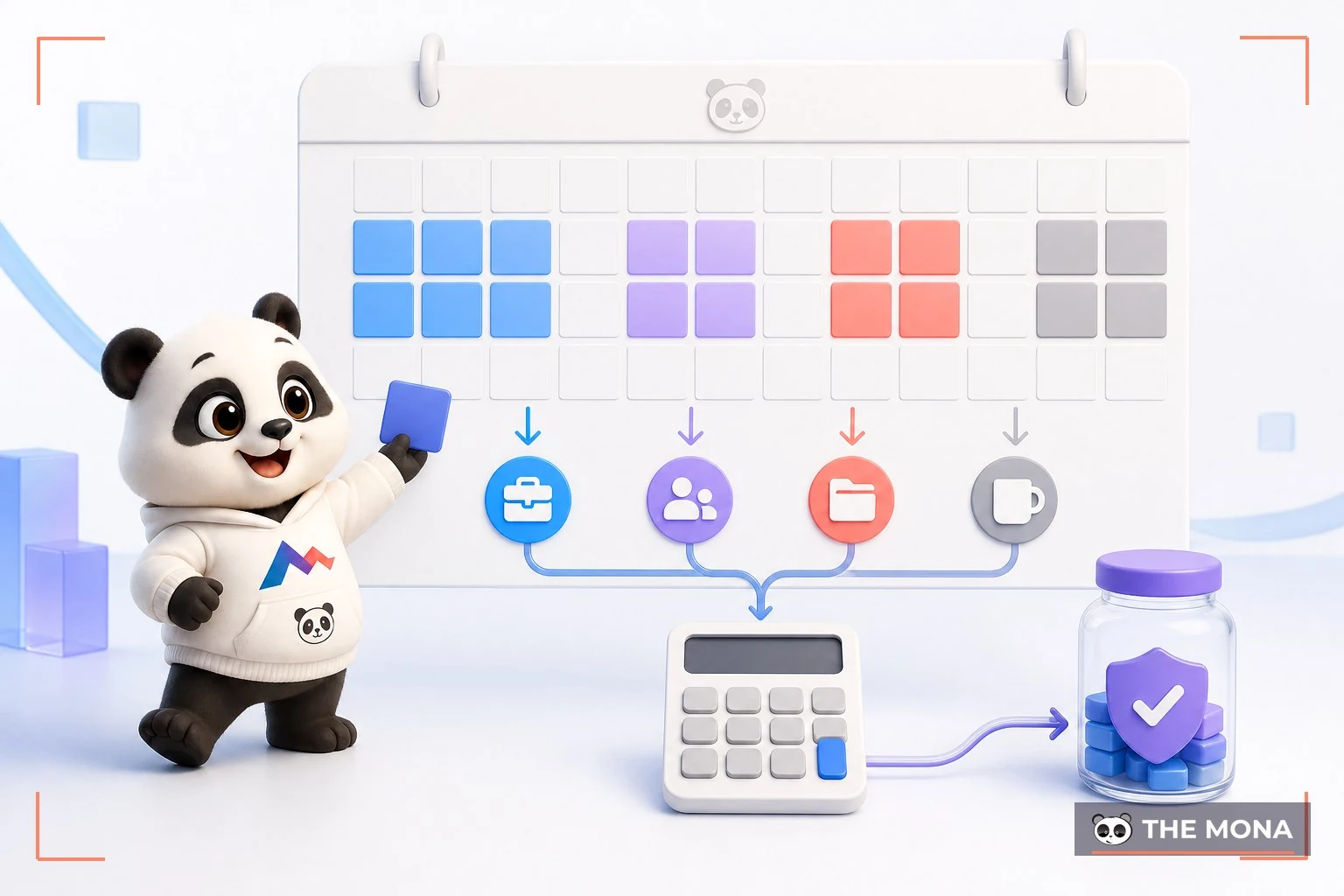
A simple formula: take the monthly income you want, add business costs (equipment, software, self-paid insurance and the 10% tax withheld), and divide by the hours you can truly sell. To take home 20 million VND a month with 100 billable hours, the floor rate has to be around 250,000 VND per hour, before any buffer for slow months. Convert the hourly floor into a project price to quote to clients; always quote by project because it's easier to sell, and keep the hourly rate as your own internal yardstick. Pricing below the floor is a hidden loss. A loss where you don't see the blood.
Ranked by what clients actually open their wallets for, not by how hot a trade is online:

Newcomers should start with the group closest to what they do at their company, because that's where they already have proof of ability. Jumping to a completely new trade means learning the trade and learning to sell at the same time. Two hard jobs at once, and if you fail, you fail at both.
If you're between several trades and can't choose, take stock of 3 things, and go with the trade that collects the most ticks:

If the check still leaves you tied, pick the trade whose clients pay faster: a trade that earns within the first 4 to 6 weeks can fund the trade you love that needs 6 months to find clients. Money first, dreams after.
Newcomers often get stuck on the feeling that they have nothing to show. In fact clients don't need 20 projects; they need 2 to 3 projects of exactly the kind of work they're about to hire for, which they can review in 5 minutes and decide. If you have no paid projects yet, set yourself realistic briefs and do them: rewrite the About page for a café you know, build an imaginary brand identity for a brand you invent, as long as you clearly label them as self-initiated projects.

How to package each project as a story with numbers is covered in a full article we wrote: what is a portfolio , using the 4-part frame of context, brief, decisions and results, plus the perspective of the person reviewing the file. Read it before building your portfolio and save yourself 2 to 3 rounds back and forth. Add a proper portrait photo and that's your whole front door. It sounds minor, but it isn't.
The 3-week late payment at the start of this article isn't rare, and most of a freelancer's money accidents come from working on trust over chat messages. Two brakes are mandatory from the very first project:

First, a service contract, even if only 2 pages. State the scope as a countable list, the maximum number of revision rounds (usually 2), the acceptance milestone, and a clause for extra work billed separately. Vietnamese law recognizes this kind of service contract, even with an individual; look up the rules on civil contracts and and income tax obligations on the government's legal documents portal. Second, take a 30 to 50% deposit before starting, with the rest paid at acceptance. Serious clients are never bothered by a deposit; only clients planning to stiff you find it annoying. Anyone who objects to a deposit, be careful.
Freelancers lose the most money at the sloppy intake stage, more than from lack of skill. The five steps below cost about 2 extra hours per project and, in return, block the most common ways the trade loses money:

All 5 steps sound tedious, but each one is a brake that cuts off a kind of accident someone has already had before you: step 1 prevents endless revisions, step 2 prevents price fights, step 3 prevents non-payment, step 4 prevents starting over, step 5 prevents unpaid extras. Taking on work one session slower buys you a month of sleeping well. Well worth it.
Working on platforms like Upwork has the advantage that the platform protects your money, but in return the platform fee takes about 10% of each order and your profile sits next to thousands of others, where the lowest price always wins. Research by the ILO on the platform economy in Asia points to this same thing: people working on platforms face price pressure and have little bargaining power.

The long-term way out is to build your own storefront: a personal website with its own domain, holding your portfolio, service list and expert articles so clients find you through Google. It costs only a few hundred thousand to just over 1 million VND a year for domain and hosting, far cheaper than a 10% platform fee once your income is steady. A website plus personal brand is the combo that gets a freelancer out of the reverse-auction trap. When clients come to you, you get to choose. You choose, rather than get chosen.
A path many people have already tested, with one single goal per week:

Your first project almost certainly won't pay for that month; its role is to prove the loop of finding a client, doing the work, getting paid and asking for feedback actually runs. A loop that runs once can run 10 times. That's how you grow.
Not the same. MMO is a broad umbrella term for every way of making money online, including affiliate or selling digital goods. Freelancing means selling professional services per project, with specific clients and acceptance. Very different.
Yes. An organization paying 2 million VND or more per payment withholds 10% personal income tax at source, and at year end you file your own tax settlement so it is recalculated on your total real income. If your income is steady and large, you should register as a household business to do things properly.
Newcomers should start with their familiar network and Vietnamese clients to get experience quickly with fewer language barriers. Foreign platforms pay better, but competition is global and the platform fee is about 10%, which suits people with solid skills and decent English. Get solid first, then go global.
Almost nothing if you already have a computer: the real cost is 1 to 3 months of living expenses as a reserve while income is uneven. That's why you should start alongside your current job rather than quit abruptly. Three months of reserve is the safe level.
Three familiar directions: raise your rates with deeper expertise, grow into a small service team, or package your knowledge into products. MONA's founder took the second path, from a solo freelancer to a team, then to MONA with more than 14,000 projects since 2016. All three directions begin with one thing: the craft has to be solid first.
Freelancing is a real trade with real rules: an hourly floor rate, contracts, deposits, an intake process, and a portfolio with proof. Treat it as a long holiday and the market will bill you tuition every month. Run it like a one-person business and freedom and income arrive together. Choose the second.
When you're ready to build the front door for your one-person business, we can handle that part: a personal website with a proper portfolio, your own logo and branding, a domain registered in your own name, which you can look up at whois.mona.host, and reliable hosting from MONA Host. Call 1900 636 648 and tell us what you do and how many projects are in your portfolio. We'll quote a single all-in price for a personal website, along with honest advice on whether to build it now or wait for a few more projects to fill out your portfolio. Waiting is also advice, and we say so when it's right.

CEO & Founder · The MONA
Founder of The MONA, who built a services company of 200+ staff with 14,000+ projects delivered. Khánh Hùng shares how he thinks about building systems that run themselves, automating a business, and the real lessons from delivering projects at MONA.
 1,9K




Professional website
design services
Own a website with a beautiful, 100% exclusive design and a lifetime warranty, with the ability
to expand features flexibly as your business grows, starting today!



NHẬN TƯ VẤN SEO MIỄN PHÍ !






 MONA will never sell your information or send you spam


 MONA will never sell your information or send you spam
