
 MONA OS 2.0
 Partner with MONA


 Tự động hoá doanh nghiệp
 Cẩm nang SEO
 Digital Marketing
 Kinh nghiệm thiết kế website
 Hạ Tầng Server
 Giáo dục


 VI
 EN













Message us on
Zalo Official


 ProductsNew

 ProductsProducts
 Mới ra mắtKHA AI 2027App tự edit video, tự đăng mọi mạng xã hội, 2 phút mỗi ngày










 Website designLooks good and wins customers over.
SEO servicesBrings in customers searching for exactly what you sell.
 Tư vấn digital marketingKéo khách từ nhiều kênh, đo bằng số thật.
Corporate video productionVideos introducing your company, factory and team.
 NewAI video productionCompany story films made with AI.
 Custom software developmentCRM, ERP and HRM built for your business.
 Viết AI Agent theo yêu cầuĐặt riêng một trợ lý AI cho đúng việc của mình.
 Tư vấn chuyển đổi AIĐưa AI vào vận hành của cả công ty.
NewMONA LMSManagement for centers and schools.
MONA SkillHubInternal training for company staff.
 NHTQ systemEnd-to-end China–Vietnam shipping operations.
MONA JMSManagement for gold, diamond and pawn shops.
 MONA E-LearningA website with every feature you need to sell courses.
 How to sell online courses (course)More than 30 free lessons on selling courses on autopilot.
 MONA Cloudmonacloud.vnServers to get your apps and websites running.
 MONA Basemonabase.vnPostgres database, sign-in and file storage.
 MONA Mailmonamail.vnSend OTP, order and invoice emails from your software.
 MONA Paymonapay.vnAccept bank transfers via VietQR and notify your software when the money arrives.
 MONA eInvoiceComing soonIssue e-invoices that meet tax standards.
Gấu CườiTrả lời khách 24/7 trên web, Fanpage, Zalo và thu lead cho sale.
 Gấu TeleSalesGọi điện tư vấn, chăm khách như tổng đài viên thật.
Dê CườiTư vấn và chốt đơn cho shop ngay trong khung chat.
Gấu WebmasterNhắn nhóm Zalo là website được sửa xong.
 Gấu Pháp ChếSoạn hợp đồng, rà điều khoản trong vài phút.
 Gấu Báo GiáLên báo giá đúng mẫu và gửi khách ngay.
 AI chăm sóc khách hàngTheo dõi và giữ chân khách hàng cũ.
 Gấu Tuyển DụngLọc hồ sơ, hẹn lịch, phỏng vấn ứng viên.
 Mới ra mắt
KHA AI 2027
Xây kênh chuyên gia 2 phút mỗi ngày
Quay bằng điện thoại, AI tự edit video, tự đăng lên 16 nền tảng và tự trả lời bình luận, tin nhắn.
884.778lượt xem trên kênh CEO MONA sau 36 ngày
 Anh Khánh HùngCEO MONA đang dùng mỗi ngày
Xem app làm được gì
 AI
Gấu Cười MONA ĐANG TỰ XÀITrả lời khách 24/7 trên website, Zalo OA, Messenger và thu lead về cho sale.
Dê CườiChốt đơn bán lẻ và sàn: Shopee, TikTok Shop, web. Chăm cả khách sỉ, đại lý.
Gấu WebmasterCập nhật nội dung, tối ưu SEO website mỗi ngày.
Gấu TeleSalesGọi điện tư vấn, chăm khách như tổng đài viên thật.
Gấu Tuyển DụngLọc hồ sơ, hẹn lịch, phỏng vấn ứng viên tự động.
AI chăm sóc khách hàngGiữ khách cũ, cứu lead đã rớt cho phòng kinh doanh.
Gấu Pháp ChếSoạn hợp đồng, rà điều khoản trong vài phút.
Gấu Báo GiáLên báo giá đúng mẫu, gửi khách ngay khi có yêu cầu.
 Chuyển đổi AI toàn phầnGiải pháp tổng cho doanh nghiệp, 3 lớp triển khai.
 Viết AI Agent theo yêu cầuĐặt riêng một con AI gánh đúng nghiệp vụ của bạn.
 Custom softwareCRM, ERP and HRM with built-in AI automation.
 SEO & AEO thời đại AIĐược Google lẫn AI trích dẫn, không chỉ xếp hạng.
 Kiến thức AI cho doanh nghiệpBài phân tích, hướng dẫn ứng dụng AI vào vận hành.
 Free AI courses
 AI tools at work
App mới · KHA AI 2027
Xây kênh 2 phút mỗi ngày
AI tự edit video, tự đăng mọi mạng xã hội
Free consultation, 8am–10pm every day

18 March, 2023
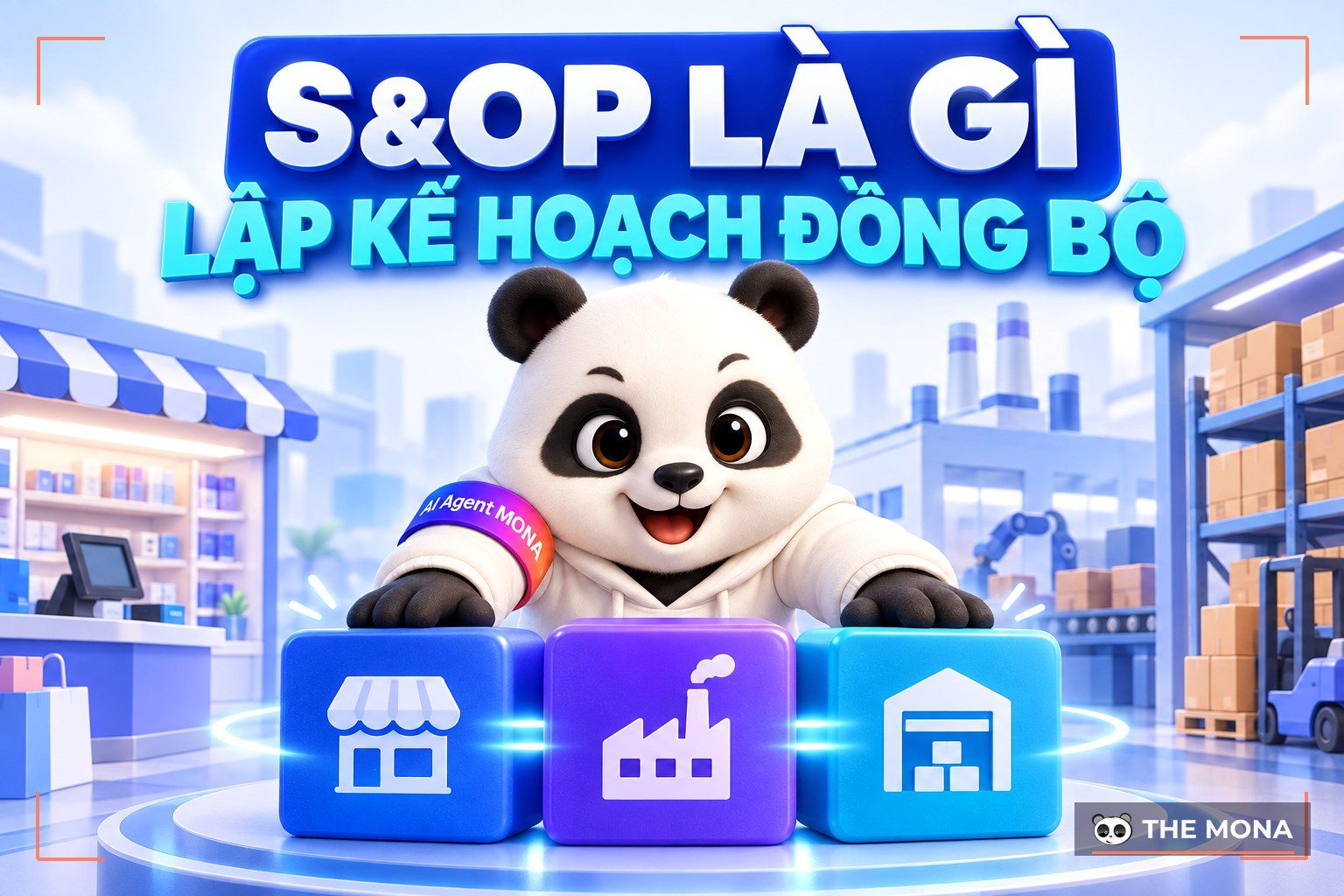
Before starting operations, every business needs to carry out S&OPas well as other business analyses. So what is S&OP and how does it affect a business's revenue and success? This article Mona Media goes into S&OP, its role and the detailed steps to carry it out strategic planning for your business.
S&OP (S and OP process), in English Sale & Operation Planning, is the work of planning production, sales and company operations. You can see S&OP as the planning step before a business carries out any of its activities.
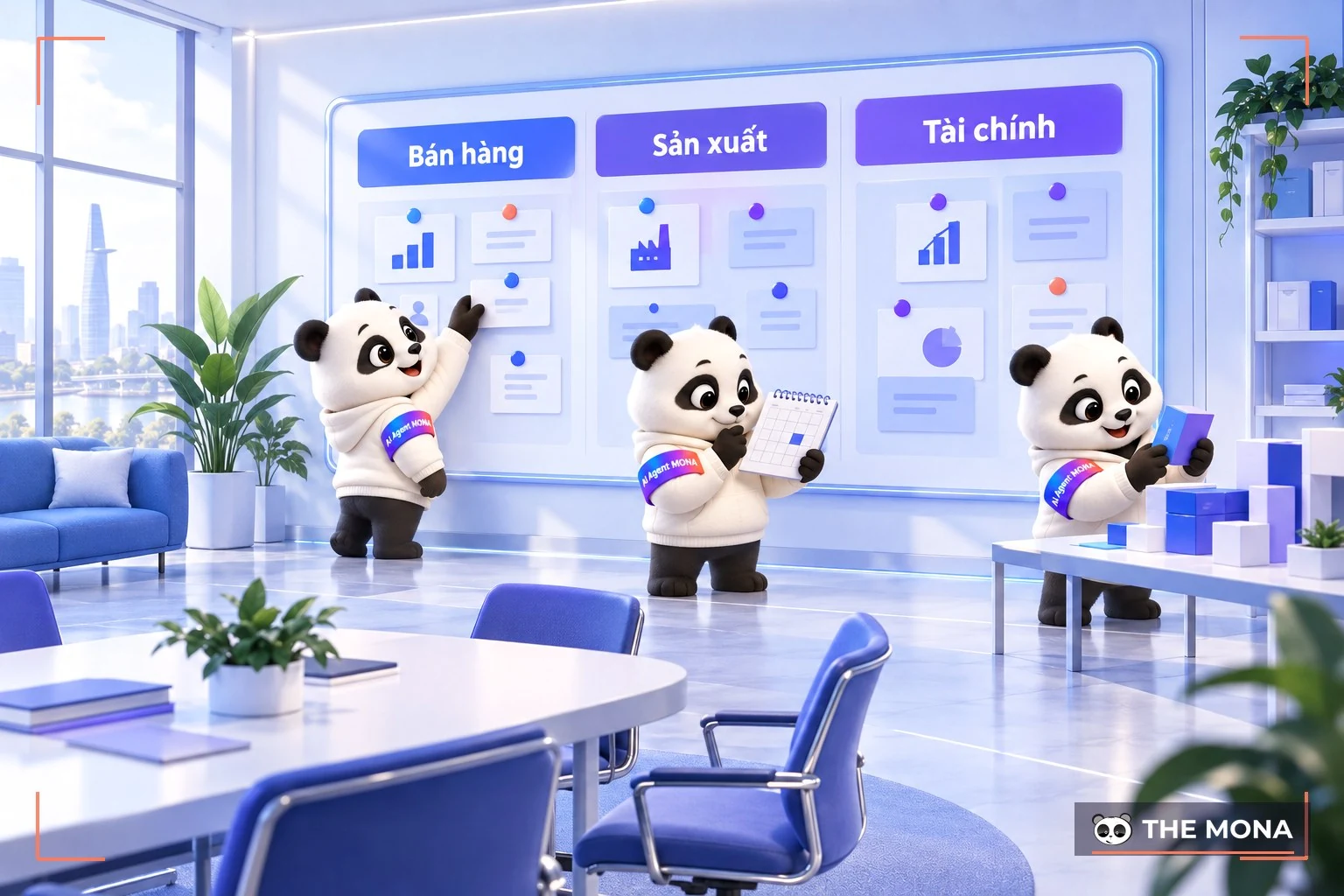
The S&OP process sets overall strategies that apply across the whole business and at every stage of the supply chain. So all departments, or their leaders, must take part.
Of course, the meeting should be chaired by the CEO or managing director. Senior directors, managers, team leaders and others also need to attend and contribute.
In S&OP, all members must reach a final agreement on how the business will operate in the coming period. Planning can be done for set periods such as 3 months, 6 months or 1 year.
The end goal of S&OP is a sensible schedule in which every department in the company knows what it must do and when. That keeps the supply chain for new products uninterrupted, reduces inventory and keeps the business running steadily.
See also: Use data-driven analysis to set business strategy
The most notable benefit of what is S&OP? It improves continuity and makes sure the whole business runs in sync like one machine.
Every department takes part in production, so there is no more situation where each works its own way at its own capacity and affects other teams.
You also reduce uneven product quality between stages of the production line that affects the final product. S&OP sets quality and timing standards so departments can keep pace even when their work requirements differ.
Clear planning with S&OP helps you forecast market demand and the business's supply capacity accurately.
From there, you can cut stocks of products and materials without worrying about disrupting the production line or supply chain.
Less inventory means less burden from storage costs, warehouse space, container demurrage and rent. The money saved adds noticeably to your profit.
Production and inventory costs make up a good part of a product's cost. If you can cut inventory costs, you can lower the selling price and make the product more appealing to customers.
Holding fewer materials and goods also reduces the risk of spoilage and loss. This matters most for fresh materials with a short shelf life, such as food and drink, or materials that attract insects and rodents.
Such materials need complex, expensive storage. That pushes the product's cost even higher and makes it harder to sell at a profit.
See also: The most effective solutions and skills for warehouse management
S&OP forecasts and calculates in detail the demand and supply of materials at each stage of the production line, so products are finished with the right quality and on time.
A steady supply chain gets products to market at the right time. Users do not face shortages, and the business has more stable revenue.
Meeting market demand and trends also indirectly improves customer experience (User Experience).
Consumer experience is extremely important. A good experience makes customers want to come back, stay for the long term and become loyal customers of your brand.
Beyond that, S&OP also helps stabilize productivity across the departments of the company.
The reason is that quality, volume and timing are all planned precisely. No department has to work more and faster than the rest just to catch up. There is no more swinging between being too busy to breathe and sitting idle with nothing to do.
Besides making the production line run more smoothly, stable productivity creates a healthy working environment for employees. They get an optimal number of working hours, can balance work with rest and relaxation, and have time for themselves and their families.
Employees are the core resource and the most important asset for building a business. Knowing how to build a healthy, ideal working environment will attract many talented people to grow your company.
Finally, S&OP helps managers make decisions more accurately and flexibly.
That is because the S&OP process clarifies the information, plans and details of the supply chain or production line. You also understand the importance, meaning and links between the steps of the supply chain.
If something unexpected happens, you can adjust your plan flexibly. This ability to adapt keeps the business and supply chain running so revenue is not affected or interrupted.
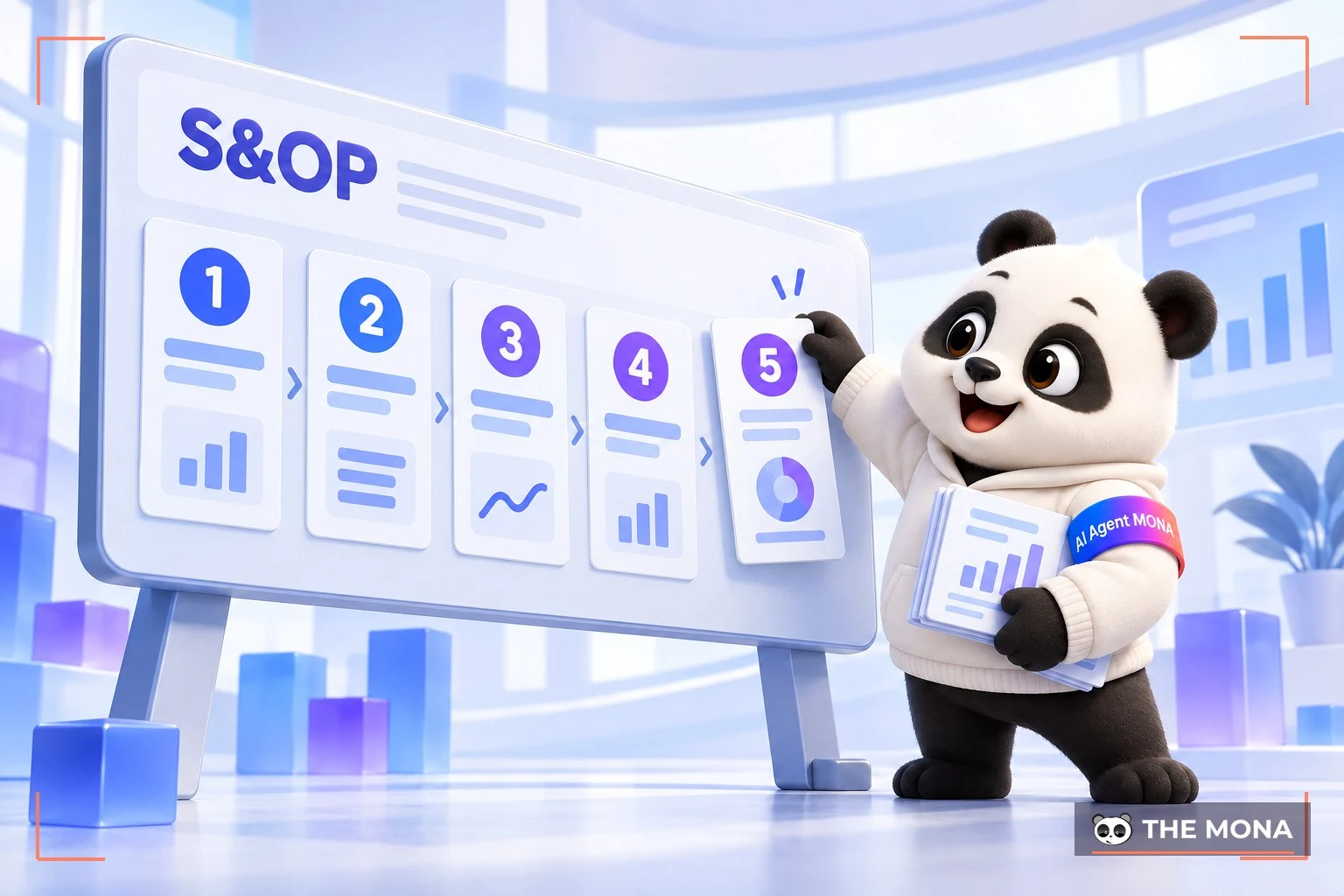
The first and core step of S&OP is forecasting future market demand.
A forecast tells you consumers' buying power, so you know how to supply sensibly: not too little, but not too much either, which leads to excess stock and falling revenue.
For the most accurate forecasts, a business must of course do market research. There are many methods and tools for this, such as analytics tools (Google Analytics, Ahrefs, SEMRush), opinion surveys, consumer interviews, and tools for tracking and analyzing consumer behavior (tracking tools), and so on.
Customer insights, and it is also an aspect that deserves research investment. Good insights tell you the real motives behind users' decisions to buy (or not to buy), and are very effective at “steering” consumers. behavior. TOf course, it also takes a lot of effort and budget to research.
Demand forecasting is not the end of it: you must also account for environmental factors. Weather can significantly affect your plan because market demand can change by season. Major events, both local (Tet, Mid-Autumn Festival) and international (Christmas, Valentine's Day), also shape the market.
The forecasting step only collects data to estimate future demand. Next, the business must use the reports and statistics it has gathered to plan demand.
You need to decide what percentage of the market you will serve and how much demand your target group has in a given period.
Consider both the short and long term. Short is about 3 to 6 months, and long is 1 year or more.
Demand planning needs to work with the next step, to calculate whether the business's supply capacity is enough to meet market demand. If not, can it raise capacity, hire outside labor (outsource) or partner with other manufacturers?
See also: Applying Maslow's hierarchy of needs to customer needs research
Before starting to plan, you need to “warm up” with some preparation.
Pre-S&OP will look at the barriers and gaps in what the business has. Do you have enough people to reach the planned goal? Which resources, materials and conditions are you missing?
Refer to the report figures and, above all, feedback from the departments to see what they think about the situation of each one.
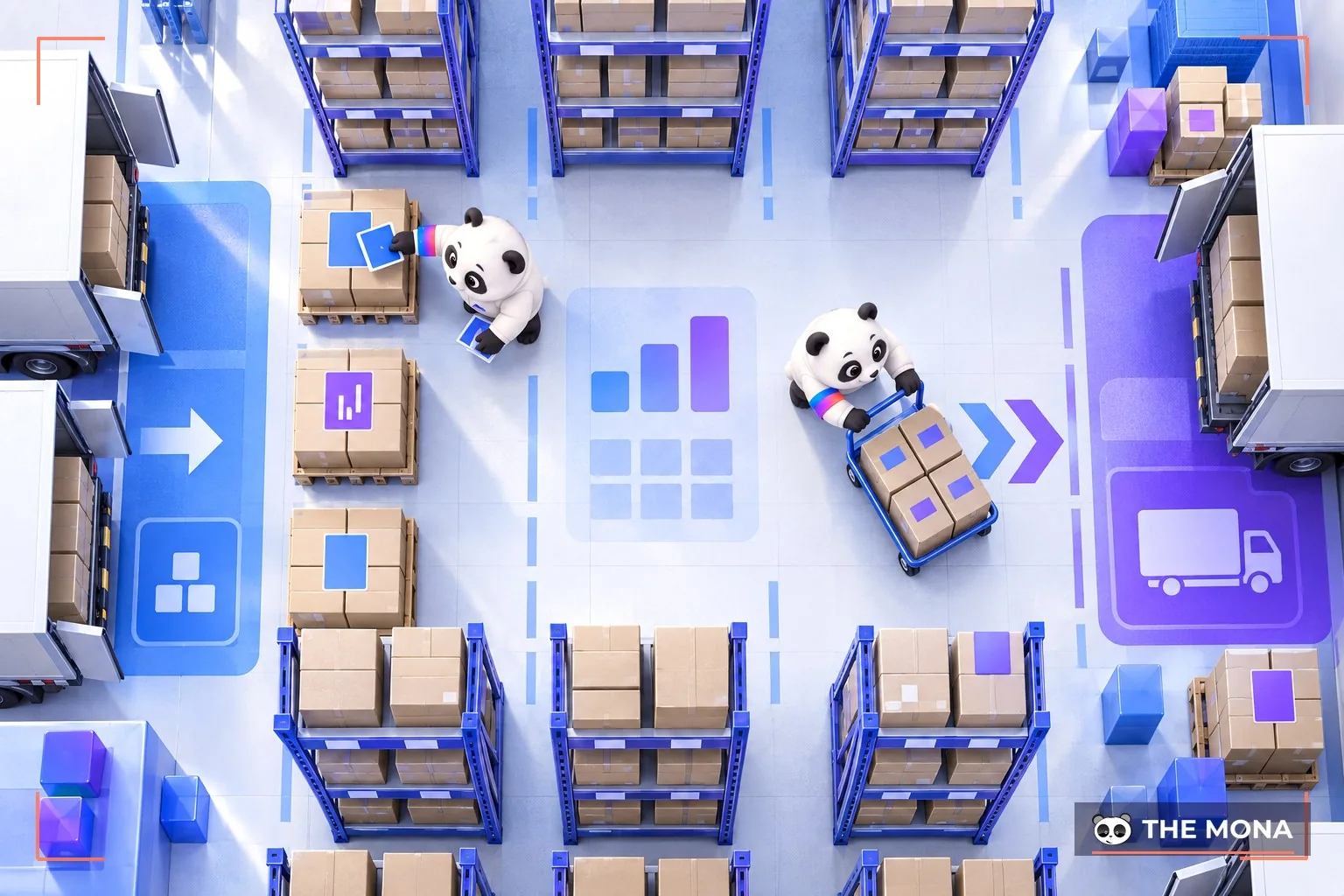
With the preparation done, the business needs to plan its supply.
The supply chain plan covers distribution, production, materials, and repair and maintenance. Set out the specific requirements of each step and which partners you will work with to complete each stage and the whole chain.
Next, start holding the meeting S&OP with all members of the executive board, department managers, team leaders and so on.
In S&OP, members confer, discuss and arrive at one operating plan for the whole business. You must consider every scenario that could happen based on the forecast and demand planning, as well as the business's ability to deliver.
The S&OP plan must be suitable and agreed by all departments (or their leaders). Each department commits to its assigned tasks without complaint and carries them out responsibly, diligently and in harmony with the others.
Once you have settled on a final detailed plan, the last task is to carry it out. During operations, the business also needs to monitor and evaluate how well the plan works fully and accurately.
The evaluation results show whether the plan is on track and at which steps it needs adjusting.
Criteria for evaluating effectiveness S&OP include:
As you can see, S&OP is a stage that must be done before running a business system. Through this article, Mona Media hopes readers understand what is S&OP and the 5 steps to carry it out, and can apply it to bring steady growth and improved revenue to their own business over time.
You may also be interested in: Key brand evaluation metrics to know

CEO & Founder · The MONA
The founder of The MONA built a service company of 60+ staff with 14,000+ projects delivered. Khánh Hùng shares his thinking on building self-running systems, automating a business, and the real lessons behind MONA's projects.
 1,5K




Professional website
design services
Own a website with a beautiful, 100% exclusive design and a lifetime warranty, with the ability
to expand features flexibly as your business grows, starting today!






 MONA will never sell your information or send you spam


 MONA will never sell your information or send you spam
