
 MONA OS 2.0
 Partner with MONA


 Tự động hoá doanh nghiệp
 Cẩm nang SEO
 Digital Marketing
 Kinh nghiệm thiết kế website
 Hạ Tầng Server
 Giáo dục


 VI
 EN













Message us on
Zalo Official


 ProductsNew

 ProductsProducts
 Mới ra mắtKHA AI 2027App tự edit video, tự đăng mọi mạng xã hội, 2 phút mỗi ngày










 Website designLooks good and wins customers over.
SEO servicesBrings in customers searching for exactly what you sell.
 Tư vấn digital marketingKéo khách từ nhiều kênh, đo bằng số thật.
Corporate video productionVideos introducing your company, factory and team.
 NewAI video productionCompany story films made with AI.
 Custom software developmentCRM, ERP and HRM built for your business.
 Viết AI Agent theo yêu cầuĐặt riêng một trợ lý AI cho đúng việc của mình.
 Tư vấn chuyển đổi AIĐưa AI vào vận hành của cả công ty.
NewMONA LMSManagement for centers and schools.
MONA SkillHubInternal training for company staff.
 NHTQ systemEnd-to-end China–Vietnam shipping operations.
MONA JMSManagement for gold, diamond and pawn shops.
 MONA E-LearningA website with every feature you need to sell courses.
 How to sell online courses (course)More than 30 free lessons on selling courses on autopilot.
 MONA Cloudmonacloud.vnServers to get your apps and websites running.
 MONA Basemonabase.vnPostgres database, sign-in and file storage.
 MONA Mailmonamail.vnSend OTP, order and invoice emails from your software.
 MONA Paymonapay.vnAccept bank transfers via VietQR and notify your software when the money arrives.
 MONA eInvoiceComing soonIssue e-invoices that meet tax standards.
Gấu CườiTrả lời khách 24/7 trên web, Fanpage, Zalo và thu lead cho sale.
 Gấu TeleSalesGọi điện tư vấn, chăm khách như tổng đài viên thật.
Dê CườiTư vấn và chốt đơn cho shop ngay trong khung chat.
Gấu WebmasterNhắn nhóm Zalo là website được sửa xong.
 Gấu Pháp ChếSoạn hợp đồng, rà điều khoản trong vài phút.
 Gấu Báo GiáLên báo giá đúng mẫu và gửi khách ngay.
 AI chăm sóc khách hàngTheo dõi và giữ chân khách hàng cũ.
 Gấu Tuyển DụngLọc hồ sơ, hẹn lịch, phỏng vấn ứng viên.
 Mới ra mắt
KHA AI 2027
Xây kênh chuyên gia 2 phút mỗi ngày
Quay bằng điện thoại, AI tự edit video, tự đăng lên 16 nền tảng và tự trả lời bình luận, tin nhắn.
940.268lượt xem trên kênh CEO MONA sau 43 ngày
 Anh Khánh HùngCEO MONA đang dùng mỗi ngày
Xem app làm được gì
 AI
Gấu Cười MONA ĐANG TỰ XÀITrả lời khách 24/7 trên website, Zalo OA, Messenger và thu lead về cho sale.
Dê CườiChốt đơn bán lẻ và sàn: Shopee, TikTok Shop, web. Chăm cả khách sỉ, đại lý.
Gấu WebmasterCập nhật nội dung, tối ưu SEO website mỗi ngày.
Gấu TeleSalesGọi điện tư vấn, chăm khách như tổng đài viên thật.
Gấu Tuyển DụngLọc hồ sơ, hẹn lịch, phỏng vấn ứng viên tự động.
AI chăm sóc khách hàngGiữ khách cũ, cứu lead đã rớt cho phòng kinh doanh.
Gấu Pháp ChếSoạn hợp đồng, rà điều khoản trong vài phút.
Gấu Báo GiáLên báo giá đúng mẫu, gửi khách ngay khi có yêu cầu.
 Chuyển đổi AI toàn phầnGiải pháp tổng cho doanh nghiệp, 3 lớp triển khai.
 Viết AI Agent theo yêu cầuĐặt riêng một con AI gánh đúng nghiệp vụ của bạn.
 Custom softwareCRM, ERP and HRM with built-in AI automation.
 SEO & AEO thời đại AIĐược Google lẫn AI trích dẫn, không chỉ xếp hạng.
 Kiến thức AI cho doanh nghiệpBài phân tích, hướng dẫn ứng dụng AI vào vận hành.
 Free AI courses
 AI tools at work
App mới · KHA AI 2027
Xây kênh 2 phút mỗi ngày
AI tự edit video, tự đăng mọi mạng xã hội
Free consultation, 8am–10pm every day

19 September, 2026

Customers come to MONA with a project written in Node.js or Next.js and often ask us what fly.io is, and why every AI tells them to put their code there. We think the main reason is the starting price: in the version we checked on 19/09/2026, the shared-cpu-1x 256 MB plan costs only $2.02 a month. That sounds very attractive. But once the project runs for real, the 256 MB machine overflows RAM as soon as it starts and has to be pushed to a higher plan.
On top of that, latency from a Singapore server to a VNPT network in Ho Chi Minh City is always 30 to 50ms. In this article we break down how foreign systems charge by the second so you aren't shocked at month end, and how to move your platform onto a domestic server at 550 VND per hour. If your system serves customers in Vietnam directly, don't use a foreign server. Bring it straight home to Vietnam.

Customers who ask us to build apps often wonder why AI assistants lately keep recommending Fly.io over the familiar domestic servers. Think of it as a cloud platform built to run source code directly, bill you in tiny increments by the second, and automatically charge USD to the company Visa card at the end of the month.
AI tools and automated systems, or vibe coding tools like Fly.io because it skips the tedious setup entirely: type one command and the site is live on the internet. Their price list puts a 256 MB virtual machine at just 2.02 USD a month, as of our latest check on 19/09/2026. That number misleads. In practice, when we took over Node.js and Next.js projects for customers, a 256 MB machine overflowed its memory right at startup and threw 502 errors. You are forced to upgrade to the 1 GB plan at 5.92 USD before the site can run.
Handing the company Visa card to staff to run this platform makes it easy to get a shock at the end of the month, when a bank message announces a sudden charge. They don't sell fixed monthly plans: when the site gets more visitors the machine automatically pulls in more resources and multiplies the bill. And when the network goes down and you want a real person to step in and help, you have to buy the Standard plan at 29 USD a month, or your staff go groping around forums on their own. Another fatal weakness is that the nearest servers are in Singapore or Tokyo, which makes your site run a beat slower.
From the real infrastructure we run, if you are building an internal system that needs fast loading and proper red invoices for tax accounting, cross this platform off the list right away. Don't entrust the life of your business to a foreign server that charges automatically. Control means holding the handle.
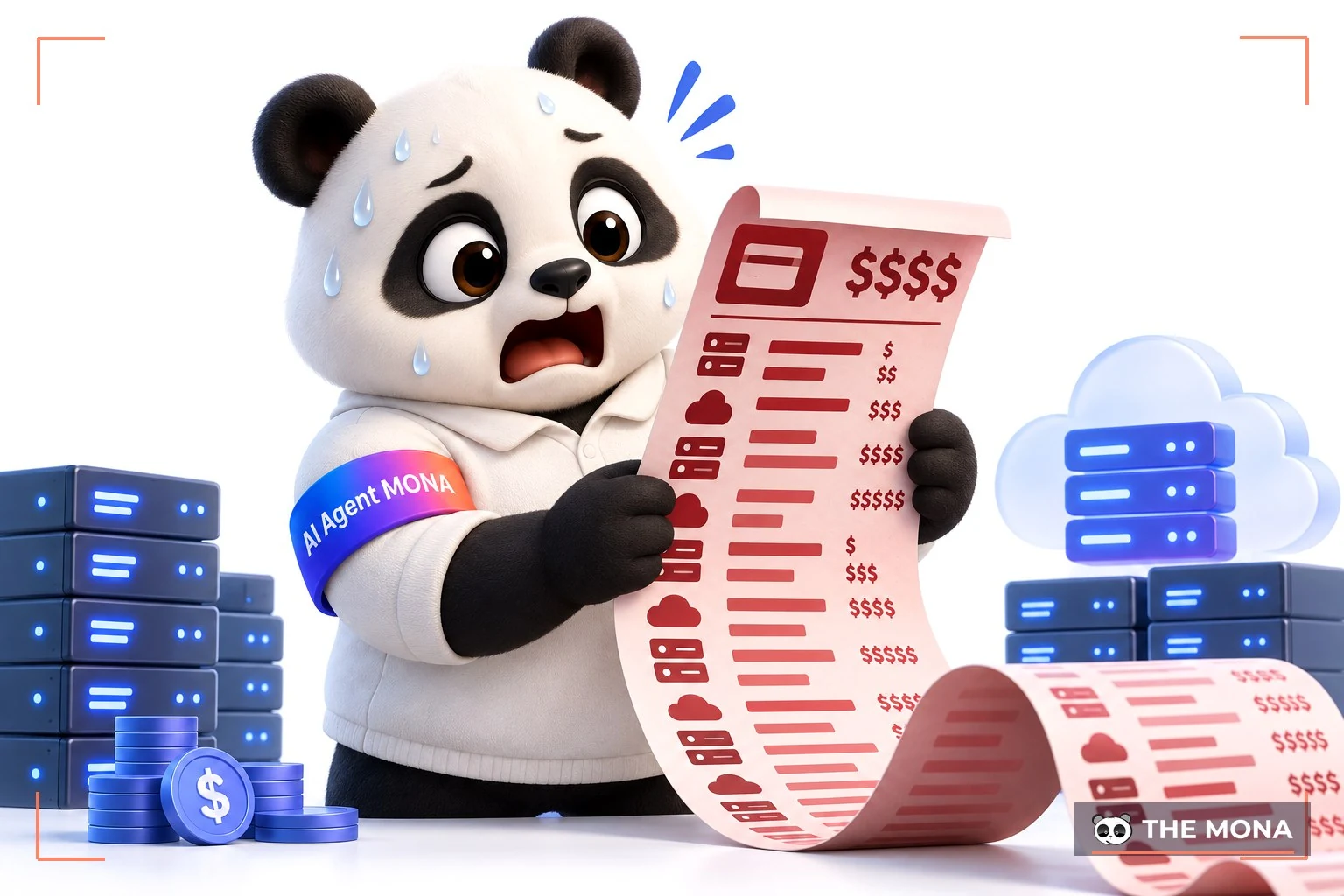
Many people assume fly.io is free for life, casually swipe a Visa card and hand it to staff to test a project, and only at month end, when a text arrives charging a few hundred dollars, do they scramble to find the cause. The money is charged without mercy. When we take on fixing systems quietly draining fees like this, the first thing we always do is lock the payment permission to stop the bleeding for the owner.
Fly.io is free for only the first 10 GB of disk, and every other resource is billed fairly in USD for each second the system runs. According to the vendor's pricing documentation as checked on 19/09/2026, the smallest server configuration with 256 MB of RAM costs 2.02 USD a month. That fee sounds cheap, but when you launch Node.js or Next.js source code the RAM overflows immediately. We always have to push customers up to the 1 GB plan at 5.92 USD before the system limps along.
The real nightmare is the automatic server cloning mechanism. As soon as visitor numbers begin to rise, the system spawns extra virtual machines to carry the load, and your card is drained overnight. One forum member VOZ once bitterly described having to shut the whole site down before the platform stopped charging, but the disk was still sitting there quietly eating fees. Instead of leaving your budget to a machine that counts seconds, choose an custom software all-in-one setup in Vietnam to lock your costs from the start.
Switch straight to domestic hosting solutions with a fixed monthly fee. This decision means the company doesn't need to assign a skilled engineer to stay up at night watching the resource meter.

Seeing the line "2.02 dollars a month" printed big on the homepage, many people rush to move their whole system to this platform to save money. In reality, when we step in to fix a project, the Visa bill at month end goes far beyond the original estimate.
The cheapest shared-cpu-1x plan gives exactly 256 MB of RAM, and as soon as a Node.js or Next.js app starts, memory overflows and the site stops working. The system goes down at once. That afternoon you have to grit your teeth and upgrade to the 1 GB version at 5.92 dollars a month just to keep the site standing, so the cost triples within a single morning. By the time an error needs an engineer to look at it, their Standard plan chops another 29 dollars a month just to have someone answer a message.
Anything involving automated money flow needs careful checking. The AI wallet top-up flow on MONA Cloud once took a hit from a key mismatch webhook on 15/09, so customer money came in but the wallet didn't credit. On the afternoon of 17/09/2026, we had Claude Code, Gemini and Codex call the cloud_topup tool themselves through AI agent platform, print the VietQR code in chat to pay, check that the webhook returned a clean 200, and only breathed easy once the new balance was credited correctly. Since then we set a hard internal rule that every key involving money must be tested with a real transaction before it opens to outsiders. The game of per-second billing on foreign cloud platforms is just as harsh: the server is off but the disk still charges storage fees. Many people assume that no use means no cost, then are stunned at month end when the Visa card is still drained.
That 2.02 dollar plan is ultimately only for running a few tiny internal code snippets, not for carrying real traffic. When it comes to a system holding all your important customer data, you need to custom software on a domestic server cluster that can issue invoices and take payment directly in Vietnamese dong. Never hand the machine that prints your company's daily money to a foreign platform that doesn't even have a hotline to call when the network drops.

Many technical people package their own apps with Docker and put them online, and it runs smoothly, but when customers complain that the buy button responds three seconds later, they scramble to find the bug. Customers leave. We have gone through the source code to fix slowness for dozens of systems, and the root cause turned out to be where the server is placed. Platforms like Fly.io have no server cluster in Vietnam, and the nearest is in Singapore or Tokyo. In our real measurements from the VNPT network in Ho Chi Minh City to Singapore, latency always jumps to 30 to 50ms, while placing it inside the country costs only 5 to 15ms.
Even more bitter is the paperwork. You swipe a Visa card to pay Fly.io and bring the USD receipt to accounting, and the department will surely refuse it because it doesn't qualify for expense booking. The books break and money is lost for nothing. We see this error repeat constantly whenever business owners hand over the job of renting a foreign server to the tech team and ignore tax law.
For a test app, you can easily wave off the latency or the invoice. Once the system runs for real and makes money, you have to bring it to domestic infrastructure, where it issues a full 10% VAT invoice every month and page load times are counted in a few milliseconds.

Every month the accounting department calls your name to explain the server service fee charged straight to the Visa card. The fly.io documentation clearly states that per-second billing is complicated, the month-end figure bounces around, and you have no valid red invoice at all to report for tax. The money hurts. The audit trouble is even more tiring.
This happens all the time. After countless rounds of sorting out paperwork for customers, we built MONA Cloud on a hard principle: you pay for what you run, costs are transparent, and a full 10% VAT invoice is issued steadily every month.
MONA Cloud runs on a prepaid wallet, letting you top up quickly via VietQR from just 10,000 VND, and gives 20,000 VND free when you sign up, removing the worry of pre-loading a credit card and getting overcharged at midnight. Thanks to a carefully designed online payment system , when the wallet is empty the API immediately returns a 402 error and blocks the action instead of silently running an overdraft. The basic server plan costs only 550 VND per hour of running, about 401,500 VND a month, of which CPU is 250 VND per core and RAM is 150 VND per GB. If you turn off the machine, the system charges only for disk and IP. You have to delete the service completely to stop the charges.
Fly.io's Standard technical support costs up to 29 USD a month, while here you always have Vietnamese staff on the 1900 636 648 line to handle things the moment the system has trouble. Even when the shared wallet top-up flow hit a 502 error on 04/09/2026, our system documentation still recorded it openly rather than hiding it.
A professional Cloudflare's connection speed report clearly shows that geographic distance directly affects response latency. Placing the server cluster inside the country is how we cut this physical latency to the minimum.
We let you deploy straight from a local folder without pushing code through GitHub. Hosting the first app takes about 150 seconds, and pulling a sample repo takes 10 to 20 seconds. Everything has a sandbox. Let your AI try it out first before paying real money.
You hand over a Visa card to buy a foreign server and the system runs smoothly until the day the automatic bill jumps because of hidden fees, while accounting despairs over the lack of valid documents to book it. We have fixed many projects where the owner finally moved the system back to Vietnamese infrastructure just to get a 10% VAT invoice and a 1900 636 648 line that answers when something goes wrong. It makes life lighter. Right now, you can go to MONA Cloud top up your VND wallet via VietQR, then let your AI try deploying to a free sandbox, where the provisioning time we measured on 05/09/2026 was just 11 seconds.

We learned a painful lesson building the AI wallet top-up flow on MONA Cloud. On 17/09/2026 we set up Claude Code, Gemini and Codex to call the cloud_topup tool themselves and print a VietQR code straight into the chat window for the customer to scan. Two internal products had a webhook key mismatch on 15/09, so money came in but the wallet didn't credit, and three engineers stayed up all night tracing the lost money.
On the morning of 17/09 after the fix, we checked again that the webhook returned a 200 code and the balance was credited to the last dong. Since then, MONA's internal rule is that every key involving money must be tested with a real transaction before opening to customers. Owning the domestic server and connecting a payment QR code ourselves lets us fix errors right away, instead of waiting with an open hand for a foreign system to respond.
Just open the page monacloud.vn/docs/bat-dau-nhanh and run the npx deploy command to get a free sandbox to try things out. Setting up Claude Code MCP and plugins to run directly on a Vietnamese server completely removes latency when calling functions. Customers have no patience.

Looking at a price list that bills by the second and keeps jumping, many people worry that this model is only for tech companies, and fear that bulky management software will die young once it is put there. But when we cleaned up and reconfigured the servers ourselves, this flexible infrastructure carried core long-running systems very smoothly without missing a beat. Reality is far from the rumors. MONA Cloud VPS 1 core, 1 GB, 10 GB: 550 VND/hour, about 401,500 VND/month (we checked on 19/09/2026).
CRM and ERP systems always need to process tens of thousands of rows of data in the background, forcing the midnight sync process to run fully in an isolated environment. The biggest headache is still the money when custom software and then sandwiching a foreign server, every month the chief financial officer struggles to swipe a Visa card with currency exchange, worrying about the exchange rate moving daily to match the accounting books. Move to a domestic server and accounting gets a VAT red invoice in Vietnamese dong every month. Everything feels light.
Online education loves this kind of server too. We once took over platforms hosted database far away in Singapore, where students pressed to download a transcript and the loading circle spun endlessly, until we moved the infrastructure back to a data center in Vietnam. Our real measurements show domestic latency of only 5 to 15 milliseconds, far better than the choppy 30 to 50 milliseconds of a foreign server.
But if you only run a fully static product introduction page, we advise you not to touch this type of cloud at all. This setup forces us to type commands by hand to update the new interface every time we push code, which wastes time for nothing. Handing static websites to specialized platforms is enough. Expensive infrastructure exists to carry heavy systems.

At midnight the test project ends, you click stop on the Fly.io server and go to sleep with peace of mind, assuming that with per-second billing, a stopped machine means money stops flowing. The bill still charges you. Taking systems back from customers, we found that nine out of ten people who do it themselves fall into this classic trap, simply because the cloud always splits each resource component apart to bill it.
Stopping the server on Fly.io only stops you paying for the processor and temporary memory. The disk partition holding the operating system and data stays put, waiting to be billed. The provider keeps charging to maintain the disk at 0.08 USD per GB per month, with only the first 10 GB free. It is the same when you use domestic infrastructure: when you stop the machine, the system still pins the disk configuration and static IP and quietly charges 15 VND per GB of storage per hour.
While auditing infrastructure for customers who came to custom software, we found a string of cases where idle disks had been running for months. Millions of dong evaporated because of one half-finished click on a platform interface that never gave a clear warning.
If the server has finished its test job, download all the important data to your personal computer, then firmly delete the service entirely in the system.

Suppose at two in the morning an accountant panics to report that the company Visa card was just charged an unreasonable amount, the browser was closed long ago but a server in the US is still quietly running. Customers who come to MONA for websites often share this worry when they hand the choice of foreign tools for projects entirely to their technical staff.
The question "what is fly.io" always comes with a question about price, because the platform has no fixed plan and charges based on actual usage. The cheapest 256 MB machine costs 2.02 USD a month, but a real Node.js project overflows RAM at startup. Technical staff have to move up to the 1 GB version at 5.92 USD. They give the first 10 GB of storage free, then charge 0.08 USD per GB. The platform requires payment by card, USD invoices, and billing by the second. Stopping the machine still charges for storage, and many people think that turning it off ends the cost. This mechanism wrecks any budget plan, especially on nights when the system runs a wrong loop and keeps eating money.
On 17/09/2026, while building the automatic top-up flow on MONA Cloud, we coded the AI model to call a VietQR code that appears right in the chat window so the customer only has to scan it. When the wallet runs dry, the API interface immediately returns a 402 error, telling the AI to stop and report to a human. It doesn't overspend on its own. Before that, two internal products had a webhook key mismatch on 15/09, so top-up money didn't enter the wallet. We fixed it right away and set an internal rule requiring a real transaction test before opening the system to customers. This proactive control mechanism settles the risk for good when you need to integrate online payment into your website, stopping the leaks for good.
Never let staff put the company card into foreign servers that bill by the second. While you are testing an app, pick a platform with a prepaid wallet topped up by VietQR, so it stops on its own when the money runs out. This is the safest way.

At midnight on a Saturday, you see the system throwing overload errors just as orders pour in. You message overseas support and the screen stays silent, with no Vietnamese engineer anywhere to help untangle it. We hear this story all the time.
For a student project, a trial run or a forever-free plan, foreign platforms are more than enough and you can set it up yourself without hiring anyone. But once it runs a real business with real money, the risk of losing customers when the system goes down is too big.
For a real business you need transparent infrastructure, a strong domestic server, and a VAT invoice your accountant can hold after you pay. On 15/09, two of our own internal products had a mismatched webhook key in the top-up flow: money came in but the account was not credited. We had Claude Code and Gemini call the top-up tool themselves, print the VietQR code right in the chat window, scan it with real money again and again, and recheck until 17/09, when the webhook check returned 200, before we dared reopen it. Doing custom software this means watching every transaction flow closely rather than handing everything over to the machine.
We built a sandbox that simulates creating a free server. You type the deploy command straight from your own computer and it takes about 150 seconds. When you go live, plug straight into the domestic cloud, billed by the hour at a very fine level. Stop the machine and delete the service and billing ends right away, and your accountant holds a solid VAT invoice.
Do not move your system to a domestic server if all you want is a free-forever plan for a personal project. If you need a system that runs steadily and makes money, call the hotline 1900 636 648 directly. On Saturday nights we still pick up the phone.
A manifesto for growing together
MONA is a software, digital transformation and AI transformation company, but above all, MONA is a B2B service company that benefits directly from this: THE MORE SUCCESSFUL VIETNAMESE BUSINESSES BECOME, THE MORE MONA BENEFITS, while a declining, slow market with weak technology is exactly what kills MONA's future business opportunities. So, more than anyone, MONA wants you to succeed, and MONA actually steps in to help you succeed.
And AI transformation is the key to that success for all of us.
MONA
Handing a Visa card to staff to set things up on their own, then seeing a huge USD charge auto-deducted at the end of the month, is a pain that is hard to talk about. You know the cost is growing every month, but you hesitate to step in for fear of breaking the current system. Most business owners shut their eyes and buy more RAM, or pay sky-high fees for foreign technical support plans, hoping the website stays stable. But money still flows out of control, the website is still slow because the server sits on the other side of the world, and the accountant struggles to find paperwork because there is no VAT invoice. We built MONA Cloud to end this loop for Vietnamese customers, with real VPS in Vietnam priced from 550đ/hour for the smallest machine. Every top-up in VND through VietQR automatically produces a valid 10% VAT invoice for your accountant, and creating a machine through MCP takes just 11 seconds, as we measured on 05/09/2026. The math is very clear. When your app already has real customers, needs a server in Vietnam and a Vietnamese team watching the system, call 1900 636 648 or message Gấu Cười and we will migrate you safely.

CEO & Founder · The MONA
Founder of The MONA, who built a services company of 60+ staff with 14,000+ projects delivered. Khánh Hùng shares how he thinks about building systems that run themselves, automating a business, and the real lessons from delivering projects at MONA.
 401




Professional website
design services
Own a website with a beautiful, 100% exclusive design and a lifetime warranty, with the ability
to expand features flexibly as your business grows, starting today!






 MONA will never sell your information or send you spam


 MONA will never sell your information or send you spam
