
 MONA OS 2.0
 Partner with MONA


 Tự động hoá doanh nghiệp
 Cẩm nang SEO
 Digital Marketing
 Kinh nghiệm thiết kế website
 Hạ Tầng Server
 Giáo dục


 VI
 EN












Message us on
Zalo Official


 ProductsNew

 ProductsProducts
 Mới ra mắtKHA AI 2027App tự edit video, tự đăng mọi mạng xã hội, 2 phút mỗi ngày










 Website designLooks good and wins customers over.
SEO servicesBrings in customers searching for exactly what you sell.
 Tư vấn digital marketingKéo khách từ nhiều kênh, đo bằng số thật.
Corporate video productionVideos introducing your company, factory and team.
 NewAI video productionCompany story films made with AI.
 Custom software developmentCRM, ERP and HRM built for your business.
 Viết AI Agent theo yêu cầuĐặt riêng một trợ lý AI cho đúng việc của mình.
 Tư vấn chuyển đổi AIĐưa AI vào vận hành của cả công ty.
NewMONA LMSManagement for centers and schools.
MONA SkillHubInternal training for company staff.
 NHTQ systemEnd-to-end China–Vietnam shipping operations.
MONA JMSManagement for gold, diamond and pawn shops.
 MONA E-LearningA website with every feature you need to sell courses.
 How to sell online courses (course)More than 30 free lessons on selling courses on autopilot.
 MONA Cloudmonacloud.vnServers to get your apps and websites running.
 MONA Basemonabase.vnPostgres database, sign-in and file storage.
 MONA Mailmonamail.vnSend OTP, order and invoice emails from your software.
 MONA Paymonapay.vnAccept bank transfers via VietQR and notify your software when the money arrives.
 MONA eInvoiceComing soonIssue e-invoices that meet tax standards.
Gấu CườiTrả lời khách 24/7 trên web, Fanpage, Zalo và thu lead cho sale.
 Gấu TeleSalesGọi điện tư vấn, chăm khách như tổng đài viên thật.
Dê CườiTư vấn và chốt đơn cho shop ngay trong khung chat.
Gấu WebmasterNhắn nhóm Zalo là website được sửa xong.
 Gấu Pháp ChếSoạn hợp đồng, rà điều khoản trong vài phút.
 Gấu Báo GiáLên báo giá đúng mẫu và gửi khách ngay.
 AI chăm sóc khách hàngTheo dõi và giữ chân khách hàng cũ.
 Gấu Tuyển DụngLọc hồ sơ, hẹn lịch, phỏng vấn ứng viên.
 Mới ra mắt
KHA AI 2027
Xây kênh chuyên gia 2 phút mỗi ngày
Quay bằng điện thoại, AI tự edit video, tự đăng lên 16 nền tảng và tự trả lời bình luận, tin nhắn.
858.716lượt xem trên kênh CEO MONA sau 30 ngày
 Anh Khánh HùngCEO MONA đang dùng mỗi ngày
Xem app làm được gì
 AI
Gấu Cười MONA ĐANG TỰ XÀITrả lời khách 24/7 trên website, Zalo OA, Messenger và thu lead về cho sale.
Dê CườiChốt đơn bán lẻ và sàn: Shopee, TikTok Shop, web. Chăm cả khách sỉ, đại lý.
Gấu WebmasterCập nhật nội dung, tối ưu SEO website mỗi ngày.
Gấu TeleSalesGọi điện tư vấn, chăm khách như tổng đài viên thật.
Gấu Tuyển DụngLọc hồ sơ, hẹn lịch, phỏng vấn ứng viên tự động.
AI chăm sóc khách hàngGiữ khách cũ, cứu lead đã rớt cho phòng kinh doanh.
Gấu Pháp ChếSoạn hợp đồng, rà điều khoản trong vài phút.
Gấu Báo GiáLên báo giá đúng mẫu, gửi khách ngay khi có yêu cầu.
 Chuyển đổi AI toàn phầnGiải pháp tổng cho doanh nghiệp, 3 lớp triển khai.
 Viết AI Agent theo yêu cầuĐặt riêng một con AI gánh đúng nghiệp vụ của bạn.
 Custom softwareCRM, ERP and HRM with built-in AI automation.
 SEO & AEO thời đại AIĐược Google lẫn AI trích dẫn, không chỉ xếp hạng.
 Kiến thức AI cho doanh nghiệpBài phân tích, hướng dẫn ứng dụng AI vào vận hành.
 Free AI courses
 AI tools at work
App mới · KHA AI 2027
Xây kênh 2 phút mỗi ngày
AI tự edit video, tự đăng mọi mạng xã hội
Free consultation, 8am–10pm every day

31 July, 2026

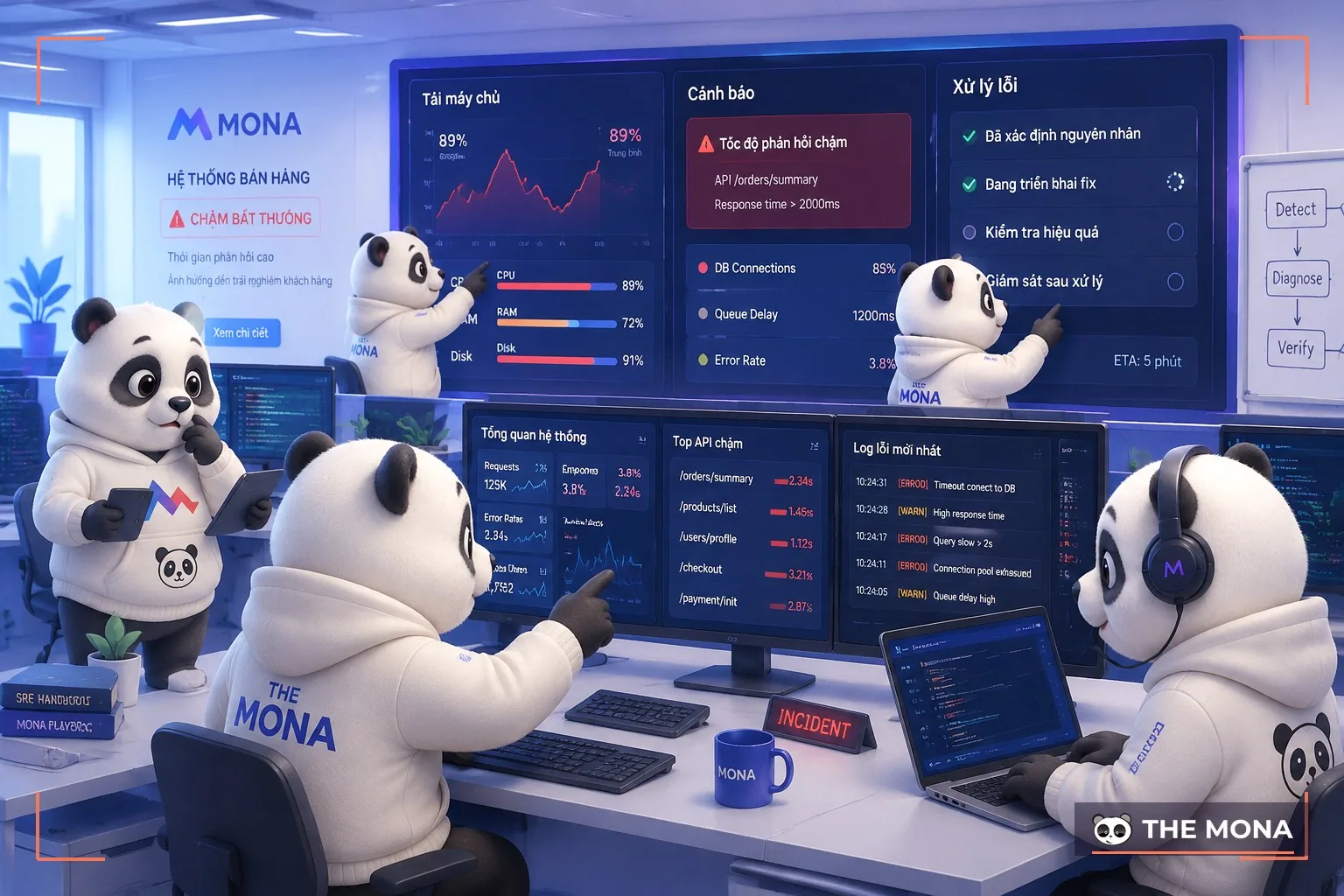
When a business grows fast, its technology systems often come under pressure before leadership notices. A sales website, internal software or customer care app can run fine for months. Then the system slows down sharply when the number of visitors rises.
Picture a big promotion day. Customers pour in, and staff need to look up orders constantly. But the screen spins for tens of seconds. Every minute of waiting then hits revenue and the business's reputation.
Many businesses don't lose money from a lack of customers. They lose money because the system can't serve customers in time when they show up. A stuck order, a staff member who can't pull up customer information, or a broken payment page all leave a gap in the sales process.
We have taken over systems that had been running for years. Operations depended on a few servers and on the manual handling of a few people who knew the system well. When it came time to scale, the business couldn't tell which point was causing the slowdown. It also couldn't tell what needed to change.
MONA usually starts by looking again at how the software is packaged and run. For projects that need to run stably, we use Docker to create a separate runtime environment for each part of the system. This makes releasing new versions easier to control.

For many businesses, the difficulty isn't whether the servers are strong or weak. The problem is that old systems usually lack consistency. Every change needs many steps of testing. That easily leads to errors.
For a retail chain with 30 branches, an update to the management software that interrupts sales is a big risk. And for a cosmetics e-commerce store, the moment many customers visit is exactly when the system needs to stay most stable.
We have seen cases where a business had to check every installed component before each update. Docker helps MONA standardize the runtime environment. That reduces the “it runs on this machine but fails on that one” problem during development and operations.
You can read more about how server infrastructure affects stability in the content on VPS Linux or what a VPS is. Once you understand the operating foundation, it is easier to decide how to invest in technology.
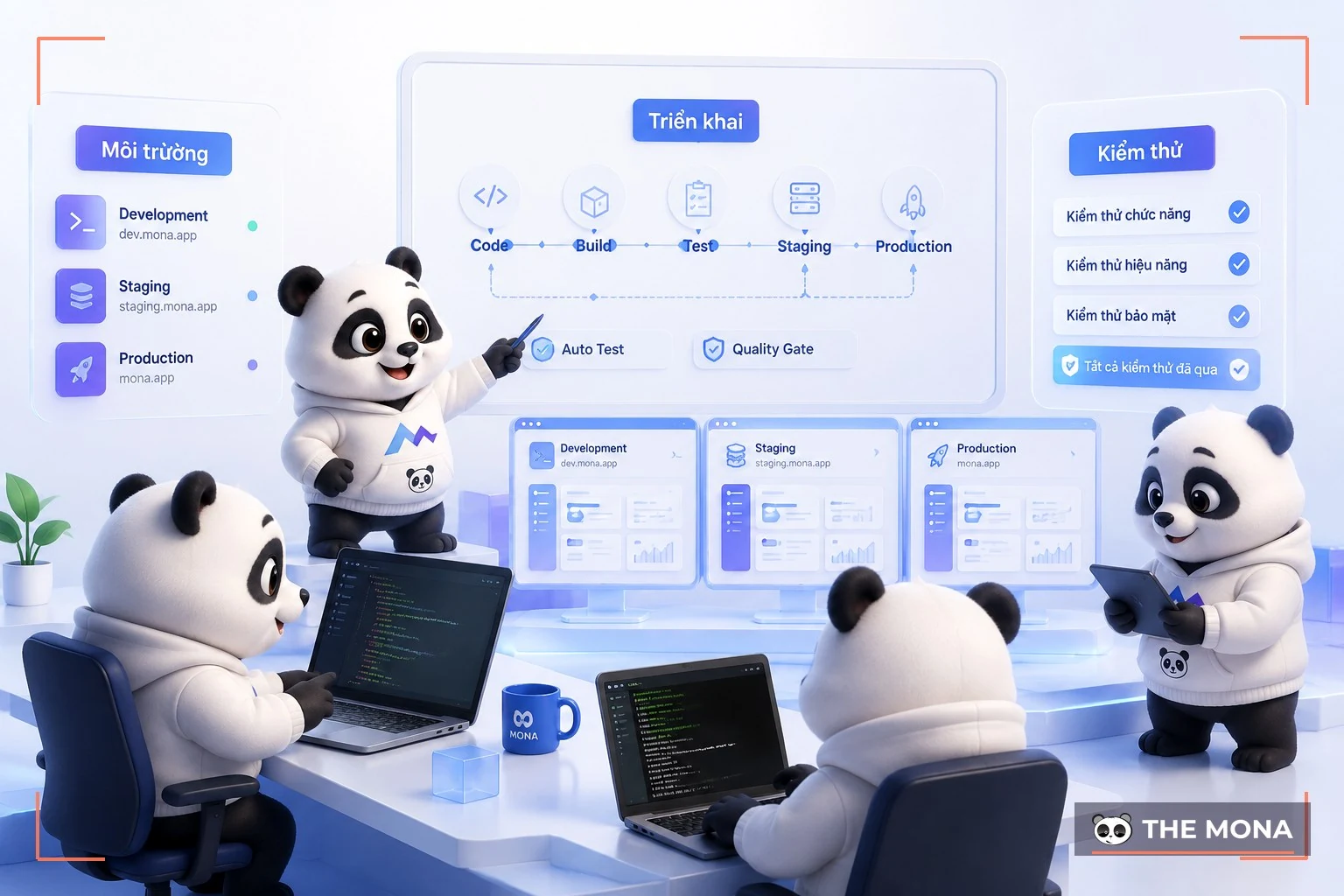
Businesses often spend many hours fixing errors. Every software update starts with worry. A version that runs fine on a developer's machine can break when moved to the real server.
Picture a technical team preparing to update the sales system. The developer's machine has one library. The test machine has a different configuration. The production server has a few more conditions of its own.
When an error appears, staff have to trace each difference. They can't focus on building new features. The expensive part is the time of skilled people.
An experienced engineer gets pulled into fixing the same errors for days. The business pays a high staffing cost. A suitable process can cut these tasks down.
Each environment that runs software is like a room with its own layout. A computer missing a library, running a different operating system version or using different security settings can all cause errors.
Docker is a way to package software together with the components it needs into a separate environment. When we explain what Docker is, we usually compare it to a shipping container.
This container already has everything needed prepared inside. That makes moving software from one place to another more stable.
We have run into this when taking over client systems. The error wasn't in the features. It was in the difference between the development machine and the production machine.
For a retail chain with 30 branches, updating the sales system has to cause as little interruption as possible. Staff still need to serve customers as usual.
MONA usually sets up a runtime environment that fits each software project. A cosmetics e-commerce store may need a system that handles load better when traffic spikes.
Customer data needs protecting. Releasing a new version also needs to happen in a controlled way.
Google Cloud DORA's Accelerate State of DevOps report compiles data from more than 36,000 professionals. It shows that stable software delivery capability is closely linked to development performance.
You can see the research source at Google Cloud DORA State of DevOps report.
The trap we often see is businesses piling up temporary fixes. After that, they forget about maintaining the system.
As the system grows, server costs, bug-fixing time and pressure on the technical team all rise.
MONA has delivered over 14,000 projects. From taking over client systems, we often deal with problems such as mismatched runtime environments.
We also deal with uncontrolled update processes and errors that appear when a system scales.
Our approach focuses on building a stable operating foundation from the start. That way, you can put your resources into growing the business.
The business spends less time fixing the same errors over and over. Technical staff get more time for work that creates value.
If your business needs a server environment that fits custom software, you can read more about Linux VPS for business systems or cloud hosting service to understand more of your operating options.
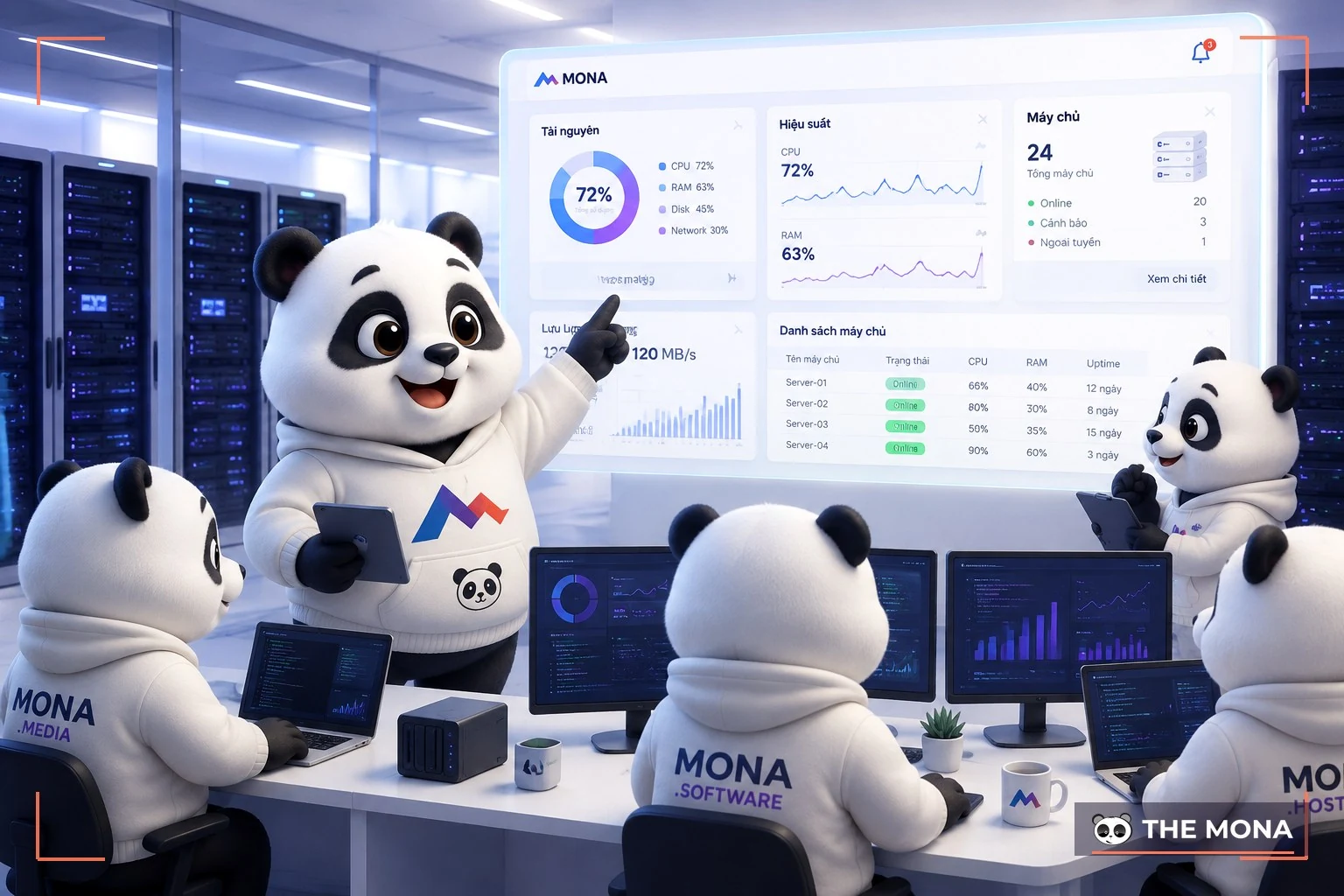
As a business grows, server costs often rise before you look back at how resources are used. Many systems still run on separate machines. Each place has its own configuration, so server rental costs climb every month.
Picture a business with many online services. One server runs only a small function. Another is heavily used for a few hours and sits almost idle the rest of the time. You still pay in full, but it is hard to tell which spending is creating value.
This situation usually appears when a business grows fast. A sales system gets a new machine to handle rising traffic. Then come a customer care system, internal management and reporting.
Each of those changes had a sound reason. But after a few years, a business can end up owning many disconnected servers. Tracking them and scaling back when needs change also gets hard.
We once took over a system for a retail chain with 30 branches. During the review, the operations team had to open many places to check each service. Every piece of software ran in its own environment.
At times staff spent hours just finding which service was using resources. After that, MONA reorganized how the applications were packaged with Docker. The system became easier to manage. Rolling out new updates also had less effect on sales.
You can read more about Linux VPS server to understand how server environments are prepared for different needs.
The hard part of large infrastructure isn't how many servers you have. What matters is knowing which applications are running. You also need to know how many resources each application needs. And you need to decide when to scale up or down.
Docker is a way to package an application together with the components it needs into a separate environment. This lets MONA control software deployment more clearly in real projects.
For a cosmetics e-commerce store, this approach makes rolling out new features more organized. The website keeps serving shoppers during peak hours. The technical team also finds it easier to check each running part.
We see many businesses splitting servers out of old habits. As the number of services grows, tracking them becomes a burden. Systems such as cloud hosting hay business hosting also need to be designed around real needs. You shouldn't just keep adding resources.

Many businesses lose control when software only runs steadily thanks to a few manual configurations. Only one technical person may fully understand these settings.
Picture a sales system running well. The person in charge of the server suddenly quits. Scattered notes, old passwords and per-machine custom setups make the handover hard.
What troubles the business owner is that the system still runs. But nobody is sure whether the next change will interrupt operations.
When you open new branches, this worry gets sharper. Each location may develop its own way of operating.

A library update, a server version change or a wrong configuration edit can make software behave differently than before.
We once took over the system of a retail chain with 30 branches. Before standardizing, every release required many manual checks.
The reason was that the runtime environment differed from place to place. The technical team had to recheck every detail before making a change.
Docker lets us package the application with the components it needs in one consistent environment. Once you understand what Docker is, you will see its value lies in depending less on the memory of individual technical staff.
This makes moving servers, testing new versions or restoring the system clearer. It suits a business that needs to run software for the long term. At the same time, the business also has a plan to expand.
For a cosmetics e-commerce store, we use a packaged runtime environment. That way, rolling out a new version has less effect on sales.
The client benefits from better control. The website can serve steadily when many people visit.
The technical team also finds it easier to track changes in the system.
Docker usually goes together with suitable server infrastructure. You can learn more about VPS services or VPS Linux to understand how a business prepares its operating environment.
We have taken part in over 14,000 projects. From taking over many real systems, we see that standardizing from the start helps a business depend less on any single person.
This approach also makes it easier for the technical team to check, hand over and handle changes as the business grows.

A business with many branches needs software that runs steadily. The system still has to serve hundreds of people at the same time.
When software depends on individual servers, even a small change can cause an interruption. That affects sales, customer care or internal operations.
Picture a retail chain with 30 branches using software order management. If every server has a different set of libraries and software versions, updates easily cause errors.
We run into this when taking over a business's old system. The software runs on the development machine but fails when moved to the real server.
Docker is a tool that packages an application with the environment it needs so the software behaves consistently. When you look into what Docker is, you can think of it simply as a way to create a “box” that holds the software.
Inside that “box” are the libraries and configuration it needs. That way, the software can be moved to another machine and still run correctly.

Theo Stack Overflow Developer Survey 2024, Docker was used by 53.9% of respondents in the group of foundational technologies.
This figure shows that Docker has become a familiar tool in many software projects.
A container is a small environment inside Docker. It holds the application and the components needed to run it.
Each container runs in isolation. That keeps one piece of software from affecting another on the same server.
MONA uses this way of organizing things when building custom software for businesses. For a cosmetics e-commerce store, separating the order-processing part makes it easier to control.
The system can also separate data management and supporting services. This suits a situation where traffic is growing.
Business software usually has many components working together. Docker Compose lets us declare and manage those components in one unified configuration.
Instead of installing each part by hand, the technical team can control the system structure more clearly.
This approach suits a business that needs to update software without stopping its operations. MONA usually combines it with suitable server infrastructure such as VPS Linux or VPS services so the system runs more stably.
What you get isn't just software that runs. The system is also easier to maintain as the business adds more branches.
We have handled systems that needed many separate deployment steps. The technical team reviews the runtime environment, the server configuration and the points where errors tend to appear.
If you see scattered servers, lots of manual work or difficulty keeping control as users grow, that is the time to look again at how the system is deployed and managed.
Once you understand what Docker is, you can look again at the system running every day. From servers and software to the moment you open another operating site.
At MONA, we usually start by looking at where resources are being wasted, where errors are likely, or where staff keep fixing the same thing. If you see scattered servers, manual work or difficulty keeping control as users grow, take a look at how the system is deployed and managed.

Many businesses choose the wrong technology because they only listened to a pitch. You haven't looked at how your system runs every day. A sales app, an e-commerce website or an internal system each has its own needs. The factors to care about include speed, security and scalability.
Picture a business with many branches. Every software update means stopping the service for a few hours. Technical staff spend time adjusting each different runtime environment. Server costs rise, but the customer experience still suffers.
We ran into this on a project for a retail chain with 30 branches. The old system ran on dedicated servers with many manual installations. Each time a new version came out, the technical team had to check each part. The goal was to avoid errors while the stores were selling.
MONA deployed Docker to package the application with the environment it needs. That made rolling out new versions more consistent. The business lowered the risk of interrupting sales during busy order periods.
A virtual machine creates a separate environment with a full operating system inside. This suits cases where you need to run a system that requires strong isolation. For example, legacy software that needs its own environment, or an application with special security requirements.
In return, each virtual machine needs more resources. The reason is that a virtual machine has to run an entire operating system. When a business has many small services to run side by side, server costs can rise fast.
So you need to define your goal clearly before choosing a technology. A system that needs its own server may suit the what a VPS isservice. An application that needs continuous deployment may need a different approach.
Docker bundles an application and the components it needs into one unified package. You can think of it as packing a full set of goods into a separate crate. Move it somewhere else and the arrangement stays the same.
MONA uses Docker in software projects that need frequent updates. This makes the development and production environments more alike. We also keep better control when taking over projects with many complicated installations.
Docker doesn't replace virtual machines in every case. Its value lies in fitting applications that need fast deployment, tidy management and efficient use of resources. You can learn more about VPS Linux. This helps you choose the right server platform for each system.
bash -lc python3 – <<'PY' text='Sau vài tháng, người tiếp nhận hệ thống không biết vì sao phần mềm chạy được và cần sửa ở đâu.' print(len(text.split())) PY
Many of you have tried bringing Docker into your system and then struggled when the software ran with real data and real customers. At first, packaging an application into its own environment looks simple. But long-term operation needs more layers of management.
We see many businesses configure Docker themselves to run a trial. Then they struggle when a new version has to be released. Even one small fix can cause errors on the server, in the data or in the services serving customers.
A common mistake is creating too many different ways of configuring things. Many places don't record the process clearly. After a few months, whoever takes over the system doesn't know why the software runs or where to fix it.
For a retail chain with 30 branches, we once took over a system with many parts running separately. Releasing a new version took a long time because there was no stable way to manage it.
When MONA builds software for a real project, Docker is used to create a consistent environment. This applies during development and when going into production. That way, updating the software has less effect on sales.
You can read more about Linux VPS server to understand how server environments are usually prepared for software systems.
Many DIY setups focus on getting the application to run. They may overlook access rights, data backups and activity monitoring. When an incident happens, recovery usually takes a lot of effort.
A cosmetics e-commerce store needs to protect customer data, orders and transaction history every day. Docker helps with how the system is organized. But security and backups still need careful design.
We usually handle this part right from the start when building automation software for businesses. MONA has delivered over 14,000 projects, many of them systems that have to stay stable for a long time.
So when you look into what Docker is, see it as one tool in the whole operating process. This tool delivers value when it is managed properly. It isn't only for experiments on a personal machine.
Once it's packaged, who runs the server for you?
Docker solves packaging, but someone still has to set up and watch the server. Give Claude Code or Codex one command line, and the AI creates a machine on MONA Cloud, puts the container online and returns an HTTPS link. Billed by the hour, paid in Vietnamese dong, with a VAT invoice.
Let AI set up the server and deploy for you Call 1900 636 648

Many businesses struggle when software has to serve many points of sale. The system also has to handle a lot of data and constantly changing traffic.
As the business scales, keeping the system running steadily every day becomes an important operations challenge.
Picture software working well at a few branches. When you expand to many more sites, one bad update can interrupt sales. Staff also spend extra time fixing errors.
We run into this often when taking over old systems. Some businesses have to install each server by hand. Each place runs a different version, which makes control very hard.
In software projects for businesses, MONA uses Docker to package the application's runtime environment into one unified set.
This makes releasing new versions, testing and managing servers much easier to control.
Systems that need dedicated resources are usually paired with suitable infrastructure such as VPS Linux or cloud hosting service. You can read more about how server infrastructure affects software performance in what a VPS is.
A retail chain with 30 branches generates product, order and customer data every day.
When each location runs a different environment, software updates easily go out of sync.
We once handled a case for a retail business with many branches. The system was standardized by packaging the application.
This lets every point of sale run the same version. The business also spends less time fixing errors by hand.
The hard part many do-it-yourself businesses run into is that they only care about the software working today.
When they need to scale or change servers, the missing groundwork becomes a burden.
E-commerce stores often see traffic spike during sales campaigns.
The software needs to be ready to handle more load. The system also must not disrupt buying and selling.
For a cosmetics e-commerce store, organizing the runtime environment with Docker helped the tech team test new versions more easily. Only then did they go live.
The business lowers the risk of downtime when changing the system.
When we take over a business system, MONA usually reviews how it is run. We check the deployment and its ability to scale before proposing a fix.
Every industry runs differently. Still, the common need is software that runs stably, scales easily and stays manageable as the business grows.
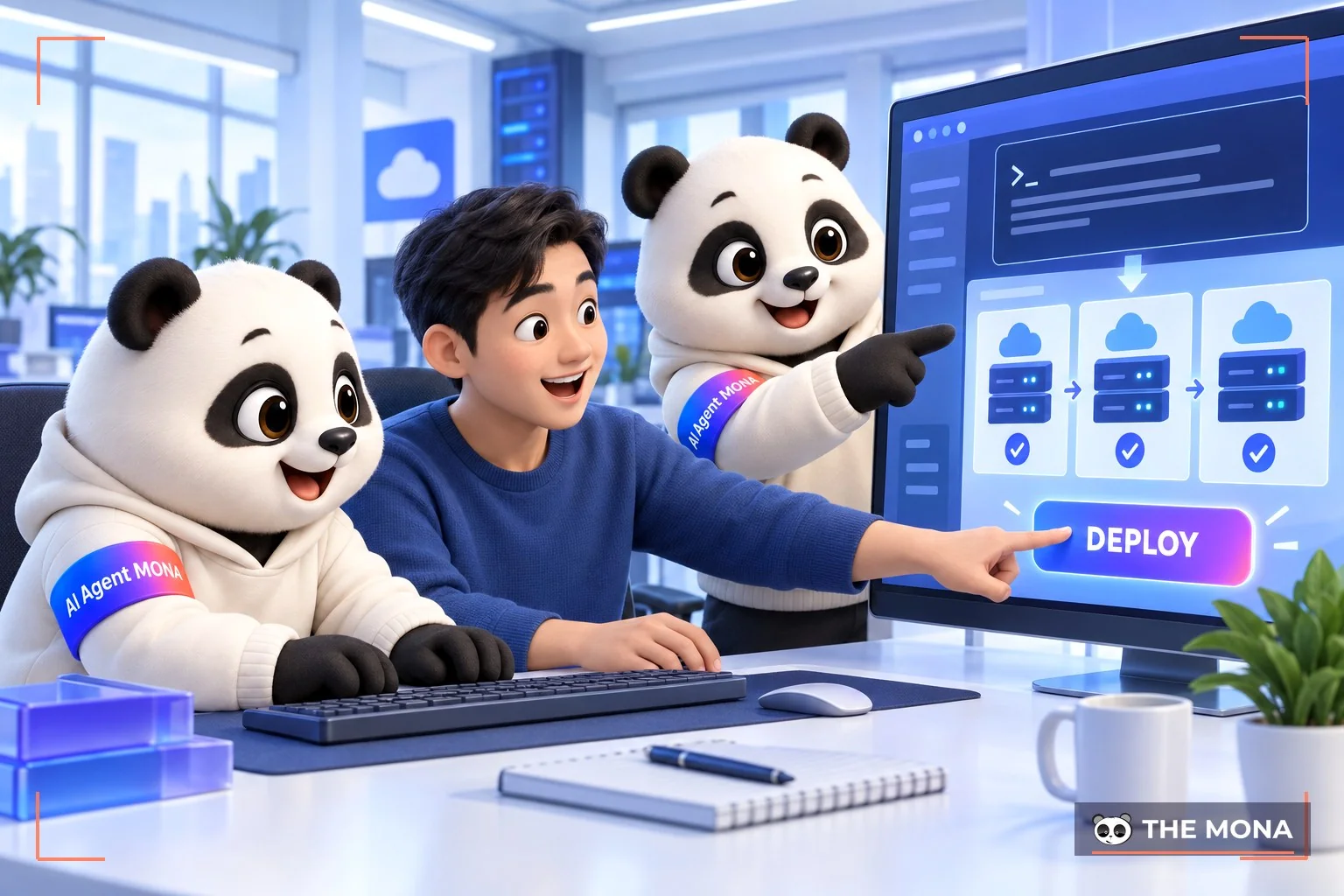
When we took over a system from a previous team for a logistics company, we saw that a new person on the project needed almost two days just to get the environment running on their own machine. We gathered the configuration into one shared file, so now a newcomer runs one command and gets the web app, database and queue, and still has half a day left to read code. Anyone who has set this up by hand knows how tiring that is: you pay a salary and don't get matching productivity back. Now the approach has changed completely thanks to machine help. MONA Cloud is the AI-friendly server and database from The MONA Group, very fast for customers in Vietnam and Southeast Asia, with servers in Vietnam, Hong Kong, Singapore, Australia and the US, rented by the hour and paid in VND, so AI agents like Claude Code, Codex and Cursor can create machines and put apps online by themselves. All you need to do is paste this command into the input box of Claude Code or Codex:
npx -y monacloud-mcp loginRight after that, the software provisions a virtual machine, deploys your source code, gets a security certificate automatically and returns a working secure link you can use right away. The whole process from creating Cloud VPS to installing database runs cleanly and avoids the pile of silly mistakes that come with manual work. We once tried building an image on a MacBook: by default it outputs the ARM format that matches the Mac chip, and when we pushed that image straight to an Intel server, the server failed immediately. We then had to force the build to the right platform, a step newcomers easily forget. With AI inserting the right environment variables automatically, you will never fall into technical traps like this. The rental rate is only 550 VND/hour, with a clear wallet cap and a VAT invoice carrying a tax code, based on the price list we checked on 19/09/2026. We advise you to stop making staff sit at a computer typing commands by hand, and hand the job of setting up your business platform to AI. Very light on the head.

We have seen many businesses run their projects smoothly on a foreign platform, then get an end-of-month bill that triples just because traffic grew a little. On top of that, data sitting on a server too far away raises response time, makes pages visibly slower to load and costs a lot of business opportunities. Owning a dedicated server gives a decisive advantage in both capacity and cost, especially when you pair it with today's standard practices for running code. According to a survey by the Cloud Native Computing Foundation, containers have become the default way most organizations package applications when putting them into production (source we checked on 19/09/2026). One logistics company that had just taken over a system from its old team once asked us to untangle it, because new staff needed almost two days to set up a working environment on their own machine. We gathered all those scattered settings into one shared control file, and now a new team member runs a single command to get the web system, database and queue. The extra time in the first half day is spent helping them get up to speed on the project fast. If you want to deploy large platforms, rent your own server and divide the workload yourself inside it. Along with a process that is domain renewal convenient and in-country, we advise that you can also set up Cloud Security to defend against sweeping attacks. On the other hand, if the project is just a static page presenting company information, we suggest you buy a Premium Cloud Hosting plan instead of forcing in an unnecessary virtualization layer. Choose to manage your own server when you want to own the fate of your code and cut monthly running costs to the bone. Self-managing is always cheaper.
A manifesto for growing together
MONA is a software, digital transformation and AI transformation company, but above all, MONA is a B2B service company that benefits directly from this: THE MORE SUCCESSFUL VIETNAMESE BUSINESSES BECOME, THE MORE MONA BENEFITS, while a declining, slow market with weak technology is exactly what kills MONA's future business opportunities. So, more than anyone, MONA wants you to succeed, and MONA actually steps in to help you succeed.
And AI transformation is the key to that success for all of us.
MONA
You don't have to pay a salary for staff to spend a whole morning watching for server errors, or wait anxiously for a bill that jumps at the end of the month. MONA Cloud charges by the hour from 550 VND, with a free sandbox so AI can test first. Try it at https://monacloud.vn/deploy-docker, it takes about 5 minutes. One click and done.
Paste one line into your AI and try MONA Cloud Call 1900 636 648

Many businesses need to understand Docker properly before changing how they run software or investing in more server infrastructure. When you look up what Docker is, you usually run into questions about cost and difficulty. And whether this technology really suits your business size.
We meet many businesses whose software already runs fine. But every update brings errors because server environments differ. In some places the developer's machine works, but on the server a library is missing or a version is wrong.
Docker packages the software with the components it needs into its own environment. When MONA deployed software for a retail chain with 30 branches, we used this packaging approach. It made pushing new versions to the server easier to control. Operations staff spent less time fixing errors caused by the runtime environment.

A small business doesn't necessarily need Docker from day one. If the software is simple, rarely changes and runs on one server, the traditional way of running it can still do the job.
As the number of services grows, Docker starts to show clearer value. For example, an e-commerce business needs to run a website, an order management system and supporting services separately. Docker keeps each part managed separately and easier to test.
We once took over a customer system that kept failing because of years of manual installs. After rebuilding the runtime environment with Docker, software updates became more controlled. The infrastructure side can be combined with options such as VPS Linux or VPS for business depending on actual needs.
Docker does not fully replace virtual machines. The two technologies solve different needs in running a system.
A virtual machine fits when you need a separate operating system with a high level of isolation. Docker fits when you need to deploy applications quickly, consistently and with easy scaling.
In the software projects MONA delivers, we usually study the system architecture before choosing a technology. Some systems can combine both virtual machines and Docker to be stable and easy to manage at once.
The trap many businesses fall into is using Docker without a process for version management and data backup. The technology only works well when paired with suitable operations.
We often see systems that need to be reviewed again, from the runtime environment to how updates are made. MONA focuses on fixing each real point of failure so the software runs more stably.

Many businesses choose Docker because they see it all over the tech world. But you haven't clearly defined the problem you need to solve.
When infrastructure has no goal, investment costs rise easily while operations stay messy.
Picture a retail chain with 30 branches expanding its website and internal software. Each time a new version goes out, the tech team has to check many different environments.
Even one small mismatch can interrupt work.
The hard part is that the business needs long-term stability. It is not just about adding one more tool.
When you look up what Docker is, look at practical questions. Where is the current system slow, and at which step does it tend to fail?
We have met many systems that were installed by hand over many years. When we take them over, changing even a small part means reviewing many layers.
The cause is that the runtime environment was never managed clearly.
Docker fits when a business has a large website, its own software and multiple runtime environments. It also fits when new versions need to go live often.
Docker packages an application together with the components it needs. That makes the system run more consistently.
However, Docker still needs people who understand servers, security, backup and troubleshooting.
If you deploy it yourself without experience, you may hit errors that are hard to find. This is usually more obvious when traffic rises.
For growing businesses, preparing suitable infrastructure from the start reduces pressure later.
You can read more about VPS Linux or cloud hosting to understand which server options fit.
We deploy Docker in projects that need a stable operating environment. The scope covers business websites and custom software systems.
For a cosmetics e-commerce store, this setup made releasing new versions easier to control.
MONA connects Docker with VPS, cloud, website management and custom software services. The goal is for the system to fit the business need.
At the same time, the system keeps data safe and cuts down on manual handling.
MONA brings experience from over 14,000 projects. We start by understanding how you run your operations.
Only after that do we propose the right technology.
When we take over an old system, we usually review how it is deployed, its runtime environment and where errors tend to appear.
This helps the tech team identify what to improve before changing any technology.
A good platform doesn't come from picking the technology everyone is talking about. It comes from solving the problem the business faces every day.
Every time the system slows down when many users are online, you lose more than a few minutes of fixing. The business also loses sales opportunities.
Repeated bug-fix costs, excess servers and staff time dragged into firefighting. All of it eats into profit.
We understand that many of you have tried to cope by adding machines, hiring more people or stitching together separate tools.
These approaches can handle things in the short term. But as the business grows, the system often struggles to stay stable.
Many business owners let the tech team patch errors one by one, thinking it was the cheaper way.
When many branches access the system at once, hard-to-control errors appear easily. The business also has to pay extra people to monitor it.
MONA and our team build custom software. We combine suitable infrastructure so the system runs longer and more reliably.
We use Docker where it fits to package the runtime environment. This makes deployment and system management clearer.
You can start by letting us review your current infrastructure. We will look at which points are costing you time and money.
Call MONA at 1900 636 648 to discuss a suitable first check. We will work with you to find a way to make your system more stable.

CEO & Founder · The MONA
Founder of The MONA, who built a services company of 200+ staff with 14,000+ projects delivered. Khánh Hùng shares how he thinks about building systems that run themselves, automating a business, and the real lessons from delivering projects at MONA.
 292




Professional website
design services
Own a website with a beautiful, 100% exclusive design and a lifetime warranty, with the ability
to expand features flexibly as your business grows, starting today!






 MONA will never sell your information or send you spam


 MONA will never sell your information or send you spam
