
 MONA OS 2.0
 Hợp tác với MONA


 Tự động hoá doanh nghiệp
 Cẩm nang SEO
 Digital Marketing
 Kinh nghiệm thiết kế website
 Hạ Tầng Server
 Giáo dục


 VI
 EN





Message us on
Zalo Official


 ProductsNew

 ProductsProducts
 Mới ra mắtKHA AI 2027App tự edit video, tự đăng mọi mạng xã hội, 2 phút mỗi ngày










 Thiết kế websiteVừa đẹp vừa thuyết phục được khách.
Dịch vụ SEOKéo về khách đang tìm đúng thứ anh chị bán.
 Tư vấn digital marketingKéo khách từ nhiều kênh, đo bằng số thật.
Quay video doanh nghiệpVideo giới thiệu công ty, nhà xưởng, đội ngũ.
 MớiDựng video AIDựng phim câu chuyện công ty bằng AI.
 Custom software developmentCRM, ERP and HRM built for your business.
 Viết AI Agent theo yêu cầuĐặt riêng một trợ lý AI cho đúng việc của mình.
 Tư vấn chuyển đổi AIĐưa AI vào vận hành của cả công ty.
NewMONA LMSManagement for centers and schools.
MONA SkillHubInternal training for company staff.
 NHTQ systemEnd-to-end China–Vietnam shipping operations.
MONA JMSManagement for gold, diamond and pawn shops.
 MONA E-LearningA website with every feature you need to sell courses.
 How to sell online courses (course)More than 30 free lessons on selling courses on autopilot.
 MONA Cloudmonacloud.vnServers to get your apps and websites running.
 MONA Basemonabase.vnPostgres database, sign-in and file storage.
 MONA Mailmonamail.vnSend OTP, order and invoice emails from your software.
 MONA Paymonapay.vnAccept bank transfers via VietQR and notify your software when the money arrives.
 MONA eInvoiceComing soonIssue e-invoices that meet tax standards.
Gấu CườiTrả lời khách 24/7 trên web, Fanpage, Zalo và thu lead cho sale.
 Gấu TeleSalesGọi điện tư vấn, chăm khách như tổng đài viên thật.
Dê CườiTư vấn và chốt đơn cho shop ngay trong khung chat.
Gấu WebmasterNhắn nhóm Zalo là website được sửa xong.
 Gấu Pháp ChếSoạn hợp đồng, rà điều khoản trong vài phút.
 Gấu Báo GiáLên báo giá đúng mẫu và gửi khách ngay.
 AI chăm sóc khách hàngTheo dõi và giữ chân khách hàng cũ.
 Gấu Tuyển DụngLọc hồ sơ, hẹn lịch, phỏng vấn ứng viên.
 Mới ra mắt
KHA AI 2027
Xây kênh chuyên gia 2 phút mỗi ngày
Quay bằng điện thoại, AI tự edit video, tự đăng lên 16 nền tảng và tự trả lời bình luận, tin nhắn.
871.699lượt xem trên kênh CEO MONA sau 34 ngày
 Anh Khánh HùngCEO MONA đang dùng mỗi ngày
Xem app làm được gì
 AI
Gấu Cười MONA ĐANG TỰ XÀITrả lời khách 24/7 trên website, Zalo OA, Messenger và thu lead về cho sale.
Dê CườiChốt đơn bán lẻ và sàn: Shopee, TikTok Shop, web. Chăm cả khách sỉ, đại lý.
Gấu WebmasterCập nhật nội dung, tối ưu SEO website mỗi ngày.
Gấu TeleSalesGọi điện tư vấn, chăm khách như tổng đài viên thật.
Gấu Tuyển DụngLọc hồ sơ, hẹn lịch, phỏng vấn ứng viên tự động.
AI chăm sóc khách hàngGiữ khách cũ, cứu lead đã rớt cho phòng kinh doanh.
Gấu Pháp ChếSoạn hợp đồng, rà điều khoản trong vài phút.
Gấu Báo GiáLên báo giá đúng mẫu, gửi khách ngay khi có yêu cầu.
 Chuyển đổi AI toàn phầnGiải pháp tổng cho doanh nghiệp, 3 lớp triển khai.
 Viết AI Agent theo yêu cầuĐặt riêng một con AI gánh đúng nghiệp vụ của bạn.
 Custom softwareCRM, ERP and HRM with built-in AI automation.
 SEO & AEO thời đại AIĐược Google lẫn AI trích dẫn, không chỉ xếp hạng.
 Kiến thức AI cho doanh nghiệpBài phân tích, hướng dẫn ứng dụng AI vào vận hành.
 Free AI courses
 AI tools at work
App mới · KHA AI 2027
Xây kênh 2 phút mỗi ngày
AI tự edit video, tự đăng mọi mạng xã hội
Free consultation, 8am–10pm every day

18 March, 2023
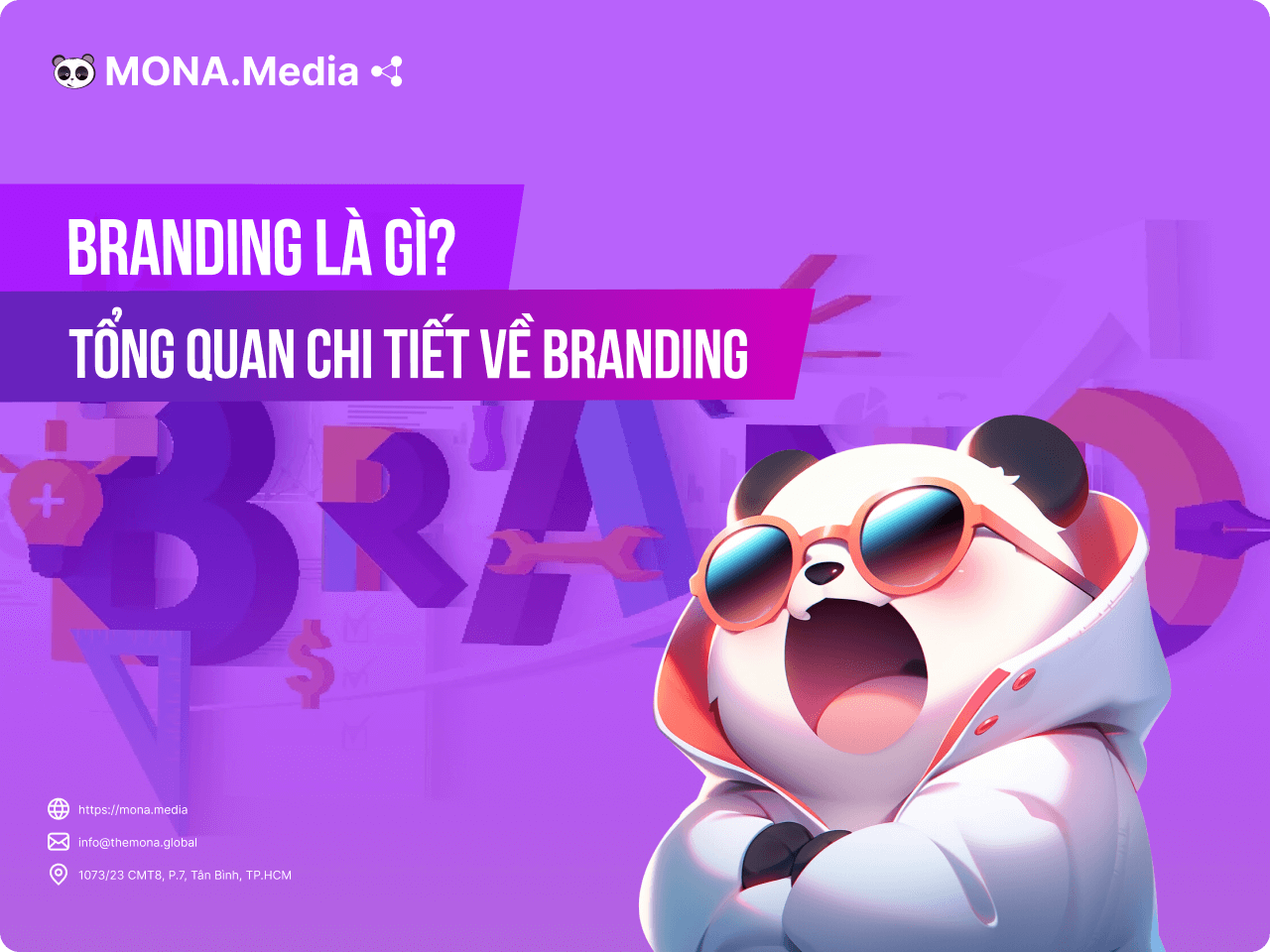
Today it is not only big brands and industry leaders that need branding. Demand for brand planning and brand marketing services is growing fast. So What is branding? And how does it shape a brand's growth? This article MONA Media explains.
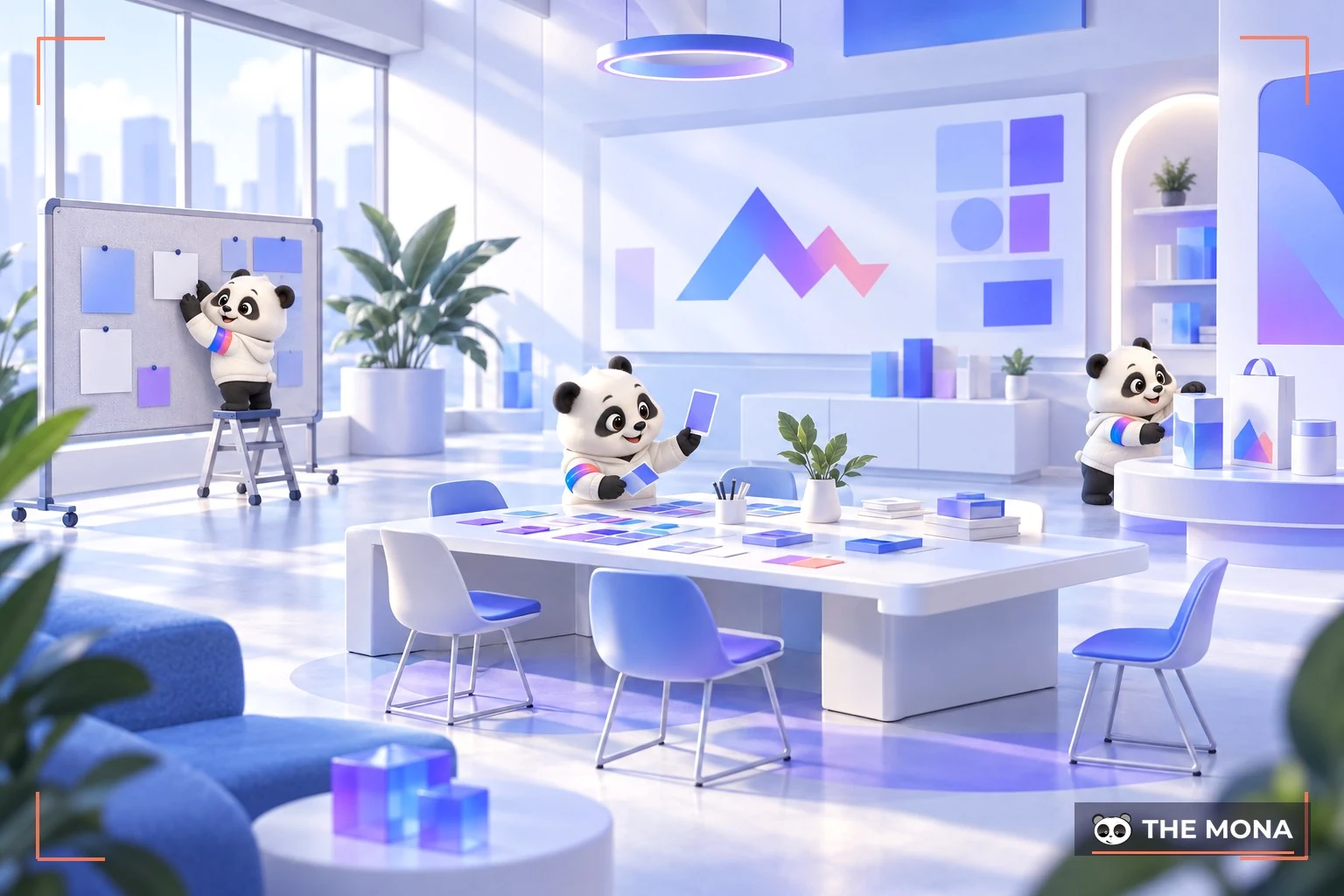
Branding is the process of building and developing a brand, shaping the values, image and role of a business in customers' minds. Branding aims to leave a strong impression, and beyond that to stir emotion and build a lasting relationship between the business and its customers.
To understand branding, there are 3 key concepts to know: Brand, Branding and Brand Identity.
A common question when it comes to branding: “Should I focus on a personal brand or a company brand?” In fact, the two can run side by side, and personal branding can cost much less. This video explains the approach.
An effective branding campaign helps a business gain long-term benefits, from greater recognition to a stronger market position. Below are the main goals of branding, each contributing to the brand's overall growth.
A brand strategy works like an emotional thread between the brand and its customers. Potential customers may be impressed when they first see a brand, but it takes a deeper connection for them to stay.
Branding also creates emotional touchpoints across the whole experience, from the logo and colors to the way the brand talks to customers. Once customers feel that connection, they not only buy but also recommend the brand to others.
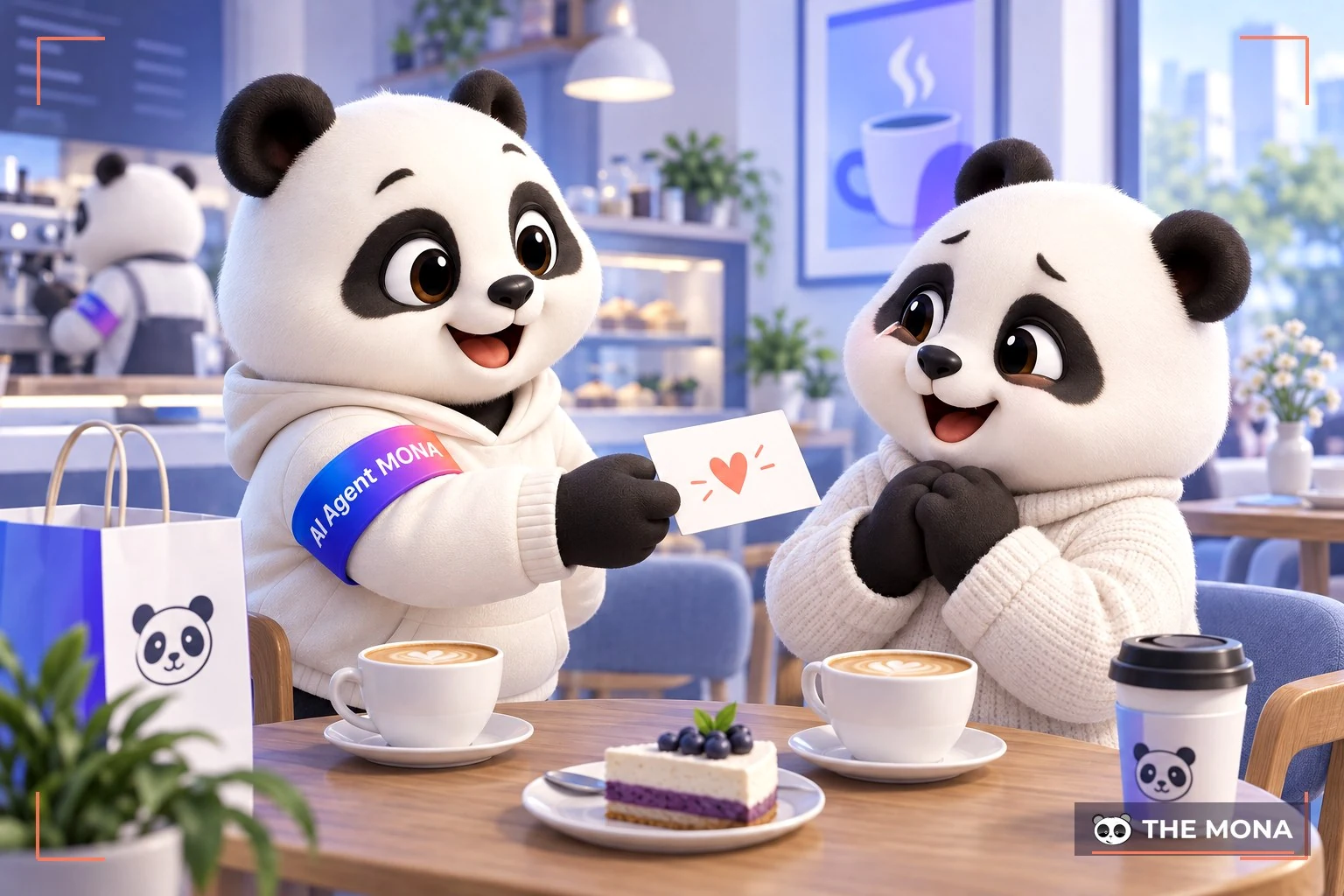
For example, look at how Nike built its brand. Nike does not just sell shoes and sportswear; it sells the spirit of pushing past your limits. Its slogan “Just Do It” has inspired people around the world to chase their goals with confidence.
It helps to understand the difference between brand recognition and brand perception. Brand recognition comes from visual cues such as a logo, colors or a slogan, while brand perception is how customers remember and feel about the brand.
Brand perception does not appear on its own; it is built through imagery, messaging and content that win customers over from the first contact.
For instance, Vinfast cleverly used the idea of “a Vietnamese brand” in its branding to stand out and get customers' attention. It emphasizes its contribution to Vietnam's automotive industry, the jobs it creates and the country's standing internationally.
A clearly positioned brand that leaves customers with positive feelings is the “spark” that starts word of mouth. When a brand has a meaningful story, customers tend to share it on their own and become valuable “ambassadors” for it.
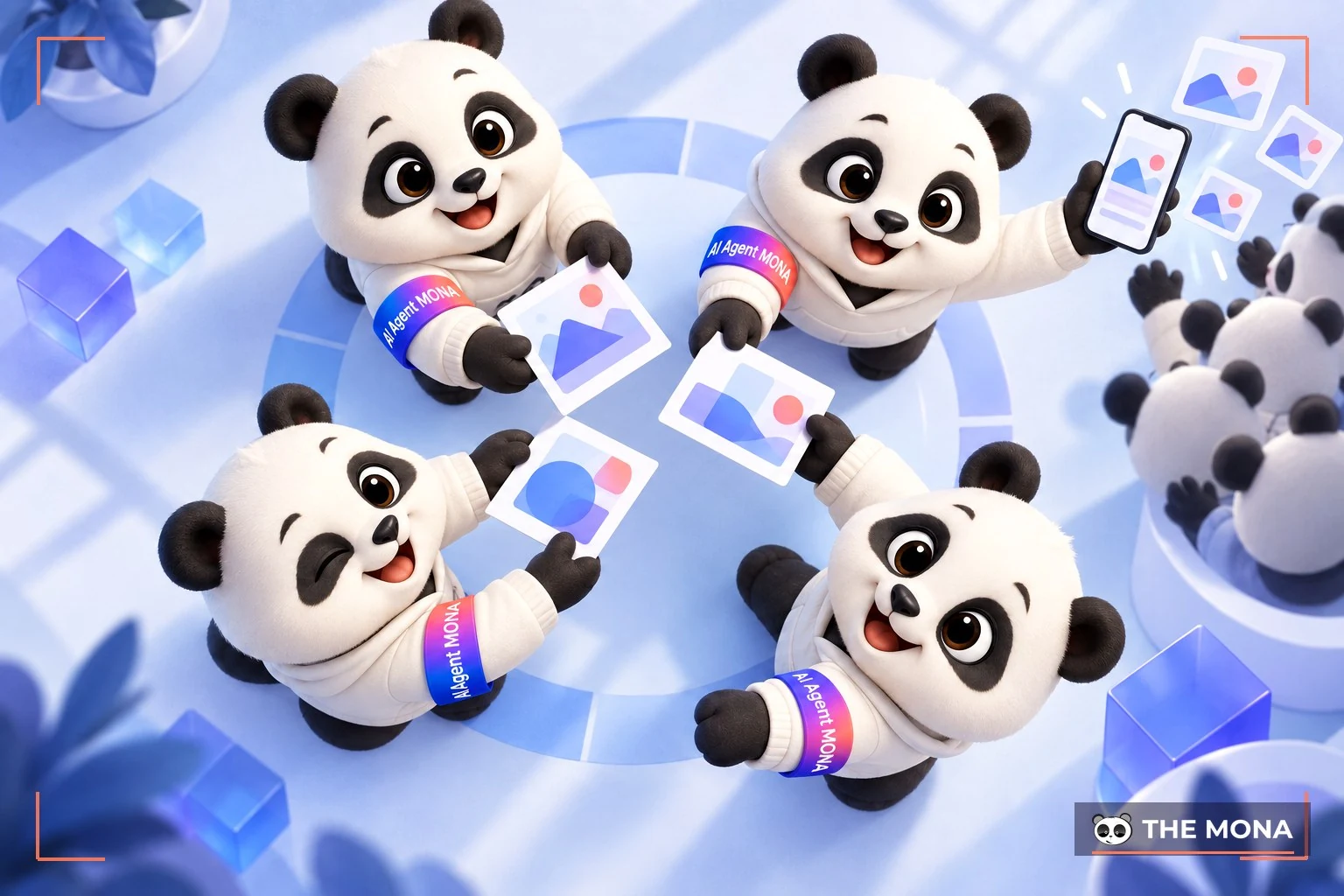
A typical example is Dyson. When people think of vacuum cleaners or hair dryers, many think of this brand first. Stories about its product quality and design details, passed on through personal recommendations, are the most natural marketing channel there is, and they have helped Dyson grow its customer base steadily without paying extra for advertising.
Branding helps a business create a consistent user experience, from imagery and messaging to how the brand communicates with customers. When every touchpoint is aligned, the brand becomes easier to recognize and leaves a stronger mark in customers' minds.
For instance, the Fahasa bookstore chain keeps a clear brand identity with its signature red, and its stores are consistent in display and shopping experience. Whether customers visit a store or shop online, they get the same professional, friendly feel.
When a brand is clearly positioned, sends consistent messages and delivers a good experience, customers feel more attached to it and trust it more. That trust is what turns potential customers into loyal ones. They keep buying, and they also become advocates who share their experience with family, friends and colleagues.
A community of loyal customers helps a business grow sustainably, lowers the cost of finding new customers and creates stable revenue. That is why investing in solid branding is a long-term strategy every business should pursue.
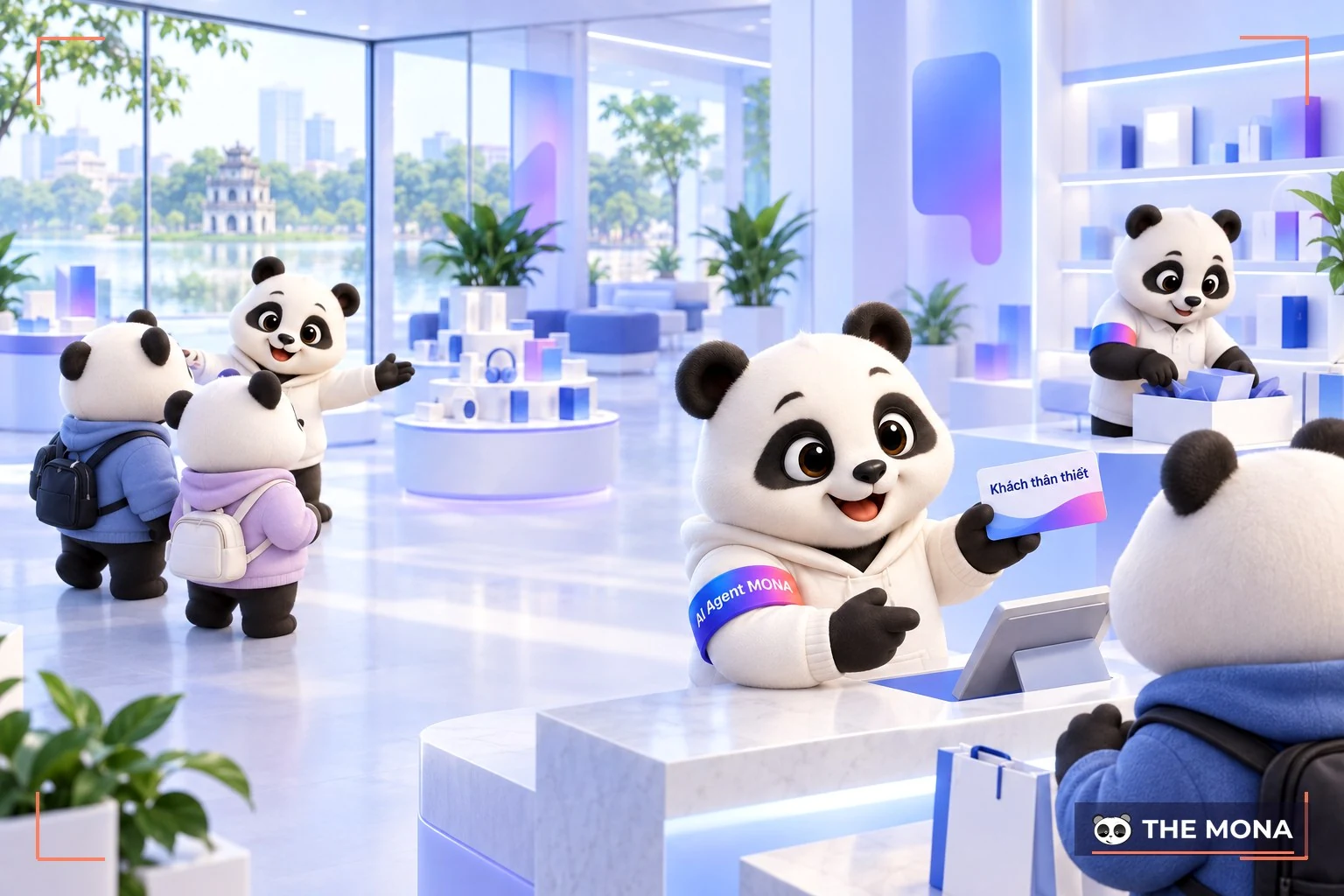
For example, Biti’s once struggled to compete with imported shoe brands. Its branding campaign “Đi để trở về” (Going away to come home) helped it build a loyal customer base by speaking to people who love to explore but always come home to their families.
With hundreds of competing brands, branding is how a business makes its own mark in customers' minds. When a brand has a clear personality and a distinctive style, customers recognize and remember it easily.
For example, when it comes to soft drinks, many people immediately think of Coca-Cola thanks to its strong branding. Through its colors, packaging and emotional campaigns, the brand has built an image tied to refreshment and joy. As a result, Coca-Cola has held its place in the market despite many competitors.
To build effective branding, a business needs to create a close connection with customers. This starts with a deep understanding of their psychology, preferences, behavior and the real motivations behind purchase decisions. When a brand is in tune with what consumers want, attachment and loyalty grow stronger.
Communication campaigns play an important part in creating an emotional impression, so customers not only recognize the brand but also feel it in their own way.
A good example is Starbucks. Besides selling coffee, Starbucks has built a lifestyle in which every drink is tied to a personal experience, so customers feel a special connection to it. These values help the brand keep a lasting relationship with consumers and strengthen its recognition and market position.
The end goal of branding is still to shape how customers see and feel about the brand. When a brand is strong enough, customers are willing to pay more for its products because they trust the value they get.
A typical example is the advertising campaign AirPods Pro 2 introducing Apple's hearing aid feature. Apple released a TV commercial telling the story of how technology can connect people and help people with hearing loss enjoy a fuller life. The idea made a strong impression on consumers, reinforced their trust in the brand and helped drive sales.
|
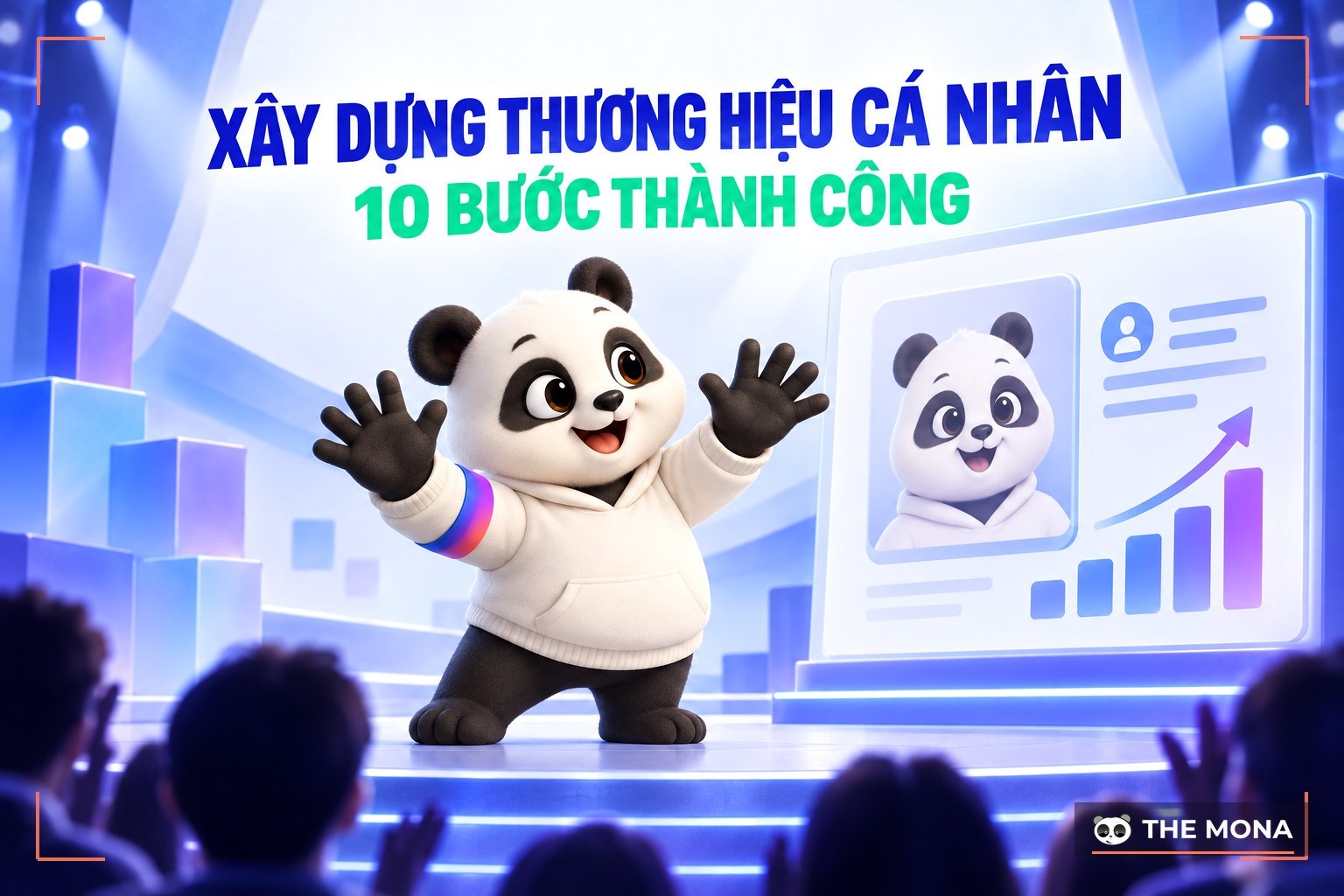
All of these complex steps are much easier with Branding Marketing services from MONA Media. 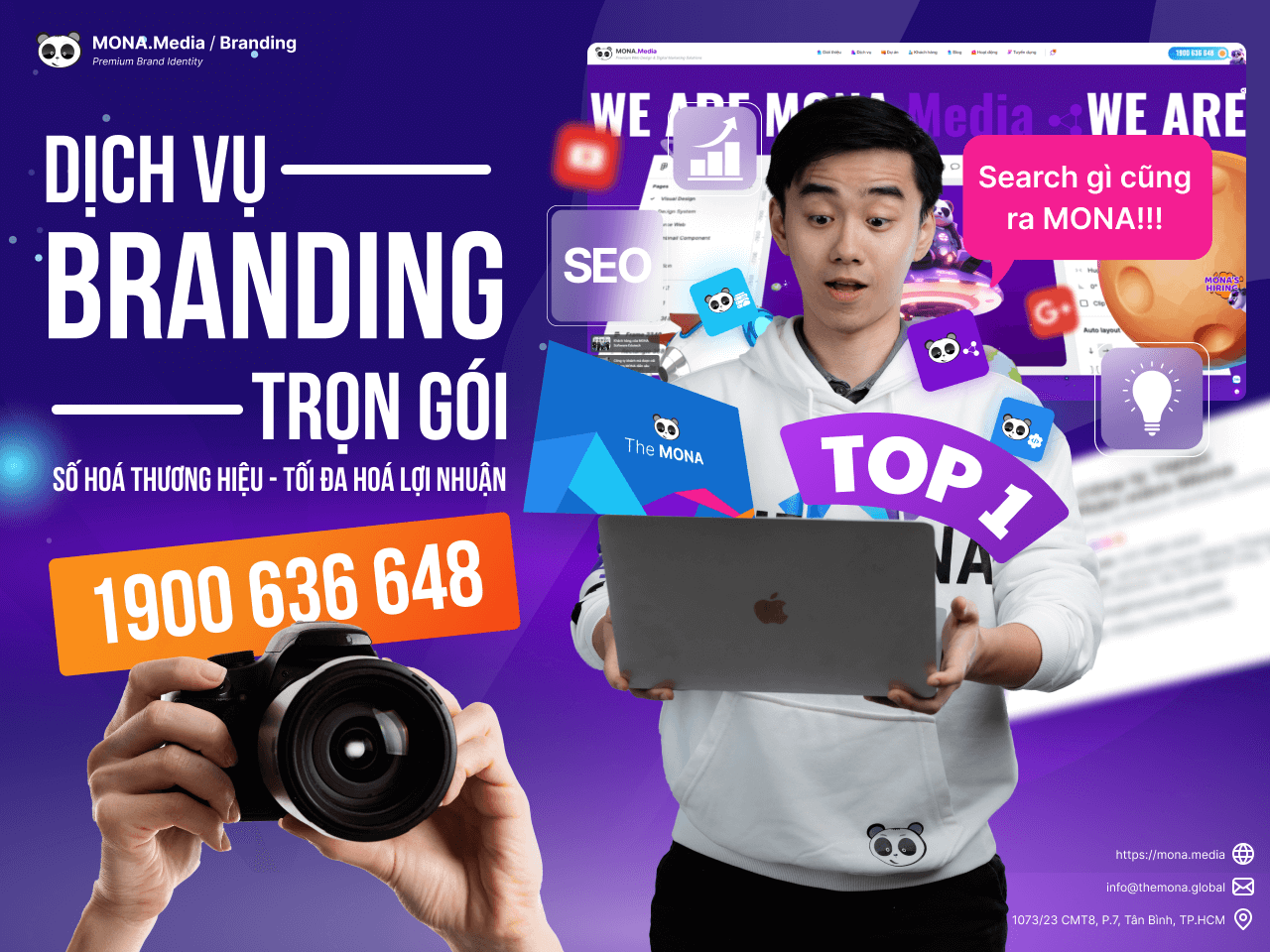
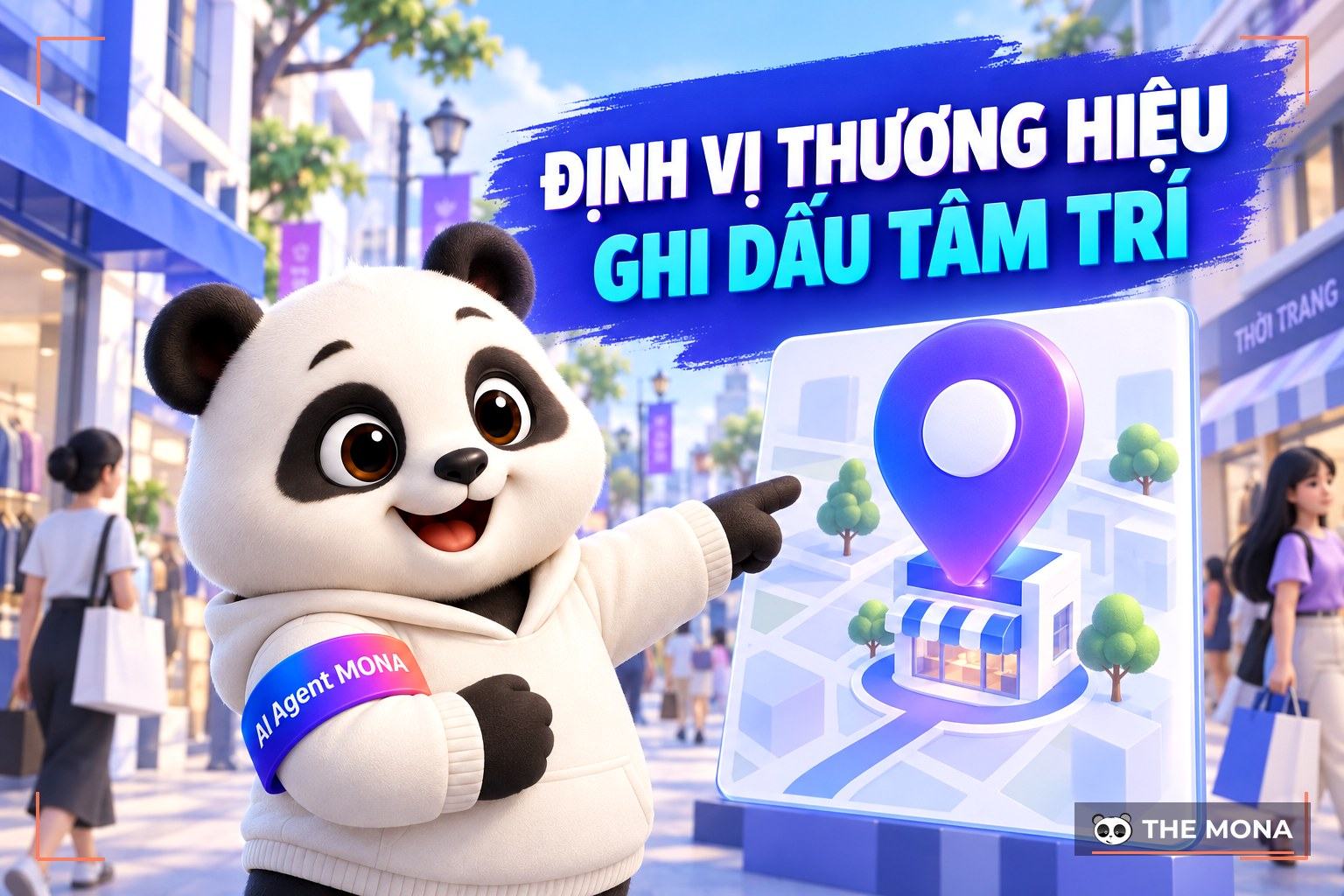
With more than 8 years of research and work with partners in Vietnam and abroad, Branding Marketing services from MONA offers an end-to-end solution to branding problems such as:
Specifically, MONA's Branding Marketing service gives you:
There are many more benefits, with service plans for every kind of business. Just CONTACT US on the hotline 1900 636 648 for advice and a detailed quote for personal profile photography and MONA's other Branding Marketing services. Please contact us using the information below:
|
Over Branding, building a brand identity kit matters most. At the same time, without Brand Identity you will not know what to advertise or how to position yourself.
However, building a brand identity involves many other components, such as colors, typography, writing style… Once defined, all these elements are gathered into a “Branding guidelines” for the brand, applied across every aspect.
The sections below cover each element of these branding guidelines.
When building a brand, the logo is one of the first and most important priorities. The logo is the face of a brand and the mark people recognize it by. One look at the logo and people remember your brand's name, field, products, origin…
So it is worth investing in a strong logo that reflects who you are and sends the message you want.

MONA Media logo
A well-known recent example of “big” spending on a logo is Xiaomi. The Chinese technology group was willing to spend 2 million yuan (about 7 billion VND) to redesign its logo. Other global giants such as Google, Facebook, Amazon… also regularly update their logo designs to keep up with trends and make their branding strategy more effective.
Looking at Vietnam, Viettel was also willing to give up its traditional two-color blue and orange logo (with the legendary slogan “Hãy nói theo cách của bạn” (Say it your way)). Viettel repositioned its brand with a more modern red logo and a new slogan that better fits its mission of “Kiến tạo xã hội số” (Building a digital society).
In some cases, companies switch to a logo that is completely different from the old one to make their branding more effective. There have been many such cases, the best known being Nokia. Nokia started out as an industrial wood pulp and paper manufacturer, so its first logo had nothing to do with the symbol you see today. After restructuring and moving into technology, Nokia “went big” and changed its logo entirely.
Switching to a completely new logo wipes out the brand awareness built by the old one. But when it is the right move, as it was for Nokia, companies go ahead with confidence.
→ See also: Logo design services
The logo is one specific aspect of form and shape in brand identity. Form & Shape studies the shape of the logo and the style it should have to suit the brand.
A logo can be designed in forms such as circles, squares, triangles and asymmetric shapes. Each form can give the logo, and the brand in general, a different feel and personality.
Beyond shape, form & shape also covers how the logo is designed, the drawing style and the images depicted. A logo can send a professional, strong message or a simple, friendly one, or a cheerful, energetic one…
Besides the logo, color is one of the most important factors in building a brand. Each color makes people think of different qualities, which helps carry the brand's message.

The brand's main color can also affect the color of the logo, so the logo and colors should be developed together. Choosing a logo and color combination that reflects the brand's personality and message is the first problem to solve in a branding strategy.
Here is what each color usually means:
Red is the warmest of all common colors. That is why red catches the eye and gives people a sense of strong energy and vitality.
It is no coincidence that most soft drink and energy drink brands in the world use red or other warm colors as their main color. For example, Coca-Cola, Pepsi… have red logos and main colors, while energy drink brands such as Sting, Samurai… all use red packaging.
Less intense than red, orange or yellow reflects a friendly and energetic personality. It also conveys optimism, cheerfulness and positivity.
Brands that use orange or yellow as their main color include energy drink makers such as Red Bull, Fanta… as well as online marketplaces such as Shopee, Lazada, Amazon, Alibaba, and tech companies such as TGDĐ (Thế Giới Di Động), Xiaomi…
It is easy to see that green symbolizes closeness to nature and environmental friendliness. Companies and brands related to the environment, food and agricultural products often use green. Bách Hóa Xanh, Tropicana, Animal Planet… are typical examples of using green in branding.
Psychological studies show that blue gives a feeling of trust, credibility and sincerity to viewers. That is why blue is also a very popular color among brands.
Facebook, Twitter, Vimeo… chose this color to convey the message of a safe, friendly and trustworthy social network. Computer maker HP, drug maker Pfizer and the US bank JP Morgan… also use blue logos to show credibility and reliability in their products.
Dreamy colors such as pink and purple symbolize creativity, fun and playfulness. Companies focused on creativity or targeting young people and children… often use pink and purple to express their personality. Examples include Yahoo, T-Mobile, the candy maker Welch’s, the Barbie doll brand…
In the physical world, a brand is represented by its head office or branches. A brand also needs a presence online, and that is its website: like the logo, the website is a face of the brand. A website can help position your brand and reflect all of its personality and messages.
The most typical example is the website of Thế Giới Di Động. The overall yellow of the website fits the logo perfectly, along with the young, positive and friendly message of a mobile retail brand. Just seeing a yellow website selling smartphones makes us think of TGDĐ right away.
In the same way, big brands all have a main color and design that make people think of them immediately. It is fair to say the website is truly an essential part of a successful branding campaign.
Today there are many tools for building a complete website. But very “cheap” tools and providers usually rely on ready-made templates whose interfaces are shared by many other businesses. Designs like these cannot show your brand's personality; only a provider that codes the site for you can meet the requirements you have in mind.
That is why MONA has put so much care into its Professional website design service, an end-to-end package that gives businesses a website done right, from design to features.
Each website is designed individually by the MONA Media team to reflect the spirit of the brand, with the features and technology a professional website needs. Every website is also SEO-ready, responsive on every device and smooth to use. Call HOTLINE 1900 636 648 now for advice on the website solution that best fits your business.
You can see some of the website design projects MONA has worked on for businesses here.

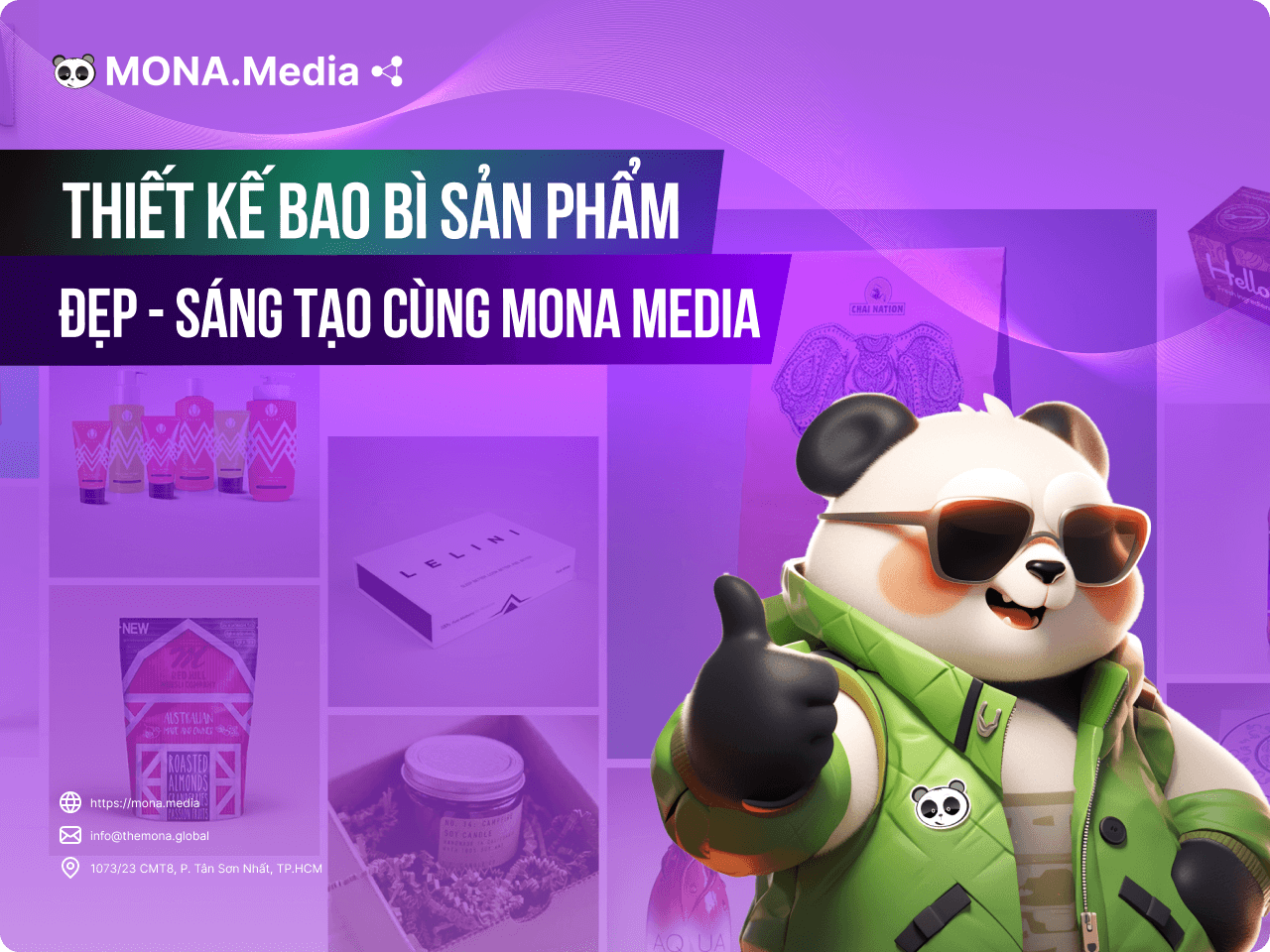
If your business sells physical products that need packaging for shipping, product packaging design is also extremely important.
For any product, packaging is the first thing that catches a customer's attention. That is why looks must come first in packaging design. Attractive, well-designed packaging always wins users over. Even for online businesses or budget products, good packaging raises the value of what you sell.
Many negative reviews on online marketplaces are about unprofessional packaging: dented or torn cartons, unglued boxes, sloppy or overly complicated taping that makes unboxing hard… There are countless packaging issues that can give customers a bad experience and lead to bad reviews of your brand.
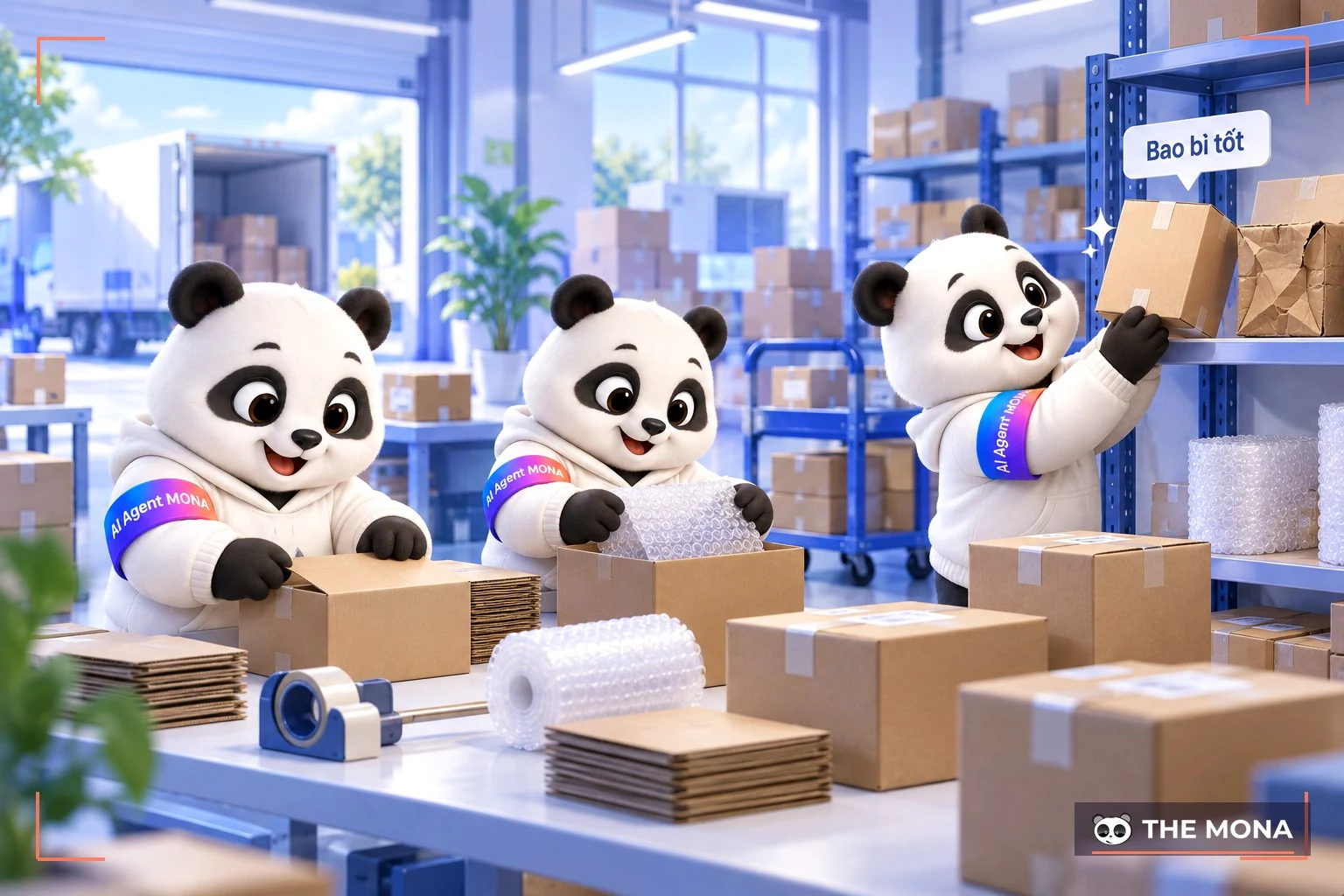
So it is worth investing in really polished product packaging, then producing a set of professional product photos to win users over. To go a step further, many brands today also brand their packaging.
So instead of a plain carton with a paper label, invest in packaging printed with your logo and slogan. Use a material other than plain carton so it feels more professional and premium. Inside the box, include business cards, a thank-you note or vouchers/coupons for the customer.
Many successful brands use this tactic to build their brand. Just by looking at the packaging, customers can see the brand's care and professionalism, and a thank-you note and vouchers make unboxing more enjoyable.
If your brand has no physical products and needs no packaging, you can replace it with a newsletter. A letter thanking customers for trusting your product or service gives them a positive experience and makes them more likely to become loyal customers.
A business card carries your company's contact details. It is also a very effective promotional tool if you know how to use it. You need to apply your branding guidelines to your business cards as well to maximize PR and brand positioning.
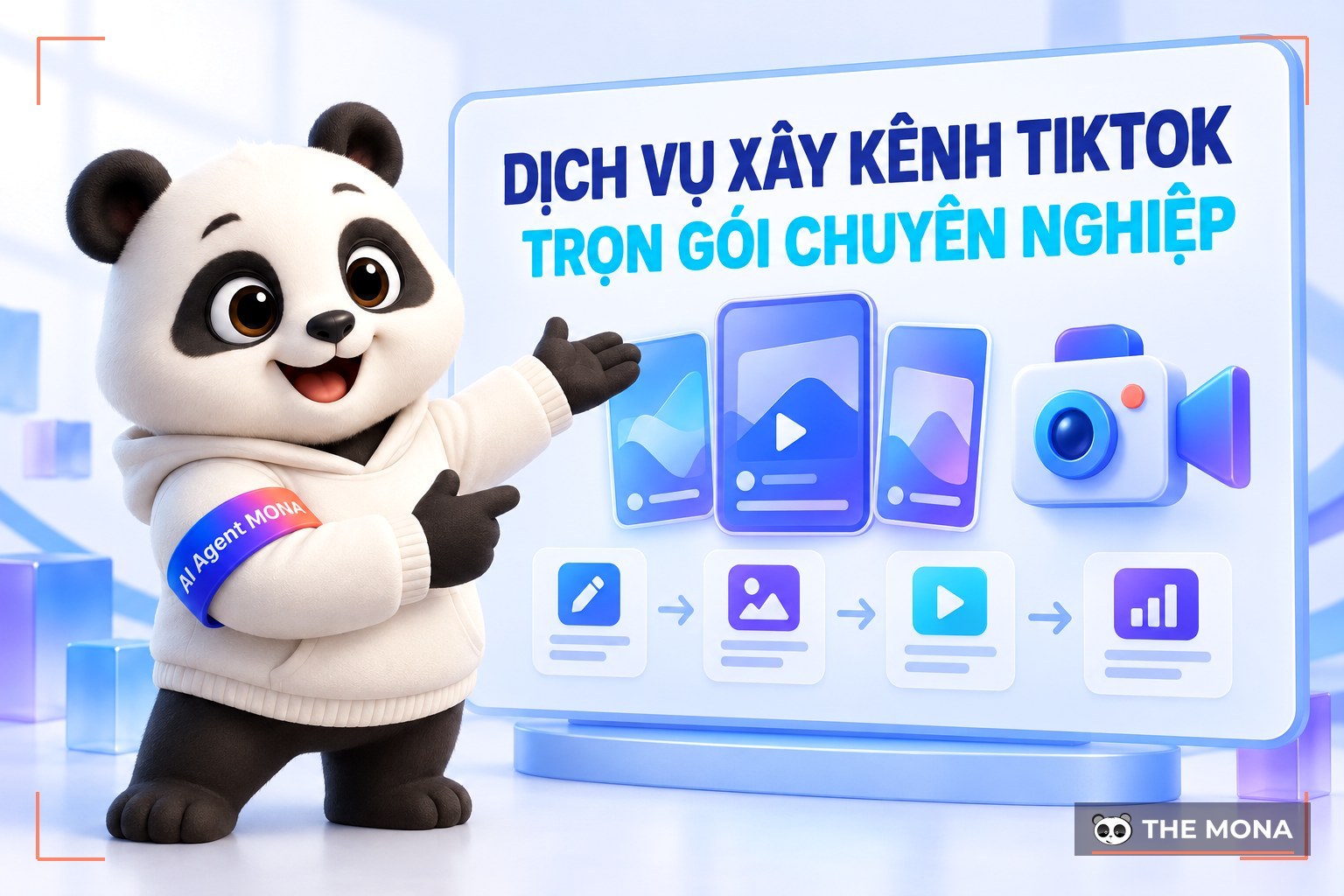
Today, branding can be done through many channels such as television, press, advertising or even social media. Especially with the growth of social media, many businesses are choosing to build their brand through short videos on TikTok. By making use of the platform's huge reach, a brand can raise its recognition without spending much on traditional channels.
If your business is still struggling to build a business TikTok channel that actually converts, MONA can help. From market analysis and identifying potential customers to planning a solid strategy, MONA helps you create quality videos that attract engagement and grow brand recognition over time.
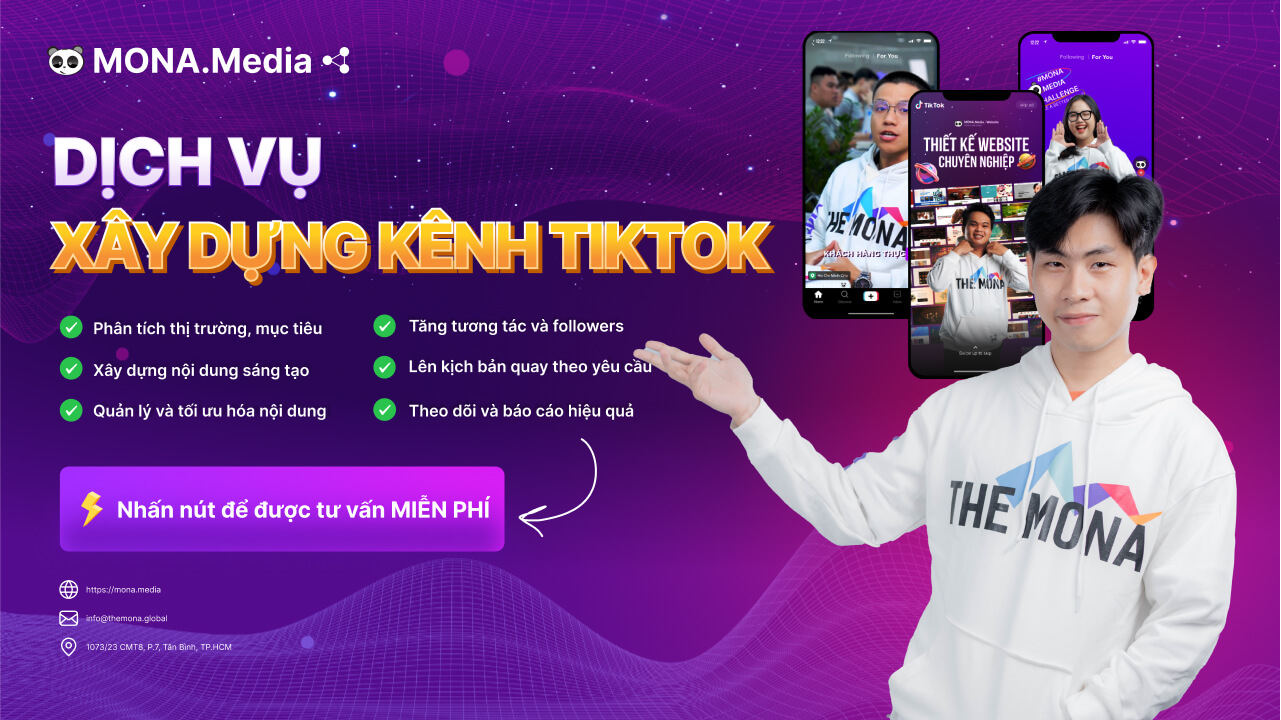
When you choose The TikTok channel building service at MONA.MEDIA, you get:
MONA knows how to make TikTok a powerful branding tool that helps your brand stand out and brings real conversions. Click the image above for advice and a detailed quote.
We hope this article has given you a general idea of the concept What is branding, the importance of branding and the main components of a brand identity kit. Branding is a broad field, and the work involved goes well beyond what this article covers. Contact us MONA Media for advice on a brand positioning strategy that fits your business.
→ You may be interested in:

CEO & Founder · The MONA
Người sáng lập The MONA, xây dựng công ty dịch vụ 200+ nhân sự với 14.000+ dự án đã triển khai. Khánh Hùng chia sẻ tư duy xây hệ thống tự chạy, tự động hoá doanh nghiệp và những bài học triển khai thật phía sau MONA.
 1,6K




Professional website
design services
Own a website with a beautiful, 100% exclusive design and a lifetime warranty, with the ability
to expand features flexibly as your business grows, starting today!












 MONA will never sell your information or send you spam


 MONA will never sell your information or send you spam
