
 MONA OS 2.0
 Partner with MONA


 Tự động hoá doanh nghiệp
 Cẩm nang SEO
 Digital Marketing
 Kinh nghiệm thiết kế website
 Hạ Tầng Server
 Giáo dục


 VI
 EN
















Message us on
Zalo Official


 ProductsNew

 ProductsProducts
 Mới ra mắtKHA AI 2027App tự edit video, tự đăng mọi mạng xã hội, 2 phút mỗi ngày










 Website designLooks good and wins customers over.
SEO servicesBrings in customers searching for exactly what you sell.
 Tư vấn digital marketingKéo khách từ nhiều kênh, đo bằng số thật.
Corporate video productionVideos introducing your company, factory and team.
 NewAI video productionCompany story films made with AI.
 Custom software developmentCRM, ERP and HRM built for your business.
 Viết AI Agent theo yêu cầuĐặt riêng một trợ lý AI cho đúng việc của mình.
 Tư vấn chuyển đổi AIĐưa AI vào vận hành của cả công ty.
NewMONA LMSManagement for centers and schools.
MONA SkillHubInternal training for company staff.
 NHTQ systemEnd-to-end China–Vietnam shipping operations.
MONA JMSManagement for gold, diamond and pawn shops.
 MONA E-LearningA website with every feature you need to sell courses.
 How to sell online courses (course)More than 30 free lessons on selling courses on autopilot.
 MONA Cloudmonacloud.vnServers to get your apps and websites running.
 MONA Basemonabase.vnPostgres database, sign-in and file storage.
 MONA Mailmonamail.vnSend OTP, order and invoice emails from your software.
 MONA Paymonapay.vnAccept bank transfers via VietQR and notify your software when the money arrives.
 MONA eInvoiceComing soonIssue e-invoices that meet tax standards.
Gấu CườiTrả lời khách 24/7 trên web, Fanpage, Zalo và thu lead cho sale.
 Gấu TeleSalesGọi điện tư vấn, chăm khách như tổng đài viên thật.
Dê CườiTư vấn và chốt đơn cho shop ngay trong khung chat.
Gấu WebmasterNhắn nhóm Zalo là website được sửa xong.
 Gấu Pháp ChếSoạn hợp đồng, rà điều khoản trong vài phút.
 Gấu Báo GiáLên báo giá đúng mẫu và gửi khách ngay.
 AI chăm sóc khách hàngTheo dõi và giữ chân khách hàng cũ.
 Gấu Tuyển DụngLọc hồ sơ, hẹn lịch, phỏng vấn ứng viên.
 Mới ra mắt
KHA AI 2027
Xây kênh chuyên gia 2 phút mỗi ngày
Quay bằng điện thoại, AI tự edit video, tự đăng lên 16 nền tảng và tự trả lời bình luận, tin nhắn.
851.542lượt xem trên kênh CEO MONA sau 29 ngày
 Anh Khánh HùngCEO MONA đang dùng mỗi ngày
Xem app làm được gì
 AI
Gấu Cười MONA ĐANG TỰ XÀITrả lời khách 24/7 trên website, Zalo OA, Messenger và thu lead về cho sale.
Dê CườiChốt đơn bán lẻ và sàn: Shopee, TikTok Shop, web. Chăm cả khách sỉ, đại lý.
Gấu WebmasterCập nhật nội dung, tối ưu SEO website mỗi ngày.
Gấu TeleSalesGọi điện tư vấn, chăm khách như tổng đài viên thật.
Gấu Tuyển DụngLọc hồ sơ, hẹn lịch, phỏng vấn ứng viên tự động.
AI chăm sóc khách hàngGiữ khách cũ, cứu lead đã rớt cho phòng kinh doanh.
Gấu Pháp ChếSoạn hợp đồng, rà điều khoản trong vài phút.
Gấu Báo GiáLên báo giá đúng mẫu, gửi khách ngay khi có yêu cầu.
 Chuyển đổi AI toàn phầnGiải pháp tổng cho doanh nghiệp, 3 lớp triển khai.
 Viết AI Agent theo yêu cầuĐặt riêng một con AI gánh đúng nghiệp vụ của bạn.
 Custom softwareCRM, ERP and HRM with built-in AI automation.
 SEO & AEO thời đại AIĐược Google lẫn AI trích dẫn, không chỉ xếp hạng.
 Kiến thức AI cho doanh nghiệpBài phân tích, hướng dẫn ứng dụng AI vào vận hành.
 Free AI courses
 AI tools at work
App mới · KHA AI 2027
Xây kênh 2 phút mỗi ngày
AI tự edit video, tự đăng mọi mạng xã hội
Free consultation, 8am–10pm every day

05 August, 2026
The question you type into Google is usually “how much does it cost to sell on Shopee”, and the answer you expect is one number. We opened Shopee's official fee page directly on 05/08/2026 to get the numbers right, and the first thing that hit us was the structure, before any number: Shopee is charging three separate fees. They are the Transaction Processing Fee, the Fixed Fee, and the Service Fee. They stack on the same order.
This matters more than it looks. Most shop owners we sit down with to work out profit remember exactly one fee, usually the commission, then take selling price minus cost price minus commission and think that is the profit. In reality two more fees have already been deducted before the money reaches your balance. You do not see them in your wallet, because they are netted out of each order.
In this article we go through all three fees, take the numbers from the official page with the verification date noted, and then calculate at a specific revenue level so you can see the final figure. Three fees, one order. After that we talk about what to do with it. To save your time, we say this upfront: we no do not advise leaving the marketplace.
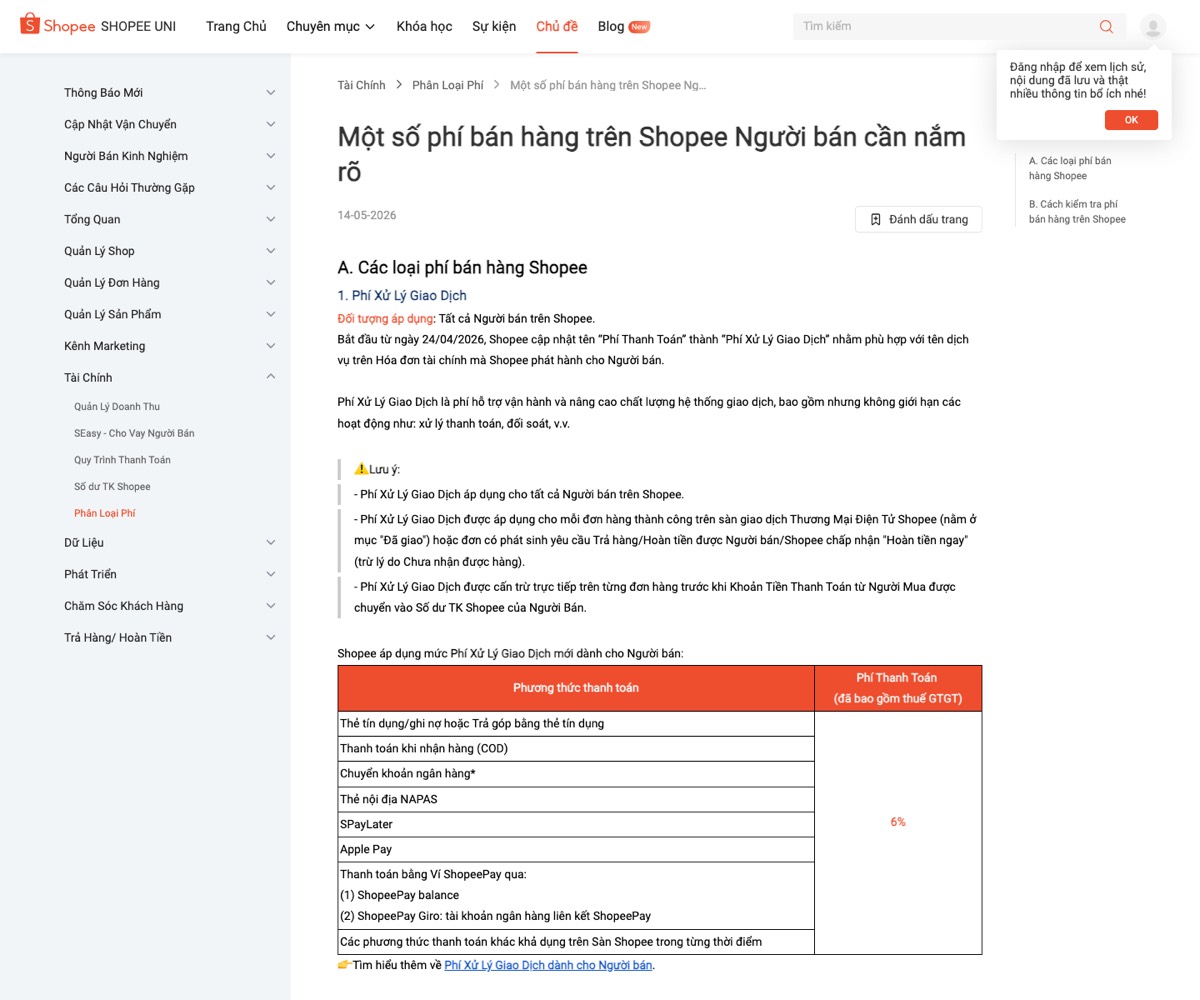
The first fee is called the Transaction Processing Fee. The rate is 6% of each successful order, including value-added tax. If the name looks unfamiliar, you are right, because it was just renamed: before 24/04/2026 this fee was called the Payment Fee, and Shopee renamed it to match the service name on the financial invoices they issue to sellers.
The trap is the word “payment” in the old name. Many shop owners think this fee applies only when the buyer pays by card, and that cash on delivery is exempt. That is not so. Shopee's table lists them all at the same 6%: credit or debit cards, installments by card, cash on delivery, bank transfer, NAPAS domestic cards, SPayLater, Apple Pay, and ShopeePay wallets, both balance and linked bank account. The last row of the table adds a catch-all line: other payment methods available on the marketplace from time to time.
So whichever button the buyer taps, it is the same. Six percent.
Two more details few people notice. First, this fee is netted directly out of each order before the buyer's money reaches the seller's Shopee balance, so you never see the deduction as a separate payment. Second, an order with a return and refund request that is accepted as “Instant Refund” is still charged, except where the reason is that the goods were not received. A returned order still costs money.
The second fee is the Fixed Fee, which is essentially a fixed commission charged on every successful sale through the marketplace. This is the fee most sellers think of first when they hear the words “marketplace fee”.
What deserves attention is how often it changes, since every shop already knows the rate. On the official page itself, Shopee lists two update dates exactly six days apart: from 23/05/2026 a new fixed fee rate for sellers outside Shopee Mall, and from 29/05/2026 a new rate for Shopee Mall sellers. Two seller groups, two dates, one month. Six days apart.
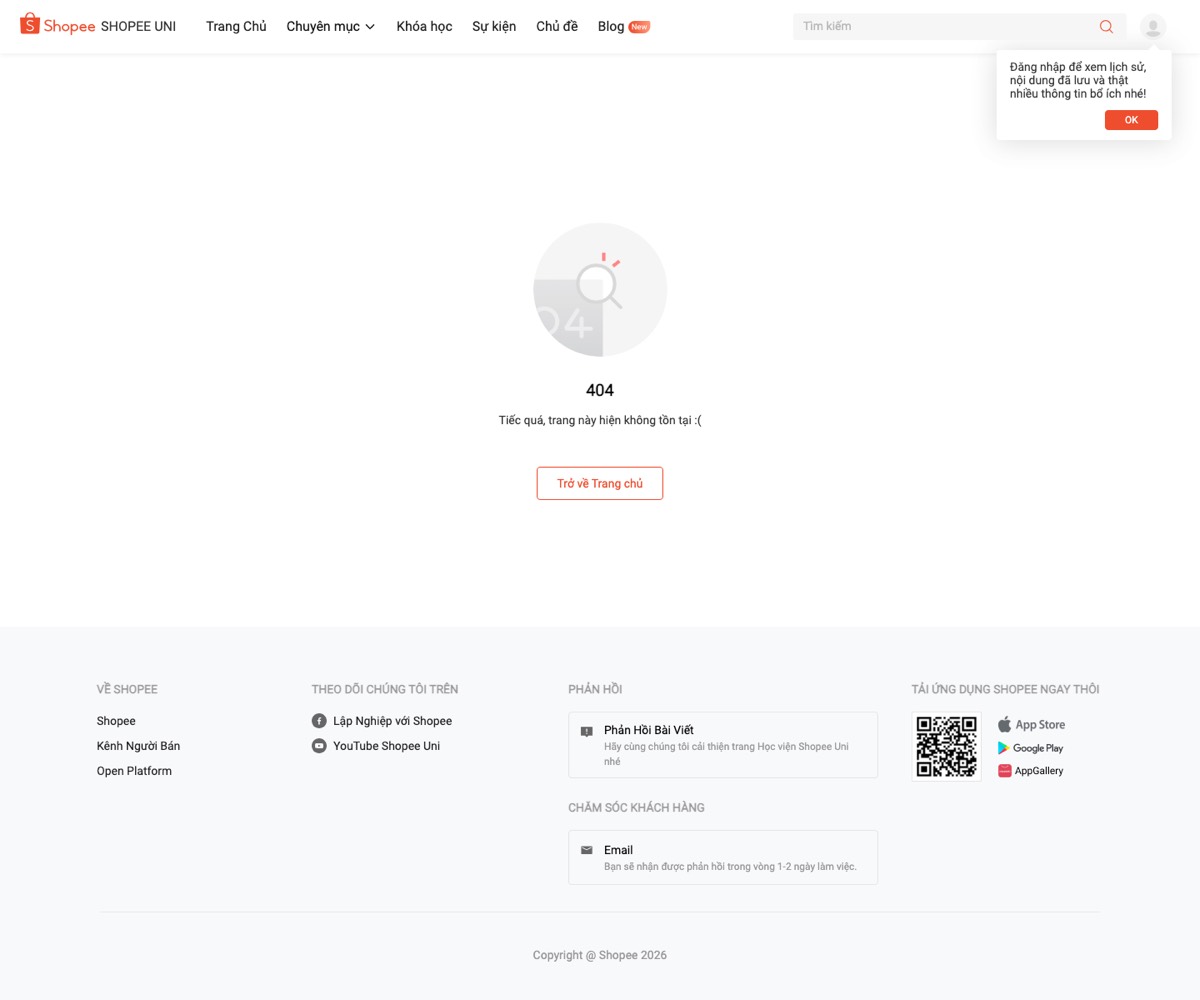
And to find out exactly how much you are being charged, you have to click through to another page. The number is not on the summary page. We tried the route a shop owner would take, and it took one more click to reach the real table, split by product category.
This is what makes calculating profit on a marketplace harder than it should be. Not because the fee is high or low, but because you are not the one who decides that rate, and it changes on someone else's schedule. A profit sheet built in April could be wrong from the end of May without you noticing.
The third fee is the Service Fee. Shopee describes it as a charge for providing services that support business on the marketplace, currently collected in two main forms: Infrastructure Fee, and a fee tied to the service package the seller joins, for example the Voucher Xtra Package. Each has its own rate and way of calculating.
Read the description closely and you will notice a phrase worth attention, quoted word for word: programs, features, or infrastructure rolled out by Shopee, “including but not limited to”. As of 05/08/2026, the date we checked, the Service Fee is collected in 2 forms: the Infrastructure Fee and the package-based fee, with the Voucher Xtra Package named as the example right on the official page. That phrase is normal contract language and nothing shady. But it tells sellers something they should hear: the fee list is an open list.
We do not raise this to scare you. Every marketplace has to collect money to run, and Shopee publishes its fee schedule properly for anyone to read, which is a real plus. The problem is not how much Shopee charges. The problem is that you are building revenue on a rulebook you did not write, and that rulebook can grow longer. The 3 fees currently charged, plus 3 changes in 5 weeks of 2026, are enough to show the pace.
Many shop owners ask us whether to sell on Shopee or TikTok Shop, so we did what someone about to choose a marketplace would do: opened the official documents of both to compare.
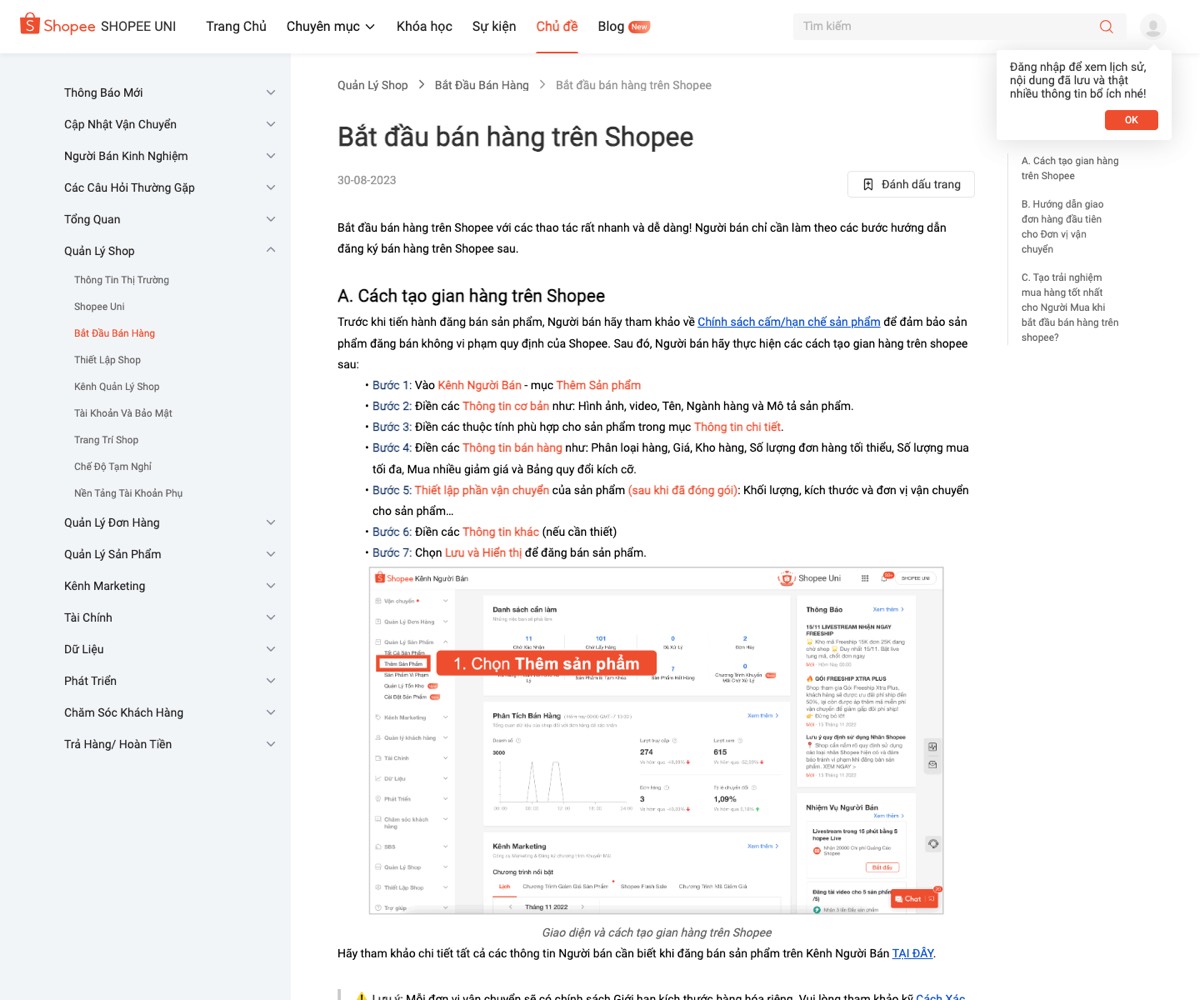
Shopee's side is smooth: the fee page reads right away, no account needed. TikTok Shop Academy's side returns 401 Permission is required, with a message saying you must sign in before you can view it. Meaning, to read TikTok's fee rules, you must already have a seller account.
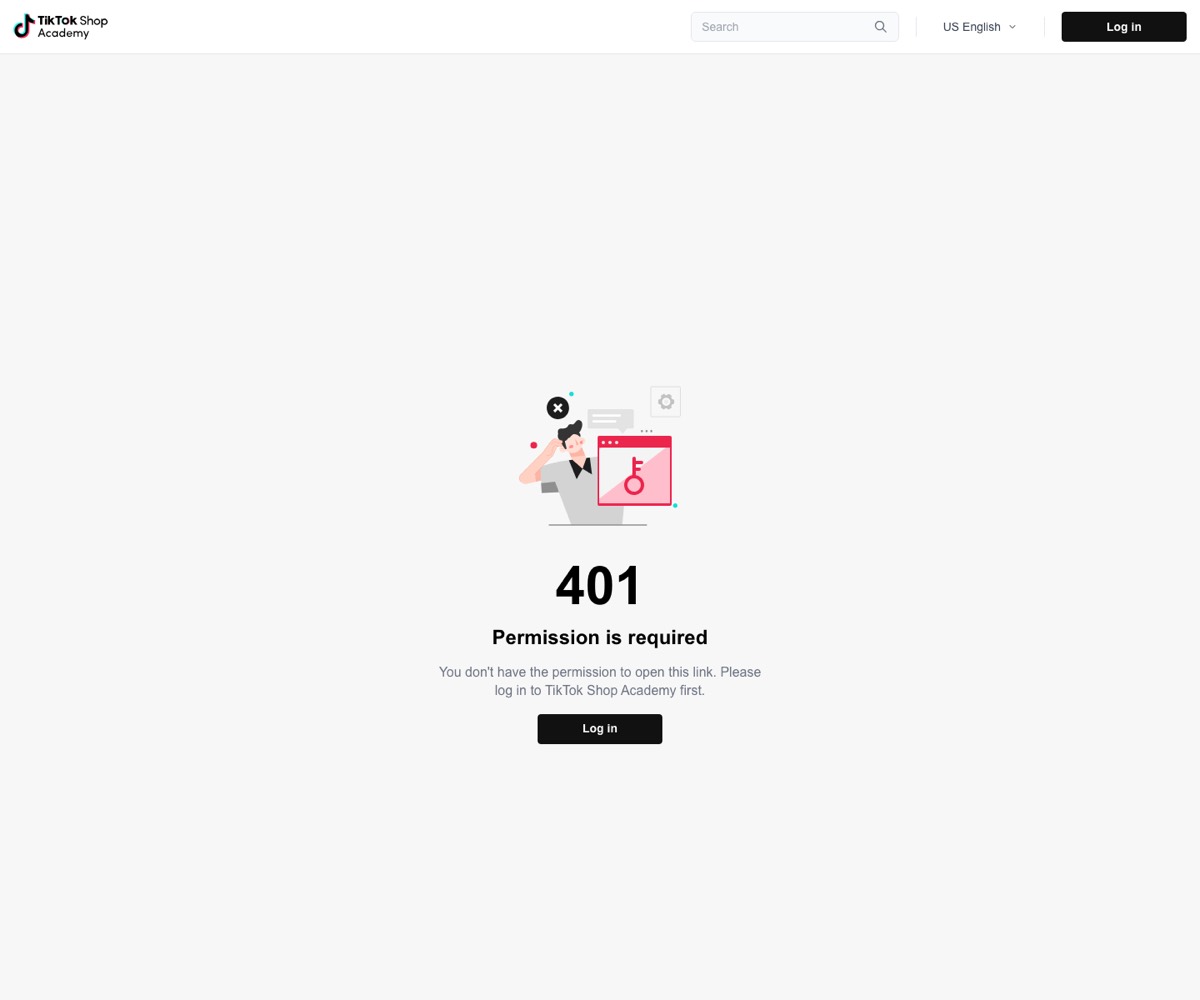
It sounds small. But notice the order: you have to walk in before you can read the rules of the game. For someone weighing two marketplaces and about to bet their whole supply on one, that order is backwards. To be clear: we could open Shopee's fee page on the first click, with no account and no login, while TikTok's door blocked us right away with a 401. Read the rules first, enter second.
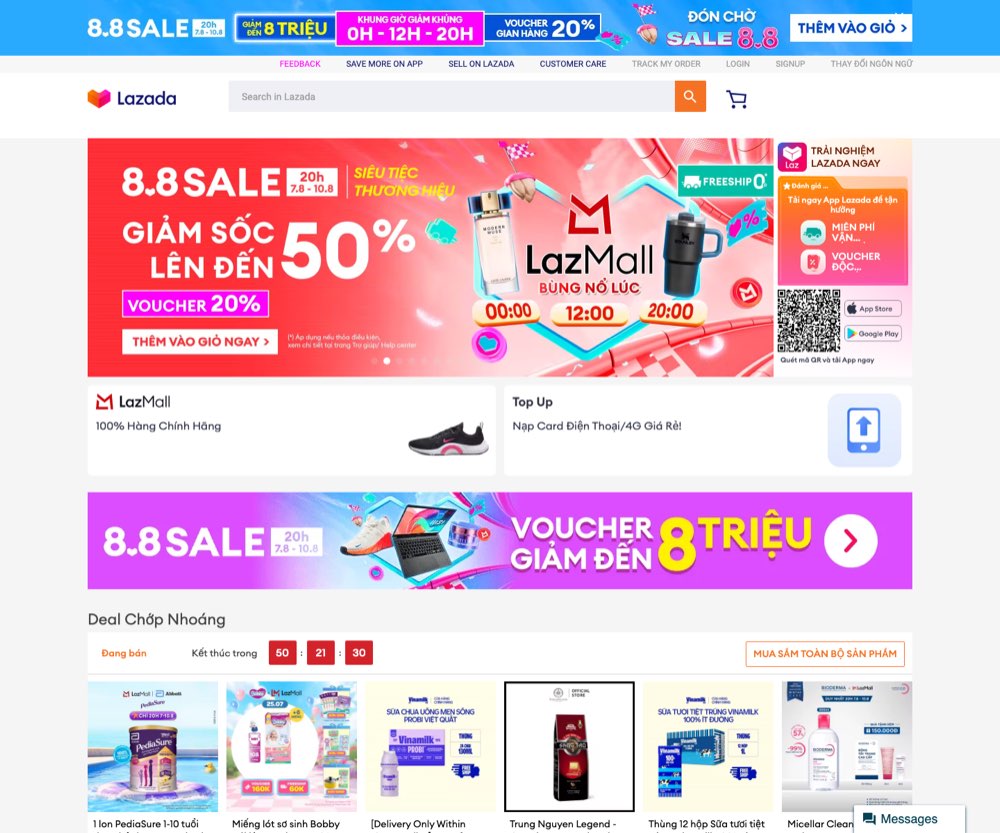
If you are thinking of moving to TikTok, also read what TikTok Shop is and how to register. As for Lazada, we opened the homepage and found it almost entirely aimed at buyers, with deals and vouchers filling the front and the seller entrance pushed far down. Search data says the same: about 66,000 searches a month from Vietnamese people look up “lazada”, but almost all are buyers hunting for discount codes, not sellers. For how payment methods work, we have an article on an overview of online payments.
A concrete number is still easier to picture than any discussion. Say your shop makes 100 million VND in revenue a month on Shopee, and we count only the fee with a clear public number, the 6% Transaction Processing Fee.
Six percent of 100 million is 6 million. That is before adding the Fixed Fee, before adding the Service Fee, before marketplace ad spend, and before the part you cover for discount programs to keep your display position. Add it all up and the real figure is always higher than 6 million, with how much higher depending on your category and the service packages your shop signs up for.
Now put it beside another comparison. Six million is one month's money. A dedicated sales website is a one-time cost, used for many years, with only domains with hosting for an e-commerce websiteas the extra yearly cost. We are not giving this number to decide for you, since every shop is different and some shops selling on marketplaces still do well. We are giving it so you can set the two numbers side by side and do the math yourself.
That calculation should be done early. The more you sell, the bigger the percentage becomes in absolute terms.
If it were only about fees, it would be easy. Paying money to get customers is a fair trade with nothing to debate. What deserves debate are three other things, and this is the part we want you to read carefully.
First, customer data. You make the sale, but the customer list belongs to the marketplace. You see orders, not people. We discuss the customer retention side separately in the article retaining customers when you sell online. When you want to message everyone who bought three times this year, or announce a new batch to customers who once bought that exact item, you have nothing in hand to do it with.
Second, the rules. The dates above are ready-made proof: 24/04 the fee was renamed, 23/05 and 29/05 the fixed fee changed for two seller groups. Nobody asked you, and they did not need to, because it is their field.
Third, getting your shop locked. This is rare, but when it happens you lose the entire sales channel, not just part of it. For a shop making 100 million a month, one lock means losing that month's whole cash flow. Not many people search for it, only a few dozen searches a month for things like whether a locked shop can be reopened, but those few dozen people are in a very hard situation.
These three share one trait: they are not risks caused by your mistakes. They are structural risks, tied to doing business on someone else's platform. The three dates 24/04, 23/05, and 29/05 in 2026 fall within 5 weeks, and all three are fee changes. That is the real pace of change.
There is a number we often show clients. According to a compilation by Baymard Institute of 50 different studies, on average 70.22% of shopping carts are abandoned. Excluding the group that was just browsing, the top reason is extra costs that are too high at the final step, accounting for 40%. Next comes slow delivery 20%, worries about card security 19%, being forced to create a new account 18%, complicated checkout 17%, and a website that errors or crashes 17%.
Read that list again. No line says “because the goods are expensive”. All of them are faults in how the purchase flow was built.
And here is the real difference between the two channels. On your own website, you can state the delivery time right on the product page to block the 20% reason; let people order without creating an account to block the 18% reason; and cut steps from the checkout page to block the 17% reason. On a marketplace, none of these are in your hands. You sell inside a store that someone else arranged. We have a separate article collecting eight ways to reduce cart abandonment for anyone who wants to go deeper here.
Theory is hard to picture, so here are two real projects, each a kind of selling that marketplaces cannot serve.
The first is a pharmacy chain selling medicine and supplements online, for which we built a web app on Magento, launched in 2025. Putting products online is the easy part. The real problem is understanding how customers look for goods. People buying medicine online rarely remember the name on the box. We cover choosing the right platform for the industry in more detail in the article what e-commerce is. They type “vitamin D for kids”, “calcium for mom”, “probiotics”, “cough syrup”. If the categories are sorted by manufacturer name, they find nothing.
We built this on Magento, and if you are interested in that platform, see services on Magento. So the first entry point on that site is the 10 phrases customers type most, placed right under the search box: vitamin D, omega 3, cough syrup, calcium, DHA, eye drops, iron, vitamin C, zinc, probiotics. The real category tree is pushed down a row. One interesting technical detail: each of those 10 phrases is actually a pre-built search query set up as a fixed path, not a separate category, which solves the problem of customers typing by need without creating a dozen categories that duplicate products. The hotline sits next to the cart at the top of the page, because people buying medicine often want to ask before they order, especially when buying for a family member in treatment.
One more worthwhile point: customer accounts let people view past orders and reorder quickly. Medicine and supplements are goods bought again and again in cycles, so repeat purchases are where the profit is, and that repeat-purchase data is something the marketplace does not hand over to the seller.
The second is the opposite: a manufacturer of interior materials selling to contractors and architects, launched in 2026. This group decides by eye and by color code, and a photo of a loose sample board does not show how the material will look on a real wall, so the story usually ends with a trip to the showroom to hold the sample.
We built a 3D material mixing tool and put it in the main menu, level with the products section. Users choose a room type and click a color code, for example LP11 Eureka Oak white wood grain, and see the material applied to a wall panel in a pre-built space. We keep similar projects on the projects page. Next to the frame, the panel size is shown 2900×120mm and the production line, with delivery in 2-3 days nationwide. The collection is already split into three lines: BALZAC with three codes, HUGO with four codes, and DUVAL with three codes, each code with its own URL from day one. The finished mix can be downloaded so contractors can put it straight into the advisory file for the homeowner.
Try picturing these two operations on a marketplace. There is no place for them.
No. We say this directly, and it is not a nice line for show.
A marketplace has something a brand-new website does not, and cannot quickly buy: the number of people already browsing inside. Open a shop today and visitors may stop by this afternoon, while a new website launches with nobody knowing the address. Giving up a channel that is producing orders for one that has nobody is making things hard for yourself.
We cover running several channels at once in the article multichannel selling. The way of dividing the work that we find most sensible, and the one most of our clients run, is: the marketplace to bring in new customers, the website to keep existing customers and sell to them again. First-time buyers on the marketplace can keep buying there, and you accept paying the fee for that meeting. But after that, you need a place of your own for them to come back to, and it must be a place where you keep their information.
And if your shop is new, with few products and a simple way of selling, we honestly recommend you do not need your own website yet. A website's value is in keeping customers coming back. With no returning customers, there is nothing to keep. We cover the common snags when starting out in the article difficulties of selling online. Get used to selling on the marketplace first, and when you start to regret the fees and see customers asking to rebuy, deciding then is not too late. The threshold we often use when advising clients is when the 6% fee alone passes 5 million a month, meaning marketplace revenue of around 85 million. At that point, recalculate.
This is the question we hear most, and the real reason many shop owners hesitate. Everyone understands that their own website is better. What people fear is that after handover, every price change, new product, or banner edit means messaging the web agency and waiting.
The websites we build come with MONA's AI webmaster to solve exactly that. You speak in plain everyday words, like add this product to that category, change the price of that code, take down the old banner, and the job gets done. On the pharmacy website we handed over in 2025, the navigation bar alone has 10 entry points that must change with the disease season. Changing one takes under 2 minutes: you type one sentence and it is done, with no clicking through 4 admin screens and no waiting for someone to be free. No technical knowledge needed, and no waiting for anyone. See more at the AI webmaster page.
And if your side has someone technical, there is a deeper path: MONA websites come with an MCP gatewayopen by default, so you can plug your own Claude straight in and order website changes. Almost no web company in Vietnam has this, and we leave it ready for anyone who needs it. Both projects above were handed over with this path: the pharmacy site running Magento since 2025, and the interior materials site with its 3D tool since 2026. Once handed over, you are in control.
The Transaction Processing Fee alone is 6% per successful order, including value-added tax, applied to every payment method. Add the Fixed Fee and the Service Fee and the total is higher, with the exact amount varying by category and by the service packages the shop signs up for. We checked these numbers on 05/08/2026 on the official page, which lists its latest update as 14/05/2026.
Yes. COD orders are still charged 6%, the same as card orders. This is the most misunderstood point, because the old name of this fee was the Payment Fee.
An order with a return and refund that is accepted as “Instant Refund” is still charged the fee, except where the reason is that the goods were not received.
You do when you start getting repeat customers, and when the fee percentage has become a number big enough to regret. Before those two points, you do not need one.
It depends on the number of products and your shop's specific processes. Those two set the price, and the number of pages hardly matters. If you state three things upfront, we can quote correctly the first time: how many products you sell, how you deliver, and whether you plan to connect to any software you already use. State all three and there are no surprise costs. A reference price list is on the pricing page.
In short, the thing to remember most from this article is the question behind the 6% figure. Every month you pay a fee to get customers, that fee is a percentage so it grows the more you sell, and after paying it you still do not own the customer list, cannot set the rules, and cannot keep the channel if it gets locked. When you pay rent for a storefront, at least you have a lease.
Your own website does not replace the marketplace, and we do not build it to replace it. It is the place where you keep what the marketplace does not give back: customers who already bought, the habit of buying again, and the right to decide how you sell. The marketplace handles meeting new customers. The website handles keeping them. To see the design first so it is easier to picture, there is a ready-made its theme library.
You are selling on a marketplace and want to see exactly what your own website would solve for your category. Call 1900 636 648 or see the service details MONA Media. We have been in this trade since 2016 and have been through over 14,000 projects, and in the first conversation we will pull up a project in the same industry as yours to look at first, instead of talking price right away.
If after talking you find you do not need it yet, we will tell you straight that you do not.

CEO & Founder · The MONA
The founder of The MONA built a service company of 60+ staff with 14,000+ projects delivered. Khánh Hùng shares his thinking on building self-running systems, automating a business, and the real lessons behind MONA's projects.
 431




Professional website
design services
Own a website with a beautiful, 100% exclusive design and a lifetime warranty, with the ability
to expand features flexibly as your business grows, starting today!






 MONA will never sell your information or send you spam


 MONA will never sell your information or send you spam
