
 MONA OS 2.0
 Partner with MONA


 Tự động hoá doanh nghiệp
 Cẩm nang SEO
 Digital Marketing
 Kinh nghiệm thiết kế website
 Hạ Tầng Server
 Giáo dục


 VI
 EN













Message us on
Zalo Official


 ProductsNew

 ProductsProducts
 Mới ra mắtKHA AI 2027App tự edit video, tự đăng mọi mạng xã hội, 2 phút mỗi ngày










 Website designLooks good and wins customers over.
SEO servicesBrings in customers searching for exactly what you sell.
 Tư vấn digital marketingKéo khách từ nhiều kênh, đo bằng số thật.
Corporate video productionVideos introducing your company, factory and team.
 NewAI video productionCompany story films made with AI.
 Custom software developmentCRM, ERP and HRM built for your business.
 Viết AI Agent theo yêu cầuĐặt riêng một trợ lý AI cho đúng việc của mình.
 Tư vấn chuyển đổi AIĐưa AI vào vận hành của cả công ty.
NewMONA LMSManagement for centers and schools.
MONA SkillHubInternal training for company staff.
 NHTQ systemEnd-to-end China–Vietnam shipping operations.
MONA JMSManagement for gold, diamond and pawn shops.
 MONA E-LearningA website with every feature you need to sell courses.
 How to sell online courses (course)More than 30 free lessons on selling courses on autopilot.
 MONA Cloudmonacloud.vnServers to get your apps and websites running.
 MONA Basemonabase.vnPostgres database, sign-in and file storage.
 MONA Mailmonamail.vnSend OTP, order and invoice emails from your software.
 MONA Paymonapay.vnAccept bank transfers via VietQR and notify your software when the money arrives.
 MONA eInvoiceComing soonIssue e-invoices that meet tax standards.
Gấu CườiTrả lời khách 24/7 trên web, Fanpage, Zalo và thu lead cho sale.
 Gấu TeleSalesGọi điện tư vấn, chăm khách như tổng đài viên thật.
Dê CườiTư vấn và chốt đơn cho shop ngay trong khung chat.
Gấu WebmasterNhắn nhóm Zalo là website được sửa xong.
 Gấu Pháp ChếSoạn hợp đồng, rà điều khoản trong vài phút.
 Gấu Báo GiáLên báo giá đúng mẫu và gửi khách ngay.
 AI chăm sóc khách hàngTheo dõi và giữ chân khách hàng cũ.
 Gấu Tuyển DụngLọc hồ sơ, hẹn lịch, phỏng vấn ứng viên.
 Mới ra mắt
KHA AI 2027
Xây kênh chuyên gia 2 phút mỗi ngày
Quay bằng điện thoại, AI tự edit video, tự đăng lên 16 nền tảng và tự trả lời bình luận, tin nhắn.
938.878lượt xem trên kênh CEO MONA sau 43 ngày
 Anh Khánh HùngCEO MONA đang dùng mỗi ngày
Xem app làm được gì
 AI
Gấu Cười MONA ĐANG TỰ XÀITrả lời khách 24/7 trên website, Zalo OA, Messenger và thu lead về cho sale.
Dê CườiChốt đơn bán lẻ và sàn: Shopee, TikTok Shop, web. Chăm cả khách sỉ, đại lý.
Gấu WebmasterCập nhật nội dung, tối ưu SEO website mỗi ngày.
Gấu TeleSalesGọi điện tư vấn, chăm khách như tổng đài viên thật.
Gấu Tuyển DụngLọc hồ sơ, hẹn lịch, phỏng vấn ứng viên tự động.
AI chăm sóc khách hàngGiữ khách cũ, cứu lead đã rớt cho phòng kinh doanh.
Gấu Pháp ChếSoạn hợp đồng, rà điều khoản trong vài phút.
Gấu Báo GiáLên báo giá đúng mẫu, gửi khách ngay khi có yêu cầu.
 Chuyển đổi AI toàn phầnGiải pháp tổng cho doanh nghiệp, 3 lớp triển khai.
 Viết AI Agent theo yêu cầuĐặt riêng một con AI gánh đúng nghiệp vụ của bạn.
 Custom softwareCRM, ERP and HRM with built-in AI automation.
 SEO & AEO thời đại AIĐược Google lẫn AI trích dẫn, không chỉ xếp hạng.
 Kiến thức AI cho doanh nghiệpBài phân tích, hướng dẫn ứng dụng AI vào vận hành.
 Free AI courses
 AI tools at work
App mới · KHA AI 2027
Xây kênh 2 phút mỗi ngày
AI tự edit video, tự đăng mọi mạng xã hội
Free consultation, 8am–10pm every day

24 August, 2026
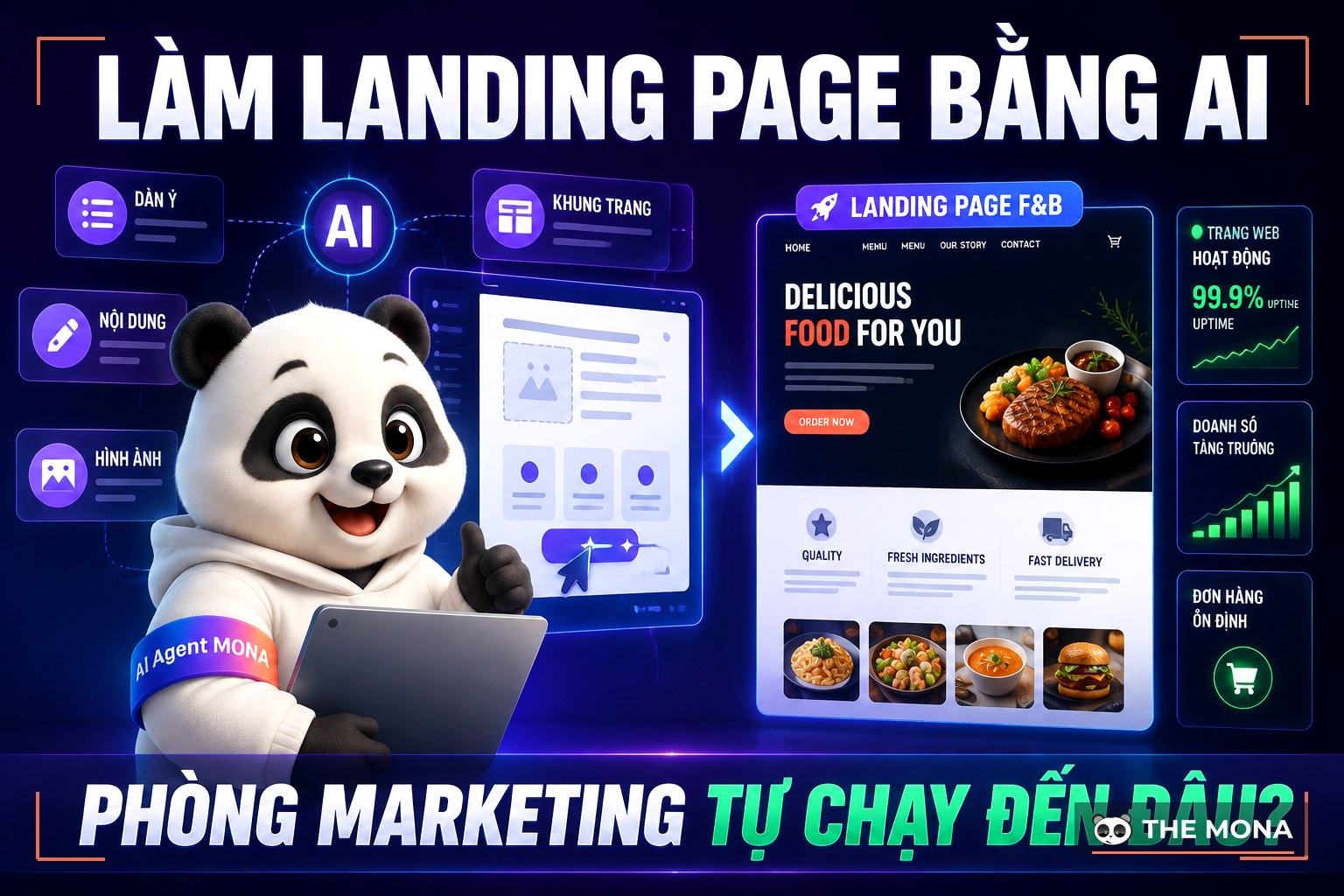
For the past 2 years, customers coming to MONA have asked one common question: how far can a marketing team go building landing pages with AI on its own. We answer plainly: AI drafts outlines, first versions, illustrations and page layouts so fast that someone who cannot code can get an idea on screen in one session, replacing the 3 to 4 day wait for design. Speed is not the question. But for the page to bring in orders from the right source, a business still needs people to handle tracking, data connections, speed and SEO.
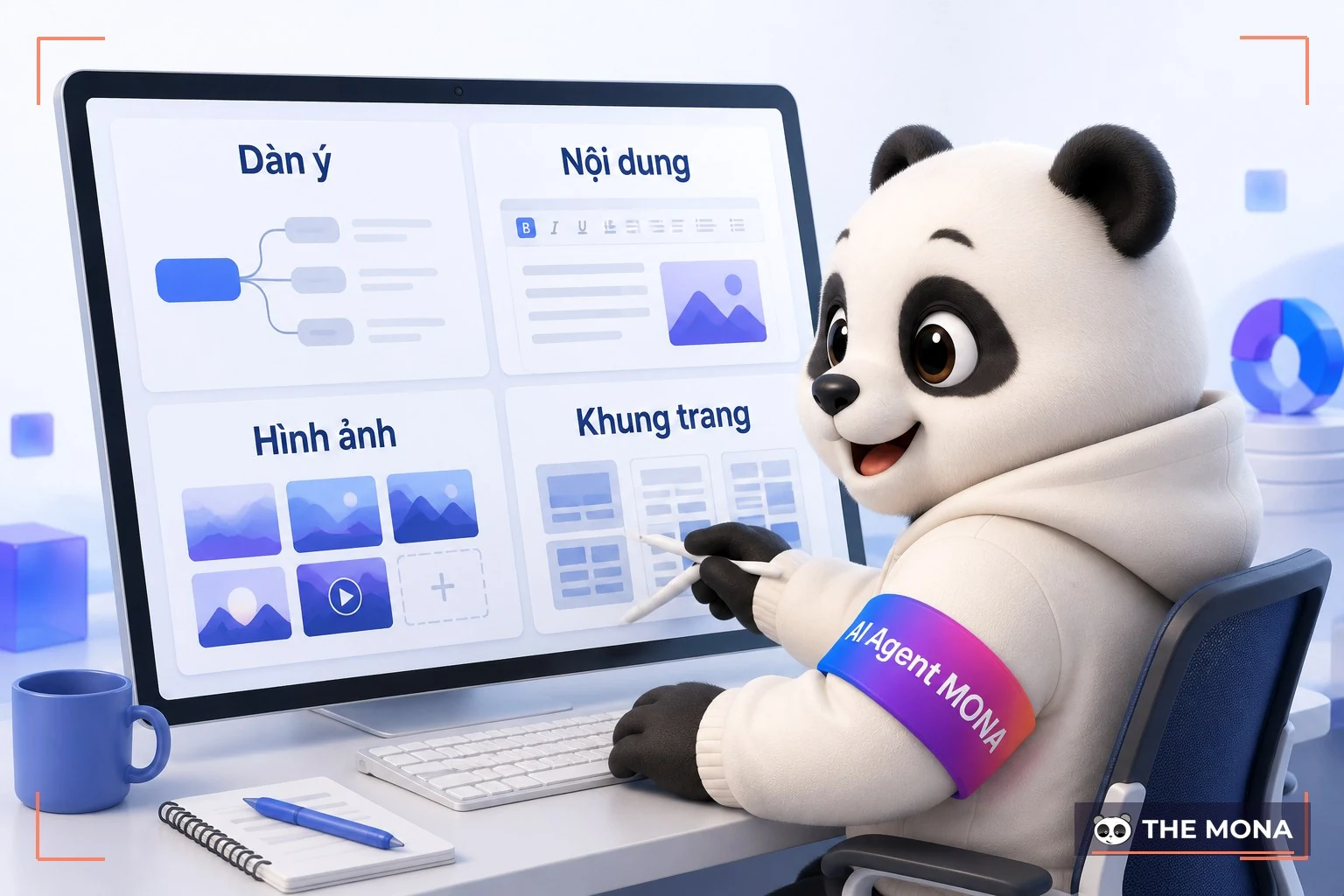
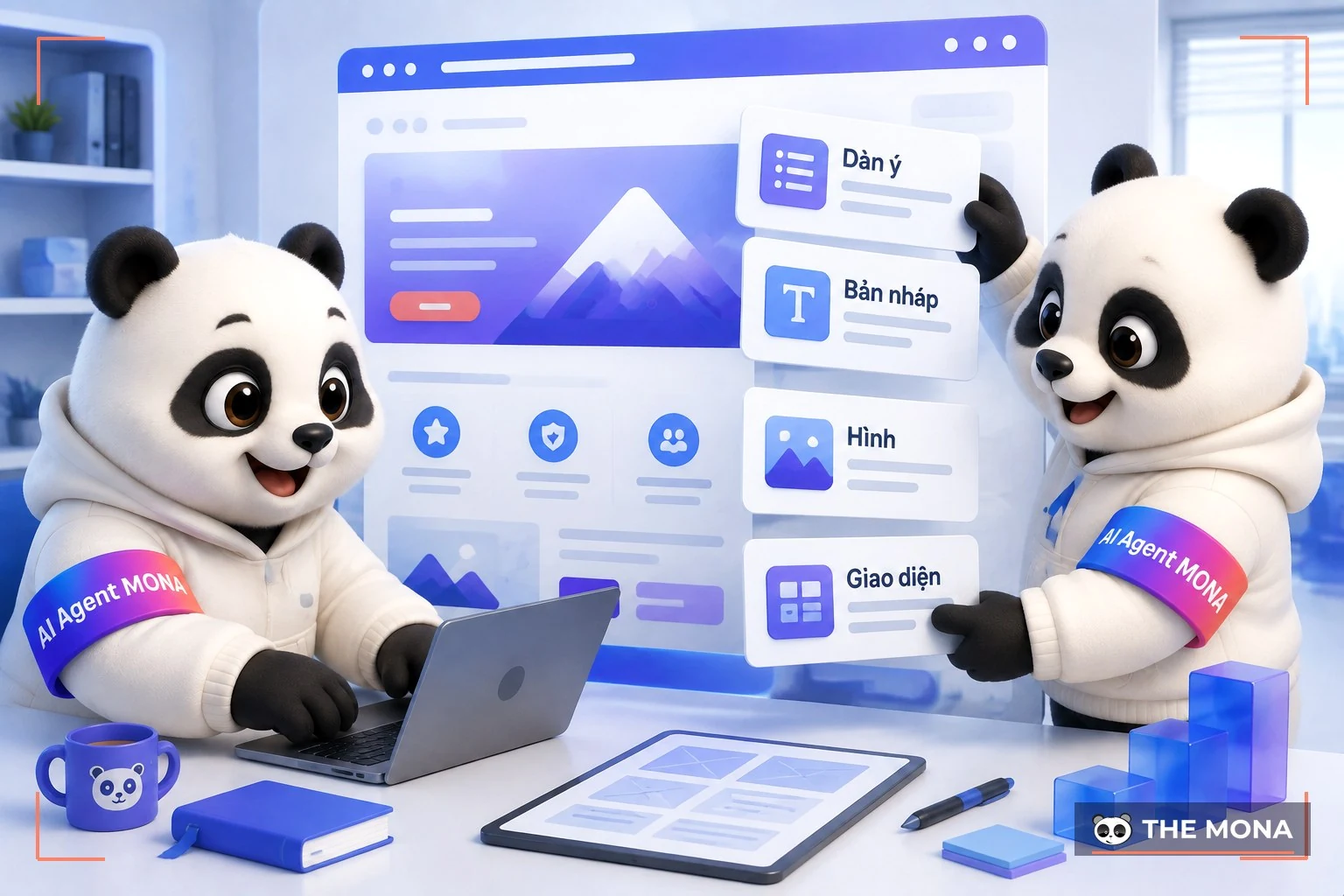
AI now carries the first 4 steps well: outlining the message, writing the first draft, creating illustrations and suggesting a layout. We use these steps every day. They really are fast.
At the outline step, MONA feeds in the product, the customer segment, the ad source and the action to drive. AI returns a few arrangements for us to choose from. For 1 page serving 1 campaign, the marketing team saves 2 to 3 hours of staring at a blank screen. You also spot missing parts of the message before building.
The content step shines when one selling point has to be turned into several different voices, because the writer takes the draft as raw material and then edits it using real customer data, the brand’s way of speaking and the ad goal.
Illustrations are faster too. AI builds product scenes, backgrounds or layout ideas without the marketing team waiting for the designer’s schedule. The layout helps you picture where the headline, benefits, proof and form go. Each of the 4 steps produces something you can see. We still check every detail before using it.
If the marketing team only needs to test one message in 90 minutes, building a landing page with AI is enough to get the idea on screen, collect internal feedback and drop weak options early before spending on ads. MONA treats AI as a very fast drafter. The right to approve stays with the person who understands the customer.
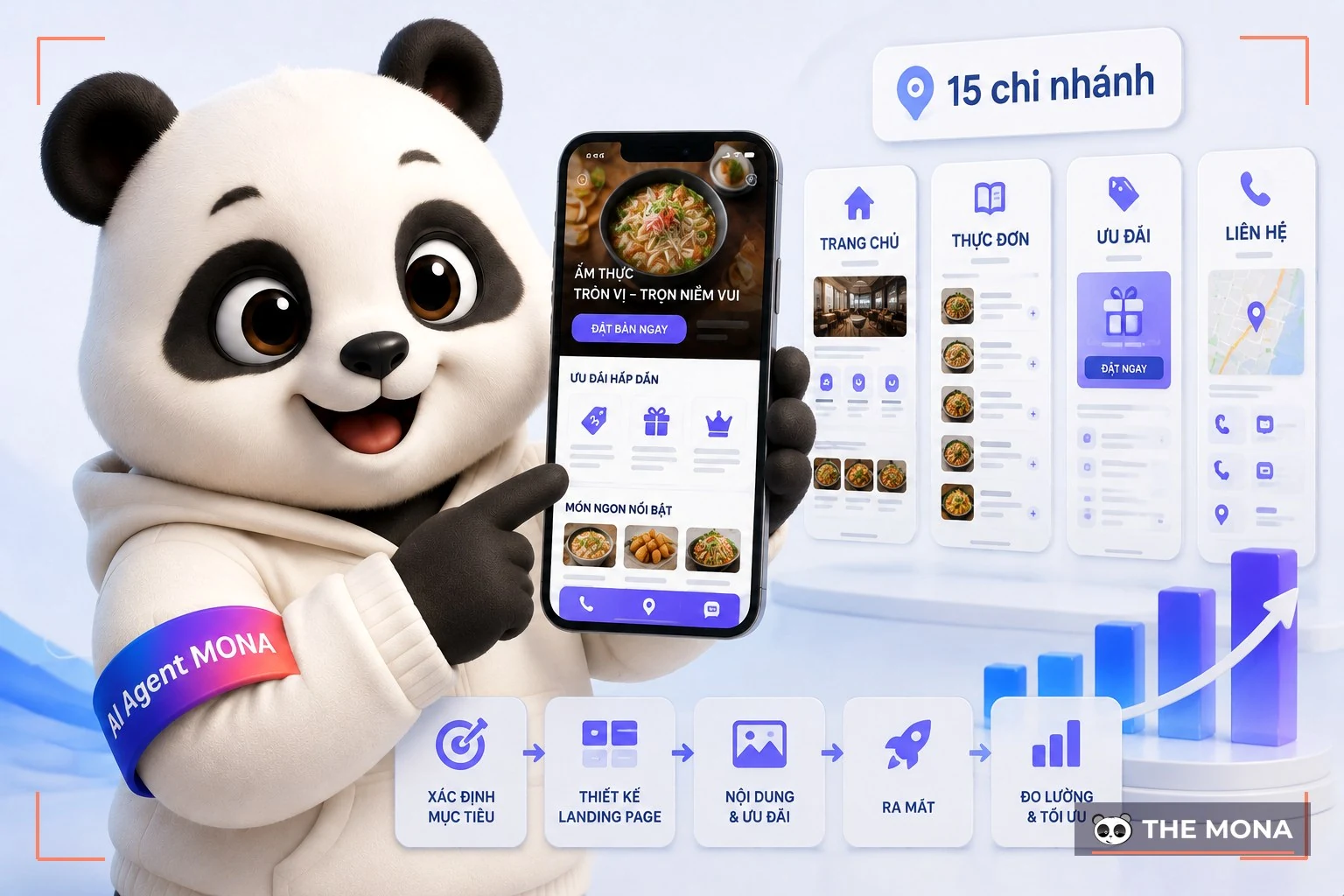
The marketing team of an F&B chain with about 15 branches once built a page on its own with an AI tool in a single afternoon. The page went live. Ads started running right away.
The person in charge even posted a screenshot to show off in the internal chat at 11 p.m. Clean design, clear food photos, a form that submits. Everyone replied happily. Then 3 weeks later the boss asked which ad creative the orders came from. Nobody could answer.
Customers who come to MONA in this situation usually already have a decent-looking page and an order sheet that keeps growing, but the data does not record which ad creative, customer segment or button brought the viewer to the form.
We have seen this more over the past 2 years. Building a landing page with AI puts the shell up quickly, so the feeling of being done arrives very early. Measurement sits behind the submit button, in events and in the system that receives the data. It does not grow on its own.
Before launching, MONA usually asks the marketing team to answer 3 points themselves: which source brings customers in, which action counts as a conversion, and where the data will go. Miss even one, and a pretty page still leaves managers unable to control the campaign, while staff have to stitch numbers together by hand after each ad round.
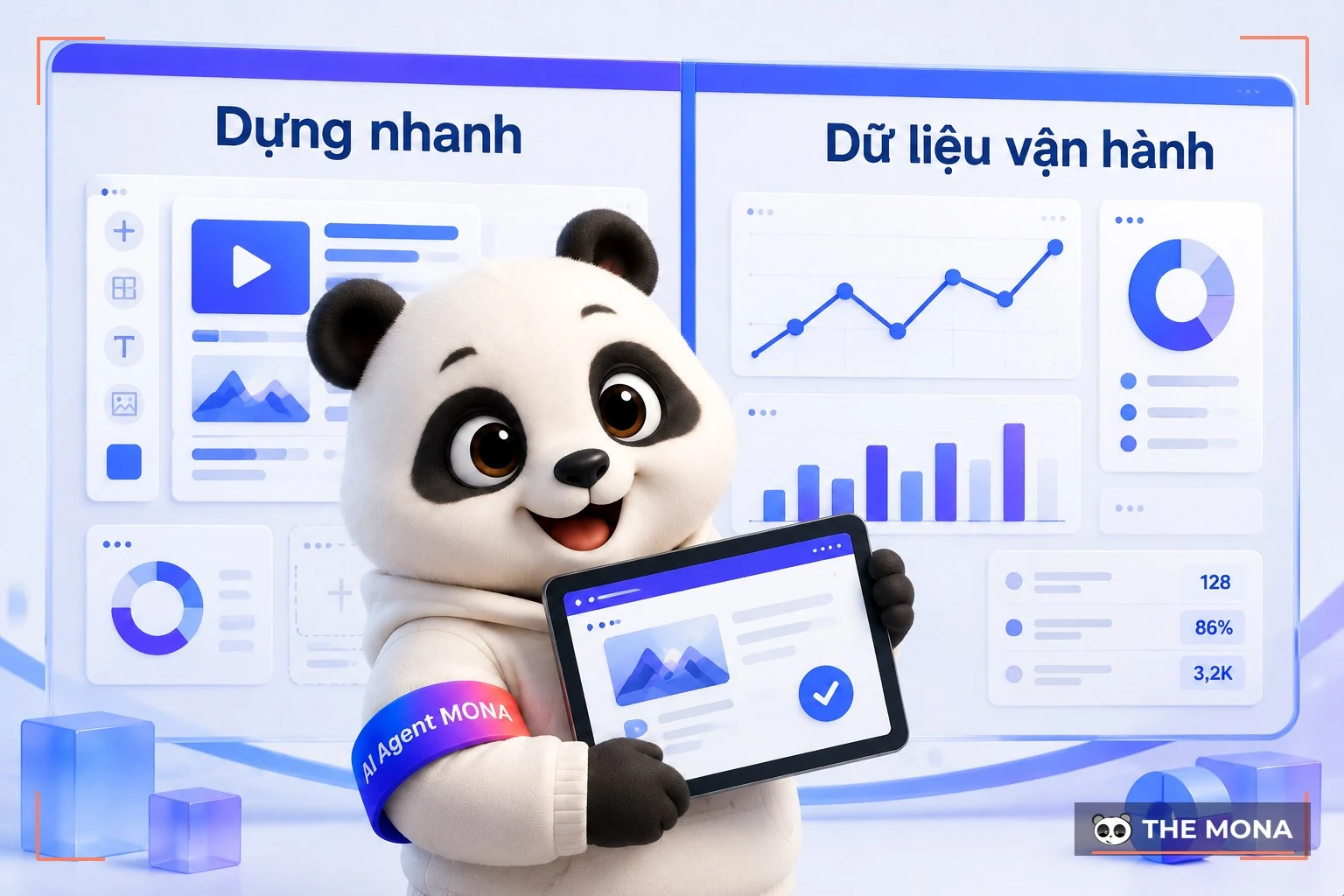
A marketing team building landing pages with AI can run on its own comfortably when the goal is to put 1 idea on 1 page, get early feedback and not yet connect many systems. MONA takes over the technical side when the page starts receiving real budget. The boundary is fairly clear.
As the number of ad creatives, customer segments and nurture flows grows, a 5-minute edit in the interface can easily break an event, cut a data flow or send customers to the wrong place, while the screen in front still looks perfectly normal.
When the budget reaches a few tens of millions a month, it is time to check carefully. For the 4 content-creation steps, AI helps marketing keep its speed. For the 4 operations parts behind the scenes, a skilled person must be accountable. We use exactly this line to advise MONA customers. You avoid overbuying and also avoid carrying the risk yourself.
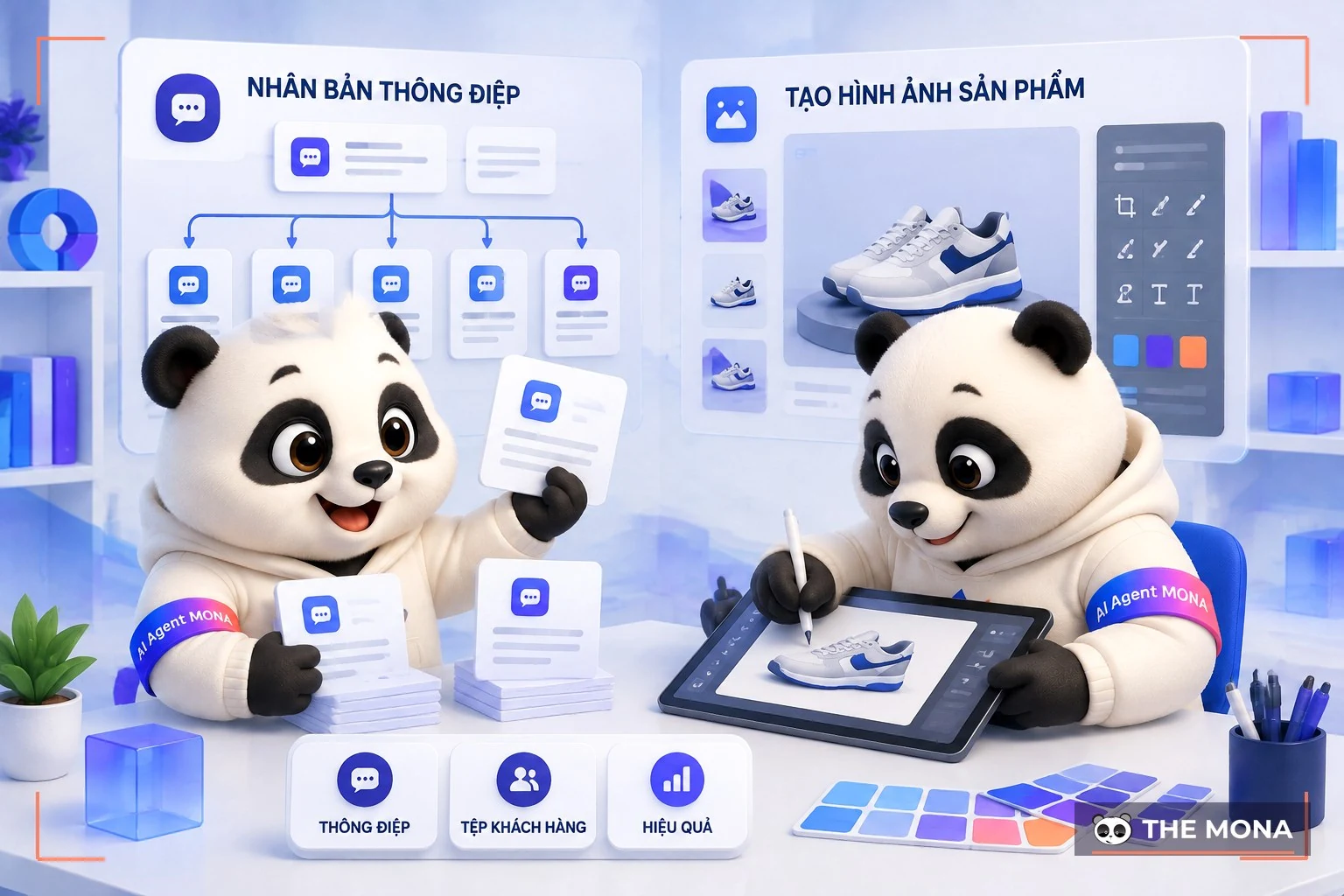
Building landing pages with AI clearly wins on speed: a draft in 15 minutes instead of a 2-day wait, along with message variants, illustrations and the ability to hold one consistent voice. MONA uses that advantage every day. The waiting step shrinks dramatically.
From 1 core message, the marketing team creates 5 to 6 versions for different ad creatives and then picks the one that fits each customer segment. Writers spend their time fixing the argument instead of retyping the wording. We still read aloud before approving. Any sentence that sounds like a machine gets dropped.
The voice also becomes more consistent when everyone uses the same input data and editorial standards. A campaign with 4 variants keeps the same form of address. Core benefits are less likely to be written off-target. Product names are also less likely to be wrong. MONA sees this as a very real production advantage.
Kho landing page statistics from Backlinko is where we often read to get a wider view of page types, traffic sources and how the market measures performance. It is a good source for research direction. It does not replace a business’s own data.
If you want to go deeper on the wording, see how to write content for a landing page. The interface and prototype side is explained in the article AI-assisted website design. MONA separates the two topics. The two jobs need different reviewers.
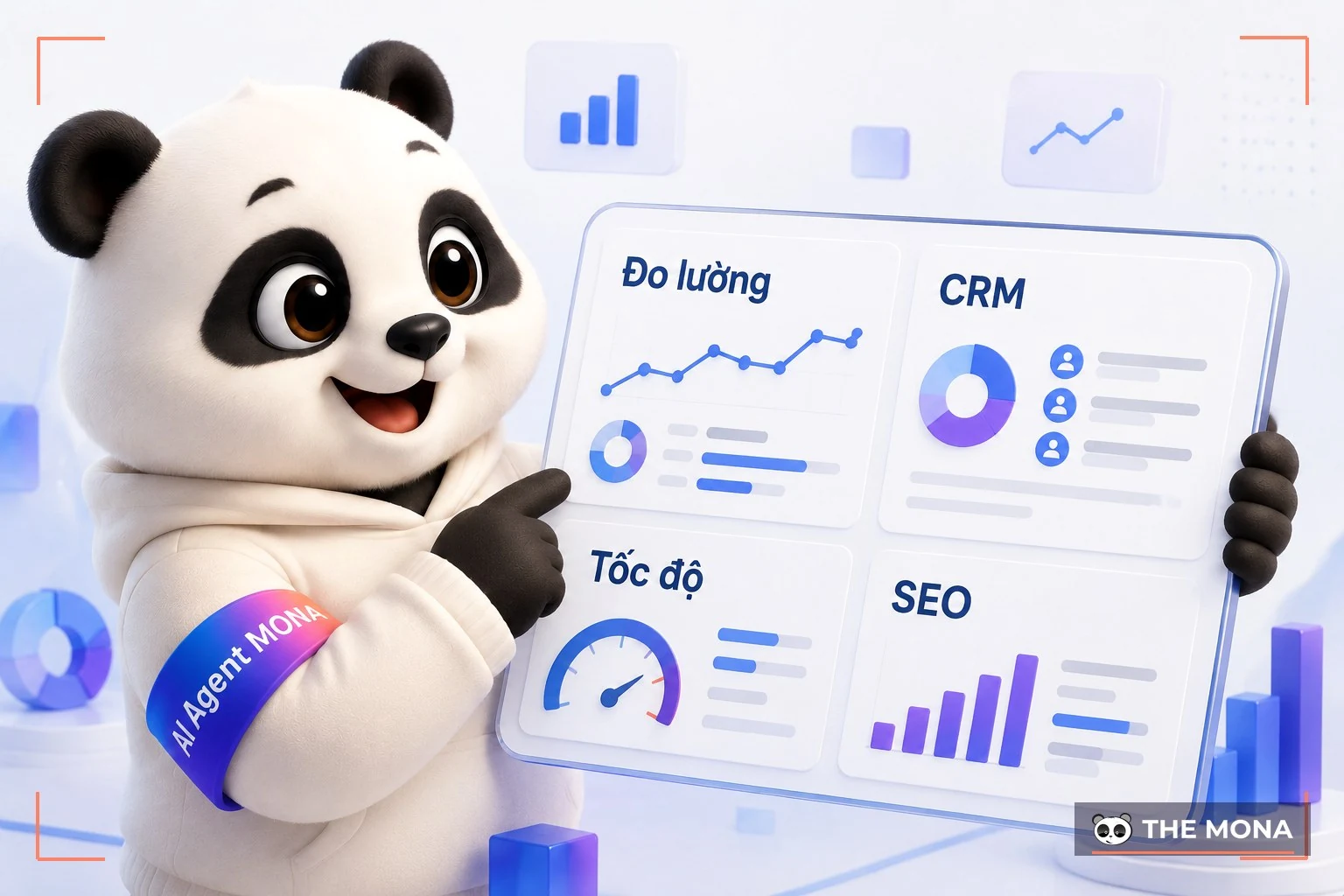
Building a landing page with AI does not by itself solve 4 operations parts: measuring conversions, connecting the CRM, checking speed and building the SEO structure. MONA checks each part before handover. A missing link shows up immediately.
Conversion tracking needs someone to define which business actions are worth recording and to check that events fire correctly. We usually test from the ad all the way to the thank-you screen. Only a full loop gets approved.
If a customer taps to call but the system only counts form submissions, the boss sees the call channel as producing no orders. A good ad creative has its budget cut. A weak one keeps running. The marketing team loses the basis for fixing the page.
Once the data is in, the team works conversion optimization hypothesis by hypothesis, instead of changing button colors based on opinions in a meeting.
The form must put data into the right CRM, assign it to the right person and trigger the right nurture sequence. MONA once took over a page that sent notifications to a shared inbox. Nobody read them until 2 days later. The first call therefore lost all its ad context.
For campaigns that need deep integration, we use the ecosystem of MONA operations software so data keeps flowing along the workflow the business has set, with a place to check when something fails and someone accountable.
Speed must be checked with tools and on the devices buyers actually use. A page that takes longer than 3 seconds to load already adds a wait before the customer reads the greeting. We measure before turning ads on.
MONA uses Google PageSpeed to find what slows the page, then compresses images, removes extra code and checks again. Infrastructure at MONA.Host suits pages that need a team monitoring servers and performance. A scoring tool is only a lead. The experience on a real device settles it.
SEO needs heading structure, search intent, links and content deep enough that the page still receives traffic after the campaign. MONA starts on this from the outline stage. Fixing it at the end is usually painful.
If a page just copies ad lines into short blocks, search engines lack the context to understand the topic. The page also struggles to earn internal links. After 2 months, the business still depends entirely on ad spend. The content already made has not built up any value.
See how MONA builds landing pages with an SEO structure to understand how the technical side, content and links have to fit together. If you want to push a whole cluster of long-term keywords, SEO services at MONA handles it from research through to content.
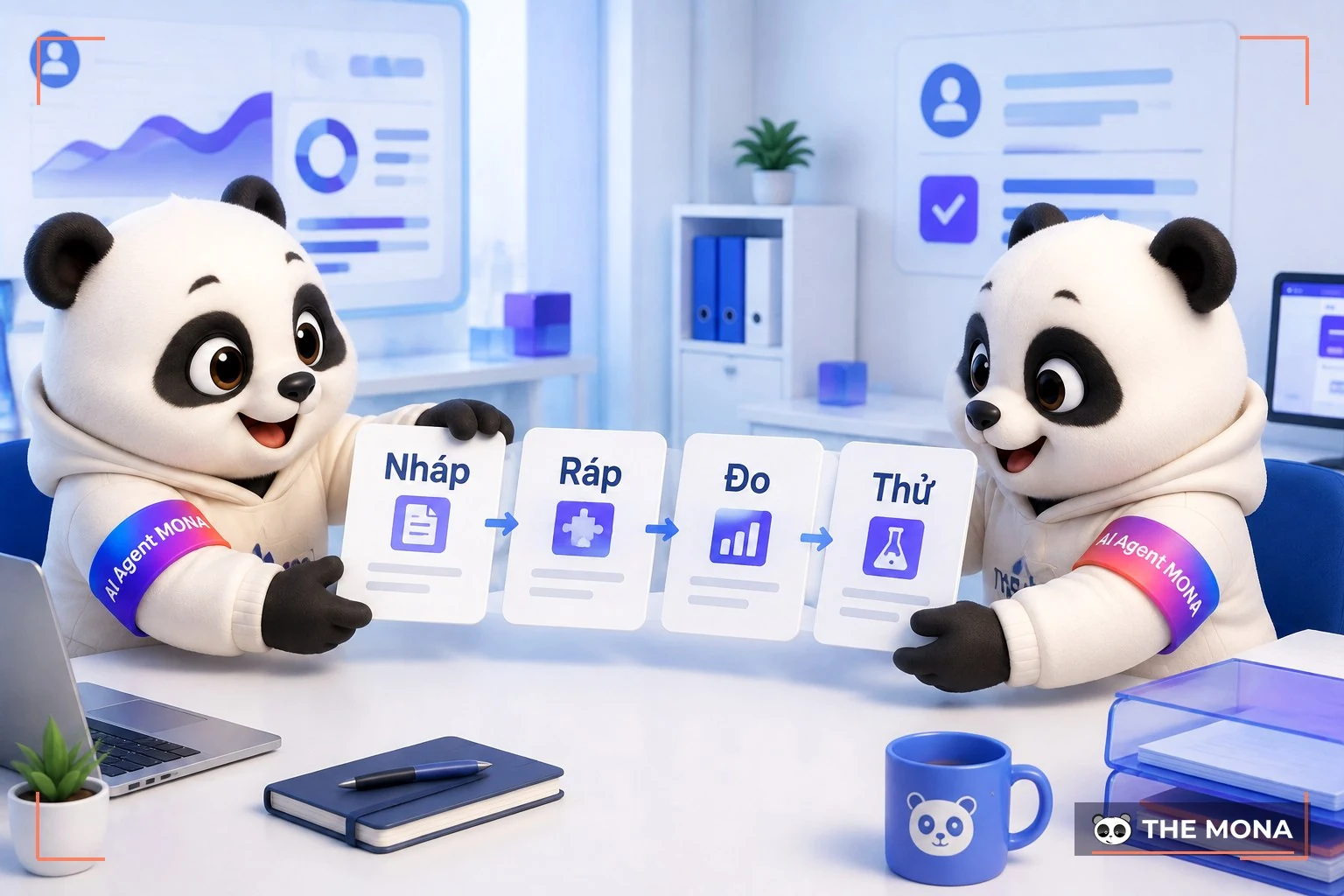
The landing page process with AI at MONA has 4 steps: AI drafts, a person assembles the page, the system measures data, then the responsible team runs A/B tests in 2-week rounds. Each step has an output to check. If it fails, go back to exactly that step.
At the first step, give AI product data, customer data and goals instead of a vague request. Then the person in charge arranges the content according to the 7 basic blocks of a landing page. A page has to lead the reader from promise to proof. We cut every paragraph that only makes the page longer.
Marketing teams who like to assemble the interface themselves should first read the limits of drag-and-drop landing page builders, because swapping templates is very fast, but naming rules, versions and publishing rights still need to be written down for the whole team.
Once the page is running, MONA measures every action and tests one change at a time. The article explaining A/B testing from Harvard Business Review helps the team understand why a hypothesis must stay clear. Do not change the headline, image and form all at once. The result will not tell you which factor made the difference.
For technical people, vibe coding shortens the stretch from idea to prototype. The live version still needs code review, security review and maintainability checks. This is where people easily slip. We only push to production once the checkpoints pass. One convenient shortcut should never become long-term debt.
For a large campaign or one that needs system integration, you should design a dedicated landing page. MONA packages start from 7,000,000 VND with a clear scope of interface and technical work. You buy accountability. Your internal team still owns the message.
If your marketing team already has a page built by AI, just send us the link with your boss’s hardest question: which ad creative are the orders coming from? MONA reviews the events, sources and data destination in 1 session, points to exactly where records are missing, and does not touch the content your team has already written. Call 1900 636 648 to book a review.
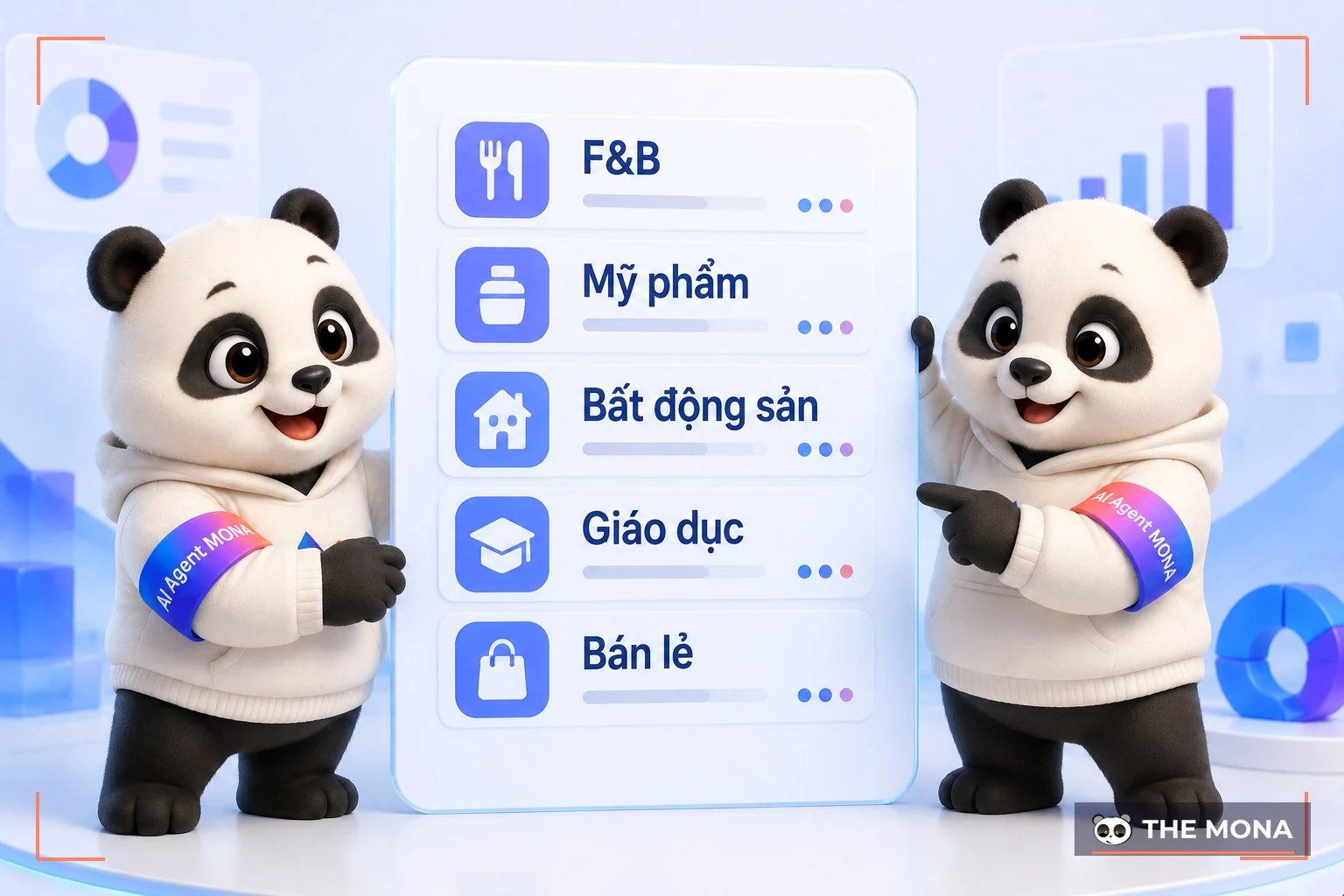
F&B, cosmetics, real estate, education and retail all build landing pages with AI to get fast drafts, but the level of technical help needed differs. MONA looks at the data behind the page. Industries that change campaigns fast can self-run more.
For an F&B chain with about 15 branches, the marketing team building seasonal dish pages on its own works fairly well if there is only 1 offer, 1 form and clear source conventions. When orders must be split by area, time slot and branch, we advise connecting systems from the start.
Cosmetics needs evidence, usage instructions and warnings presented carefully. A test page for 1 product line is still fine for the internal team. A page with personal consultation needs technical support alongside. MONA has compiled the structure of a cosmetics landing page.
Real estate depends heavily on traffic source, project and the staff who receive inquiries, so we always require source tagging, assigning recipients and checking handling history before opening the budget.
An AI version is good for early idea approval. A live version needs a technical team behind it. See the structure of a real estate page to see the layers of information that need to be assembled.
Education self-runs well with a single seminar or a small enrollment round. When the page connects to consultation schedules and multiple campuses, data must reach the right person the same day. MONA also checks the script after the form. Students must know the next step.
Retail suits AI on short product pages. If a page touches inventory, pricing, payment or shipping, engineering should step in. We treat that as a transaction page. Errors hit orders directly. The structure of your sales landing page helps you tell them apart clearly.
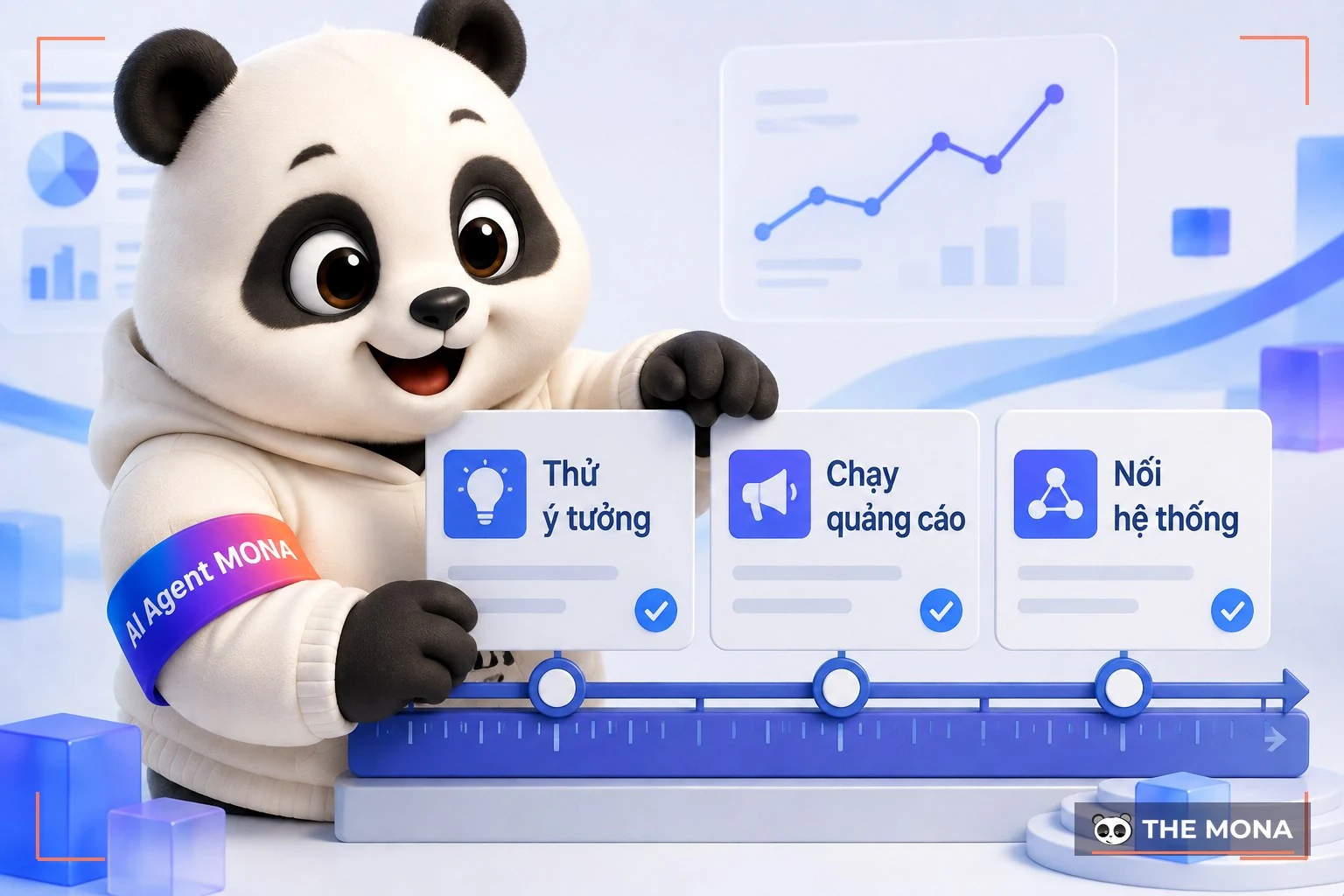
Choose the self-run level by ad spend, the data you need to keep and the number of systems to connect. MONA does not use looks as the benchmark. We use technical accountability as the benchmark. That is where the line sits.
If the goal is to test 1 idea in 1 session, it is reasonable for the marketing team to use AI from content to page layout and approve it themselves. Record the traffic source and where the form goes. Run 2 versions first. Once the data can answer, the team opens up more.
If the campaign has 4 ad sources, multiple customer segments or a nurture sequence, you should hand the integration to someone technically accountable, because a tracking error that goes unnoticed for 2 weeks makes the whole report look good while budget decisions stay wrong.
Building landing pages with AI works well when it sits inside a process with reviewers, measurement points and data owners. The tool gets the page up fast. The system tells the business what the page produces. MONA sits at the join between those two sides. You keep the brand’s voice.
This section answers 5 questions marketing teams often send MONA before building a page themselves, with each answer set against the campaign goal and the technical checkpoints to verify. Two minutes of reading makes it clear.
Yes, if you use the free version to build one trial page with AI. A custom domain, tracking and data connections will cost money. We recommend budgeting for the whole campaign lifecycle.
Yes, once the page has been checked for display, forms, conversion sources and speed. MONA always runs a full test from ad to data destination. A form that submits is not enough. The report has to receive the right event.
Yes, if someone edits the content, builds the headings correctly, adds links and runs technical checks. A version AI makes in one session is only the starting point. We also review search intent so SEO is planned before publishing.
Yes, for a message-testing page with 1 traffic source and 1 form. When you need multiple events or a CRM connection, marketing should have technical support. MONA recommends that the in-house team keep the right to edit content. The technical person owns operations.
Hire when the page gets a large budget, has several traffic sources, needs to connect to systems or needs to build up SEO. MONA has 3 tiers from 7,000,000 VND, 15,000,000 VND and 40,000,000 VND. We set the price against your goals and data so you avoid overbuying.
Marketing teams build landing pages with AI to move fast through the outline, draft, images and layout. Once ads run, assign clear owners for tracking, CRM, speed and SEO. Ready to review your page? MONA will help you split the in-house part from the technical part.
Back to the story at the start: the page went up in one afternoon, ads ran right away, and it took 3 weeks before the whole team realized it could not answer the boss’s most important question. That gap comes from four operations parts that no tool grows on its own: tracking, CRM, speed and SEO.
Let your internal team keep what they already do well with AI: messaging, images, campaign rhythm. What MONA takes on is the part we can be accountable for by contract: events that fire correctly, forms that reach the right person, pages that load in under 3 seconds, and an SEO structure that keeps living after the ads. Dedicated packages start from 7,000,000 VND, with the scope written down before you sign. Call 1900 636 648, or send us the link to your AI page, and this week MONA will send back a free review pointing to exactly where it is leaking.
MONA Media founded in 2016 (over 10 years), has delivered 14.000+ projects and has 85% of clients coming back. Hotline: 1900 636 648. Website: https://mona.media.
MONA explains how far a marketing team can go building landing pages with AI, and which four technical parts need someone accountable.

CEO & Founder · The MONA
Founder of The MONA, who built a services company of 60+ staff with 14,000+ projects delivered. Khánh Hùng shares how he thinks about building systems that run themselves, automating a business, and the real lessons from delivering projects at MONA.
 325




Professional website
design services
Own a website with a beautiful, 100% exclusive design and a lifetime warranty, with the ability
to expand features flexibly as your business grows, starting today!






 MONA will never sell your information or send you spam


 MONA will never sell your information or send you spam
