
 MONA OS 2.0
 Partner with MONA


 Tự động hoá doanh nghiệp
 Cẩm nang SEO
 Digital Marketing
 Kinh nghiệm thiết kế website
 Hạ Tầng Server
 Giáo dục


 VI
 EN














Message us on
Zalo Official


 ProductsNew

 ProductsProducts
 Mới ra mắtKHA AI 2027App tự edit video, tự đăng mọi mạng xã hội, 2 phút mỗi ngày










 Website designLooks good and wins customers over.
SEO servicesBrings in customers searching for exactly what you sell.
 Tư vấn digital marketingKéo khách từ nhiều kênh, đo bằng số thật.
Corporate video productionVideos introducing your company, factory and team.
 NewAI video productionCompany story films made with AI.
 Custom software developmentCRM, ERP and HRM built for your business.
 Viết AI Agent theo yêu cầuĐặt riêng một trợ lý AI cho đúng việc của mình.
 Tư vấn chuyển đổi AIĐưa AI vào vận hành của cả công ty.
NewMONA LMSManagement for centers and schools.
MONA SkillHubInternal training for company staff.
 NHTQ systemEnd-to-end China–Vietnam shipping operations.
MONA JMSManagement for gold, diamond and pawn shops.
 MONA E-LearningA website with every feature you need to sell courses.
 How to sell online courses (course)More than 30 free lessons on selling courses on autopilot.
 MONA Cloudmonacloud.vnServers to get your apps and websites running.
 MONA Basemonabase.vnPostgres database, sign-in and file storage.
 MONA Mailmonamail.vnSend OTP, order and invoice emails from your software.
 MONA Paymonapay.vnAccept bank transfers via VietQR and notify your software when the money arrives.
 MONA eInvoiceComing soonIssue e-invoices that meet tax standards.
Gấu CườiTrả lời khách 24/7 trên web, Fanpage, Zalo và thu lead cho sale.
 Gấu TeleSalesGọi điện tư vấn, chăm khách như tổng đài viên thật.
Dê CườiTư vấn và chốt đơn cho shop ngay trong khung chat.
Gấu WebmasterNhắn nhóm Zalo là website được sửa xong.
 Gấu Pháp ChếSoạn hợp đồng, rà điều khoản trong vài phút.
 Gấu Báo GiáLên báo giá đúng mẫu và gửi khách ngay.
 AI chăm sóc khách hàngTheo dõi và giữ chân khách hàng cũ.
 Gấu Tuyển DụngLọc hồ sơ, hẹn lịch, phỏng vấn ứng viên.
 Mới ra mắt
KHA AI 2027
Xây kênh chuyên gia 2 phút mỗi ngày
Quay bằng điện thoại, AI tự edit video, tự đăng lên 16 nền tảng và tự trả lời bình luận, tin nhắn.
899.122lượt xem trên kênh CEO MONA sau 37 ngày
 Anh Khánh HùngCEO MONA đang dùng mỗi ngày
Xem app làm được gì
 AI
Gấu Cười MONA ĐANG TỰ XÀITrả lời khách 24/7 trên website, Zalo OA, Messenger và thu lead về cho sale.
Dê CườiChốt đơn bán lẻ và sàn: Shopee, TikTok Shop, web. Chăm cả khách sỉ, đại lý.
Gấu WebmasterCập nhật nội dung, tối ưu SEO website mỗi ngày.
Gấu TeleSalesGọi điện tư vấn, chăm khách như tổng đài viên thật.
Gấu Tuyển DụngLọc hồ sơ, hẹn lịch, phỏng vấn ứng viên tự động.
AI chăm sóc khách hàngGiữ khách cũ, cứu lead đã rớt cho phòng kinh doanh.
Gấu Pháp ChếSoạn hợp đồng, rà điều khoản trong vài phút.
Gấu Báo GiáLên báo giá đúng mẫu, gửi khách ngay khi có yêu cầu.
 Chuyển đổi AI toàn phầnGiải pháp tổng cho doanh nghiệp, 3 lớp triển khai.
 Viết AI Agent theo yêu cầuĐặt riêng một con AI gánh đúng nghiệp vụ của bạn.
 Custom softwareCRM, ERP and HRM with built-in AI automation.
 SEO & AEO thời đại AIĐược Google lẫn AI trích dẫn, không chỉ xếp hạng.
 Kiến thức AI cho doanh nghiệpBài phân tích, hướng dẫn ứng dụng AI vào vận hành.
 Free AI courses
 AI tools at work
App mới · KHA AI 2027
Xây kênh 2 phút mỗi ngày
AI tự edit video, tự đăng mọi mạng xã hội
Free consultation, 8am–10pm every day

24 August, 2026
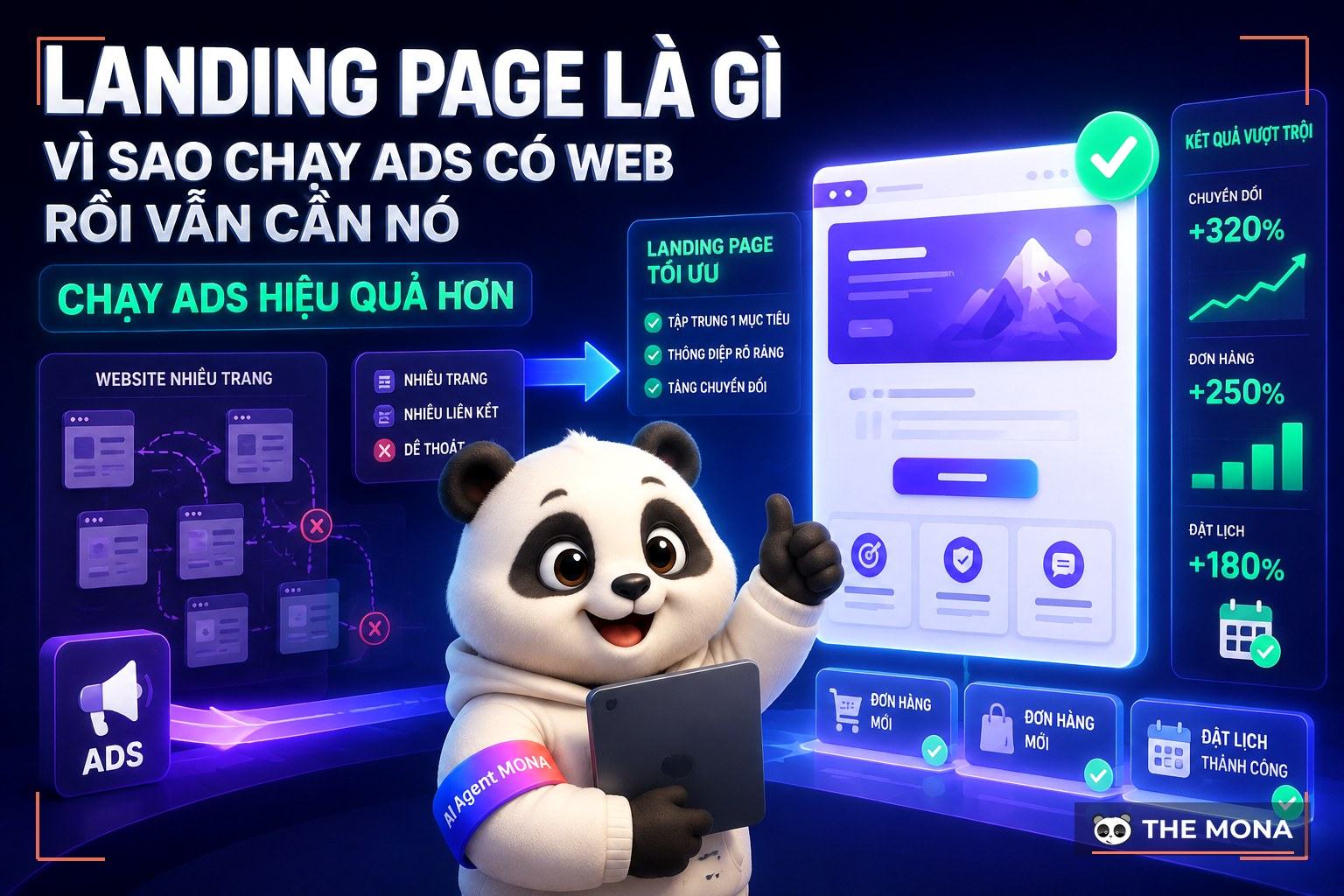
What is a landing page? This is a standalone web page that serves a single conversion goal such as buying, filling in a form or booking an appointment. Visitors usually arrive from an ad, an email or a search result and are then led along a clear action path.
Customers who come to MONA for a landing page usually share the same scene. The website exists, tens to hundreds of millions of VND in ad spend goes in every month, the click report looks great, yet the number of consultation messages stays weak. The money keeps running. Visitors click, get lost on the homepage, look for a few seconds and leave, while the sales team waits for calls that never come. In this article we explain in detail when to use a landing page, which blocks it needs, what it costs and when to build it yourself.
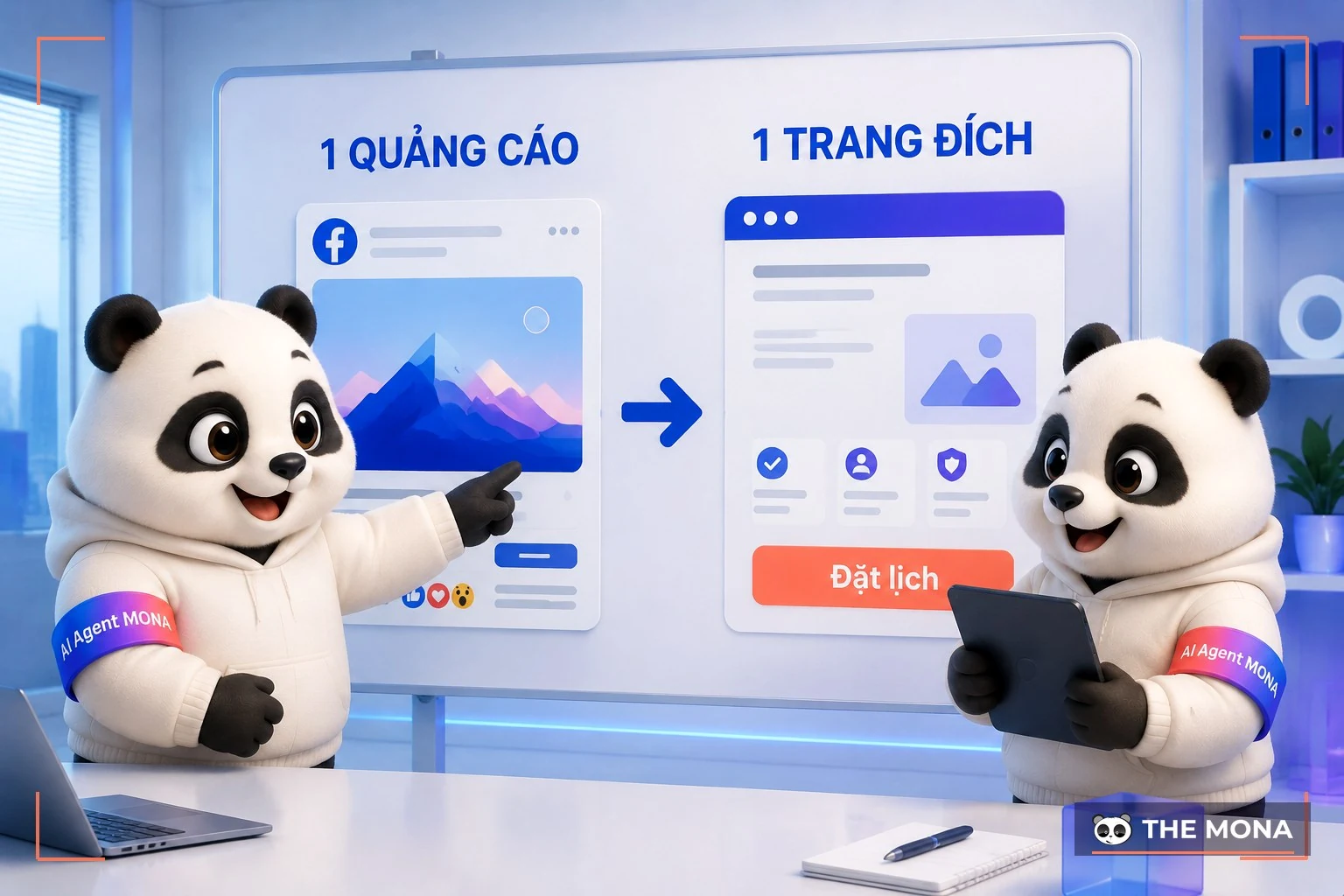
A landing page is a standalone web page designed for exactly one conversion goal. That goal is usually buying, leaving contact details, getting a quote or booking an appointment. Only one.
Visitors arrive from a Facebook ad, a Google ad, an email or a search result, and everything on the page keeps the promise they just saw before clicking. The Vietnamese name for a landing page is landing page, the place where visitors land after a marketing touchpoint. For example, a brand launching a serum builds one page that sells only that serum. A training center uses a different page just to take registrations for next month's seminar.
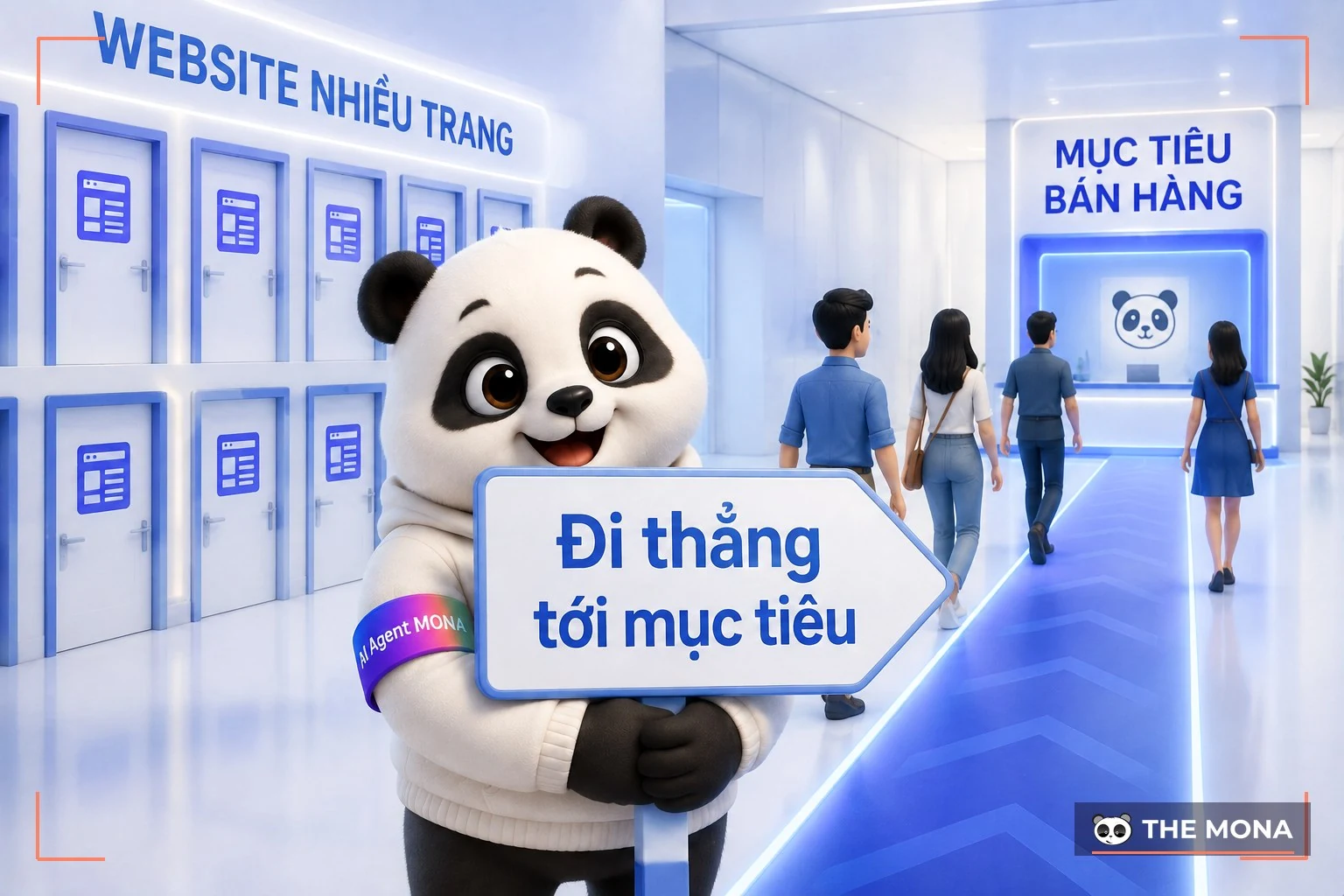
A homepage is like a hotel lobby: many turns lead to rooms, restaurants and service desks. A landing page is the direct path to the exact desk the visitor needs. One path only.
MONA always settles the goal before discussing colors or effects. In the first meeting, the first thing we ask is: after viewing the page, what should the visitor do in the next 5 seconds? If the person in charge cannot answer that, no matter how beautiful the interface is, it has not solved the selling problem. Visitors do not know what they are being invited to do.
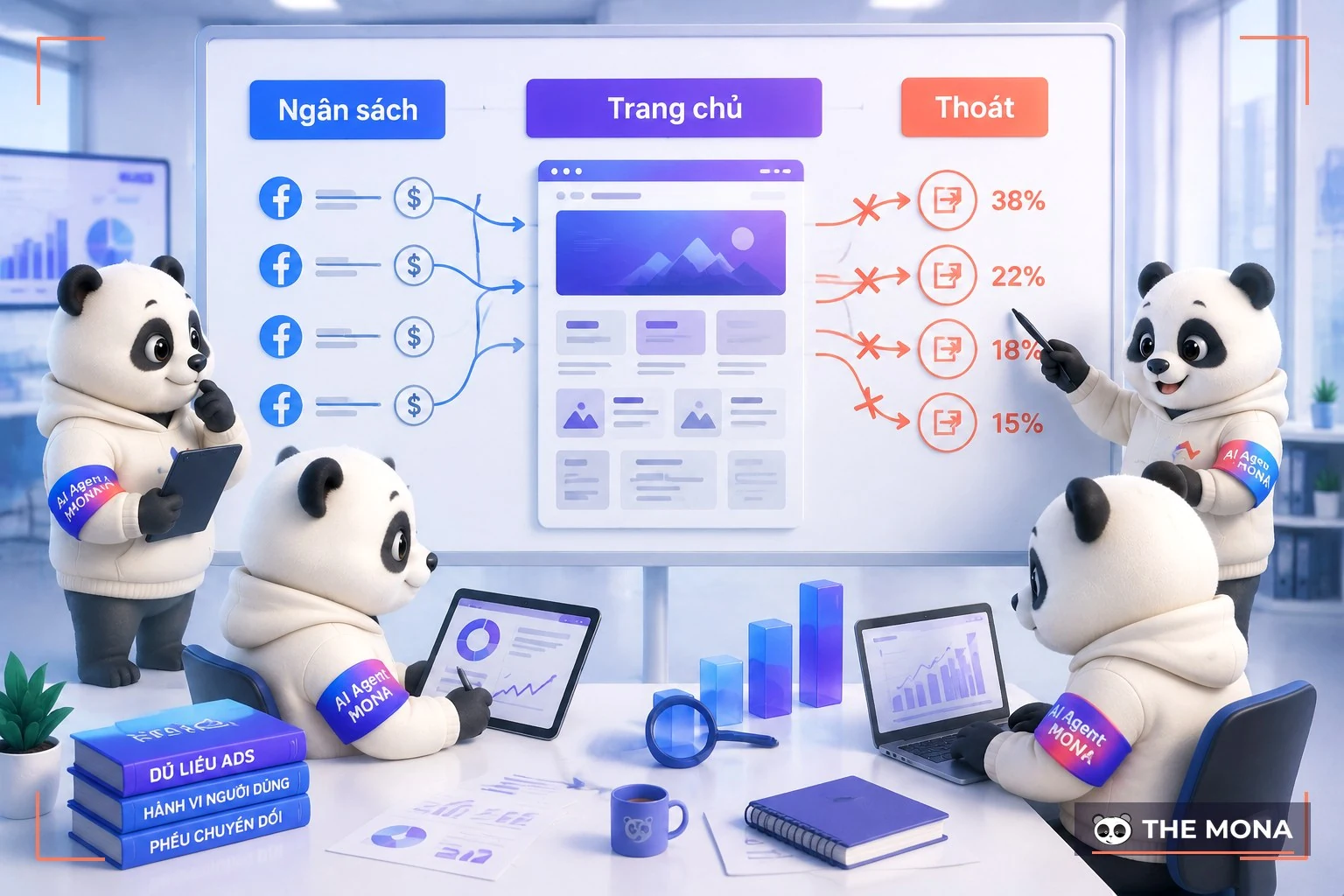
A homepage with many exits tends to drag down the conversion chance of a specific campaign. A visitor who just clicked a serum ad meets a careers menu, a news section and dozens of other product groups competing for attention. They skim. Then they leave.
A cosmetics chain of about 20 stores in Ho Chi Minh City and Binh Duong once came to MONA with exactly that feeling: money drifting away with no idea where. Nearly 400 million VND of Facebook ad spend every month all went to the homepage. The marketing manager often sent reports close to midnight, because during the day she was busy running around checking stores. In her tracking sheet, the cost per consultation message had climbed to about 180 thousand VND.
We separated out a landing page for exactly the one serum line that was running ads, where the images, the promise and the consultation button all continued from the ad creative the visitor had just clicked. The cost per message dropped to about 70 thousand. The ads were no better. Viewers simply saw exactly the product and the exact reason they cared, that is all.
This is the problem homepages usually cause: the message is diluted, visitors face too many choices and forget their original reason. WordStream data across thousands of ad accounts records an average conversion rate of about 2.35%, while the top 25% reach above 5.31%. That means a small change on the page is enough to strongly shift the efficiency of the whole spend. HubSpot also found that businesses that raised their landing pages from 10 to 15 saw leads rise by about 55%. When each sales offer has its own page, the message stays focused.
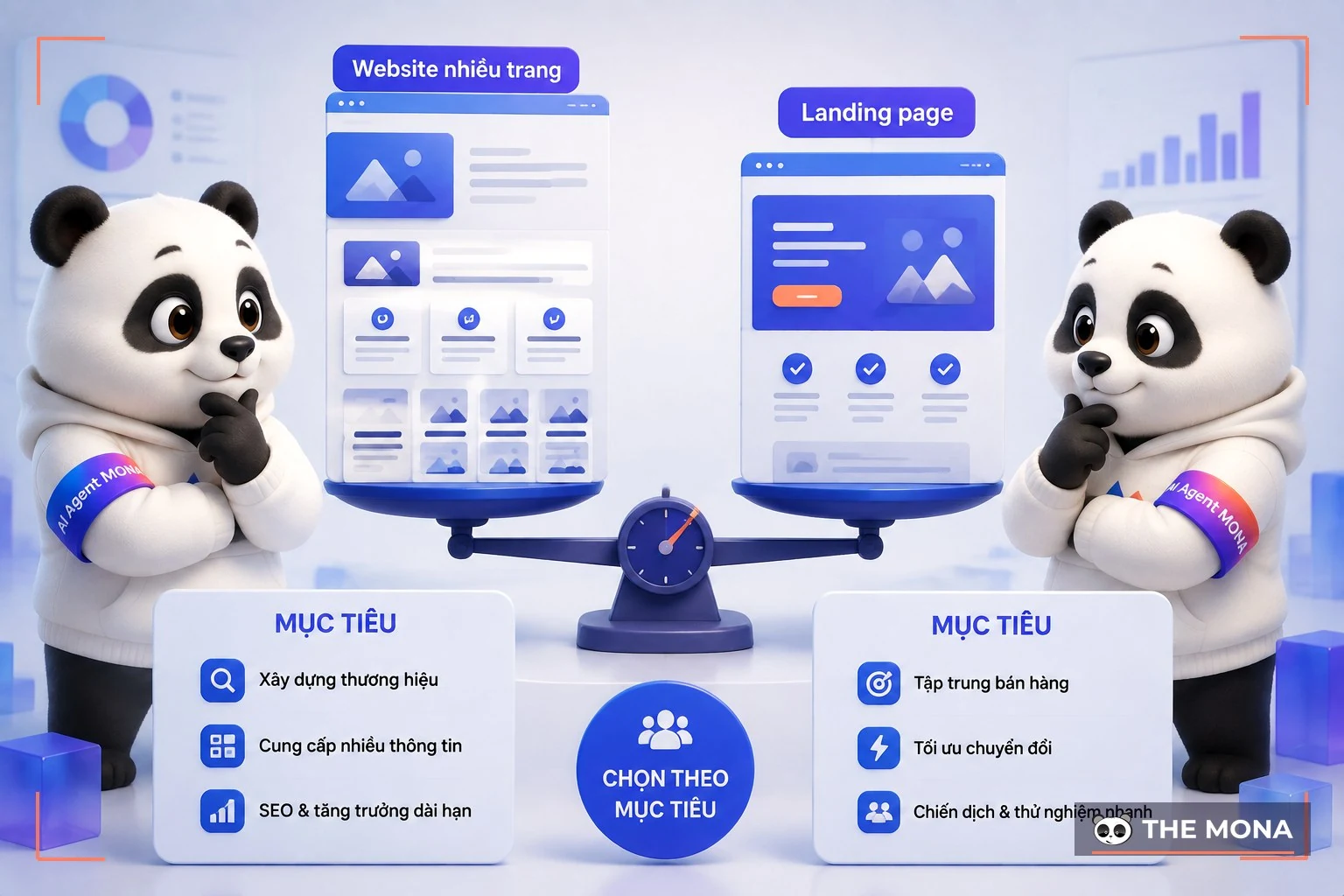
A website builds long-term trust and lays the base for SEO, while a landing page handles one specific campaign. These two assets serve two different moments for the same buyer: when they look into whether the company is trustworthy, and when they face a specific offer they need to decide on. One cannot replace the other.
We often meet businesses that want the homepage to also sell a new product. Every time the promotion changes, the content team has to touch 3 or 4 pages on the website, while existing customers still need a stable place to read company information. Edit after edit, both sides get tired. A separate page removes exactly that friction.
| Criterion | Website | Landing page |
|---|---|---|
| Goals | Introduces the whole business | Settles one action |
| Content | Many groups of information | One campaign message |
| How long it is used | Long term | Per product or sales round |
If you need a closer comparison, read the article landing page vs website, which goes deep into structure, goals and how to choose by need. Another form is microsite, made of 3 to 5 small pages for one brand or a large campaign. MONA usually suggests a microsite when the volume of content has outgrown what a single page can hold.
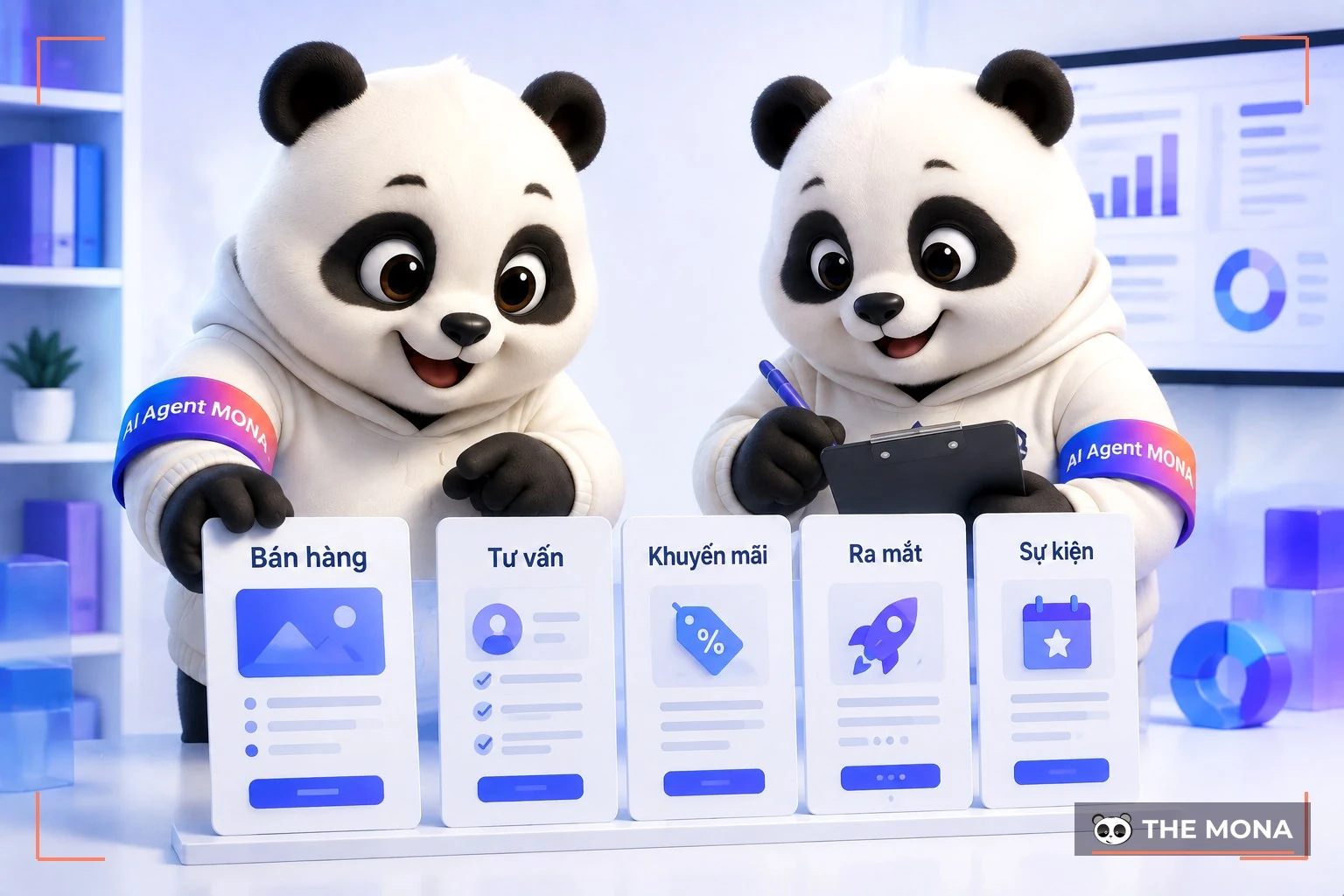
The five common types are sales, consultation lead capture, seasonal promotion, product launch and event registration. We choose the page type by the action that needs measuring, instead of using one shared template for every industry. They sound alike, but they are built very differently.
A sales page fits when the customer can decide right on the page. The structure runs from the problem, benefits, proof and offer to the buy button, all packed into 1 page. MONA often builds this type for cosmetics, home appliances, food and digital products. See the detailed structure in the article your sales landing page.
A lead capture landing page suits products that need a salesperson's advice before a contract is signed. The form should only ask for data that gives the sales team enough confidence to begin the first call, because every extra field is one more reason for a visitor to drop out midway. For housing projects, MONA prioritizes floor plans, legal status and viewing appointments in the real estate landing page.
A seasonal promotion page gathers products, deadlines and offer conditions in one place, letting the ad team change the message without disturbing the main website. Retailers, fashion and gift sellers usually launch the page about 6 weeks before Tet to have time for a full test round. After Tet the page comes down and the website stays clean. A deployment sample is in the article build a Tet sales page.
A launch page helps the market understand who the new product is for and what job it solves. The content needs more real-use images than self-praise. For cosmetics, MONA arranges ingredients, effects and user feedback after 2 weeks of use following the guide designing pages for cosmetics.
An event page needs to make the topic, the speaker, the schedule and the benefits after registering clear, and the main metric to track is the number of people filling in the form. Training centers, schools and seminar organizers use this type often, and MONA has compiled how to build an effective course registration page specifically for the education group.
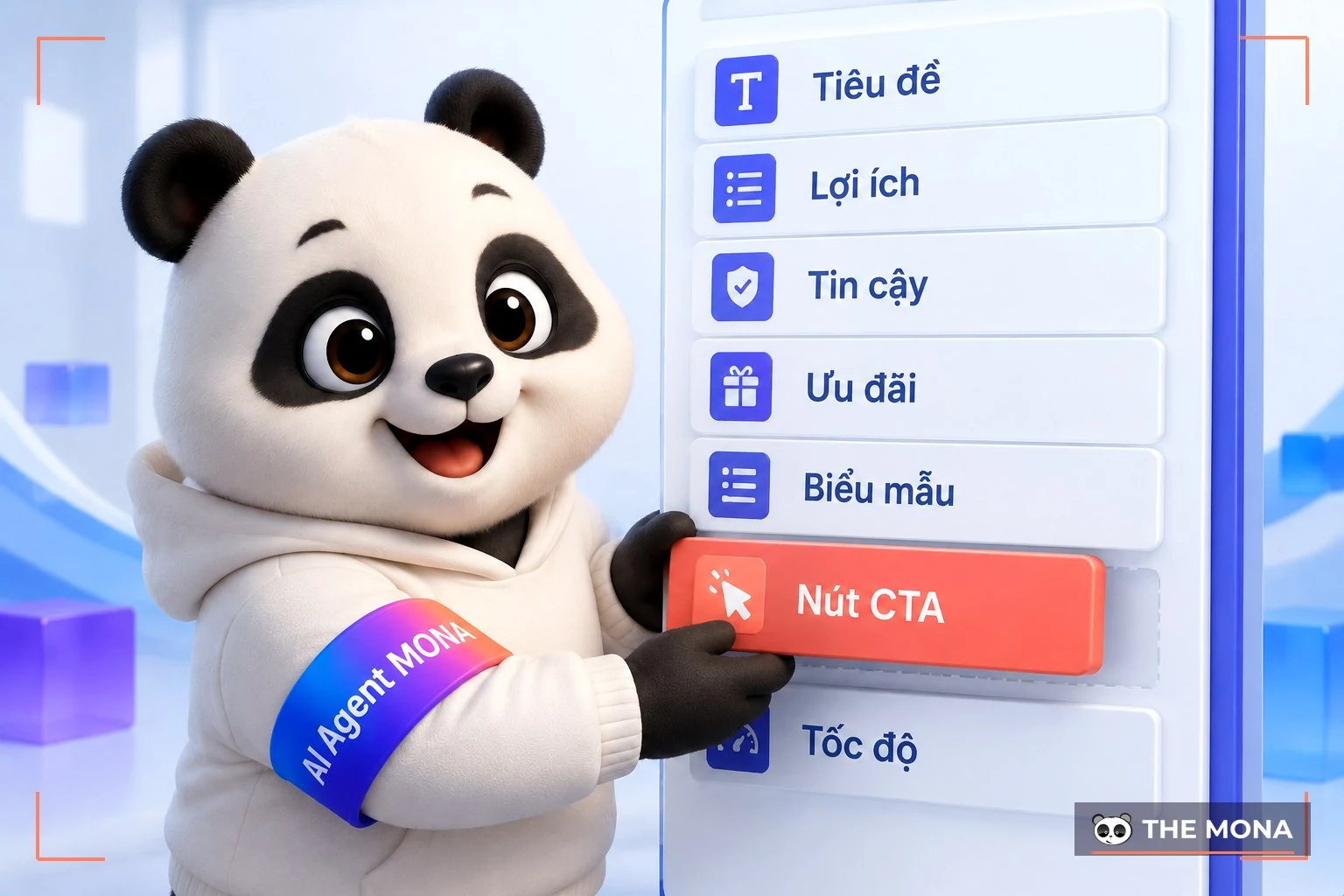
The seven blocks are the opening, selling points, proof, offer, form, action button and technical foundation. Miss one and the visitor stops. When we take over an old page, MONA rarely starts by changing colors: we look at where visitors leave, whether the promise matches the ad creative and whether the button works properly on a phone.
The top of the page must tell visitors who the product is for, what benefit it brings and what the next step is. A generic headline makes the viewer guess. Visitors do not have time to spare. We often rewrite headlines from a description of the company to the result the customer wants, then check the layout against the principle of UX/UI design so the eye reads in the right order.
Selling points state why the product deserves to be chosen in a specific situation. Grouped into 3 to 5 short points, they are easier to read than one long introduction. MONA often sees pages that list a lot of features but forget what customers really want: how their life changes after buying.
Trustworthy proof includes feedback with context, usage photos, verified figures or a clear policy. Each piece of proof must tie directly to the worry the customer has before buying. We often remove vague certification icons from old pages. One review that names the trade and a specific result is more convincing than a dozen logos placed just to fill space.
A good offer states what the customer gets, the price and the conditions. A time or quantity limit should only be used when the business truly keeps its word. We often remove countdown timers that reset every day, because a visitor who catches that fake detail once starts doubting every other promise on the page.
A form should only collect data needed for the next consultation step: name, phone number and one qualifying question are usually enough. MONA often drops the address, job title or budget fields when they do not help the sales team's first call.
The action button should appear about 3 times down the page, each time right after a paragraph that has just resolved a major doubt. The text on the button must describe what the visitor is about to do, such as "Get a consultation" or "Book a viewing". MONA tests every button, every scroll point and even the confirmation screen after submitting, because a beautiful button that fails to send means the ad team loses money while the sales team receives nothing.
A landing page must load fast and be easy to use with a finger on a small screen. A page that takes over 3 seconds to open starts losing visitors before they read the headline. Heavy images, tiny text and buttons packed together all reduce the chance of contact, and you can check it yourself with Google PageSpeed Insights. This technical part ties directly to ads and SEO, so MONA uses the criteria in the article build an SEO-friendly landing page to check structure, speed and crawlability.
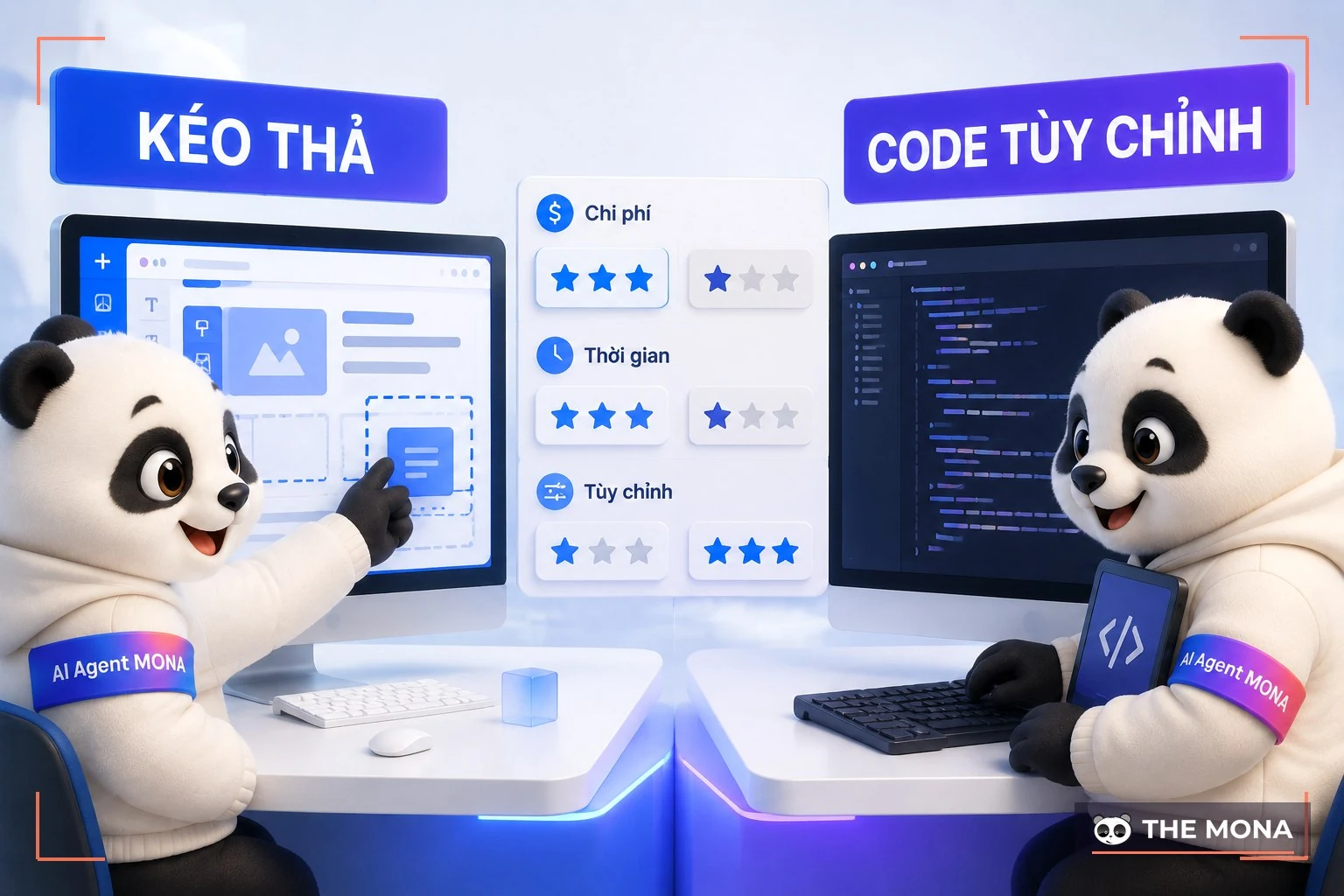
Drag-and-drop tools suit quick idea tests, small campaigns and keeping the starting budget low. A custom build suits when the page must load fast, track deeply, rank in SEO and stay close to the brand identity. Each path does a different job.
LadiPage or Canva wins on the speed of building a first version: the owner changes the text, swaps the images and opens a test round without waiting for the development team. MONA usually recommends this approach when the product is still testing demand or the campaign runs only a few weeks. Just decide in advance which metric you need to track, so even a rough test version still gives a useful conclusion.
A custom-written landing page shows its value when traffic is large and the business needs to connect data. Speed, tracking code, interface and control of the source code are handled to the actual requirements. If the form submissions need to flow into a CRM and then run an automated follow-up sequence, MONA connects the page directly to custom operations software, so managers can see the ad source, consultation status and closing result in the same system. Drag-and-drop tools also make it hard to control SEO structure in depth, and for a long-running campaign the cost of patchwork fixes grows with the number of requests.
| Option | Fits the need | Investment level at MONA |
|---|---|---|
| Drag and drop | Idea tests, small campaigns | Self-built with the tool |
| Basic Plan | From a ready template, one tight goal | From 7,000,000 VND |
| Standard Plan | Custom design, own brand identity | From 15,000,000 VND |
| Premium Plan | Fully custom design, complex integrations | From 40,000,000 VND |
The three packages, Basic, Standard and Premium, start from 7 million, 15 million and 40 million VND respectively, chosen by the complexity of the interface and the integrations. The scope of each package is stated clearly in the detailed price list on MONA's service page.
If you are torn between drag and drop and a custom build, send us the ad creative you are running and what you pay per consultation message. MONA will tell you plainly where your current page leaks and which package fits your stage, even if the answer is that you do not need to spend another cent yet. Call 1900 636 648 or look at the landing page design price list just above to picture it more easily.
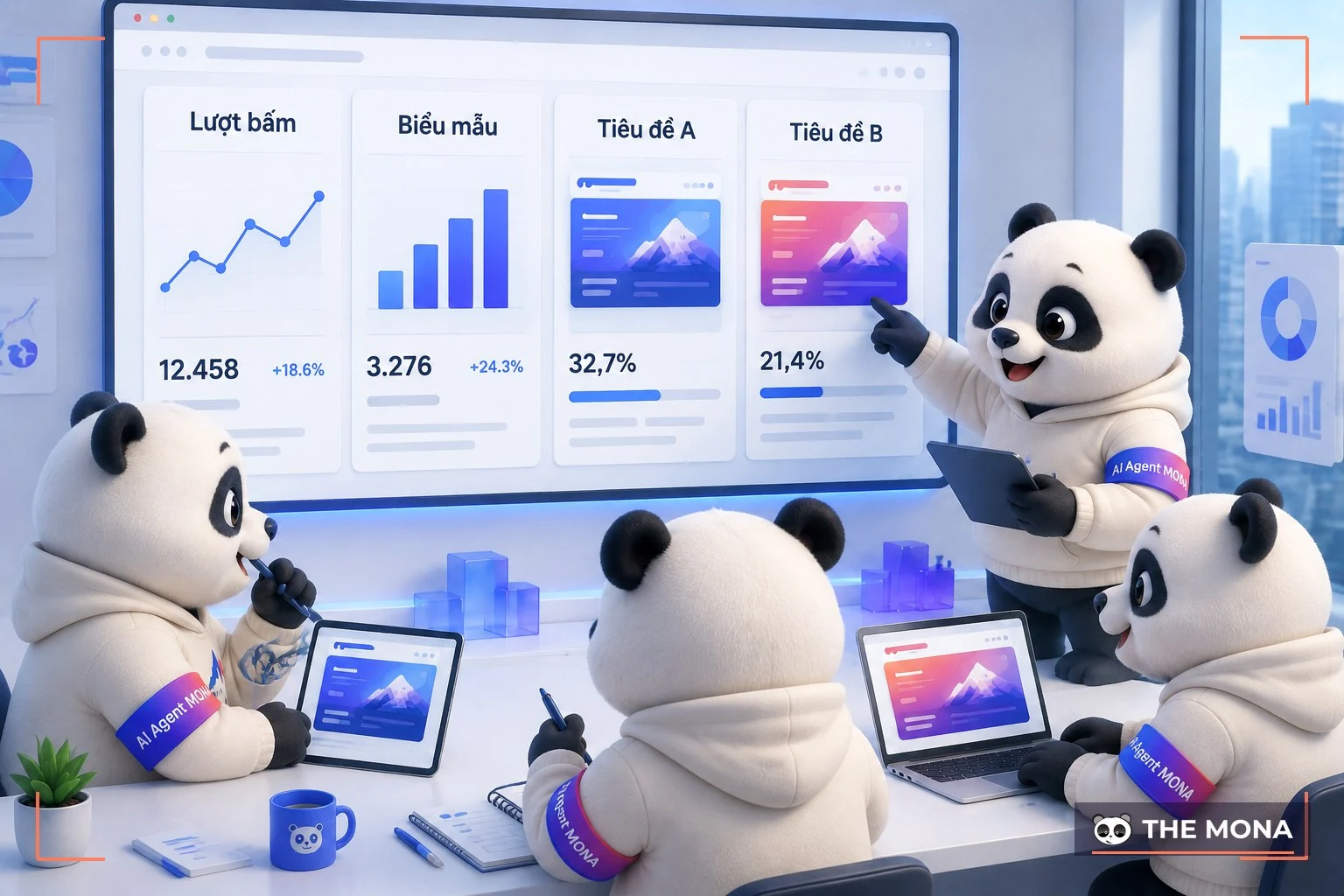
A landing page is only built at the start; the rest is measuring and improving the conversion rate. Measure first, spend more later. CRO is the process of improving the rate at which viewers take the desired action. We always start from view data, button clicks, form opens and successful submissions, instead of sitting at a desk going by feel.
Testing A/B testing as Harvard Business Review sums it up on 2 headline versions or action buttons will tell you which option generates more leads. Change only one element per round so the result still has comparison value. Load speed also needs tracking by device and traffic source, keeping it under 3 seconds; infrastructure from MONA Host helps the technical team control the server, the security certificate and resource loading.
MONA does not judge a page by how nice it looks. A design that passes must tell the sales team where the visitor came from, what they care about and how far they have been followed up. Once the page can be measured, multi-channel advertising puts the right customer group into each message. And SEO services adds long-term traffic for pages with deep enough content.
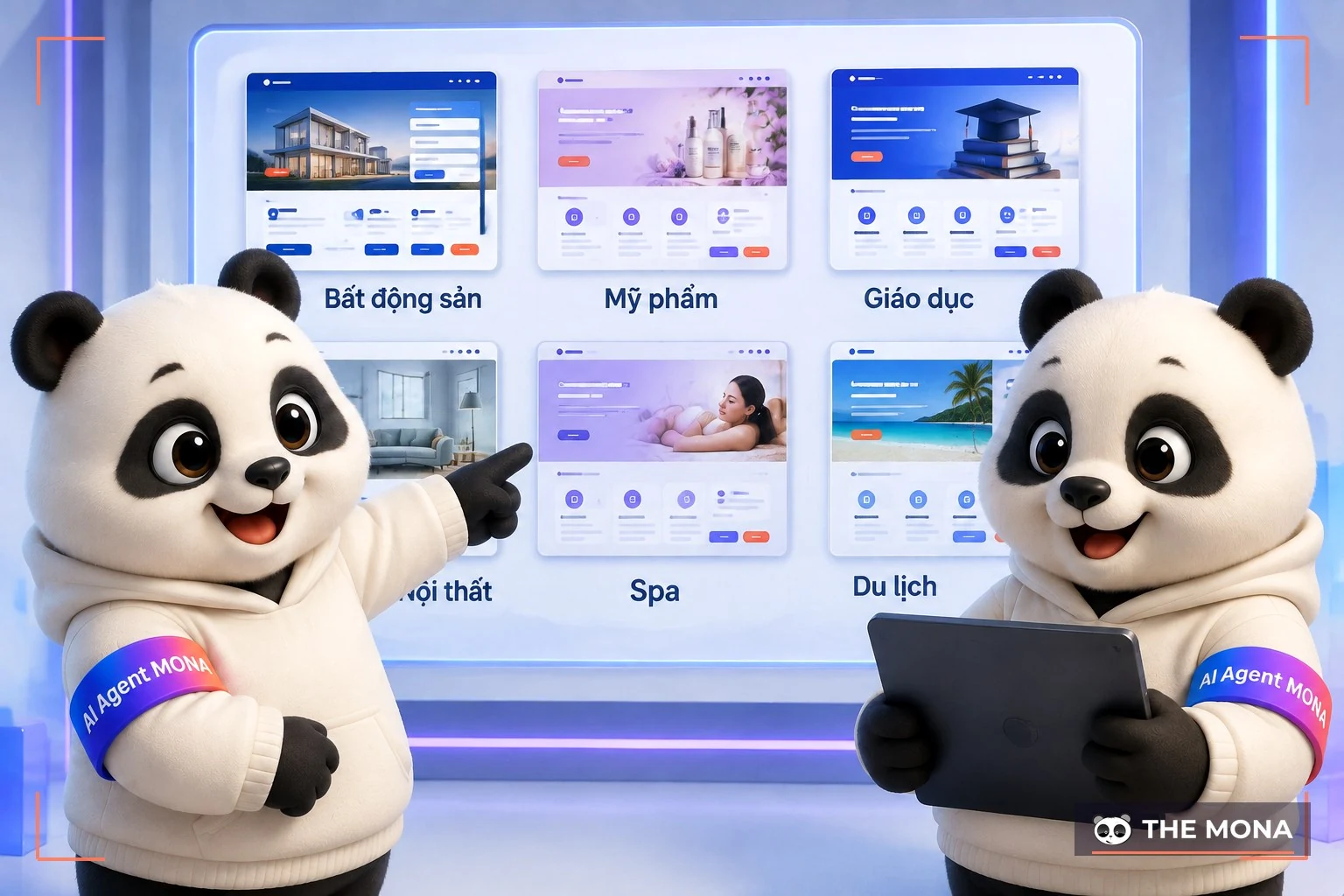
A landing page fits every industry that has a sales offer or an action to measure. The difference is the proof. We do not take a cosmetics page, swap the images to real estate and hand it over; we look for the buying questions unique to each industry and arrange the content and the form to match how buyers weigh their options. A 4-day 3-night tour needs very different proof from a 2-month skincare treatment.
A business that sells many products still needs a e-commerce websites as the base, while landing pages are split out for each ad round, collection or customer group. The landing page website templates also helps you define your taste before the meeting.

The six questions below answer the concerns MONA hears most before a business gets started. Each question focuses on one practical decision about needs, cost or how to deploy.
Yes, if you are running a campaign that needs to be measured separately. The website handles the overall introduction, while a landing page focuses on one product, offer or form. MONA usually keeps the website as the trust base and builds a separate page for each ad source, so cost and lead reports become much clearer.
MONA has three packages: Basic from 7 million, Standard from 15 million and Premium from 40 million VND. The right level depends on how custom the interface is, the content, the tracking and the system connections; settle the goal and scope before choosing a package, because a low quote that lacks content or tracking code leads to rework later.
Yes, if the page has content that meets search intent, a clear structure and a solid technical base. The page also needs good load speed, internal links and tracking data, as Ahrefs' landing page SEO guide analyzes. MONA usually separates short-run pages from pages meant to rank in search long term, each built for its own goal to avoid thin content.
The timeline is set after the content, interface and integrations are settled. A template-based page is faster than a custom-designed page, a multi-step form or a CRM connection. MONA sets milestones for each step: content, design, development, testing and handover. If you have the images and sales policies ready, the waiting time shrinks considerably.
The length should be enough for the customer to decide, rather than sticking to a fixed number. A familiar product needs less explanation than a high-value service or a high-risk decision. MONA keeps the parts that answer real buying questions and cuts repeated passages; scroll data, click counts and sales feedback show what needs adjusting.
Yes, if you understand your customers, your sales offer and the proof you have. The draft should start from the questions customers ask sales before buying, and MONA advises writing the headline, benefits, feedback and offer conditions before building the interface so you do not end up replacing the whole layout after the design is done.
An effective landing page always starts from the goal, then moves to content and interface. Settle whether the page needs to generate orders, collect contacts or book appointments before picking a template. What a landing page is stops being a hard question when the whole team looks at one action to measure, and MONA always reviews the goal, the traffic source and how the data connects before deploying.
Back to the math at the start of the article: the same ad creative, the same budget of nearly 400 million a month, and the cost per consultation message fell from 180 thousand to 70 thousand just because visitors landed on the right page. That gap, every month, is enough to pay for several well-made landing pages, and it is leaking out in every campaign that still sends traffic to the homepage.
You can keep trying the usual ways: change the ad creative, raise the budget, replace the ads team. We have met many business owners who went around that whole loop, spent a few more months of budget, before realizing the ads were innocent. The problem is where visitors land after the click.
MONA builds landing pages from the first goal-setting session until the page runs and the numbers can be measured: content that follows the ad creative, a form that connects straight to the sales team, and numbers clear enough that you know how many conversations each ad dong brings in. Call 1900 636 648 or leave your details at the landing page design service page, and this week we will set up a free review of the landing page for the campaign you are running.
MONA Media founded in 2016 (over 10 years), has delivered 14.000+ projects and has 85% of clients coming back. Hotline: 1900 636 648. Website: https://mona.media.
This article is part of the MONA Media website knowledge base, explaining what a landing page is and how to deploy one for a business.

CEO & Founder · The MONA
Founder of The MONA, who built a services company of 60+ staff with 14,000+ projects delivered. Khánh Hùng shares how he thinks about building systems that run themselves, automating a business, and the real lessons from delivering projects at MONA.
 310




Professional website
design services
Own a website with a beautiful, 100% exclusive design and a lifetime warranty, with the ability
to expand features flexibly as your business grows, starting today!






 MONA will never sell your information or send you spam


 MONA will never sell your information or send you spam
