
 MONA OS 2.0
 Partner with MONA


 Tự động hoá doanh nghiệp
 Cẩm nang SEO
 Digital Marketing
 Kinh nghiệm thiết kế website
 Hạ Tầng Server
 Giáo dục


 VI
 EN


Message us on
Zalo Official


 ProductsNew

 ProductsProducts
 Mới ra mắtKHA AI 2027App tự edit video, tự đăng mọi mạng xã hội, 2 phút mỗi ngày










 Website designLooks good and wins customers over.
SEO servicesBrings in customers searching for exactly what you sell.
 Tư vấn digital marketingKéo khách từ nhiều kênh, đo bằng số thật.
Corporate video productionVideos introducing your company, factory and team.
 NewAI video productionCompany story films made with AI.
 Custom software developmentCRM, ERP and HRM built for your business.
 Viết AI Agent theo yêu cầuĐặt riêng một trợ lý AI cho đúng việc của mình.
 Tư vấn chuyển đổi AIĐưa AI vào vận hành của cả công ty.
NewMONA LMSManagement for centers and schools.
MONA SkillHubInternal training for company staff.
 NHTQ systemEnd-to-end China–Vietnam shipping operations.
MONA JMSManagement for gold, diamond and pawn shops.
 MONA E-LearningA website with every feature you need to sell courses.
 How to sell online courses (course)More than 30 free lessons on selling courses on autopilot.
 MONA Cloudmonacloud.vnServers to get your apps and websites running.
 MONA Basemonabase.vnPostgres database, sign-in and file storage.
 MONA Mailmonamail.vnSend OTP, order and invoice emails from your software.
 MONA Paymonapay.vnAccept bank transfers via VietQR and notify your software when the money arrives.
 MONA eInvoiceComing soonIssue e-invoices that meet tax standards.
Gấu CườiTrả lời khách 24/7 trên web, Fanpage, Zalo và thu lead cho sale.
 Gấu TeleSalesGọi điện tư vấn, chăm khách như tổng đài viên thật.
Dê CườiTư vấn và chốt đơn cho shop ngay trong khung chat.
Gấu WebmasterNhắn nhóm Zalo là website được sửa xong.
 Gấu Pháp ChếSoạn hợp đồng, rà điều khoản trong vài phút.
 Gấu Báo GiáLên báo giá đúng mẫu và gửi khách ngay.
 AI chăm sóc khách hàngTheo dõi và giữ chân khách hàng cũ.
 Gấu Tuyển DụngLọc hồ sơ, hẹn lịch, phỏng vấn ứng viên.
 Mới ra mắt
KHA AI 2027
Xây kênh chuyên gia 2 phút mỗi ngày
Quay bằng điện thoại, AI tự edit video, tự đăng lên 16 nền tảng và tự trả lời bình luận, tin nhắn.
687.770lượt xem trên kênh CEO MONA sau 25 ngày
 Anh Khánh HùngCEO MONA đang dùng mỗi ngày
Xem app làm được gì
 AI
Gấu Cười MONA ĐANG TỰ XÀITrả lời khách 24/7 trên website, Zalo OA, Messenger và thu lead về cho sale.
Dê CườiChốt đơn bán lẻ và sàn: Shopee, TikTok Shop, web. Chăm cả khách sỉ, đại lý.
Gấu WebmasterCập nhật nội dung, tối ưu SEO website mỗi ngày.
Gấu TeleSalesGọi điện tư vấn, chăm khách như tổng đài viên thật.
Gấu Tuyển DụngLọc hồ sơ, hẹn lịch, phỏng vấn ứng viên tự động.
AI chăm sóc khách hàngGiữ khách cũ, cứu lead đã rớt cho phòng kinh doanh.
Gấu Pháp ChếSoạn hợp đồng, rà điều khoản trong vài phút.
Gấu Báo GiáLên báo giá đúng mẫu, gửi khách ngay khi có yêu cầu.
 Chuyển đổi AI toàn phầnGiải pháp tổng cho doanh nghiệp, 3 lớp triển khai.
 Viết AI Agent theo yêu cầuĐặt riêng một con AI gánh đúng nghiệp vụ của bạn.
 Custom softwareCRM, ERP and HRM with built-in AI automation.
 SEO & AEO thời đại AIĐược Google lẫn AI trích dẫn, không chỉ xếp hạng.
 Kiến thức AI cho doanh nghiệpBài phân tích, hướng dẫn ứng dụng AI vào vận hành.
 Free AI courses
 AI tools at work
App mới · KHA AI 2027
Xây kênh 2 phút mỗi ngày
AI tự edit video, tự đăng mọi mạng xã hội
Free consultation, 8am–10pm every day

00 · Try it now
From our work with language centers, we've seen that students usually submit essays in the evening but don't learn their mistakes until the next class. Paste your essay, choose the Task and click score to get one round of preliminary feedback. MONA shortens the wait; the teacher still confirms the band and what to fix.
Paste the prompt and your essay, see a preliminary band across the four IELTS criteria, read the specific mistakes and fix them right in your own sentences.
MONA's free AI IELTS Writing checker reads Task 1 or Task 2 essays, estimates a band against IELTS's four public criteria, points out sentences to fix and suggests how to improve the essay. The result is a preliminary score for practice; a teacher should still review it before it's used to make study decisions.
The tool accepts essays of 150 to 400 words. In the official test, Task 1 requires at least 150 words and Task 2 at least 250 words. You can paste a draft shorter than the Task 2 standard to catch mistakes early, but the feedback will clearly flag the missing length.
The results include the overall band, Task Achievement or Task Response, Coherence & Cohesion, Lexical Resource and Grammatical Range & Accuracy. These are the four public IELTS criteria, not a scale made up by MONA.

01 · The tool runs right on this page
Your essay is still in the box. Open Gấu Cười to see the full scoring flow in MONA LMS.
Open Gấu Cười to see the full versionYour results
We've seen essays that read very smoothly but missed one part of the prompt, so the tool won't score anything while the prompt box is empty. Choose the Task first, paste the right text into both boxes, then click score once. That way the feedback reads the essay against the question instead of guessing what it's about from the essay alone.
To try the interface, paste in a draft of at least 150 words. Check the Task type before you click score, and don't edit the essay while the system is reading it. The results keep what you entered, so you can compare your original sentences with the suggested ones without opening another document.
MONA deliberately requires the full prompt. An essay with good vocabulary that answers the wrong question still loses Task Response points; if the AI only read the essay, the feedback would sound reasonable but still miss the point. For Task 1, the prompt also tells it whether you're describing a chart, a map or a process, or writing a letter.
After scoring, the tool puts the four bands side by side, lists the feedback, quotes the exact problem spots and suggests corrected sentences. The quoted mistakes are highlighted right in your essay so you don't have to hunt through a long paragraph. The PDF download uses your browser's print dialog, so you can save the feedback as a PDF without installing anything, which is handy.
Keep in mind: This is a preliminary AI score. Official bands are set only by the IELTS test and its certified examiners. If the result affects your study plan, a teacher should reread the argument, check the nuance and confirm the mistakes the AI flagged.
02 · How to read the band
MONA has found that an overall band on its own makes it hard for students to improve their next essay. There are 4 columns to read. Open the two IELTS sources at the end of this section to compare the band descriptors, then paste one of your own essays into the tool. Comparing column by column shows whether the problem lies in answering the prompt, linking ideas, word choice or sentence control.
Paste in an old essay a teacher has already marked. Click score once and compare the 4 columns first. If the preliminary band is far from the teacher's feedback, read the quoted mistakes and treat the teacher's verdict as your benchmark.
According to IELTS's published guidance, each Writing response is assessed on four criteria. Task Achievement applies to Task 1, and Task Response to Task 2. The other three are Coherence & Cohesion, Lexical Resource, and Grammatical Range & Accuracy. The criteria carry equal weight in each task.
This criterion asks whether the essay does what the prompt asked. Task 1 needs to select and highlight the key features with a suitable overview; Task 2 needs to address every part of the question, keep a clear position and develop ideas with relevant reasons or examples. Fluent writing that leaves out part of the prompt is still capped here.
Examiners follow how ideas are organized, how they progress and how they connect. Each paragraph needs a clear role, and each sentence should build on the one before. Counting linking words isn't the point: adding “Moreover” or “Furthermore” to every sentence won't raise your band.
This part looks at the range, accuracy and appropriateness of vocabulary. Less common words only help when they're used with the right meaning and in natural collocations. A simple word that fits the context is usually better than a long word with the wrong nuance or the wrong collocation.
The band reflects both range of structures and accuracy. You need control of simple, compound and complex sentences, sensible punctuation, and few repeated errors. Longer isn't automatically better; a complex sentence with broken structure can make the idea harder to follow.
Sources: IELTS Academic Writing structure and scoring and the official Writing band descriptors.
03 · The difference is in the sentences
MONA sees students hunting for difficult words before checking whether the paragraph develops its ideas fully. Read the 2 versions below. Paste both the sentence and the paragraph it sits in into the tool, then click score to see how the change affects Lexical Resource and Coherence & Cohesion. A good correction serves the overall argument, not a display of vocabulary.
Paste in enough of the essay for context. Click score once and read the reasons first. A revision is worth keeping when it makes the main idea clearer, cuts repetition and doesn't push the tone into a formality that clashes with the rest of the essay.
The gap between band 6 and band 7 usually comes down to control rather than sprinkling in a few hard words. A band 6 essay meets the main requirements and organizes ideas fairly clearly, but some ideas are underdeveloped, linking is sometimes mechanical, and word choice and grammar still have errors. Band 7 requires a clearer line of argument, more flexible vocabulary and many error-free sentences.
Example: “Public transport is good because it reduces traffic and it is good for the environment.” The answer is on track, but “good” is repeated and the cause and effect is vague. The reader can't see how public transport actually reduces congestion or emissions.
Try: “Reliable public transport can reduce congestion by giving commuters a practical alternative to private cars, while lower per-passenger emissions ease pressure on urban air quality.” The revision is more specific, links the two halves more clearly and uses words that fit the context. It still has to fit the paragraph as a whole; one polished sentence can't save an essay that misses the prompt.
MONA wants the tool to point out exactly this kind of gap in your own sentences. Feedback like “improve your vocabulary” is too vague. Quoting the sentence, pinpointing the weakness, giving a revision and explaining why is what lets a learner try again.
See how an online essay grading system organizes submissions and feedback, then compare that with the specific requirements of an IELTS prep LMS.
04 · A scene at the center
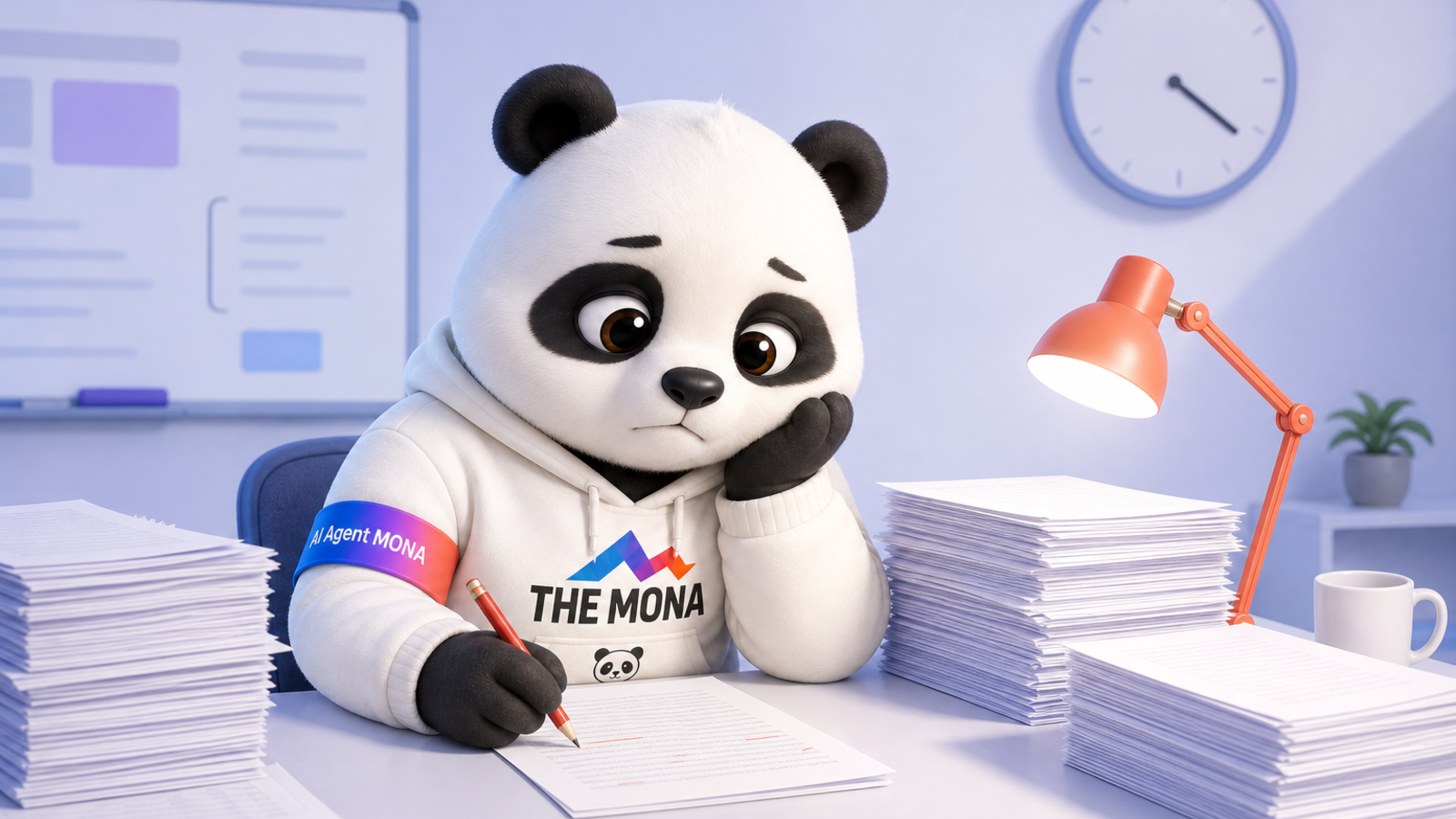
MONA has seen classes end just as the marking begins: the teacher opens each file, rereads the prompt and writes down nearly the same mistakes again and again. Just 20 students means 20 separate reads. Pasting one essay into the tool shows what the machine can prepare; going through the results shows what the teacher still has to review. Splitting the work this way shows the center where its teachers' attention is going.
Class has ended and the students have gone home, but the teacher is still sitting with a stack of Writing essays. Each one means reading the prompt, tracing the position, checking the structure, circling phrases, fixing sentences and writing feedback. The next day brings a new class, and the old stack still has to be returned in time for students to revise.
Speaking is heavy in a different way. The teacher listens to each recording, rewinds unclear pronunciation, spots hesitations, checks whether the answer develops its ideas and writes feedback. Relistening takes a long time. If the center also runs a campaign on its IELTS mock test website, the recordings to review easily pile up in the same window.
The usual approach is to share files through a common folder, track status in a spreadsheet and send feedback by message. That works when there are only a few essays. When many classes submit at once, academic staff struggle to track which essays have been marked, which teacher has which one, whether the student has read the feedback, and whether the next essay repeats the same mistakes.
MONA has built systems for 7 of the top 10 English centers in Vietnam and has seen this exact scene many times. What a center needs is a rule-based split of the work: the machine does the first read, the teacher reviews the parts that need expertise, and the system keeps the history so the next round doesn't start from a blank page.
With a small class that rarely submits, you can mark by hand; there's no need for a dedicated system. Once the number of classes, branches and exam rounds grows, it becomes worth bringing the IELTS mock test flow and the marking step into one place.
05 · A clear split of work
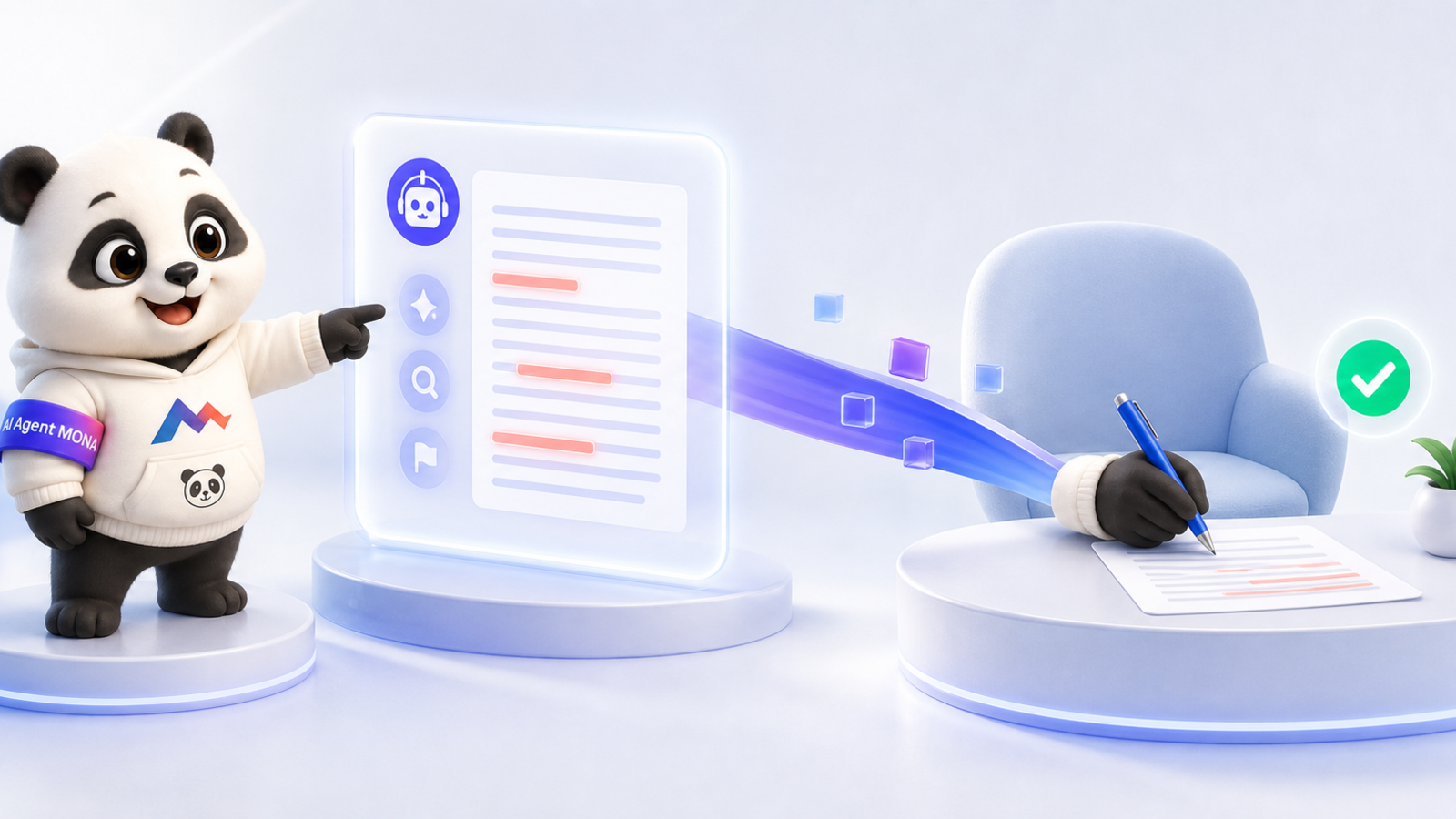
We make the machine pass and the teacher pass two separate states in MONA LMS. Paste a real essay into the system and click a flagged sentence to see the quote, the revision and the reason before the teacher approves. This keeps a record of who looked at the essay, what changed and which version the student received.
This keeps the final say with the teacher. The AI handles the repetitive part: counting length, catching common grammar mistakes, spotting repeated words, checking whether the essay sticks to the prompt and drafting the feedback. Teachers focus on what machines easily miss: whether the ideas are convincing, whether the examples make sense, whether the tone is natural, and which reasoning mistake a student keeps making across essays.
The revision history sits in the same learning record, so the teacher can see what was suggested last time. Students get the band, quoted mistakes and what to do for their next essay in the same place they submit. Managers can track the status of essays across classes and branches without messaging each person.
MONA LMS is education center management software for language and test prep centers, developed in-house by The MONA Group since 2016 as part of the MONA Software EduTech suite. MONA owns the source, so your center can start from what already exists and then customize it in depth to your own marking process, permissions and reporting.
See our IELTS Writing marking software, our IELTS Speaking scoring, or the product page for MONA LMS for training centers.
06 · Same problem, different data
MONA believes useful Speaking feedback has to point to a moment in the audio, not just say “not fluent”. Listen to 1 minute first. Click the marked timestamps to compare the original audio, what the machine heard and the teacher's confirmation. Pasting text into the Writing box can't replace this, because text loses the rhythm of speech, the hesitations and the pronunciation cues.
For Speaking, the input is a recording instead of a paragraph. The system transcribes speech into text to check the content and find hesitations, uneven speaking pace, repeated words and sounds that need relistening. The feedback should point to exact time ranges so the teacher can click and listen to the right spot.
Pronunciation isn't just about saying each sound correctly. Word stress, sentence rhythm, clarity, linking and how easily a listener understands all need to be judged in context. Listening again is the only way to be sure. The AI flags notable signals; the teacher confirms, because microphone quality, background noise and regional accents easily cause the machine to mishear.
Fluency also has to be judged alongside how the answer is developed. Speaking fast while repeating ideas, dodging the question or reciting memorized sentences may not meet the goal. MONA designs the AI to screen and prepare data, while the teacher keeps the job of judging real communication.
The tool on this page doesn't accept recordings yet and doesn't pretend that the paste box can score Speaking. Centers that need it should look at the separate flow in MONA LMS. Keep the scales separate, too: TOEIC or VSTEP learners need their own criteria, and we don't take the IELTS scale and relabel it.
For test prep in other exams, read about TOEIC prep software. Test creation, skills and reporting need to be set up separately from the start.
07 · A real story from MONA

We want you to try it once before hearing any pitch about MONA LMS. Paste in a real essay, click score and look closely at the quoted mistakes. If the feedback doesn't help you fix a single sentence, a longer feature list won't mean much either.
Clients who come to MONA usually have a very specific bottleneck. For IELTS centers, it's often Writing feedback returned late, teachers spending their evenings fixing the same group of mistakes, or mock test results sitting apart from the student record. We built a small tool so you can test that exact bottleneck before we talk about a bigger system.
We'll be upfront about what's in it for us too: one useful round of scoring shows you whether MONA understands the test prep business. If the tool is enough, keep using it. That's where the line is. When your center needs student accounts, essay allocation to teachers, progress history, Speaking, multi-branch reports and student care integrations, that's when MONA LMS comes into the conversation.
The MONA Group has developed its own software since 2016, delivered 14,000+ projects and 85% of its clients come back. In education alone, MONA has 180+ clients. These numbers explain why we bothered to build a decent small tool; they don't turn a preliminary band into a real test band.
For two projects in the same niche, see Pasal's LMS and the IELTS with Datio project. They show that MONA has worked through how a center operates; they're not a promise of an AI that scores every essay correctly.
08 · Part of MONA EduTech
We split the suite into 10 products so each type of institution finds the right one. Choose MONA LMS if you run a test prep center, and paste 1 essay into the tool to try the marking step first. If you work in credit-based training, preschool or internal training, picking the right product below saves a round of explaining the wrong workflows.
This tool is the entry point to MONA LMS, the product for education and training centers. When an organization has a different problem, the MONA Software EduTech suite has products for each type of institution. MONA gives each one its own name so you can find the right place, instead of cramming every kind of education workflow onto one generic page.
MONA recommends choosing by the operation you need to solve first. Test prep centers that need Writing and Speaking marking should start with MONA LMS; credit-based institutions should go straight to MONA UniMaster, rather than forcing a center's class structure onto a university.
09 · Quick questions, straight answers
We've kept all 8 questions students and centers ask before submitting an essay. Read the one about data first. Paste in your essay once you understand this is a preliminary band, then click score, up to 3 checks per day. Where a rollout policy isn't settled yet, MONA marks it as pending rather than writing a promise to make the page look good.
The AI gives a preliminary band and finds many useful mistakes, but it doesn't replace IELTS examiners or teachers who are professionally accountable. Accuracy also depends on the prompt, the essay, the context and how the model understands the argument. Use the results to find what to fix, then ask a teacher to review when the band affects your study plan or test date.
Yes. Choose Task 1 and paste the full prompt and an essay of 150 to 400 words. Get the Task type right first. The tool uses Task Achievement instead of Task Response and still scores the other three criteria. For Academic Task 1, the essay needs the key features and an overview; for General Training, the letter format and the prompt's requirements need to be read correctly.
The live endpoint allows 3 checks per day per IP address. This lets the free tool serve more people and cuts down on automated submissions. When you run out, the interface keeps the essay you pasted and invites you to open Gấu Cười if you want to see the full scoring in MONA LMS.
The essay isn't tied to your name or phone number, and the tool doesn't require you to log in. The server only keeps the scoring result under a hash of the essay for 24 hours, so pasting the same essay again doesn't use up a check, then deletes it automatically; essays aren't used to train models. If you want it deleted sooner, message Gấu Cười right on the page and we'll delete it by hand.
No. The free tool on this page only accepts Writing text. AI Speaking scoring from recordings is on the MONA LMS rollout plan, flagging pronunciation, fluency and the parts a teacher needs to relisten to. Centers that want to see the recording side should open Gấu Cười so we can show the right flow, rather than using the Writing box to simulate it.
Don't treat the result as a TOEIC or VSTEP band; the scoring scales are different. The tool follows the IELTS Writing criteria, while each exam has its own test structure and assessment method. You can paste an English passage to see grammar suggestions, but the band it returns doesn't represent a score in another exam.
MONA looks at integrating via API, or moving the marking step into MONA LMS, after seeing how your current system stores tests, submissions, accounts and permissions. MONA owns the source, so it can be customized in depth to your workflows. We only settle on an approach after looking at the data and the path of a real essay.
Yes. Teachers should review the band, the argument, the nuance, the corrected sentences and any cases where the AI misread the prompt. Don't skip the review. The right way to use it is to let the AI prepare the first pass and have the teacher confirm before returning the essay. For personal practice, you can use it right away to find mistakes and then check against the official band descriptors.
10 · Follow one essay all the way through
We want the session to start with 1 real essay and end with a clear decision. Bring an essay your center needs to return, and click through the AI pass, the teacher pass and the screen where the student gets feedback. After one full run, you'll know whether the free tool is enough or whether you need MONA LMS to run the operations behind it.
Your center has tried splitting files among teachers, tracking status in spreadsheets, sending feedback by message and reminding students to collect their own past mistakes. Each approach solves one piece, but once many classes submit at once, academic staff still have to ask each person, and the revision history ends up scattered in many places.
It still falls short. This is the bottleneck. Adding another spreadsheet doesn't make the first marking pass any shorter, and it doesn't help teachers see right away which mistakes a student keeps repeating across essays. The repetitive work should be prepared by the machine first, while the teacher keeps the final say on judgment calls.
MONA LMS connects prompts, submissions, preliminary bands, quoted mistakes, teacher reviews and progress records into one flow. You keep your good teachers for the work that needs good people, instead of making them spend their evenings rewriting feedback the machine could have prepared.
Bring a prompt and a real essay to the session, and we'll go straight to the essay. We open the actual Writing and Speaking marking flow, show which parts work right away and which need custom development, and then you decide whether to go further.
Open Gấu Cười to see AI marking in MONA LMS · 1900 636 648 · info@themona.global






 MONA will never sell your information or send you spam


 MONA will never sell your information or send you spam
